Maier Rotary Union Replacement | China Manufacturer & OEM Alternative
Original price was: $55.00.$48.00Current price is: $48.00.
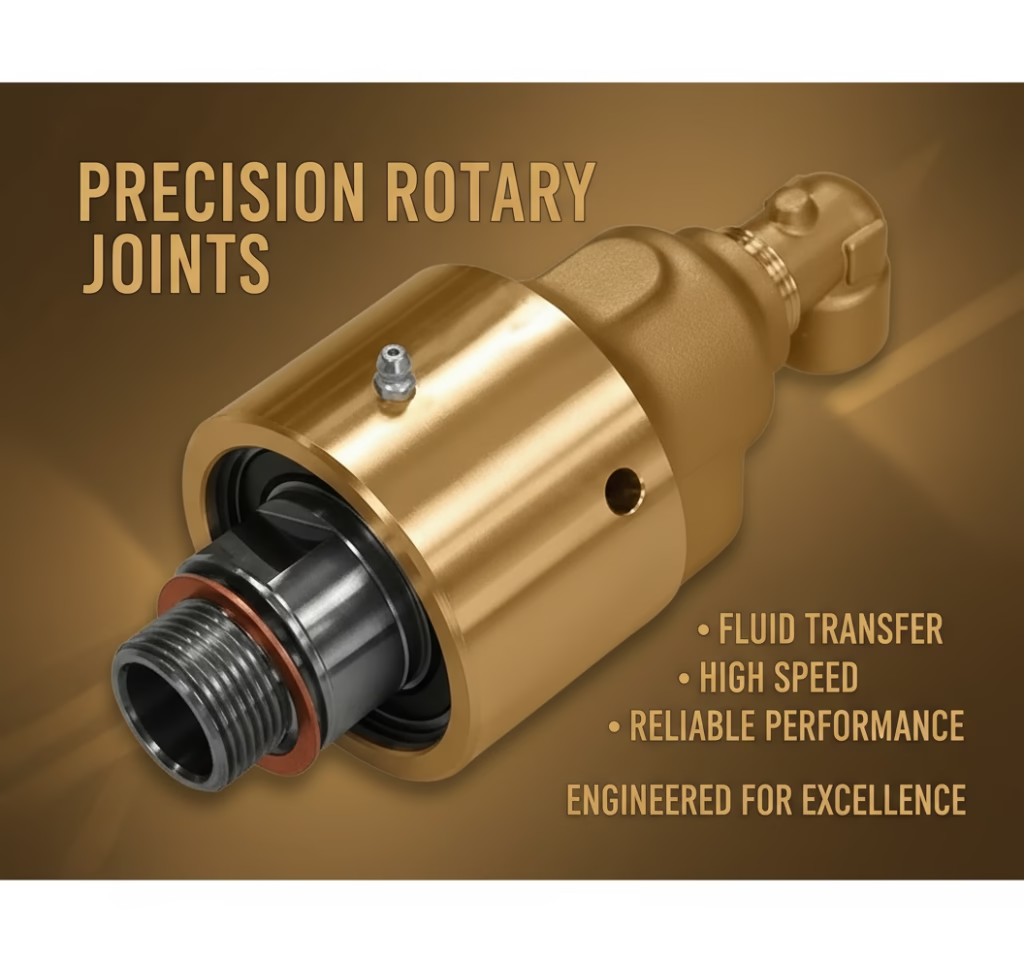
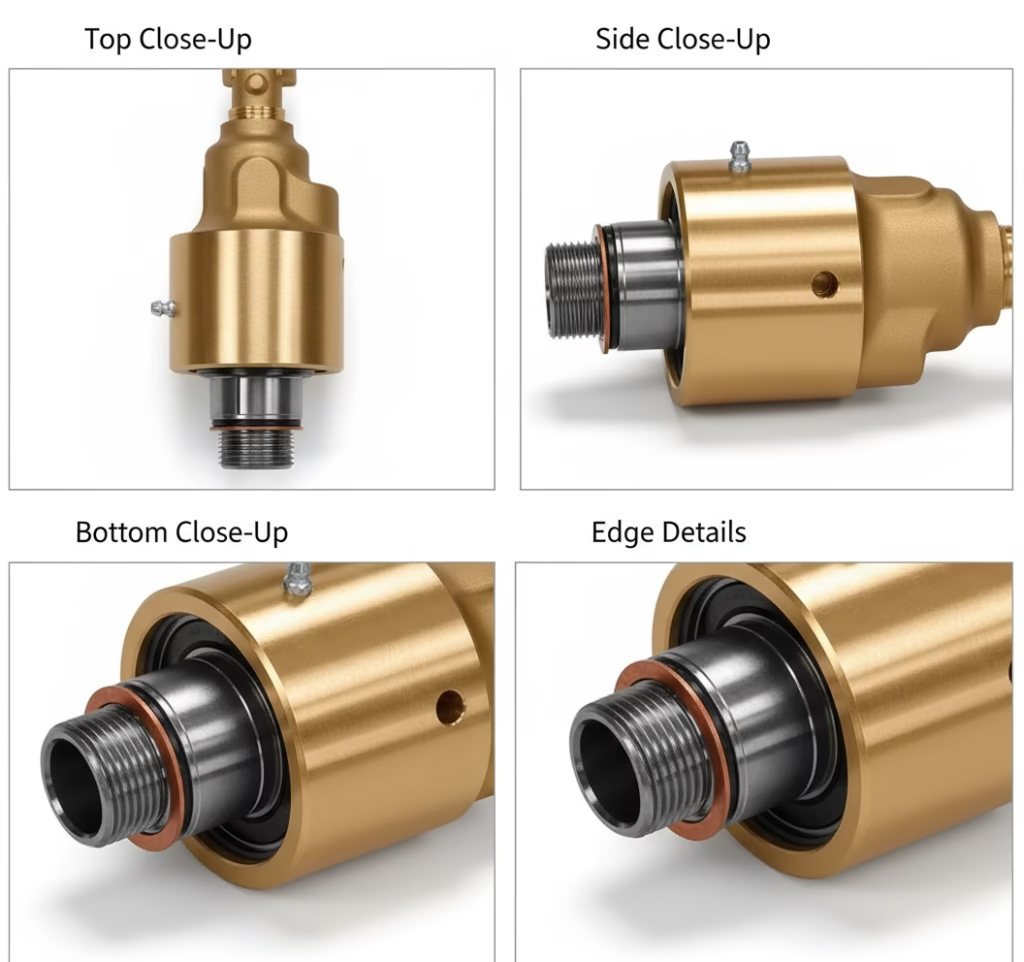
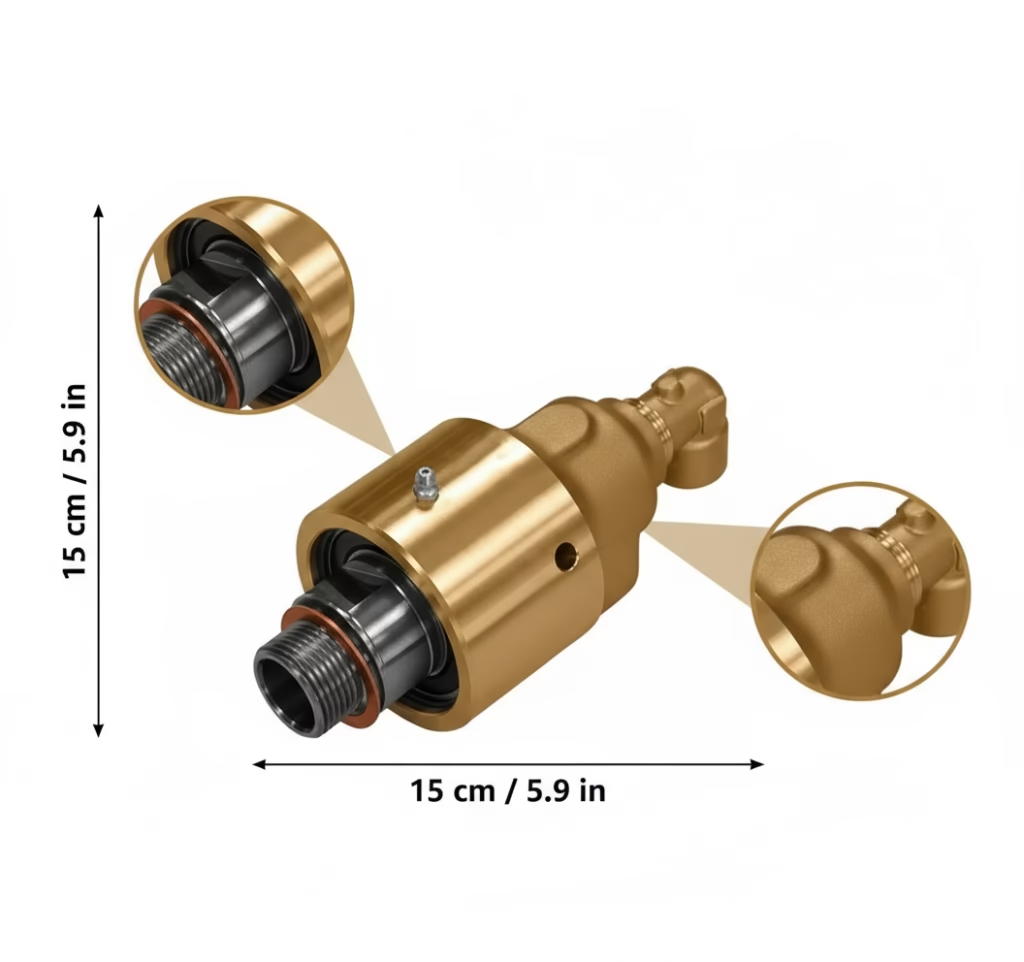
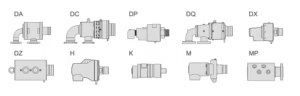
- Model number: Maier DP series
- Connection: Thread/The flange
- Color: yellow, can be customized
- Medium: Coolant water, hot water
- Surface treatment: Polishing
- Thread: BSPP BSPT NPT METRIC
- Business Type: Production enterprise
- Max Speed: 6000RPM
- Max Temperature: 120℃
- Max Pressure: 5.0mpa
Description
Selecting the right Maier rotary union is not only about matching dimensions. In demanding industrial environments, reliability, sealing performance, service life, and after-sales support directly affect equipment uptime and production costs. For companies operating paper machines, steel processing lines, plastic extrusion equipment, textile machinery, or rotary heating systems, an unexpected rotary union failure can result in hours—or even days—of costly downtime.
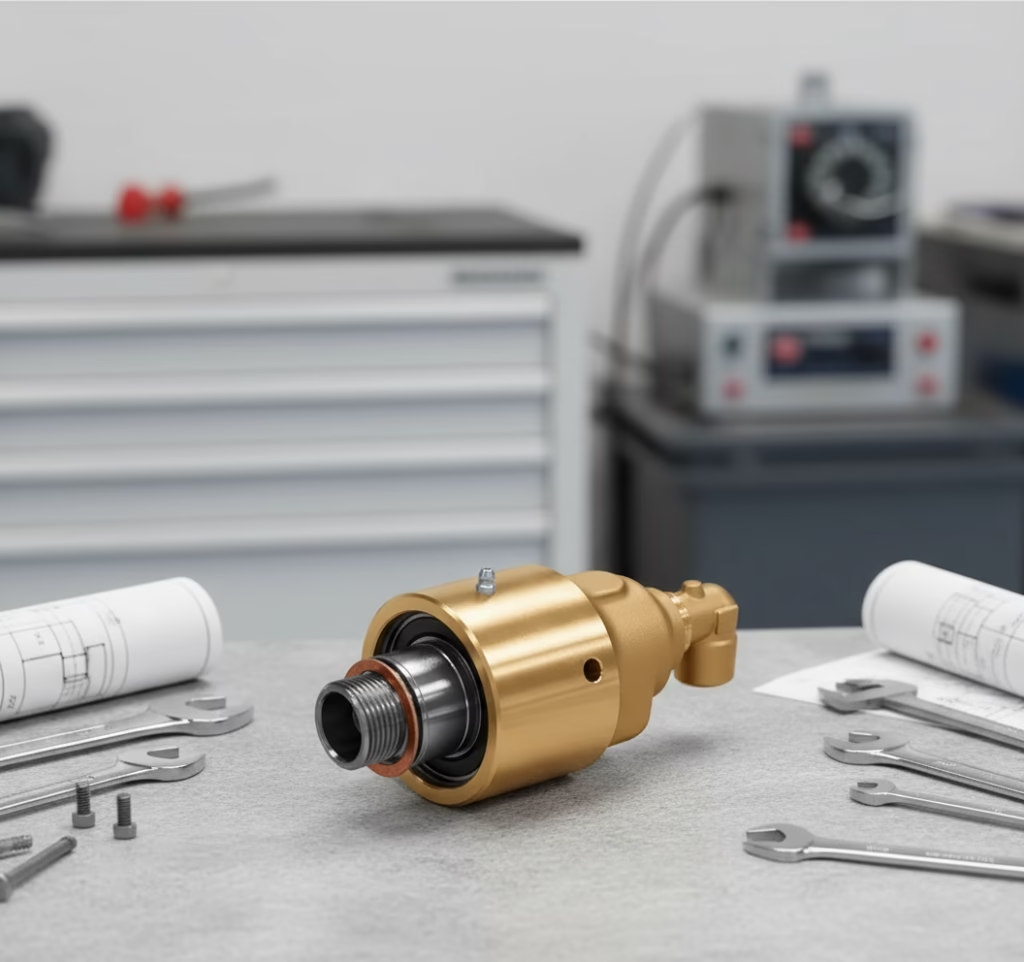
As a professional rotary union manufacturer in China, we supply high-quality rotary unions that are dimensionally compatible with many Maier rotary union models. Our products are designed for customers seeking a dependable and cost-effective alternative without compromising performance. Every rotary union is manufactured under strict quality control and tested before shipment to ensure stable operation under real industrial conditions.
Unlike companies that simply copy existing designs, our engineering team evaluates each application based on operating pressure, media, rotational speed, temperature, installation space, and maintenance requirements. This allows us to recommend the most suitable sealing structure, bearing arrangement, and material combination for each project.
Over the years, our rotary unions have been exported to customers across Europe, North America, South America, Southeast Asia, and the Middle East. Many of these customers originally used Maier rotary unions and later chose our products because they required shorter delivery times, more competitive pricing, and customized engineering support.
Whether you need a direct replacement for an existing Maier rotary union or a customized rotary joint for a new machine design, our engineering team can provide practical solutions based on real manufacturing experience rather than catalog specifications alone.
What Is a Maier Rotary Union?
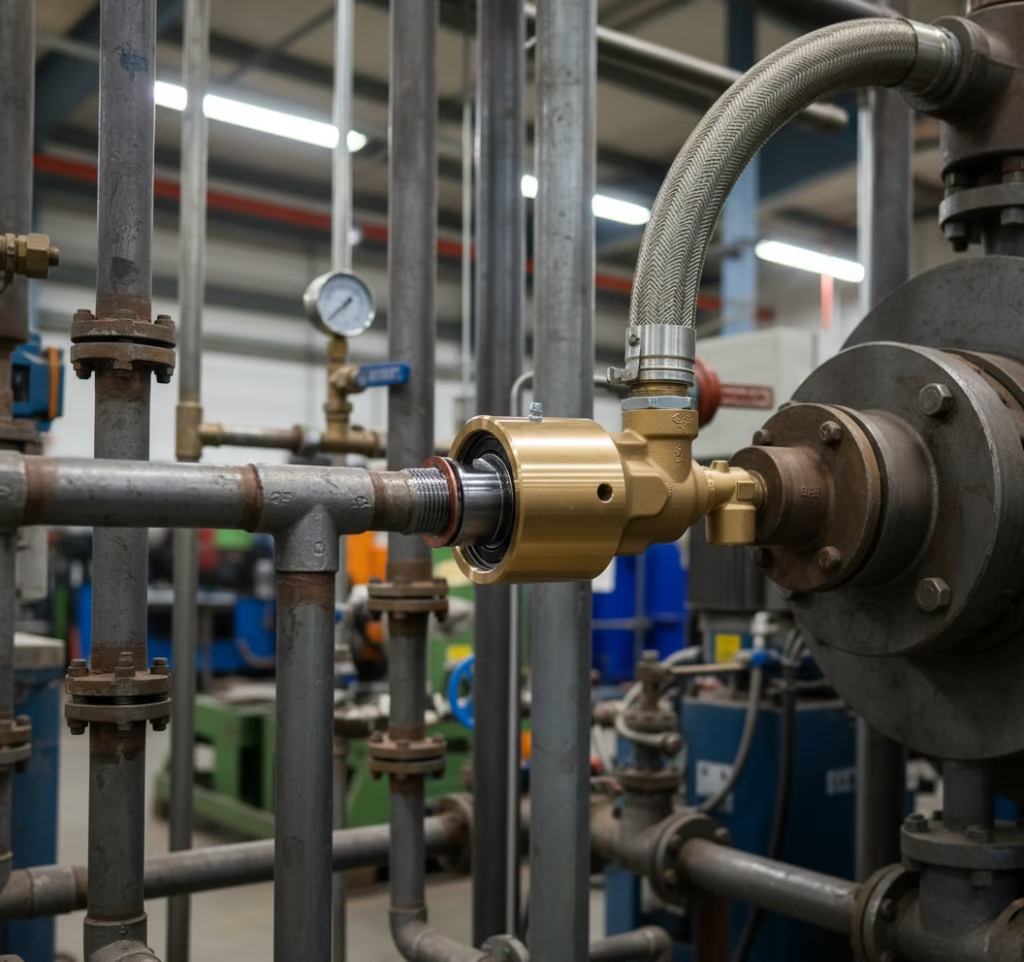
A rotary union is a precision mechanical component that transfers fluids or gases from a stationary supply line into rotating equipment while maintaining a reliable seal. Depending on the application, the transferred media may include cooling water, thermal oil, steam, compressed air, vacuum, hydraulic oil, or other industrial fluids.
Maier rotary union is widely used in industries where continuous fluid transfer and rotating motion occur simultaneously. They are known for handling demanding operating conditions such as:
- High operating temperatures
- High rotational speeds
- Continuous 24/7 production
- Heavy industrial environments
- Abrasive cooling media
- Long service life requirements
For these applications, sealing performance is critical. Even a small internal leakage can reduce production efficiency, contaminate products, or damage expensive bearings and rotating shafts.
Our compatible Maier rotary union replacements are engineered to provide reliable sealing performance while maintaining interchangeability with many existing installations. Depending on customer requirements, we offer various seal combinations including carbon graphite, silicon carbide, tungsten carbide, and PTFE, allowing the rotary union to operate efficiently under different pressures, temperatures, and media conditions.
Typical media include:
- Cooling water
- Thermal oil
- Steam
- Hot water
- Hydraulic oil
- Compressed air
- Vacuum
- Coolant
- Food-grade fluids (with appropriate materials)
Housing materials can be selected according to operating environments, including aluminum alloy, brass, carbon steel, stainless steel 304, and stainless steel 316 for corrosive applications.
For higher-speed equipment, dynamic balancing and precision machining play an equally important role as sealing technology. Even a well-designed seal cannot compensate for excessive shaft runout or poor concentricity. For this reason, we maintain strict machining tolerances throughout production to ensure smooth rotation and extended bearing life.


Key Features & Benefits
Heavy-Duty Construction
Built with high-strength alloys and corrosion-resistant materials for reliable performance in extreme environments.
Leak-Free Sealing
Advanced balanced seals with carbon-graphite, silicon carbide, or tool steel combinations ensure long-lasting, leak-free operation.
Multi-Media Compatibility
Handles water, oil, steam, coolant, thermal oil, air, and hydraulic fluid with maximum efficiency.
Single & Multi-Passage Options
Choose from one, two, or multiple passages for clamping, cooling, heating, lubrication, and tool sensing.
High-Speed Capability
Operates smoothly at speeds up to 12,000 RPM, making it ideal for machine tools and automation systems.
High Pressure & Temperature Resistance
Withstands up to 300 bar and 300°C, ensuring stability in the most demanding processes.
Low Maintenance Design
Self-lubricating seals, grease fittings, and accessible components reduce downtime and extend service life.
Flexible Installation
Compact, space-saving design with multiple mounting options for easy integration in different systems.
OEM-Level Performance at Lower Cost
Offers the same durability and precision as original Maier rotary unions at a more competitive price.
Proven Across Industries
Widely used in steel mills, paper machines, plastics processing, marine applications, and high-speed machining.


Technical Specifications
- Media Types: Water, Oil, Steam, Coolant, Air, Hydraulic Fluid
- Passages: Available in single-passage, dual-passage, and multi-passage designs
- Sealing Options: Carbon-graphite, silicon carbide, tool steel combinations
- Temperature Range: Up to 300°C (depending on model)
- Pressure Capacity: Up to 300 bar
- Speed Rating: Up to 12,000 RPM (depending on configuration)
- Applications: Machine tools, steel mills, paper machines, plastics, marine, and automation systems

Common Problems with Maier Rotary Unions and Practical Solutions
Even a high-quality rotary union has a finite service life. In our factory, we receive inquiries every week from maintenance engineers and equipment manufacturers looking to replace worn rotary unions originally supplied by well-known European brands, including Maier. In most cases, the problem is not the brand itself but the operating environment. High temperatures, contaminated media, incorrect installation, and inadequate maintenance gradually reduce sealing performance and eventually lead to failure.
By examining returned rotary unions from customers in paper mills, steel plants, plastic processing factories, and textile machinery manufacturers, we have identified several recurring failure modes. Understanding these issues helps customers extend service life and reduce unplanned downtime.
Problem 1: External Leakage Around the Seal
External leakage is one of the most common reasons for replacing a rotary union.
Typical symptoms include:
- Water dripping from the housing
- Steam is escaping around the seal area
- Oil leaking onto surrounding equipment
- Gradually increasing fluid consumption
Common Causes
In many cases, leakage is not caused by a defective seal alone. During inspections, we frequently observe one or more of the following conditions:
- Mechanical seal faces are worn after prolonged operation
- Shaft runout exceeding the recommended tolerance
- Damaged O-rings caused by improper installation
- Abrasive particles entering the sealing surfaces
- Operating pressure beyond the design limit
- Dry running during machine start-up
Our Engineering Solution
Instead of replacing only the sealing components, we recommend evaluating the complete operating condition.
Our replacement rotary unions can be configured with:
- Silicon carbide mechanical seals for superior wear resistance
- Tungsten carbide seal faces for abrasive media
- Carbon graphite seals for steam applications
- Precision-machined seal cavities to maintain uniform contact pressure
- High-quality elastomers selected according to operating temperature and fluid compatibility
During production, every sealing surface is carefully inspected before assembly to ensure consistent sealing performance.
Problem 2: Premature Bearing Failure
Bearing damage is another major cause of rotary union replacement.
Typical symptoms include:
- Abnormal operating noise
- Increased vibration
- Elevated housing temperature
- Shaft wobbling
- Difficult manual rotation after shutdown
Common Causes
Based on returned products from industrial customers, bearing failure is usually associated with:
- Cooling water contamination
- Lack of lubrication
- Excessive axial load
- Misalignment between equipment and rotary union
- High-speed operation beyond bearing capacity
- Seal leakage allowing fluid to enter the bearing chamber
Replacing only the bearing often does not solve the root cause if contamination or alignment issues remain.
Our Engineering Solution
When selecting bearings, we consider more than the shaft diameter.
Our engineering team evaluates:
- Rotational speed
- Radial load
- Axial load
- Operating temperature
- Working medium
- Expected service life
Depending on the application, we use premium bearings from internationally recognized suppliers or equivalent high-quality industrial bearings that meet demanding operating conditions.
The bearing chamber is also designed to improve lubrication retention and reduce contamination from external particles.
Problem 3: Seal Wear in High-Temperature Applications
Thermal oil systems, steam-heated rollers, and drying cylinders expose rotary unions to continuous thermal expansion.
Over time, excessive heat may cause:
- Seal face cracking
- Reduced spring force
- Carbon seal degradation
- Elastomer hardening
- Increased leakage
Common Causes
In our production experience, seal wear is often accelerated by:
- Incorrect seal material selection
- Rapid temperature fluctuations
- Operating beyond recommended limits
- Poor cooling conditions
- Frequent machine starts and stops
Our Engineering Solution
Rather than supplying a standard seal configuration, we recommend seal materials based on actual working conditions.
For example:
| Operating Condition | Recommended Seal Material |
|---|---|
| Steam | Carbon Graphite + Silicon Carbide |
| Cooling Water | Silicon Carbide |
| Thermal Oil | Tungsten Carbide + Silicon Carbide |
| Hydraulic Oil | Silicon Carbide |
| Corrosive Media | Customized Material Combination |
Selecting the appropriate seal combination can significantly extend service life while reducing maintenance frequency.
Problem 4: Excessive Vibration During Operation
Customers sometimes assume vibration originates from the machine itself, but in many cases, the rotary union also contributes.
Possible symptoms include:
- Seal wears shortly after installation
- Bearing overheating
- Increased machine noise
- Reduced machining accuracy
- Frequent leakage
Typical Causes
Factory inspections commonly reveal:
- Poor shaft concentricity
- Incorrect installation angle
- Rotor imbalance
- Excessive shaft runout
- Loose mounting bolts
Our Engineering Solution
Every rotary union housing and rotating component is manufactured on precision CNC equipment.
Critical dimensions are carefully controlled to improve:
- Concentricity
- Surface finish
- Dynamic balance
- Assembly accuracy
For higher-speed applications, additional balancing procedures may be performed before shipment.
Problem 5: Corrosion Inside the Rotary Union
Customers working with untreated cooling water or aggressive chemicals frequently experience corrosion-related failures.
Corrosion may result in:
- Seal damage
- Bearing contamination
- Reduced flow rate
- Internal blockage
- Difficult maintenance
Recommended Solution
Material selection should always match the operating medium.
We provide multiple housing materials, including:
- Brass
- Carbon steel
- Stainless Steel 304
- Stainless Steel 316
- Customized corrosion-resistant alloys
For chemical applications, our engineers recommend confirming fluid composition before finalizing material selection.

Typical Industrial Applications of Maier Rotary Union Replacements
One of the biggest advantages of Maier rotary unions is their versatility across many industrial sectors. In our factory, we manufacture compatible rotary unions for customers operating a wide range of production equipment. Although the operating media may differ, the engineering objective remains the same: maintaining reliable fluid transfer while minimizing maintenance and production downtime.
Paper Manufacturing Industry
Paper mills are among the most demanding applications for rotary unions. Dryer cylinders, calender rolls, coating equipment, and paper finishing lines require continuous steam or thermal oil transfer during rotation.
In these environments, rotary unions operate continuously for long production cycles. Seal wear, bearing contamination, and thermal expansion are common causes of failure if the rotary union is not properly designed.
Based on our manufacturing experience, paper industry customers generally focus on three factors:
- Stable sealing during long production runs
- Low maintenance frequency
- Easy replacement during scheduled shutdowns
For thermal oil and steam applications, selecting suitable sealing materials and bearing configurations is often more important than simply matching the original model number.
Plastic Film and Extrusion Industry
Plastic processing equipment relies heavily on accurate temperature control. Rotary unions are commonly installed on cooling rolls, chill rolls, laminating rollers, blown film equipment, and extrusion lines.
These applications often involve:
- High rotational speed
- Continuous cooling water circulation
- Frequent start-stop cycles
- Elevated operating temperatures
In our production experience, one of the most common problems in plastic processing equipment is internal scaling caused by poor water quality. Over time, mineral deposits reduce cooling efficiency and increase seal wear.
To address this issue, we recommend selecting corrosion-resistant materials and performing regular maintenance on cooling water systems. Proper media filtration can significantly extend the service life of both seals and bearings.
Steel and Metal Processing Industry
Steel plants present one of the harshest environments for rotary unions. Equipment such as continuous casting machines, rolling mills, strip processing lines, and coil handling systems often operates under heavy loads, high temperatures, and contaminated conditions.
These applications require rotary unions capable of handling:
- High-pressure cooling water
- Thermal oil circulation
- Heavy vibration
- Continuous operation
- Harsh environmental contamination
From our experience supplying rotary unions to metal processing equipment manufacturers, bearing protection is often just as important as seal performance. Dust, scale particles, and contaminated cooling water can quickly shorten bearing life if proper sealing and lubrication are neglected.
To improve reliability, we carefully select bearing configurations according to rotational speed and load while maintaining strict machining accuracy to reduce shaft vibration during operation.
Rubber and Tire Manufacturing
Rubber processing machines such as internal mixers, calenders, tire curing equipment, and cooling drums require efficient temperature control throughout production.
Temperature fluctuations directly influence product quality, making reliable rotary unions essential for maintaining stable heat transfer.
For these applications, our engineering team frequently recommends mechanical seal combinations that provide excellent wear resistance during long production cycles. Customers also benefit from customized flange dimensions and connection options that simplify replacement on existing equipment.
Textile, Printing, and Converting Equipment
Rotary unions are widely used on heated rollers, drying cylinders, printing rolls, laminating machines, and coating equipment within the textile and printing industries.
Although operating pressures are generally lower than those found in steel or hydraulic applications, these machines often run at high rotational speeds and require consistent sealing performance over extended periods.
In many replacement projects, customers initially believe seal leakage is caused solely by seal wear. However, after reviewing returned products in our factory, we often find that shaft misalignment, excessive vibration, or improper installation contributed significantly to premature failure.
By analyzing these operating conditions before production, we are able to recommend a more suitable rotary union configuration instead of simply supplying a dimensionally identical replacement.
Food Processing and Chemical Equipment
Food processing and chemical production place additional demands on material compatibility and corrosion resistance.
Depending on the transferred media, rotary unions may require:
- Stainless steel construction
- Corrosion-resistant seals
- Food-grade elastomers
- High-temperature capability
- Easy cleaning and maintenance
For customers operating in these industries, we work closely with engineering teams to select appropriate materials based on the actual process conditions rather than using a standard configuration for every application.
This application-oriented approach has helped many customers reduce maintenance frequency while improving the overall reliability of their rotating equipment.

Why Choose Our Maier Rotary Union Replacement?
Replacing an existing rotary union should be straightforward. Unfortunately, many low-cost alternatives fail because they only copy external dimensions while overlooking internal engineering details.
Our approach is different. We focus on long-term operating reliability rather than simply reproducing appearance.
Dimensionally Compatible Design
Many of our Maier-compatible rotary unions are designed to match the original installation dimensions, allowing customers to replace worn units without modifying machine structures or piping connections.
This helps reduce installation time and minimizes production downtime during scheduled maintenance.
Reliable Sealing Performance
Seal performance determines the service life of any rotary union.
Depending on operating conditions, we offer different sealing configurations for:
- Steam
- Thermal oil
- Water
- Air
- Hydraulic oil
- Vacuum
- Mixed industrial media
Each sealing arrangement is selected according to pressure, temperature, rotational speed, and maintenance requirements.
Flexible Material Options
Different industries require different material combinations.
Available housing materials include:
- Aluminum alloy
- Brass
- Carbon steel
- Stainless Steel 304
- Stainless Steel 316
Seal materials include:
- Carbon Graphite
- Silicon Carbide
- Tungsten Carbide
- PTFE
- Special composite materials
This flexibility allows customers to optimize both performance and overall operating cost.
Fast Production and Short Lead Time
One of the most common reasons customers seek an alternative to imported rotary unions is delivery time.
Many replacement parts for older equipment require long manufacturing cycles.
Because we manufacture rotary unions in our own factory, we can typically provide:
- Faster quotation response
- Flexible production scheduling
- Shorter manufacturing lead times
- Customized engineering support
- Stable export packaging
For urgent maintenance projects, reducing delivery time often has a greater economic impact than the purchase price itself.
Engineering Support Throughout the Project
Every industrial application is different.
Instead of recommending products solely based on part numbers, our engineers evaluate:
- Medium
- Pressure
- Temperature
- Rotational speed
- Shaft dimensions
- Installation method
- Duty cycle
This engineering-first approach helps customers avoid selecting an unsuitable rotary union that may fail prematurely.
Whether replacing a single rotary union or supporting an OEM equipment manufacturer, we aim to provide practical technical assistance throughout the project rather than simply shipping a standard product.


Frequently Asked Questions
1. Are your rotary unions compatible with Maier rotary unions?
Yes. Many of our rotary unions are manufactured with dimensions compatible with commonly used Maier models. Compatibility is confirmed according to drawings, dimensions, or OEM part numbers before production.
2. Which industries commonly use your Maier-compatible rotary unions?
Our products are widely used in paper manufacturing, steel processing, plastic extrusion, rubber production, textile machinery, printing equipment, food processing, chemical plants, and many other rotating industrial applications.
3. What media can your rotary unions transfer?
Depending on the selected configuration, our rotary unions can handle cooling water, steam, thermal oil, hydraulic oil, compressed air, vacuum, coolant, and various industrial fluids.
4. How do I choose the correct replacement model?
Simply provide the original model number, operating medium, pressure, temperature, rotational speed, connection dimensions, and photographs if available. Our engineers will recommend the most suitable replacement solution.
5. What sealing materials do you offer?
We offer carbon graphite, silicon carbide, tungsten carbide, PTFE, and other specialized sealing materials selected according to the operating environment and expected service life.
6. Is every rotary union tested before shipment?
Yes. Every assembled rotary union undergoes dimensional inspection, rotation testing, pressure testing, and leakage inspection before packaging to ensure reliable performance.
7. Can you manufacture customized rotary unions?
Absolutely. We support OEM manufacturing and custom designs for special equipment, unique installation dimensions, high-speed applications, and demanding operating conditions.
8. What information is needed for a quotation?
The most helpful information includes the original model number, working medium, pressure, temperature, RPM, connection type, installation dimensions, and photographs or drawings of the existing rotary union.
9. How long is the production lead time?
Production time depends on the product type and order quantity. Standard models are typically completed within 7–15 working days, while customized projects are scheduled according to engineering complexity.
10. Why should I choose your Maier rotary union replacement?
Customers choose our products because they combine precision manufacturing, reliable sealing performance, flexible customization, competitive factory pricing, rigorous quality control, and responsive technical support. Our goal is to provide practical, long-term solutions that help reduce downtime and maintenance costs while maintaining compatibility with existing equipment.

Customer Testimonials
⭐ “The Maier rotary union alternative we purchased works flawlessly in our steel mill cooling system. Performance is identical to the OEM but at half the cost.” – Manufacturing Engineer, Germany
⭐ “Excellent sealing reliability. Installed in our injection molding machines with zero leakage after 6 months of continuous use.” – Plant Manager, USA

Replace or Repair? Which Option Is More Economical?
Many maintenance engineers ask whether a leaking rotary union should be repaired or replaced.
The answer depends on its condition, operating environment, and overall maintenance costs.
Repair may be appropriate when:
- The housing remains undamaged.
- Bearings are still in good condition.
- Replacement seal kits are readily available.
- Equipment downtime is not critical.
However, replacement is often the more cost-effective solution when:
- Bearings have failed.
- Shaft surfaces are severely worn.
- Corrosion has damaged internal components.
- Multiple seals require replacement.
- Spare parts are difficult to obtain.
- Production downtime is expensive.
In industries operating around the clock, the cost of one unexpected production stoppage frequently exceeds the cost of installing a new rotary union.
Many of our customers originally repaired imported rotary unions several times before deciding to replace them with new compatible units. Besides reducing maintenance costs, they also benefited from improved delivery times and easier access to future spare parts.
Why More Industrial Companies Choose Chinese Rotary Union Manufacturers
Over the past decade, global procurement strategies have changed significantly. Today, industrial buyers are not only looking for lower prices but also for dependable quality, responsive engineering support, and stable supply chains.
Chinese manufacturers have invested heavily in advanced CNC equipment, inspection systems, and manufacturing processes. As a result, many industrial customers now source replacement rotary unions directly from qualified manufacturers rather than relying solely on traditional European suppliers.
Customers typically choose Chinese manufacturers because of several practical advantages.
Competitive Manufacturing Cost
Factory-direct production reduces unnecessary distribution costs while maintaining high manufacturing standards.
Shorter Lead Times
Many replacement rotary unions can be produced significantly faster than imported OEM products, helping reduce equipment downtime.
Flexible Customization
Unlike standard catalog suppliers, we support custom dimensions, special thread connections, alternative seal materials, and application-specific modifications for OEM equipment manufacturers.
Responsive Technical Support
Our engineering team communicates directly with customers to confirm technical requirements before production, reducing the risk of ordering an unsuitable replacement.
Stable International Supply Experience
Our products are exported to customers in Europe, North America, South America, Southeast Asia, Australia, and the Middle East. Years of international business have helped us understand different industrial standards, documentation requirements, and logistics processes.
For many maintenance departments, choosing a reliable manufacturing partner is just as important as selecting the correct rotary union itself.
Why Work With Us?
A rotary union may appear to be a relatively small component, but its reliability directly affects the performance of an entire production line.
Our goal is not simply to manufacture replacement parts—we aim to become a long-term engineering partner for our customers.
When working with us, customers benefit from:
- Rotary unions compatible with many Maier models
- Engineering recommendations based on real operating conditions
- Strict quality control throughout production
- Precision CNC machining and stable manufacturing consistency
- Multiple seal and material options for different media
- Pressure and leakage testing before shipment
- OEM and customized manufacturing services
- Fast technical communication and after-sales support
- Reliable export packaging and worldwide delivery
Every project is reviewed individually because no two industrial applications are exactly the same. Whether the rotary union operates on a paper machine, steel rolling mill, plastic extrusion line, textile equipment, or thermal oil system, our engineers focus on providing practical solutions that improve equipment reliability and reduce maintenance costs.
Conclusion
A reliable rotary union is essential for maintaining continuous production, reducing maintenance costs, and protecting valuable industrial equipment.
Although Maier rotary unions have earned an excellent reputation in many industries, customers today increasingly seek alternatives that combine dependable performance with shorter delivery times, competitive pricing, and flexible engineering support.
As a professional Chinese rotary union manufacturer, we provide dimensionally compatible replacement solutions designed around real operating conditions—not simply copied specifications.
From material selection and precision machining to pressure testing and final inspection, every rotary union is manufactured with attention to quality and long-term performance. Our experience across industries such as paper manufacturing, steel processing, plastics, rubber, textiles, food processing, and chemical production enables us to recommend practical solutions tailored to each application.
Whether you need a standard replacement or a fully customized rotary union, our engineering team is ready to assist with product selection, technical consultation, and manufacturing support.
If you are looking for a dependable alternative to Maier rotary unions, we welcome the opportunity to discuss your application and help you find the right solution for your equipment.