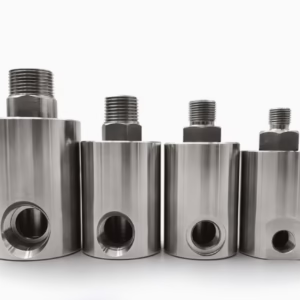
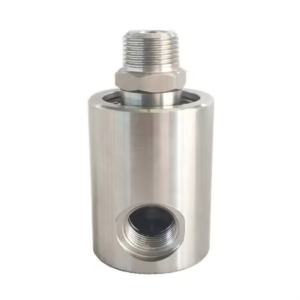
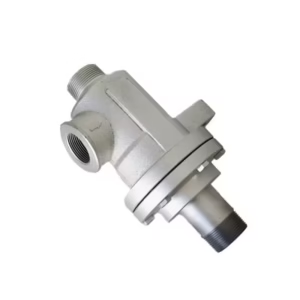
The High Temperature Rotary Union is a specialized industrial component engineered to facilitate fluid transfer in systems exposed to extreme thermal conditions. Constructed with heat-resistant alloys and advanced sealing technologies, this rotary joint ensures reliable performance at temperatures up to 650°C (1202°F)—ideal for applications in steel manufacturing, glass processing, and petrochemical refining. Unlike standard unions, its thermal expansion compensation design minimizes stress fractures and leakage in high-heat operations.
Key Features & Specifications
Temperature Range
Operates efficiently from -20°C to 650°C (-4°F to 1202°F), with custom models for 800°C+ environments; Capable of operating at temperatures up to 300°C (572°F), suitable for steam, hot oil, and thermal fluids used in drying, heating, and calendering processes.
Material Construction
Inconel 625, Hastelloy C-276, or ceramic-composite materials for oxidation resistance.
Pressure Rating
Up to 2800 PSI (19.3 MPa) at ambient temperature, with thermal pressure compensation. Designed to handle pressures ranging from low to high, commonly up to 20 bar or more, depending on the model and application.
Advanced sealing technology
Utilizes mechanical seals, metal bellows, carbon seals, and high-performance elastomers that resist thermal degradation to ensure long-lasting, leak-free performance.
Rotation Speed
Smooth operation at up to 1200 RPM (high-speed variants available for specialized furnaces).
Stainless Steel & Ceramic Composites
316L stainless steel body with ceramic-coated bearings and PTFE seals for corrosion resistance and minimal thermal degradation.
Multi-Fluid Compatibility
Supports hydraulic oil, steam, thermal oil, and coolant transfer, adaptable to industrial ovens and heat exchangers.
Bearing systems
Equipped with precision ball bearings or carbon bearings that tolerate high temperatures and reduce friction for smooth rotation and extended service life.
Robust construction
Materials such as stainless steel, nickel-plated steel, and special alloys provide corrosion resistance and durability under harsh conditions.
Design options
Available in single or multi-passage configurations, with flange or threaded connections to suit various industrial machinery setups.
Maintenance-friendly
Many models feature split designs for quick on-site repair and wear indication grooves to facilitate proactive maintenance.
Applications
The High Temperature Rotary Union excels in extreme-heat industrial scenarios, including:
Paper and printing
Steam and hot oil transfer for drying cylinders and calender rolls
Rubber and plastics
Calendering and extrusion lines requiring heat transfer fluids
Steel Rolling Mills
Transfers hot oil and coolant in continuous casting machines operating near 1000°C.
Glass Kilns
Connects rotating feeder mechanisms in glass manufacturing furnaces with 600°C+ environments.
Petrochemical Reactors
Manages high-temperature steam and chemical media in cracking units.
Cement Production
Transmits lubricant to rotating kiln bearings in cement processing plants.
Aerospace Testing Facilities
Facilitates fluid transfer in engine test stands, simulating re-entry temperatures.
Chemical processing
Circulation of thermal oils in reactors and heat exchangers
Food and beverage
Steam and hot water transfer in cooking and sterilization equipment
Advantages of High-Temperature Rotary Union
Ensures leak-free fluid transfer at elevated temperatures, reducing downtime and maintenance costs
Supports high-pressure and high-speed operation for demanding industrial processes
Uses specialized seals and bearings that resist wear and thermal degradation
Provides flexible mounting options, including flanged and threaded connections for easy integration
Enhances equipment lifespan through durable materials and advanced engineering
Selection Tips: High-Temperature Rotary Unions
When selecting the right rotary union for high-temperature applications, consider the following:
Fluid Media Type (steam, oil, water)
Maximum Operating Temperature
Pressure & Flow Requirements
Rotational Speed (RPM)
Seal Compatibility with Media
Mounting Orientation (vertical, horizontal)
Thermal Expansion Compensation Design Tip: Always select unions rated 15–20% higher than your system’s peak temperature and pressure for added safety and longevity.