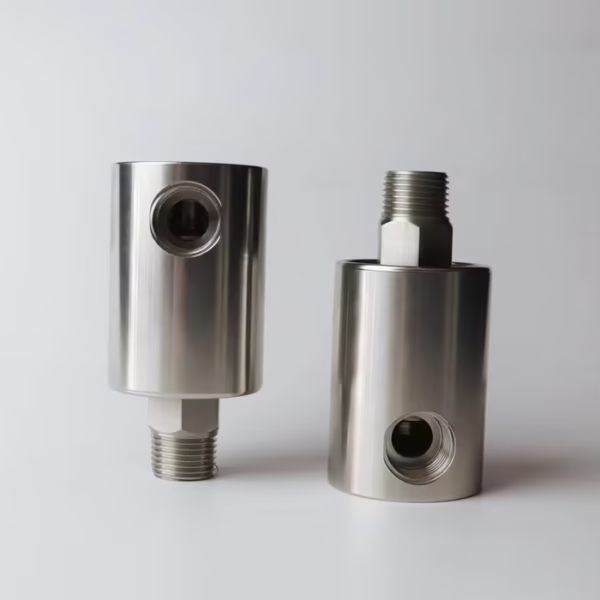
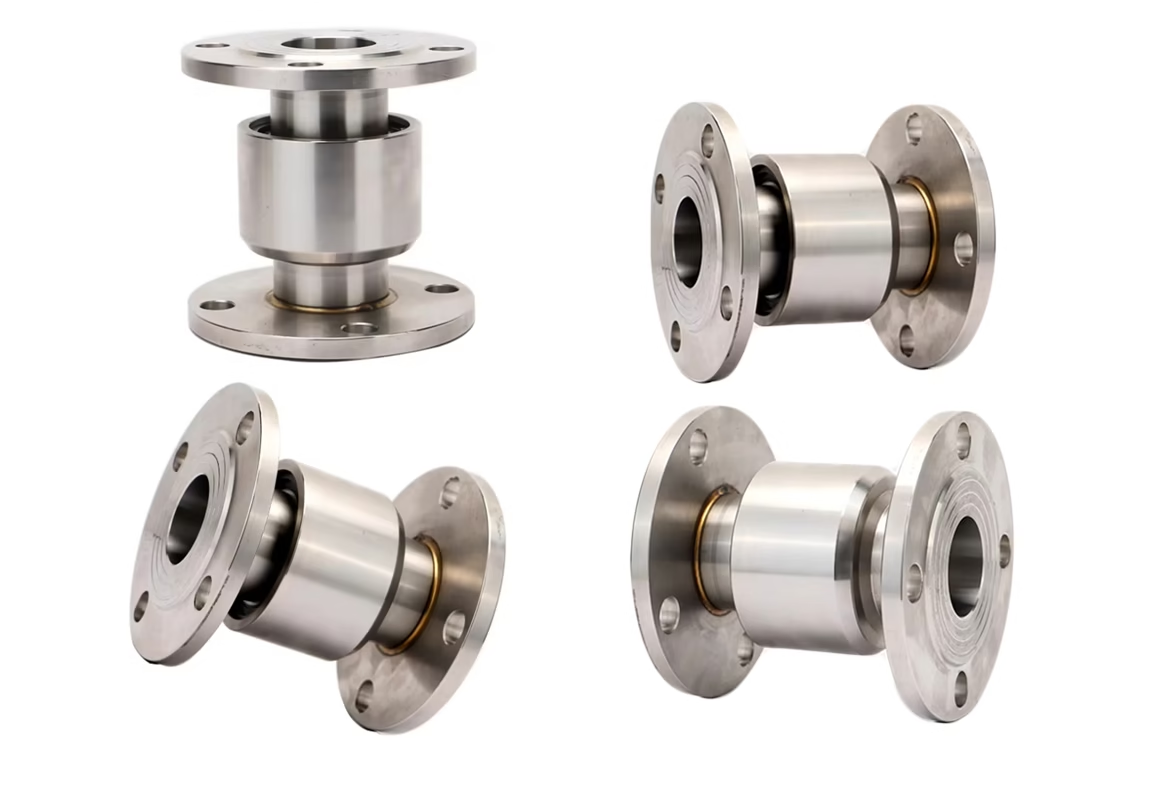
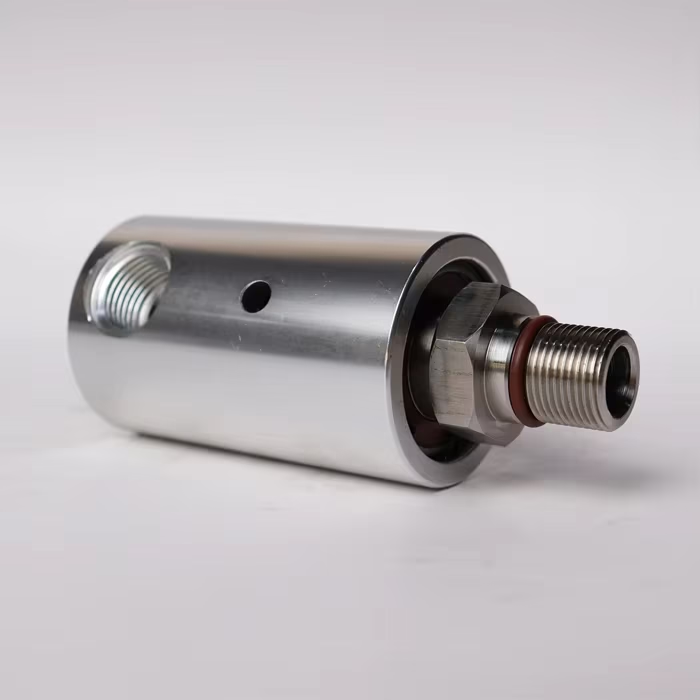
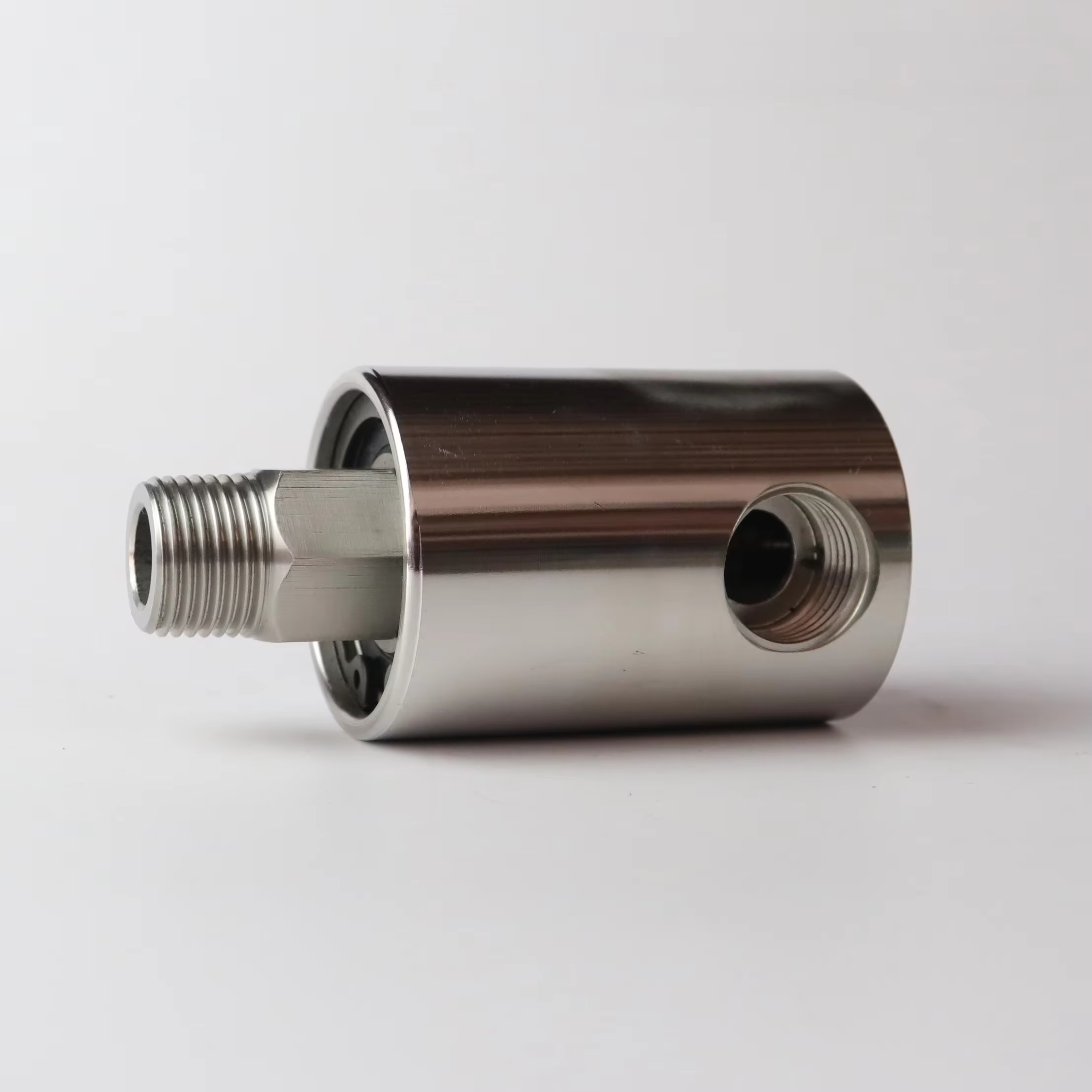
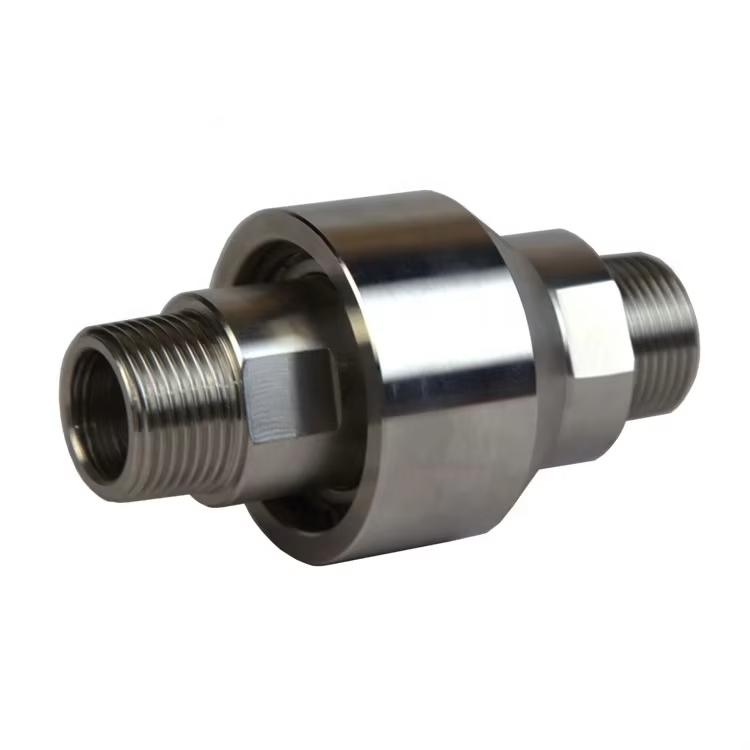
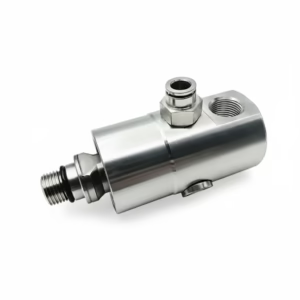
Corrosion-Resistant Stainless Steel Hydraulic Rotary Union Manufacturer
Original price was: $35.00.$31.00Current price is: $31.00.
- Material: Stainless Steel (SS304/316)
- Size: 1/8″ – 4″ NPT (customizable)
- Max Pressure: Up to 7,500 PSI (515 BAR)
- Max Temperature: Up to 220°C (428°F)
- Max Speed: Up to 500 RPM
- Passages: 1, 2, 3 or more
- Media: Oil, Water, Air, Coolant, Gas
Description
In many industrial environments, a standard carbon steel rotary union performs well under normal operating conditions. However, when equipment is exposed to seawater, corrosive chemicals, humid environments, food-grade cleaning agents, or outdoor weather, corrosion quickly becomes one of the leading causes of rotary union failure. For these demanding applications, a stainless steel hydraulic rotary union provides significantly better durability, corrosion resistance, and service life.
At Dann Hydraulic, we manufacture stainless steel rotary unions for customers in industries including marine engineering, food processing, chemical production, pharmaceutical manufacturing, paper mills, offshore equipment, and hydraulic machinery. Rather than simply changing the housing material from carbon steel to stainless steel, we optimize the complete product—including seal materials, bearing configuration, machining accuracy, and pressure testing—to ensure reliable performance in challenging industrial environments.
Whether you require a replacement rotary union or an OEM solution for new equipment, our stainless steel rotary unions are designed to deliver dependable sealing performance while reducing maintenance costs.

Key Features of Stainless Steel Hydraulic Rotary Union
Premium Stainless Steel Construction
Built with high-grade stainless steel (such as SS304 or SS316), offering exceptional corrosion resistance and durability for industrial environments. It provides unmatched protection against rust and chemical degradation. Resists corrosion in harsh conditions, ensuring long-term reliability.
High Pressure & Temperature Capability
Handles pressures up to 7,500 PSI (515 BAR) and temperatures up to 220°C (428°F), making it suitable for demanding hydraulic and pneumatic applications. Engineered to handle the extreme pressures of hydraulic systems without compromising integrity.
Multi-Media Compatibility
Designed to transfer various media, including hydraulic oil, water, compressed air, coolant, and chemicals, ensuring versatility across industries.
Multiple Passages
Available in single, dual, or multi-passage configurations for simultaneous transfer of different fluids or gases without cross-contamination.
Precision Sealing Technology
Advanced sealing systems prevent leaks, support vacuum and bidirectional pressures, and extend operational life.
Wide Range of Sizes
Offered in sizes from 1/8″ to 4″ NPT or custom threads, fitting most industrial setups.
High Rotational Speed
Supports speeds up to 500 RPM, suitable for both low-speed and high-speed rotary applications.
Custom Solutions Available
Tailored designs and modifications to meet unique application requirements. Tailored sizes and connections to suit your specific needs.

Why Choose a Stainless Steel Hydraulic Rotary Union?
Many buyers assume that stainless steel rotary unions are simply “rust-proof” versions of standard models.
In reality, stainless steel provides several important engineering advantages that directly improve reliability in harsh operating environments.
Compared with carbon steel, stainless steel offers:
- Superior corrosion resistance
- Better resistance to moisture and chemicals
- Longer service life in aggressive environments
- Easier cleaning and maintenance
- Better appearance after long-term use
- Improved suitability for hygienic applications
These advantages make stainless steel the preferred material for industries where corrosion can affect both equipment reliability and product quality.

304 vs. 316 Stainless Steel: Which Material Should You Choose?
One of the most common questions we receive from customers is:
“Should I choose 304 or 316 stainless steel?”
Although both materials provide excellent corrosion resistance, they are designed for different operating environments.
304 Stainless Steel
304 stainless steel is the most widely used material for industrial rotary unions.
Typical advantages include:
- Good corrosion resistance
- High mechanical strength
- Excellent machinability
- Cost-effective solution
- Suitable for most industrial environments
Typical applications include:
- Hydraulic systems
- CNC machinery
- Food processing equipment
- Textile machinery
- Packaging equipment
For clean water, hydraulic oil, compressed air, and general industrial applications, 304 stainless steel usually provides excellent long-term performance.
316 Stainless Steel
316 stainless steel contains molybdenum, giving it significantly better resistance to chloride corrosion.
It is recommended for environments involving:
- Seawater
- Salt spray
- Chemical processing
- Marine equipment
- Offshore platforms
- Pharmaceutical production
Compared with 304 stainless steel, 316 offers:
- Better resistance to pitting corrosion
- Improved resistance to chlorides
- Longer service life in marine environments
- Better chemical compatibility
Although 316 stainless steel has a higher material cost, it often reduces maintenance expenses by extending service life under severe operating conditions.
At Dann Hydraulic, we help customers select the most appropriate material based on their working environment rather than recommending the most expensive option. Matching the material to the application ensures reliable performance while avoiding unnecessary costs.


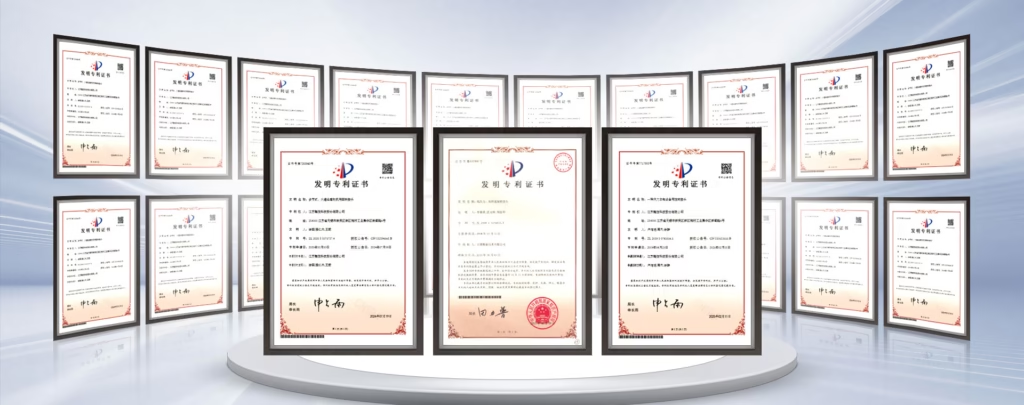
Engineering Experience from a Stainless Steel Rotary Union Manufacturer
Selecting the correct stainless steel hydraulic rotary union involves more than choosing between 304 and 316 stainless steel. Manufacturing quality, machining accuracy, sealing technology, and quality control all have a direct impact on the product’s long-term performance.
As a Chinese rotary union manufacturer, we have supplied corrosion-resistant rotary unions to customers in marine engineering, food processing, hydraulic equipment, chemical plants, paper mills, offshore platforms, and heavy industrial machinery. Through years of production and after-sales support, we have gained valuable practical experience that cannot be found in product catalogs alone.
The following insights reflect what we have learned from manufacturing thousands of stainless steel rotary unions.
Experience 1: Material Quality Is the Foundation of Corrosion Resistance
Many products on the market are advertised as “stainless steel rotary unions,” but the quality of the raw material varies considerably.
In our factory, stainless steel bars are sourced from qualified suppliers with verified material certificates. Before machining begins, incoming materials are inspected for:
- Material grade
- Surface defects
- Dimensional accuracy
- Mechanical properties
This helps ensure that every housing and shaft meets the required specifications.
For marine and chemical applications, selecting genuine 316 stainless steel rather than lower-grade substitutes significantly improves resistance to chloride corrosion and extends equipment life.
We have seen returned products from other suppliers where inferior stainless steel developed pitting corrosion after less than one year of service in coastal environments. Replacing these with properly manufactured 316 stainless steel rotary unions eliminated the problem and reduced maintenance frequency.
Experience 2: Precision Machining Determines Sealing Performance
A stainless steel housing alone cannot guarantee reliable operation.
The sealing performance of a rotary union depends heavily on machining precision.
Critical machining operations include:
- Bearing seat accuracy
- Shaft concentricity
- Seal face flatness
- Internal flow passage machining
- Thread precision
At Dann Hydraulic, all major components are manufactured on CNC machining centers.
After machining, sealing surfaces undergo precision grinding to achieve:
- Excellent flatness
- Low surface roughness
- Accurate parallelism
These characteristics reduce friction between mechanical seal faces and improve sealing stability during continuous rotation.
Especially in hydraulic applications operating under high pressure, even small dimensional errors can increase leakage and accelerate seal wear.
Experience 3: Clean Assembly Protects Seal Reliability
Mechanical seals operate with extremely small contact tolerances.
Even microscopic dust particles trapped between sealing faces may scratch the polished surfaces during startup.
For this reason, assembly cleanliness is treated as an important manufacturing process rather than a simple workshop procedure.
During assembly, we carefully inspect:
- Seal orientation
- Spring installation
- Bearing positioning
- O-ring lubrication
- Rotor alignment
Each assembled rotary union is manually rotated before pressure testing to verify smooth movement without abnormal resistance.
This additional inspection reduces the likelihood of assembly-related failures after installation.
Experience 4: Pressure Testing Should Never Be Skipped
One of the most common differences between premium manufacturers and low-cost suppliers is factory testing.
Some manufacturers inspect only the product appearance before shipment.
At Dann Hydraulic, every stainless steel hydraulic rotary union undergoes hydraulic pressure testing before packaging.
Testing verifies:
- External leakage
- Internal sealing performance
- Pressure stability
- Thread sealing
- Smooth shaft rotation
Products that fail testing are disassembled for analysis rather than repaired superficially.
This process helps us continuously improve machining accuracy and assembly procedures while ensuring that every shipped product meets our quality standards.

Common Problems with Stainless Steel Hydraulic Rotary Unions
Although stainless steel significantly improves corrosion resistance, it does not eliminate every potential failure. Like any precision mechanical component, a stainless steel hydraulic rotary union must be correctly selected, installed, and maintained to achieve its expected service life.
Based on our manufacturing and after-sales experience, the following are the most common issues encountered in industrial applications.
1. Hydraulic Oil Leakage
Leakage is the most common reason customers replace a rotary union.
Many users assume leakage always indicates seal failure, but the actual cause is often more complex.
Typical causes include:
- Worn mechanical seal faces
- Damaged O-rings
- Excessive shaft runout
- Bearing wear
- Incorrect installation
- Pressure exceeding the product rating
Hydraulic systems operate under much higher pressure than pneumatic systems. Even a small installation error can increase seal loading and accelerate wear.
When evaluating leakage, we recommend checking both the rotary union and the surrounding equipment, including shaft alignment, hose routing, and support brackets.
2. Corrosion Around Threaded Connections
Even though the housing is manufactured from stainless steel, corrosion can still occur if the connected fittings or piping use incompatible materials.
For example:
- Carbon steel fittings connected to stainless steel housings
- Poor-quality plated adapters
- Saltwater trapped around threaded joints
- Chemical residue remaining after production
These conditions may lead to galvanic corrosion or localized rust around the connection area.
For marine and offshore equipment, we recommend using stainless steel fittings throughout the hydraulic circuit whenever possible.
3. Bearing Wear
Bearings support the rotating shaft and maintain accurate alignment between sealing surfaces.
Bearing wear usually develops gradually.
Early warning signs include:
- Increased vibration
- Abnormal operating noise
- Rising housing temperature
- Reduced rotational smoothness
If these symptoms are ignored, seal leakage often follows because the seal faces can no longer maintain proper contact.
To improve durability, we carefully machine all bearing seats to maintain tight dimensional tolerances. Depending on customer requirements, premium bearings from internationally recognized manufacturers can also be specified for continuous-duty applications.
4. Seal Face Damage
Mechanical seals are precision components.
Although stainless steel protects the housing against corrosion, the sealing faces themselves remain vulnerable to improper operating conditions.
Typical causes of seal damage include:
- Abrasive contamination
- Dry running
- Excessive operating temperature
- Hydraulic oil containing metal particles
- Incorrect seal material selection
For applications involving contaminated hydraulic oil, improving system filtration often extends seal life more effectively than simply replacing the rotary union.

Industries That Require Stainless Steel Rotary Unions
1. Marine Equipment
Marine applications represent one of the harshest environments for rotary unions.
Typical equipment includes:
- Deck cranes
- Offshore winches
- Ship loading systems
- Marine hydraulic equipment
- Cable reels
Saltwater exposure continuously attacks ordinary carbon steel components.
Without corrosion-resistant materials, rust gradually damages sealing surfaces and threaded connections, eventually leading to leakage and difficult maintenance.
For marine applications, we generally recommend 316 stainless steel combined with corrosion-resistant sealing materials.
2. Food and Beverage Processing
Food processing equipment requires rotary unions that are not only corrosion-resistant but also easy to clean.
Typical applications include:
- Filling machines
- Mixing equipment
- Rotary packaging machines
- Dairy production lines
- Beverage processing systems
These machines are frequently cleaned using high-pressure water and chemical detergents.
Stainless steel housings resist corrosion while maintaining a clean appearance throughout years of operation.
For food-grade applications, seal materials must also be compatible with cleaning chemicals and elevated washdown temperatures.
3. Chemical Processing Industry
Chemical plants often handle aggressive liquids capable of attacking standard metals.
Examples include:
- Mild acids
- Alkaline solutions
- Process water
- Cooling systems
- Chemical transfer equipment
Selecting the correct stainless steel grade and compatible sealing materials helps minimize corrosion and extend maintenance intervals.
Because chemical compatibility varies significantly between applications, our engineering team reviews the working medium before recommending materials.

Why Choose Our Stainless Steel Rotary Unions?
Over 20 Years of Rotary Sealing Experience
With over two decades of expertise in rotary sealing technology, we understand the complex requirements of fluid transfer systems across industries. Our deep engineering knowledge enables us to design and manufacture rotary unions that meet the highest standards of precision, safety, and durability. From prototyping to mass production, we deliver consistent quality backed by real-world performance data.
In-Stock Options for Fast Shipping
We maintain a large inventory of standard stainless steel hydraulic rotary unions, ready for immediate dispatch. This ensures minimal lead time, helping customers avoid costly production delays. Whether you need a single unit or a batch of 100, we can ship quickly to meet tight deadlines.
Competitive Pricing for OEM & Bulk Orders
By streamlining our manufacturing processes and sourcing high-quality materials in bulk, we’re able to offer highly competitive pricing —without compromising on performance. OEM customers benefit from volume discounts, flexible payment terms, and long-term supply agreements. Our pricing structure is ideal for resellers, system integrators, and equipment manufacturers looking to scale.
Engineering Support & Custom Solutions
Our in-house engineering team works closely with clients to develop custom rotary unions tailored to their application requirements. From selecting optimal sealing materials to designing multi-passage layouts or specialty mounting options, we offer technical support at every stage. Whether you’re in R&D or mass production, our team ensures your solution performs exactly as needed.
Trusted by Fortune 500 Manufacturers Worldwide
Leading global companies across the automotive, aerospace, marine, and heavy machinery sectors rely on our rotary unions for mission-critical applications. Our reputation for quality, reliability, and responsive service has made us a long-term partner to some of the world’s most respected brands. When you choose our product, you’re choosing a solution trusted by industry leaders.

Frequently Asked Questions
Can a stainless steel hydraulic rotary union handle hydraulic oil?
Yes.
Stainless steel hydraulic rotary unions are widely used for transferring hydraulic oil in rotating equipment. However, compatibility depends on more than just the housing material.
When selecting a rotary union, engineers should also consider:
- Operating pressure
- Oil viscosity
- Rotational speed
- Operating temperature
- Seal material compatibility
For high-pressure hydraulic systems, choosing the appropriate mechanical seal and bearing configuration is just as important as selecting the correct stainless steel grade.
Is 316 stainless steel always better than 304?
Not necessarily.
Although 316 stainless steel offers superior resistance to chloride corrosion and seawater, it is also more expensive.
For most hydraulic applications using clean hydraulic oil in indoor industrial environments, 304 stainless steel provides excellent performance at a lower cost.
We generally recommend:
304 Stainless Steel
Suitable for:
- Hydraulic equipment
- Machine tools
- Industrial automation
- Food processing
- Packaging machinery
316 Stainless Steel
Recommended for:
- Marine equipment
- Offshore platforms
- Chemical plants
- Coastal environments
- Saltwater cooling systems
Choosing the material according to the actual operating environment provides the best balance between cost and service life.
Can stainless steel completely prevent corrosion?
No.
Stainless steel offers excellent corrosion resistance, but no metal is completely immune to corrosion.
Factors that may still cause corrosion include:
- High chloride concentrations
- Strong acids
- Poor cleaning practices
- Galvanic corrosion between different metals
- Long-term chemical exposure
Proper material selection and routine maintenance remain essential for maximizing service life.
Why is my stainless steel rotary union leaking?
Leakage is not necessarily caused by corrosion.
In our experience, the most common causes include:
- Worn mechanical seals
- Bearing wear
- Excessive shaft runout
- Incorrect installation
- Contaminated hydraulic oil
- Operating pressure beyond the design specification
Before replacing the rotary union, the entire hydraulic system should be inspected to identify the actual source of the problem.
Can stainless steel rotary unions be used with seawater?
Yes.
For seawater applications, we strongly recommend 316 stainless steel because it provides significantly better resistance to chloride attack than 304 stainless steel.
Typical seawater applications include:
- Marine cranes
- Offshore platforms
- Shipboard hydraulic systems
- Oceanographic equipment
- Coastal industrial facilities
In addition to selecting the correct housing material, seal materials and fasteners should also be compatible with seawater service.
Do you provide customized stainless steel rotary unions?
Yes.
In addition to our standard product range, Dann Hydraulic manufactures customized rotary unions based on customer drawings or application requirements.
Customization options include:
- 304 or 316 stainless steel construction
- Single-passage or multi-passage designs
- High-pressure hydraulic rotary unions
- Special thread standards (BSP, NPT, SAE, Metric)
- Customized shaft dimensions
- Flange mounting options
- OEM logo and private labeling
Our engineering team works closely with customers during the design stage to ensure compatibility with existing equipment and operating conditions.

Conclusion
A stainless steel hydraulic rotary union is the preferred solution for applications where corrosion resistance, durability, and reliable sealing are critical. Whether used in marine engineering, food processing, chemical plants, hydraulic machinery, or outdoor industrial equipment, selecting the correct material and design can significantly reduce maintenance costs and improve operational reliability.
At Dann Hydraulic, we manufacture stainless steel rotary unions that combine precision CNC machining, carefully selected materials, advanced sealing technology, and comprehensive quality control. Every unit is produced with a focus on long-term performance rather than simply matching external dimensions.
Our production experience has shown that reliable rotary union performance depends on the complete manufacturing process—from material selection and machining accuracy to assembly quality and pressure testing. By controlling each of these stages, we deliver products that provide dependable service in demanding industrial environments.
If you are replacing an existing rotary union, designing new equipment, or looking for a corrosion-resistant solution for hydraulic, water, or chemical applications, our engineering team can help you select the most suitable product based on your operating conditions.
We welcome OEM and customized projects and are committed to providing practical engineering support, consistent product quality, and responsive service to customers worldwide.
Related products
-
Sale!

Hydraulic Rotary Union Pneumatic for Air, Vacuum, and Fluids
Original price was: $90.00.$81.00Current price is: $81.00. -
Sale!

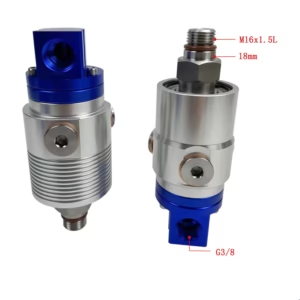
Deublin 1109 020 188 Rotary Union Alternative Made in China
Original price was: $120.00.$108.00Current price is: $108.00. -
Sale!
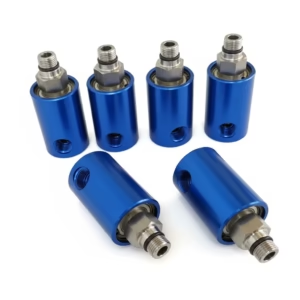
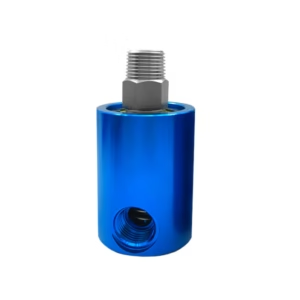
High Speed Pneumatic Rotary Union for Industrial Systems
Original price was: $35.00.$30.00Current price is: $30.00. -
Sale!
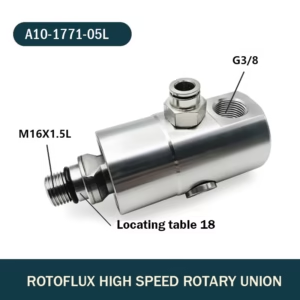
Rotoflux A10-701 Rotary Joint Alternative | OEM Compatible Replacement
Original price was: $100.00.$91.00Current price is: $91.00.