
What Is a Rotary Union Used For? Complete Industrial Guide
Many people ask a simple question: What are the Rotary Union Applications? The short answer is that a rotary union transfers fluids from a stationary source into a rotating component without leakage. While this definition is technically correct, it does not fully explain why rotary unions have become essential components in modern industrial equipment.
From CNC machining centers and paper machines to steel mills, plastic injection molding systems, wind turbines, and automated production lines, rotary unions allow water, hydraulic oil, coolant, steam, compressed air, vacuum, and thermal oil to flow continuously while shafts, drums, rollers, or spindles rotate.
Without a rotary union, flexible hoses would twist during rotation, eventually leading to hose failure, leakage, equipment downtime, and expensive repairs.
As a manufacturer of rotary unions, we work with OEM equipment builders, industrial distributors, maintenance contractors, and end users across a wide range of industries. Every year, we manufacture and inspect rotary unions operating under different pressures, temperatures, and rotational speeds. We also analyze returned products to understand why some units achieve years of reliable operation while others fail prematurely.
This practical manufacturing experience has taught us that selecting the right rotary union involves much more than matching dimensions or pressure ratings. Operating conditions, seal materials, machining accuracy, installation quality, and preventive maintenance all influence long-term performance.
In this guide, we explain Rotary Union Applications, how they work, where they are applied, the most common causes of failure, and what we have learned through years of manufacturing and field support.
What is a Rotary Union?
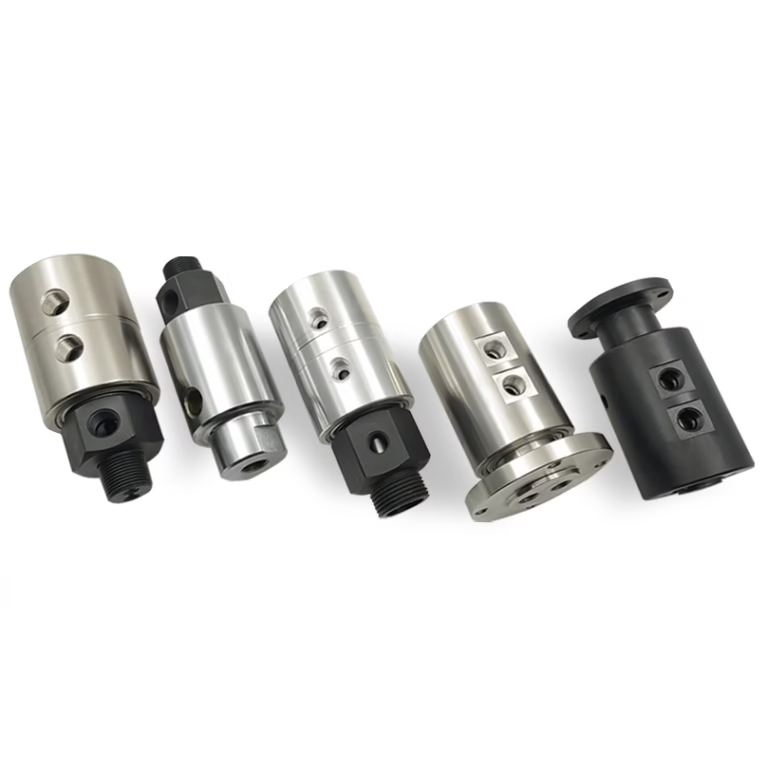
A rotary union—also called a rotary joint—is a precision mechanical device that transfers fluid from a stationary pipeline to a rotating component while maintaining a reliable seal during continuous rotation.
Depending on the application, a rotary union may transfer:
- Water
- Hydraulic oil
- Coolant
- Steam
- Thermal oil
- Compressed air
- Vacuum
- Other compatible industrial media
Some rotary unions contain a single fluid passage, while others include multiple independent channels that allow different media to flow simultaneously without mixing.
This makes rotary unions suitable for increasingly complex industrial equipment.
What are Rotary Union Applications?
The primary purpose of a rotary union is to eliminate the problems created when a machine must rotate continuously while still receiving fluid.
Imagine a rotating spindle supplied by an ordinary hose.
As the spindle rotates, the hose twists tighter with every revolution until it eventually fails.
A rotary union prevents this problem by allowing unlimited rotation while maintaining a sealed fluid path.
Its functions include:
- Delivering coolant into rotating machine spindles
- Cooling heated rollers
- Supplying hydraulic oil to rotating equipment
- Transferring steam into drying cylinders
- Feeding thermal oil into heated rolls
- Providing compressed air to rotating machinery
- Supporting vacuum systems
- Improving machine reliability and production efficiency
Although these tasks appear straightforward, maintaining leak-free operation under pressure and continuous rotation requires precision engineering.
How Does a Rotary Union Work?
Regardless of application, the operating principle remains similar.
One side of the rotary union is connected to a stationary fluid supply.
The opposite side rotates together with the machine.
Inside the housing, mechanical sealing components maintain continuous contact between stationary and rotating surfaces, allowing fluid to flow through internal passages without escaping.
Several precision components work together to achieve reliable operation.
Mechanical Seals
Mechanical seals create the primary sealing interface.
Two precision-machined sealing faces remain in controlled contact throughout rotation.
Proper seal design minimizes both leakage and friction.
Material selection depends on:
- Fluid type
- Pressure
- Temperature
- Rotational speed
- Operating environment
Bearings
Bearings maintain accurate shaft alignment.
Many leakage problems begin when bearing wear allows the shaft to move slightly away from its original centerline.
Although the movement may be almost impossible to detect visually, it gradually damages sealing surfaces.
Housing and Shaft
The housing supports the stationary portion of the rotary union.
The shaft rotates together with the machine.
Precision machining is essential for maintaining concentricity between these components.
Static Seals
O-rings and other static seals prevent leakage between stationary components inside the assembly.
Selecting compatible elastomer materials improves long-term reliability.
Why Rotary Unions Are Critical in Industrial Equipment
Rotary unions perform a task that ordinary pipe fittings cannot.
They allow continuous fluid transfer without interrupting machine movement.
This provides several important advantages.
Improved Production Efficiency
Continuous cooling and lubrication allow machines to operate for longer periods without interruption.
Reduced Equipment Downtime
Reliable sealing minimizes unexpected leakage and helps prevent production stoppages.
Longer Tool and Machine Life
Stable coolant delivery helps reduce operating temperatures and mechanical wear.
Better Product Quality
Consistent cooling and lubrication contribute to improved machining accuracy, dimensional stability, and production consistency.
Lower Maintenance Costs
Properly selected rotary unions often reduce the frequency of seal replacement and unplanned maintenance.
Common Types of Rotary Unions
Although the operating principle is similar, rotary unions are designed for different industrial media.
Water Rotary Unions
Used for cooling systems, steel mills, injection molding equipment, and industrial processing lines.
Coolant Rotary Unions
Widely installed on CNC machining centers where coolant must pass through rotating spindles.
Hydraulic Rotary Unions
Transfer hydraulic oil to rotating machinery such as indexing tables, cranes, and specialized equipment.
Steam Rotary Unions
Used on paper machines, textile equipment, and heating systems where steam transfers thermal energy to rotating cylinders.
Thermal Oil Rotary Unions
Designed for high-temperature heat transfer systems requiring reliable sealing under elevated temperatures.
Multi-Passage Rotary Unions
Contain multiple independent flow channels, allowing several fluids to be transferred simultaneously without cross-contamination.
What Years of Manufacturing Have Taught Us
One advantage of being a manufacturer rather than only a distributor is the opportunity to learn directly from products that return from real industrial environments.
Whenever a rotary union is returned for inspection, our engineers completely disassemble it before replacing any components.
The inspection includes:
- Mechanical seal wear
- Bearing condition
- Shaft surfaces
- Housing dimensions
- Internal flow passages
- O-ring condition
- Signs of contamination
- Corrosion analysis
After examining hundreds of returned rotary unions from different industries, one conclusion has become clear:
The visible failure is rarely the original cause of the problem.
For example, a customer operating several CNC machining centers reported repeated coolant leakage and assumed the seal material was defective. However, our inspection found that the seal faces showed uneven wear caused by slight spindle runout. The bearings inside the machine spindle had gradually worn, creating enough movement to alter seal contact pressure during rotation.
Once the spindle bearings were repaired and a replacement rotary union was installed, leakage disappeared, and the service life increased significantly.
In another project involving a steel processing line, returned rotary unions showed severe abrasion inside the flow passages. Investigation revealed that contaminated cooling water carrying fine metallic particles had gradually damaged the sealing surfaces. After the customer upgraded the filtration system, the next batch of rotary unions operated much longer under the same production conditions.
These experiences remind us that successful rotary union performance depends not only on manufacturing quality but also on proper installation, clean operating media, and regular equipment maintenance.
Where Are Rotary Unions Used?
Although the basic function of every rotary union is the same, the operating environment can vary dramatically from one industry to another.
A rotary union installed on a high-speed CNC spindle experiences completely different working conditions from one mounted on a paper machine drying cylinder or a steel mill cooling roll. Pressure, rotational speed, operating temperature, fluid type, contamination, and maintenance practices all influence product performance.
For this reason, our engineering team never recommends a rotary union based only on the model number. We first evaluate the customer’s application because the correct solution depends on how the equipment actually operates.
CNC Machining Centers
One of the most common applications for rotary unions is the CNC machining industry.
Modern machining centers deliver coolant directly through the spindle to the cutting tool. The rotary union makes this possible by transferring coolant from a stationary supply line into the rotating spindle without interrupting machine operation.
Why Rotary Unions Matter
Stable coolant delivery helps:
- Reduce cutting temperature
- Remove metal chips efficiently
- Improve machining accuracy
- Extend cutting tool life
- Increase production efficiency
High-speed spindle applications require excellent balance, low friction, and reliable sealing because even minor vibration can shorten the service life of both the spindle and the rotary union.
Factory Observation
Many returned rotary unions from CNC workshops do not fail because of poor seal materials. Instead, our inspections often reveal spindle bearing wear, improper installation, or coolant contamination. Addressing these underlying issues usually results in a much longer service life than simply replacing the rotary union.
Steel Mills
Steel production is one of the most demanding environments for rotary unions.
Water rotary unions are commonly used to cool:
- Rolling mill rolls
- Continuous casting equipment
- Cooling drums
- Coil processing systems
Operating conditions typically include:
- High temperatures
- Heavy vibration
- Continuous production
- Contaminated cooling water
What We Have Learned
Returned products from steel mills frequently show abrasive wear caused by metallic particles suspended in the cooling water.
In several customer projects, improving water filtration extended rotary union service life more effectively than changing seal materials.
Paper Manufacturing
Paper machines operate continuously, often twenty-four hours a day.
Rotary unions transfer steam, condensate, or cooling water to rotating drying cylinders throughout the production process.
Unexpected leakage may lead to:
- Production interruptions
- Paper quality defects
- Increased energy consumption
- Costly maintenance shutdowns
For paper mills, long-term reliability is generally more important than achieving the lowest purchase price.
Plastic Injection Molding
Injection molding equipment depends on efficient cooling to maintain consistent production cycles.
Rotary unions supply cooling water to rotating molds, indexing tables, and automated molding systems.
Stable cooling contributes to:
- Shorter cycle times
- Better dimensional accuracy
- Improved product quality
- Higher production capacity
Common Issues
Our inspection reports frequently identify:
- Mineral scale inside cooling passages
- Corrosion
- Reduced water flow
- Seal wear caused by contaminated cooling water
Regular maintenance of the cooling system significantly improves rotary union reliability.
Food and Beverage Equipment
Food processing machinery often incorporates rotary unions to transfer cooling water, heated water, compressed air, or other process media.
Typical applications include:
- Rotary filling machines
- Mixing equipment
- Packaging systems
- Food processing drums
These industries place particular emphasis on:
- Corrosion resistance
- Cleanability
- Reliable sealing
- Stable production
Depending on customer requirements, stainless steel construction is frequently selected.
Textile Machinery
Textile production equipment commonly uses steam rotary unions to heat drying cylinders and process fabrics continuously.
Reliable steam transfer helps maintain:
- Stable production temperatures
- Consistent fabric quality
- Efficient energy utilization
Because many textile plants operate continuously, preventive maintenance is essential for minimizing downtime.
Printing Equipment
Printing presses require accurate temperature control for rollers and cylinders.
Rotary unions transfer:
- Cooling water
- Thermal oil
- Air
Consistent temperature control improves print quality while reducing equipment wear.
Wind Energy Equipment
Although less visible than traditional industrial applications, rotary unions also play an important role in wind turbines.
Depending on turbine design, rotary unions may transfer:
- Hydraulic oil
- Lubricating oil
- Cooling fluids
Equipment installed in remote locations must operate reliably for extended periods with minimal maintenance.
Marine and Offshore Equipment
Marine cranes, offshore platforms, and deck machinery require hydraulic systems capable of operating under corrosive environmental conditions.
Challenges include:
- Saltwater exposure
- High humidity
- Continuous vibration
- Heavy mechanical loads
Material selection and corrosion protection become especially important in these environments.
Automated Manufacturing Systems
Automation continues to increase demand for compact rotary unions.
Applications include:
- Rotary indexing tables
- Robotic workstations
- Assembly equipment
- Inspection systems
- Packaging machinery
Although these machines often operate at lower pressures than heavy industrial equipment, they may complete thousands of repetitive cycles every day.
Reliability during continuous operation is therefore essential.
How to Select the Right Rotary Union
Many customers initially ask only one question:
“Can this rotary union replace my current model?”
From an engineering perspective, a better question is:
“Will this rotary union perform reliably under my operating conditions?”
Our engineers typically review the following information before making a recommendation.
1. Working Medium
The first consideration is the fluid being transferred.
Common media include:
- Water
- Coolant
- Hydraulic oil
- Steam
- Thermal oil
- Compressed air
- Vacuum
Different fluids require different seal materials and internal designs.
2. Working Pressure
Pressure directly affects sealing performance.
In addition to normal operating pressure, engineers should also consider pressure spikes caused by pump starts, valve switching, or system fluctuations.
Repeated pressure changes often accelerate seal wear.
3. Rotational Speed
Speed influences:
- Bearing load
- Heat generation
- Seal friction
- Dynamic stability
A rotary union designed for low-speed equipment should not be used on a high-speed machining spindle without verifying its performance limits.
4. Operating Temperature
Temperature affects:
- Seal material compatibility
- Lubrication
- Thermal expansion
- Bearing life
Selecting suitable materials helps maintain stable performance over long operating periods.
5. Installation Environment
External conditions are frequently overlooked.
Dust, humidity, vibration, chemicals, and outdoor exposure all influence product life.
Protecting the rotary union from contamination can significantly reduce maintenance requirements.
Factory Experience: Why Application Matters More Than Part Numbers
One lesson we have learned from years of manufacturing is that identical part numbers do not always mean identical operating conditions.
For example, two customers may order the same rotary union model.
The first installs it on a climate-controlled CNC machining center using filtered coolant.
The second uses it in a steel mill where cooling water contains abrasive particles and the surrounding environment is exposed to constant vibration and elevated temperatures.
Although both machines use the same model number, the service life may differ substantially because the operating environments are completely different.
This is why our engineering team asks about equipment type, working medium, pressure, speed, and maintenance practices before recommending a replacement. In some cases, changing the seal material, selecting a different bearing configuration, or improving filtration provides greater long-term benefits than simply installing an identical replacement.
Manufacturing experience has shown us that understanding the application is the foundation of reliable rotary union performance.
Common Rotary Union Failures
1. External Leakage
External leakage is the most common reason customers replace a rotary union.
Typical symptoms include:
- Coolant or oil dripping from the housing
- Water around the rotating shaft
- Reduced sealing performance
- Fluid contamination around the machine
Many people immediately assume the mechanical seal has failed.
In reality, leakage is often only the final symptom of another mechanical problem.
Possible root causes include:
- Worn mechanical seals
- Bearing clearance
- Shaft runout
- Improper installation
- Excessive pressure fluctuations
- Contaminated working fluid
Our engineers always recommend identifying the root cause before replacing components.
2. Bearing Wear
Bearings maintain accurate alignment between rotating and stationary components.
As bearings gradually wear, the shaft begins moving slightly away from its original centerline.
Although this movement is extremely small, it changes the contact pressure between seal faces during every rotation.
Typical warning signs include:
- Abnormal noise
- Increased vibration
- Rising operating temperature
- Uneven seal wear
In many returned products, bearing wear developed long before visible leakage appeared.
Replacing the bearings early often prevents damage to more expensive sealing components.
3. Mechanical Seal Wear
Mechanical seals are designed to wear gradually during normal operation.
However, rapid wear usually indicates another problem.
Factors accelerating seal wear include:
- Dirty coolant
- Poor lubrication
- Dry running
- Shaft misalignment
- Excessive rotational speed
- Pressure spikes
Replacing seals without correcting these conditions usually results in repeated failures.
4. Contamination
Fluid cleanliness has a major influence on rotary union life.
Depending on the industry, contamination may include:
- Metal chips
- Rust particles
- Sand
- Welding residue
- Mineral deposits
- Rubber debris
These particles gradually scratch precision sealing surfaces and accelerate bearing wear.
One recommendation we frequently make is improving filtration before changing rotary union materials.
In many cases, cleaner fluid extends service life more effectively than purchasing more expensive components.
5. Corrosion
Applications involving untreated water, chemicals, or outdoor exposure may experience corrosion.
Corrosion affects:
- Housing
- Shaft
- Springs
- Fasteners
- Internal flow passages
Selecting corrosion-resistant materials during product selection helps prevent long-term reliability problems.
6. Improper Installation
Even the highest-quality rotary union can fail prematurely if installed incorrectly.
Common installation mistakes include:
- Misalignment
- Excessive pipe stress
- Unsupported piping
- Damaged O-rings
- Incorrect tightening torque
Installation quality should always be verified before assuming product failure.
Real Factory Experience
One advantage of manufacturing rotary unions is the opportunity to learn from every returned product.
Instead of replacing damaged components immediately, our engineering team first performs a complete inspection.
Each returned rotary union is carefully disassembled and evaluated.
The inspection includes:
- Mechanical seal condition
- Bearing wear
- Shaft concentricity
- Housing dimensions
- Internal flow passages
- Evidence of contamination
- Corrosion analysis
- Installation marks
Over time, these inspections have revealed several consistent patterns.
Case 1 — CNC Machining Center
A customer reported repeated coolant leakage on multiple machining centers.
The original assumption was that the seal material was unsuitable.
After inspecting several returned rotary unions, we found that the seals had worn unevenly.
Further investigation identified excessive spindle bearing clearance inside the machine rather than a problem with the rotary union itself.
Once the spindle bearings were repaired, replacement rotary unions achieved much longer operating life.
Case 2 — Steel Processing Line
Another customer experienced frequent seal failures on cooling roll rotary unions.
Returned products showed heavy scratches across the seal faces.
Inspection of the cooling system revealed fine metallic particles circulating with the cooling water.
After upgrading the filtration system, seal life increased significantly without changing the rotary union design.
Case 3 — Plastic Injection Molding
A molding factory reported gradually decreasing cooling performance.
The rotary union itself showed very little mechanical wear.
Instead, internal flow passages were partially blocked by mineral deposits caused by hard water.
Cleaning the cooling system and improving water treatment restored normal performance.
These projects demonstrate an important engineering principle:
A rotary union often reveals system problems before other machine components show visible symptoms.
For this reason, successful troubleshooting should always evaluate the complete machine rather than focusing only on the rotary union.
How We Manufacture Reliable Rotary Unions
As a rotary union manufacturer, we believe consistent production is built on controlled processes rather than relying solely on final inspection.
Our manufacturing workflow includes several critical stages.
Precision CNC Machining
Critical components are machined with close dimensional tolerances to maintain:
- Shaft concentricity
- Bearing alignment
- Seal cavity accuracy
- Thread precision
Consistent machining improves assembly accuracy and sealing stability.
Material Selection
Different applications require different material combinations.
Depending on operating conditions, we select appropriate materials for:
Mechanical Seals
- Silicon carbide
- Tungsten carbide
- Carbon graphite
Elastomers
- NBR
- FKM
- PTFE
Material recommendations are based on operating pressure, temperature, rotational speed, and fluid compatibility.
Controlled Assembly
Assembly procedures focus on:
- Cleanliness
- Correct bearing installation
- Seal orientation
- Lubrication
- Component inspection
Preventing contamination during assembly helps improve long-term reliability.
Factory Testing
Before shipment, rotary unions undergo inspection procedures appropriate to the product type.
Testing may include:
- Hydrostatic pressure testing
- Leakage testing
- Rotational testing
- Dimensional verification
- Appearance inspection
- Functional checks
Testing confirms product performance before installation at the customer’s facility.
Preventive Maintenance Tips
Proper maintenance significantly extends rotary union service life.
Our engineers generally recommend:
Daily Checks
- Inspect for external leakage
- Listen for abnormal bearing noise
- Monitor operating temperature
- Verify stable fluid pressure
Weekly Inspection
- Check hydraulic or coolant hoses
- Verify mounting bolts
- Observe shaft vibration
- Inspect surrounding equipment
Scheduled Maintenance
During planned shutdowns:
- Replace worn seals if necessary
- Inspect bearings
- Check shaft wear
- Clean internal passages
- Evaluate fluid cleanliness
Preventive maintenance usually costs far less than emergency production downtime.
Why Choose Dann Hydraulic?
Customers choose us not only because we manufacture compatible alternatives to leading international brands, but because we combine manufacturing capability with engineering support.
We provide:
- Precision CNC manufacturing
- Strict quality control
- Pressure and leakage testing
- OEM and customized solutions
- Fast production lead times
- Technical support before and after delivery
- Replacement solutions for many international rotary union models
Our objective is not simply to supply replacement parts but to help customers improve equipment reliability and reduce total maintenance costs.
Frequently Asked Questions
Can your rotary unions replace international brands?
Yes. We manufacture dimensionally compatible rotary unions for many industrial applications. Our engineering team can review drawings, specifications, or samples to confirm compatibility before production.
How do I know which rotary union I need?
The following information is helpful:
- Working medium
- Pressure
- Rotational speed
- Temperature
- Number of passages
- Connection type
- Installation dimensions
With these details, we can recommend the most suitable solution.
Why does my rotary union fail repeatedly?
Repeated failures often indicate problems elsewhere in the system, such as:
- Poor fluid cleanliness
- Shaft misalignment
- Bearing wear
- Pressure spikes
- Incorrect installation
Investigating the complete machine usually produces better long-term results than replacing the rotary union alone.
Can rotary unions be customized?
Yes.
We manufacture customized rotary unions for OEM equipment, including:
- Special threads
- Modified dimensions
- Multiple passages
- Alternative seal materials
- Private-label production
How long should a rotary union last?
There is no universal service life.
Longevity depends on:
- Operating conditions
- Fluid quality
- Maintenance practices
- Installation accuracy
- Product selection
Proper application and preventive maintenance generally produce the best long-term performance.
Conclusion
A rotary union is much more than a connector between a stationary pipe and a rotating machine. It is a precision-engineered component that enables continuous fluid transfer, improves production efficiency, and supports reliable operation across countless industrial applications.
Our experience as a manufacturer has shown that successful rotary union performance depends on far more than pressure ratings or connection sizes. Precision machining, appropriate material selection, controlled assembly, comprehensive testing, and a clear understanding of the customer’s operating conditions all contribute to long-term reliability.
At Dann Hydraulic, we continue improving our products by combining modern manufacturing with practical field experience. Every returned product we inspect, every customer project we support, and every production improvement we implement helps us deliver more reliable rotary unions for OEM manufacturers, distributors, and industrial users worldwide.
Whether you are selecting a rotary union for a new machine or replacing an existing component, working directly with an experienced manufacturer gives you access not only to high-quality products but also to engineering knowledge that helps reduce downtime, extend service life, and lower overall operating costs.