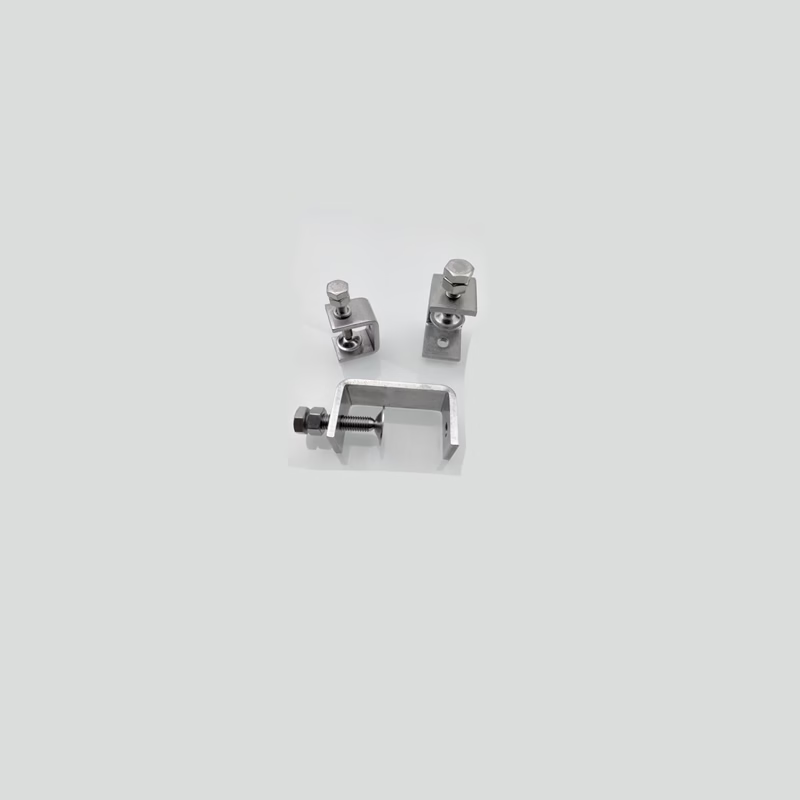
Adjustable Swivel Joint Connector: Practical Engineering Lessons from Real Hydraulic Applications
Why Swivel Clamp Connector Joints Matter More Than Most Engineers Think
When customers contact us about hydraulic leaks, damaged hoses, or premature fitting failures, the root cause is often not the hydraulic hose itself. In many cases, the problem starts with a missing or poorly selected swivel clamp connector joint.
Over the years, our factory has manufactured thousands of swivel joint connectors for construction machinery, steel mills, mobile hydraulic equipment, industrial automation systems, and heavy-duty manufacturing facilities.
One lesson has become clear:
A hydraulic system can have premium pumps, valves, and hoses, yet still experience repeated failures if hose movement is not properly managed.
An adjustable swivel joint connector may look like a small component, but it often determines whether a hydraulic line lasts six months or six years.
In this article, we share practical knowledge gained from manufacturing, testing, and troubleshooting swivel joints in real industrial environments.
What is a swivel clamp connector joint?
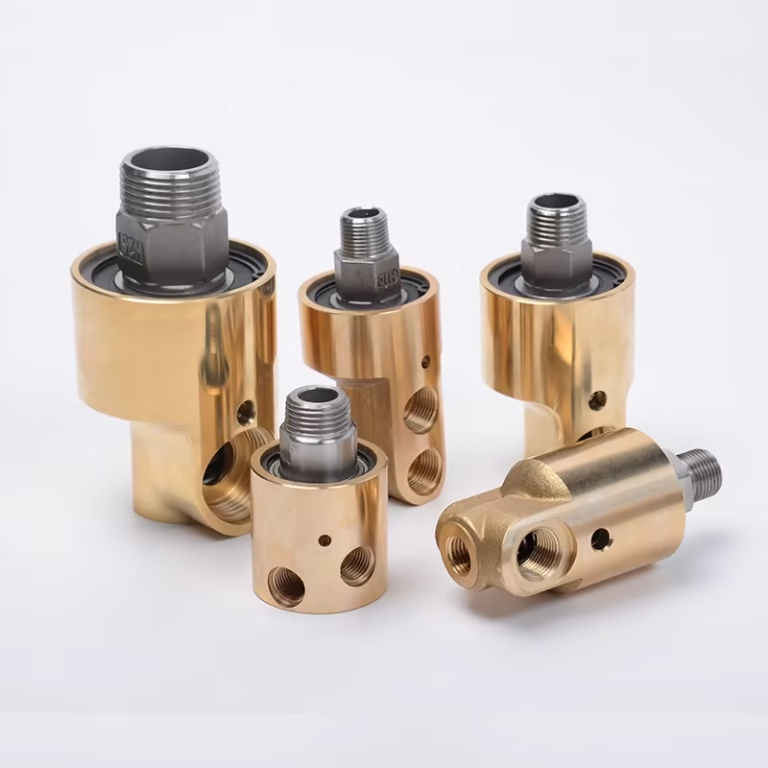
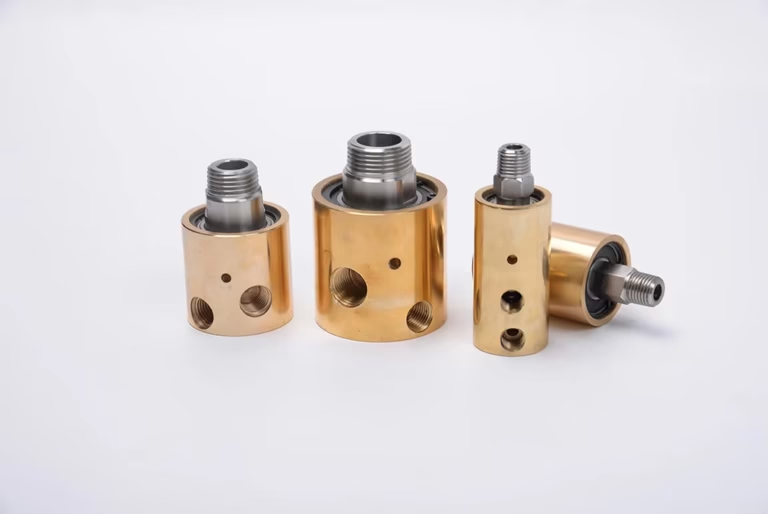
A swivel clamp connector joint is a rotating hydraulic connection that allows one side of the hydraulic circuit to rotate relative to another while maintaining a sealed fluid passage.
Unlike conventional adapters or fittings, swivel joints absorb rotational movement and prevent torsional stress from being transferred into hoses or rigid piping.
The result is:
- Reduced hose twisting
- Lower fitting stress
- Improved equipment reliability
- Longer hose life
- Reduced maintenance costs
Although the concept sounds simple, the engineering behind a durable swivel joint is far more complex than many users realize.
Why Hydraulic Hoses Fail Prematurely
Many customers initially believe hose failures are caused by poor hose quality.
However, our inspection reports often reveal a different story.
In numerous cases, failed hoses show clear evidence of torsional loading.
Typical signs include:
- Spiral cracking
- Outer cover tearing
- Fitting loosening
- Uneven reinforcement wire breakage
The hose was never designed to absorb rotational movement.
The swivel joint should have absorbed that motion.
When the swivel joint is missing, seized, or incorrectly selected, the hose becomes the rotating component.
Eventually, failure becomes inevitable.
Real Applications Where swivel clamp connector joint Are Critical
Construction Machinery
Excavators represent one of the most common applications.
The boom, arm, and bucket move continuously throughout the workday.
Hydraulic hoses experience constant motion.
Without swivel joints:
- Hoses twist repeatedly
- Connections loosen
- Maintenance frequency increases
Several excavator repair companies that work with our products reported significant reductions in hose replacement frequency after upgrading to properly sized swivel joints.
Steel Mills
Steel plants create one of the harshest environments for hydraulic equipment.
We have supplied swivel joints for:
- Continuous casting machines
- Billet handling systems
- Rolling mills
- Hydraulic manipulators
Temperatures can exceed conditions found in most industrial facilities.
Dust contamination is constant.
In these applications, standard seals often fail prematurely.
Our experience showed that upgrading seal materials and bearing arrangements dramatically improved service life.
Offshore and Marine Equipment
Marine applications introduce another challenge:
Corrosion.
Saltwater environments attack standard steel components quickly.
For offshore customers, we typically recommend:
- Stainless steel bodies
- Corrosion-resistant bearings
- Enhanced sealing arrangements
Without these upgrades, service life can decrease dramatically.
Agricultural Equipment
Modern agricultural machinery operates continuously during planting and harvesting seasons.
Equipment such as:
- Sprayers
- Harvesters
- Irrigation systems
often require hydraulic lines to accommodate repetitive movement.
Swivel joints help prevent hose fatigue during extended operation.
Common Swivel Joint Failures We See in the Factory
Every year, our engineering team examines failed swivel joints returned by customers.
The same problems appear repeatedly.
Failure #1: Seal Leakage
The most common complaint is hydraulic oil leakage.
However, leakage itself is not the root cause.
We often discover:
- Seal wear
- Excessive pressure spikes
- Contamination damage
- Incorrect material selection
In many cases, the swivel joint was originally designed for low-pressure service but was installed in a high-pressure hydraulic system.
The seal simply could not survive the operating conditions.
Failure #2: Bearing Wear
A swivel joint rotates continuously.
Without proper bearing support, internal components experience excessive friction.
Symptoms include:
- Increased torque
- Difficult rotation
- Seal damage
- Leakage
This failure mode is particularly common in heavy construction equipment.
Failure #3: Contamination Ingress
Contamination destroys hydraulic components faster than almost any other factor.
Metal particles, dirt, welding residue, and abrasive dust can enter the swivel joint and damage sealing surfaces.
When inspecting failed units, we frequently observe contamination-related wear patterns.
This is why filtration and sealing quality are equally important.
Failure #4: Improper Installation
Many failures originate during installation.
Examples include:
- Over-tightened fittings
- Misalignment
- Unsupported hoses
- Side loading
These installation mistakes generate forces that the swivel joint was never designed to absorb.
Manufacturing Challenges Behind a Reliable Swivel Joint
Many buyers compare swivel joints primarily by price.
However, the manufacturing process has a direct impact on reliability.
From our factory experience, several production stages are critical.
Precision Machining
Rotating surfaces require extremely tight tolerances.
Even minor dimensional deviations can affect:
- Seal performance
- Bearing alignment
- Rotational smoothness
Our CNC machining centers maintain strict dimensional control throughout production.
Surface Finish Control
A sealing surface may appear smooth to the naked eye but still contain microscopic defects.
Poor surface finish accelerates seal wear.
For this reason, critical sealing surfaces undergo additional finishing operations before assembly.
Seal Selection
No single seal material works for every application.
We select materials according to:
- Pressure
- Temperature
- Fluid compatibility
- Rotational speed
This process significantly improves service life.
Pressure Testing
Every swivel joint should be tested before shipment.
At our facility, completed units undergo pressure testing and leakage inspection.
Testing identifies potential issues before products reach the customer.
A Practical Customer Case
A customer operating hydraulic manipulators in a steel processing plant experienced repeated hose failures.
The average hose life was less than four months.
Initially, the customer believed hose quality was the problem.
After reviewing photographs and operating conditions, we identified excessive hose twisting.
The original design did not include swivel joints.
After installing our adjustable swivel joint connectors, hose life increased significantly.
More importantly, unplanned maintenance interruptions decreased.
The biggest savings came not from component cost but from improved equipment uptime.
How to Select the Right Adjustable Swivel Joint Connector
Selection should always begin with application analysis.
Important factors include:
Operating Pressure
Higher pressure requires stronger sealing systems and bearing arrangements.
Flow Rate
Internal passages must accommodate system flow requirements.
Rotational Frequency
Continuous rotation requires different designs than occasional movement.
Media Compatibility
Hydraulic oil, water, glycol, compressed air, and other fluids may require different materials.
Environmental Conditions
Dust, heat, moisture, and chemicals influence material selection.
Why Customers Choose Factory-Direct Manufacturing Partners
Many swivel joints sold online originate from trading companies.
While distributors play an important role, they often have limited knowledge of specific operating conditions.
As a manufacturer, we can evaluate:
- Pressure requirements
- Installation arrangements
- Failure history
- Material compatibility
before recommending a solution.
This engineering support frequently prevents costly mistakes.
Our Experience Manufacturing Swivel Joint Connectors
Over the years, we have supplied swivel joints for customers in:
- Construction equipment
- Steel production
- Mining operations
- Agricultural machinery
- Marine equipment
- Industrial automation
These projects have provided valuable insight into real-world failure mechanisms.
Many design improvements in our current products originated from field feedback rather than laboratory testing.
That practical experience allows us to build swivel joints capable of surviving demanding industrial environments.
Frequently Asked Questions
What is the purpose of an adjustable swivel joint connector?
It allows rotational movement between hydraulic connections while maintaining a sealed fluid path.
Why do hydraulic hoses twist?
Hoses often twist when rotational movement is transferred into the hose instead of being absorbed by a swivel joint.
How long should a swivel joint last?
Service life depends on pressure, speed, contamination levels, and installation quality.
Can swivel joints be customized?
Yes. We frequently customize thread types, port sizes, materials, and pressure ratings.
What causes swivel joint leakage?
The most common causes are seal wear, contamination, improper installation, excessive pressure, and bearing damage.
Conclusion
Adjustable swivel joint connectors are often overlooked components in hydraulic systems, yet they play a major role in equipment reliability.
Through years of manufacturing, testing, and troubleshooting swivel joints in demanding industrial applications, we have learned that successful performance depends on far more than specifications listed in a catalog.
Understanding the operating environment, selecting appropriate materials, controlling manufacturing quality, and learning from field failures are what ultimately determine service life.
For customers seeking reliable swivel joint solutions, practical engineering experience is often just as important as the product itself.