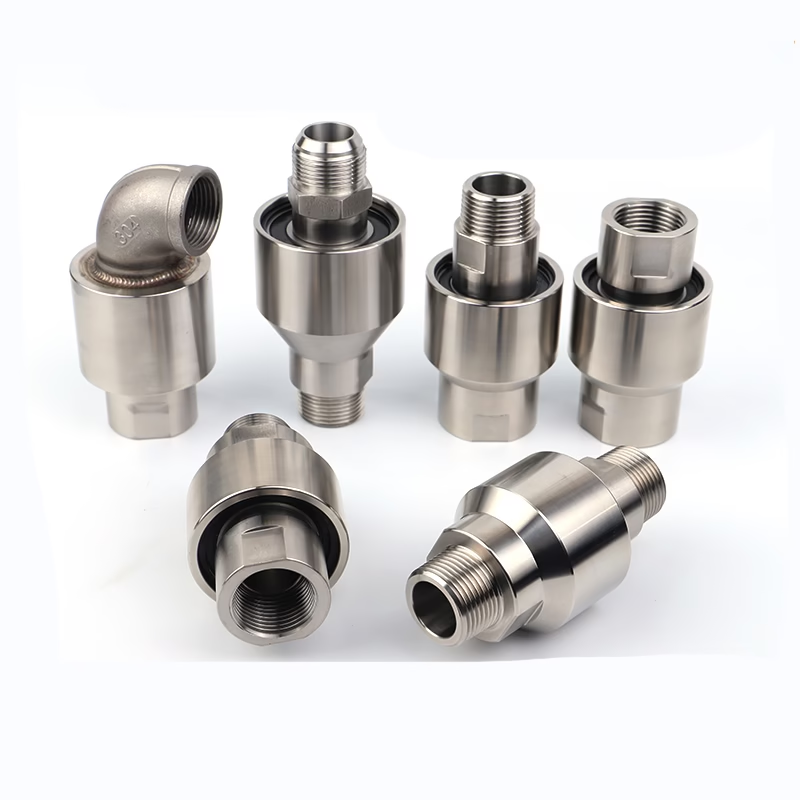
Rotary Joint Price Guide: Cost Factors, Types and Buying Tips
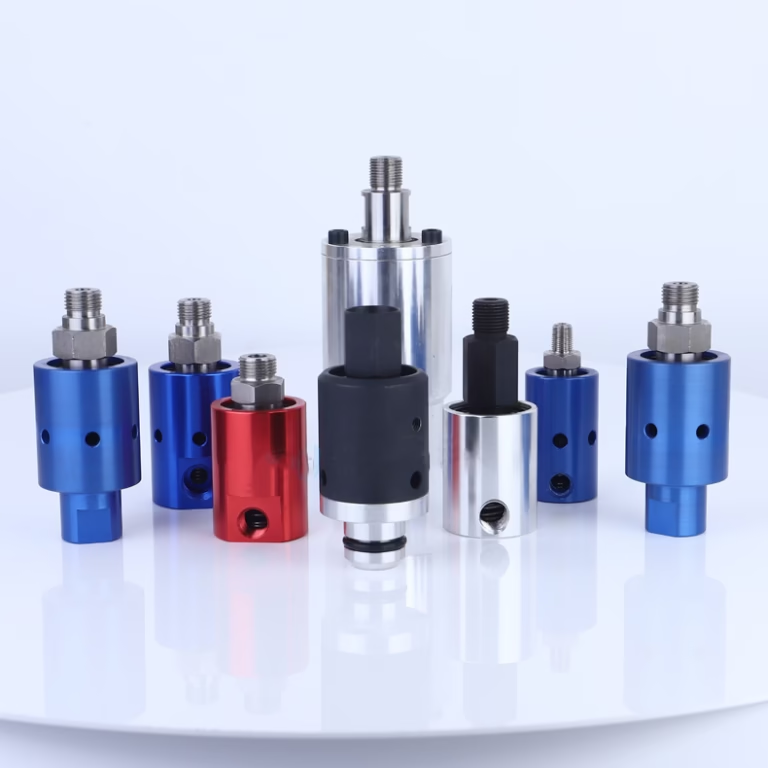
Rotary joint price depends on many factors, including design structure, operating conditions, sealing technology, materials, and customization requirements.
For industrial buyers, choosing a rotary joint is not only about the initial purchase cost. A suitable rotary joint should provide reliable sealing performance, stable operation, and long service life under actual working conditions.
As a professional rotary joint manufacturer, Dann Hydraulic provides customized rotary joint solutions for hydraulic systems, machine tools, steel processing equipment, automation systems, and other industrial applications.
How Much Does a Rotary Joint Cost?
The price of a rotary joint varies depending on the specifications, design requirements, and application conditions.
A standard rotary joint usually has a lower cost, while high-performance models designed for high pressure, high speed, or special media require more advanced manufacturing processes and sealing technologies.
The main factors affecting rotary joint price include:
– Working pressure
– Rotational speed
– Number of passages
– Media type
– Material selection
– Seal technology
– Connection dimensions
– Custom manufacturing requirements
Main Factors That Affect Rotary Joint Price
1. Material Selection
Material selection has a direct impact on rotary joint cost and performance.
Common rotary joint materials include:
– Aluminum alloy
– Carbon steel
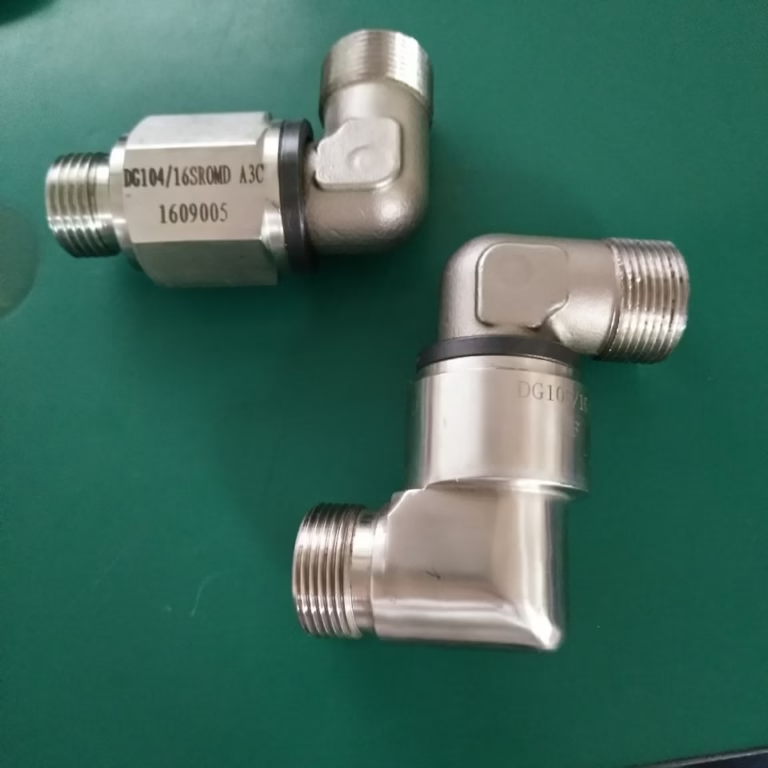
– Stainless steel
– Brass
– Special corrosion-resistant materials
For applications involving water, chemicals, or corrosive environments, stainless steel rotary joints usually have a higher cost because they provide better corrosion resistance and durability.
2. Working Pressure and Rotational Speed
Pressure and speed requirements are important factors that influence rotary joint price.
Low-pressure rotary joints are commonly used in general industrial applications.
High-pressure rotary joints require stronger body structures, precision machining, and advanced sealing systems.
High-speed rotary joints require optimized internal designs to reduce friction, heat generation, and wear during continuous operation.
3. Number of Passages
Rotary joints are available in different passage configurations, including:
– Single passage rotary joints
– Dual passage rotary joints
– Multi-channel rotary joints
As the number of passages increases, the internal structure becomes more complex, which increases manufacturing difficulty and production cost.
4. Sealing Technology
The sealing system is one of the most important components affecting rotary joint performance.
Different applications may require different sealing solutions, such as:
– Mechanical seals
– Carbon graphite seals
– Ceramic seals
– High-temperature resistant seals
A high-quality sealing system improves reliability and service life, although it may increase the initial cost.
5. Customization Requirements
Standard rotary joints usually have shorter production cycles and lower prices.
However, many industrial applications require customized solutions, including:
– Special thread sizes
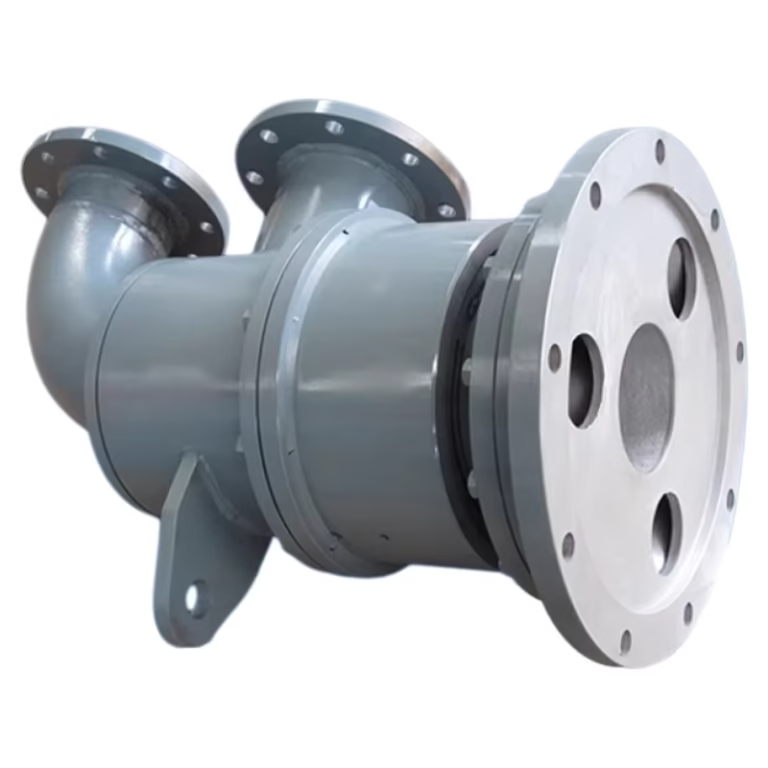
– Customized flange dimensions
– Different sealing materials
– Special temperature requirements
– OEM drawings
These requirements affect the final rotary joint quotation.
Rotary Joint Price Differences by Application
Different industries require different rotary joint designs.
Hydraulic Rotary Joints
Hydraulic rotary joints usually require:
– High pressure resistance
– Reliable sealing performance
– Compact installation design
They are widely used in:
– Construction machinery
– Injection molding equipment
– Automation systems
– Hydraulic machinery
Machine Tool Rotary Joints
Machine tool applications require rotary joints with:
– High rotational speed capability
– Stable coolant flow
– Precision manufacturing
Typical applications include CNC machines, machining centers, and automated production equipment.
Steam and Thermal Rotary Joints
Steam rotary joints require:
– High temperature resistance
– Special sealing materials
– Corrosion resistance
They are commonly used in:
– Paper manufacturing equipment
– Textile machinery
– Industrial heating systems
Why Choose a Rotary Joint Manufacturer?
Purchasing directly from a rotary joint manufacturer provides several advantages.
Engineering Support
Professional manufacturers can recommend suitable rotary joint solutions according to:
– Working pressure
– Rotational speed
– Operating medium
– Installation dimensions
– Application environment
Custom Manufacturing Capability
A manufacturer can produce rotary joints according to:
– Customer drawings
– Existing model numbers
– Equipment requirements
– Performance specifications
Better Cost Control
Direct cooperation with manufacturers helps reduce unnecessary distribution costs and provides stable technical support and supply capability.
How to Get an Accurate Rotary Joint Quotation?
To receive an accurate rotary joint price, customers should provide the following information:
– Rotary joint model
– Working pressure
– Rotation speed
– Operating medium
– Temperature range
– Connection size
– Required quantity
– Installation drawing or existing part number
Dann Hydraulic provides replacement rotary joints and customized rotary joint solutions for global industrial customers.
Our engineering team can evaluate your application requirements and recommend a suitable rotary joint based on your operating conditions.
Frequently Asked Questions
Why are rotary joint prices different between suppliers?
Different suppliers may use different materials, sealing technologies, manufacturing processes, and quality standards, which can result in different prices.
Is a cheaper rotary joint always the best choice?
Not necessarily. The lowest-priced product may not meet the required pressure, speed, or service life requirements. Selecting the correct specification is more important than choosing only based on price.
Can rotary joints be customized?
Yes. Rotary joints can be customized according to customer drawings, installation dimensions, and actual working conditions.
What information is needed for a rotary joint quotation?
Manufacturers usually need information about pressure, speed, medium, temperature, connection size, quantity, and application requirements.
How long can a rotary joint last?
The service life depends on operating conditions, installation accuracy, sealing materials, rotation speed, maintenance and working environment.
Conclusion
Rotary joint price is determined by multiple factors, including materials, pressure requirements, sealing technology, application conditions and customization needs.
For industrial equipment manufacturers and maintenance teams, selecting the correct rotary joint specification is more important than simply choosing the lowest price.
Dann Hydraulic provides reliable rotary joint replacement solutions and customized manufacturing services for customers worldwide.
Contact our engineering team to get a suitable rotary joint solution for your application.