
What Are Hydraulic Hose Rotary Joints? Engineering Experience, Common Failures, and Industrial Rotary Union Solutions
The hydraulic hose rotary joint plays a critical role in modern rotating hydraulic systems. They allow hydraulic fluid to transfer continuously between stationary pipelines and rotating equipment without twisting hoses or causing leakage.
Although hydraulic rotary joints may appear mechanically simple, the actual operating conditions are often extremely demanding. In many industrial applications, the rotary joint becomes one of the highest-stress components in the entire hydraulic system.
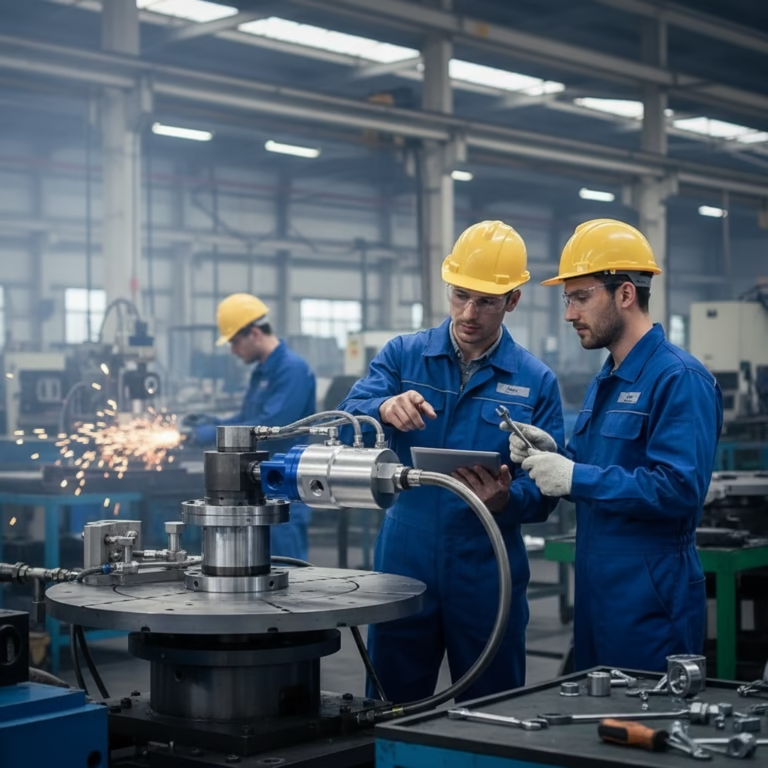
As a rotary union manufacturer with years of production and field application experience, we have worked with customers from construction machinery, steel plants, offshore equipment, automatic production systems, and hydraulic reel manufacturers. One thing we consistently observe is that many rotary joint failures originate not from extreme pressure alone, but from poor material selection, inadequate sealing structures, contamination, and installation errors.
This article explains what hydraulic hose rotary joints are, how they work, where they are used, common failure causes, and how proper engineering and manufacturing significantly improve service life.
What Is a Hydraulic Hose Rotary Joint?
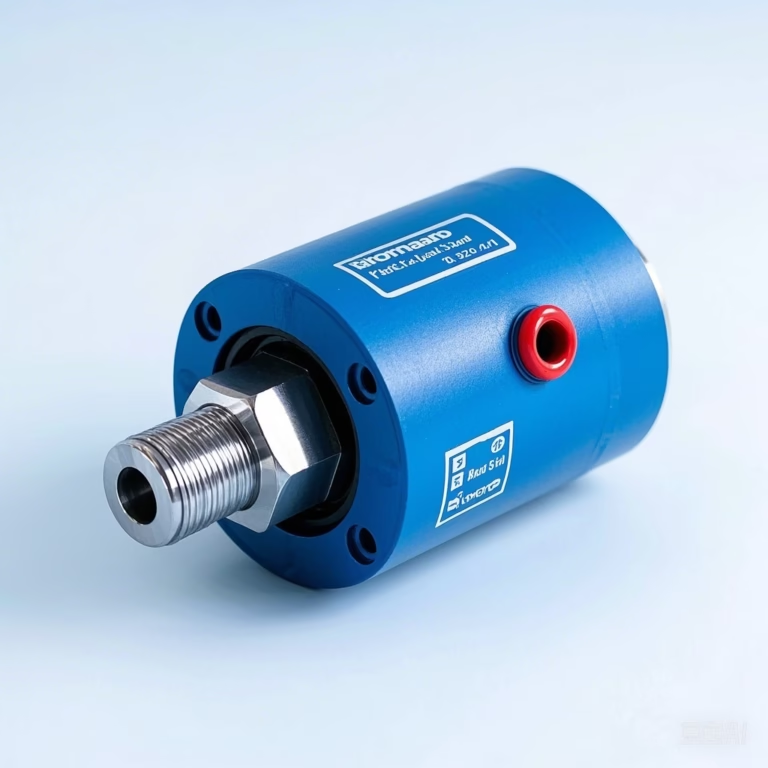
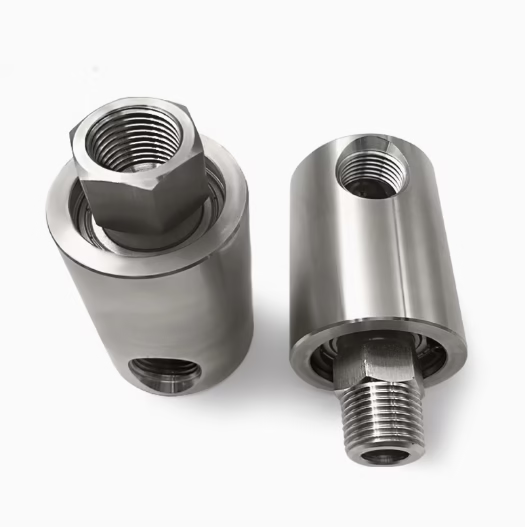
A hydraulic hose rotary joint, also called a hydraulic rotary union or hydraulic swivel joint, is a mechanical device designed to transfer hydraulic fluid between stationary and rotating parts of a machine.
The rotary joint allows rotational movement while maintaining a sealed hydraulic passage.
Without a rotary joint, hydraulic hoses would twist, bend excessively, or fail during continuous machine rotation.
Hydraulic rotary joints are commonly used where equipment rotates continuously or intermittently while hydraulic power must remain connected.
Main Functions of Hydraulic Rotary Joints
A hydraulic hose rotary joint performs several critical functions:
Continuous Hydraulic Fluid Transfer
The rotary union maintains uninterrupted hydraulic flow during rotation.
Preventing Hose Twisting
Without rotary joints, rotating machinery would quickly damage hydraulic hoses through torsional stress.
Maintaining Pressure Stability
Hydraulic systems require stable pressure for reliable machine operation.
A properly designed rotary joint minimizes pressure loss during rotation.
Improving Equipment Reliability
A stable rotary joint reduces:
- Hose failure
- Leakage
- Maintenance downtime
- Hydraulic pressure instability
Common Industrial Applications
Excavators and Construction Machinery
Excavators frequently rotate while hydraulic power continues flowing to attachments and rotating upper structures.
Hydraulic hose rotary joints prevent hose twisting during:
- Cab rotation
- Boom movement
- Attachment operation
These applications involve:
- High pressure
- Dust contamination
- Shock loads
- Outdoor exposure
which places significant stress on sealing systems.
Hydraulic Hose Reels
Hose reels require continuous fluid transfer during winding and unwinding.
Poor-quality rotary joints often develop leakage after repeated rotation cycles.
We have supplied rotary unions for hose reel manufacturers requiring stable performance under continuous operation.
Steel and Metallurgy Industry
Steel plants use hydraulic rotary joints in:
- Coilers
- Reels
- Rotary tables
- Roll systems
These environments combine:
- High temperature
- Heavy vibration
- Hydraulic shock
- Dust contamination
which demand highly durable sealing structures.
Offshore and Marine Equipment
Marine hydraulic systems face additional challenges:
- Saltwater corrosion
- Humidity
- Continuous vibration
- Pressure fluctuation
For these applications, stainless steel rotary unions are often necessary.
Mining Machinery
Mining systems expose hydraulic rotary joints to:
- Dirt contamination
- Abrasive particles
- Impact loads
- Continuous heavy-duty operation
Poor sealing quickly causes system contamination and leakage.
Common Hydraulic Rotary Joint Failures
1. Hydraulic Fluid Leakage
Leakage is the most common field problem.
Main Causes
From our manufacturing and repair experience, leakage usually results from:
- Seal wear
- Poor machining precision
- Shaft vibration
- Excessive pressure spikes
- Improper installation
- Contaminated hydraulic oil
Low-cost rotary joints often use poor-quality seals that fail rapidly under pressure cycling.
2. Bearing Damage
Hydraulic rotary joints rely heavily on stable bearing support.
Bearing failure may occur due to:
- Excessive radial load
- Misalignment
- Water contamination
- Poor lubrication
- Shock loading
Once bearings loosen, seal surfaces lose alignment and leakage begins.
3. Pressure Loss
Some rotary joints create excessive internal flow restriction.
This reduces hydraulic efficiency and affects machine performance.
Pressure loss commonly results from:
- Poor internal flow design
- Incorrect rotary union sizing
- Damaged internal passages
4. Hose Vibration and Instability
Improper rotary joint balancing may cause:
- Hose vibration
- Rotational instability
- Noise
- Premature hose fatigue
This is especially common in high-speed rotating systems.
5. Seal Face Overheating
Dry running or insufficient lubrication creates excessive friction.
Seal overheating may cause:
- Cracking
- Hardening
- Leakage
- Surface scoring
How We Improve Hydraulic Rotary Joint Reliability
Precision CNC Machining
Accurate machining is critical for sealing performance.
We use CNC equipment to maintain:
- Concentricity
- Dimensional tolerance
- Surface finish quality
Poor concentricity often causes vibration-related leakage.
Better Seal Material Selection
Different hydraulic systems require different sealing materials.
We commonly use:
- NBR
- FKM
- PTFE
- Carbon graphite
- Silicon carbide
depending on pressure, temperature, and media conditions.
Dynamic Balancing for Rotating Stability
For high-speed systems, dynamic imbalance increases:
- Vibration
- Seal wear
- Bearing load
We perform balancing procedures for critical rotating applications.
Improved Bearing Structures
Bearing quality strongly affects rotary union lifespan.
We use high-quality bearing configurations suitable for:
- Continuous operation
- Heavy radial load
- Pressure fluctuation
Real Manufacturing Experience from Our Factory
As a Chinese rotary union manufacturer specializing in replacement rotary unions for international brands, including Deublin-compatible models, we focus heavily on practical industrial performance rather than only catalog specifications.
Over the years, we have helped customers solve problems involving:
- Continuous leakage
- Short seal life
- Pressure instability
- Hose twisting damage
- Bearing failures
- Corrosion issues
Many imported rotary unions are expensive and involve long delivery times. Customers increasingly seek cost-effective replacement solutions that maintain reliable industrial performance.
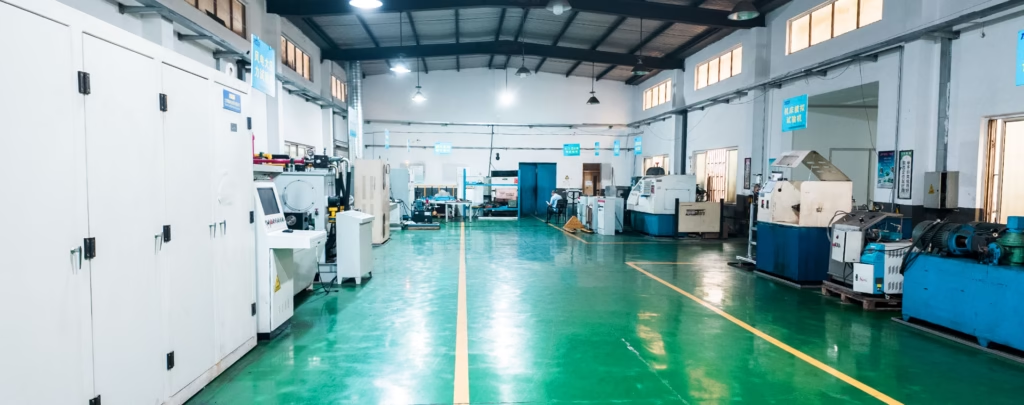 Our Factory Production Process
Raw Material Inspection
We inspect material hardness and dimensional accuracy before machining.
CNC Machining
Critical rotating parts are precision-machined to improve:
- Rotation stability
- Seal performance
- Bearing alignment
Seal Surface Finishing
Mechanical seal surfaces undergo grinding and lapping procedures to improve sealing reliability.
Pressure Testing
Each hydraulic rotary joint undergoes pressure testing before shipment.
Leakage Inspection
We inspect for:
- Internal leakage
- External leakage
- Rotational smoothness
before final packaging.
 Why Cheap Hydraulic Rotary Joints Often Fail
Many low-cost rotary joints reduce production cost through:
- Poor bearings
- Inferior seals
- Loose machining tolerance
- Low-grade materials
These products may initially operate normally but fail quickly under real industrial conditions.
Common results include:
- Leakage
- Pressure loss
- Hose damage
- Unexpected downtime
How to Select the Correct Hydraulic Hose Rotary Joint
Before selecting a hydraulic rotary union, customers should confirm:
Operating Pressure
High-pressure systems require reinforced sealing structures.
Rotation Speed
Different applications involve different rotational speeds.
Fluid Type
Seal compatibility depends on hydraulic fluid chemistry.
Passage Number
Some systems require multi-passage rotary unions for multiple fluid circuits.
Environmental Conditions
Outdoor or corrosive environments may require stainless steel structures.
Frequently Asked Questions
What is the difference between a hydraulic rotary joint and a swivel joint?
In many industrial applications, the terms are used interchangeably. Both allow fluid transfer during rotation.
Why does my hydraulic rotary joint leak?
The most common causes are seal wear, bearing damage, contamination, poor installation, or pressure spikes.
Can hydraulic rotary joints handle high pressure?
Yes. Properly designed hydraulic rotary unions can handle high-pressure industrial systems.
How long does a hydraulic rotary joint last?
Service life depends on:
- Operating pressure
- Rotation speed
- Fluid cleanliness
- Seal material
- Installation quality
Do you provide replacement rotary unions for imported brands?
Yes. We manufacture compatible replacement rotary unions for multiple international brands while offering lower cost and shorter lead times.
Can you customize hydraulic rotary joints?
Yes. We support:
- Custom dimensions
- Multi-passage designs
- Special threads
- High-pressure applications
- OEM manufacturing
Final Thoughts
Hydraulic hose rotary joints are essential components in rotating hydraulic systems. Their performance directly affects machine reliability, maintenance cost, and operational stability.
In our manufacturing experience, the most reliable rotary unions result from a combination of:
- Precision machining
- Proper sealing technology
- Correct material selection
- Stable bearing support
- Strict quality inspection
As a professional Chinese rotary union manufacturer, we continue improving our products based on real industrial operating conditions and practical customer feedback rather than relying only on theoretical specifications.
For customers seeking reliable hydraulic hose rotary joints or cost-effective replacement solutions for imported rotary unions, our engineering team can provide application-based support according to actual working conditions and system requirements.