Excavator Rotary Joint: Common Failures, Selection Guide and Factory Insights from a Manufacturer
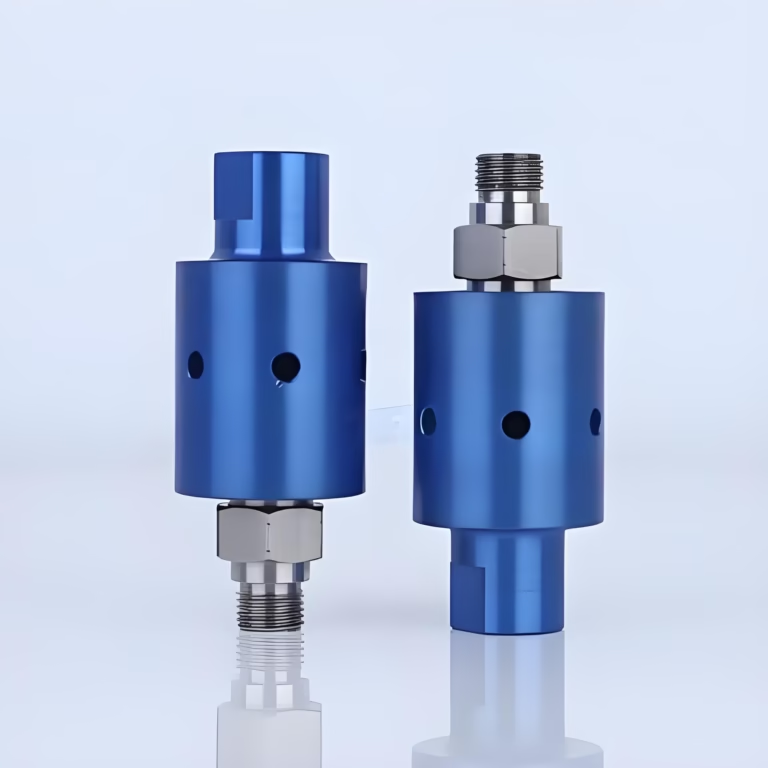
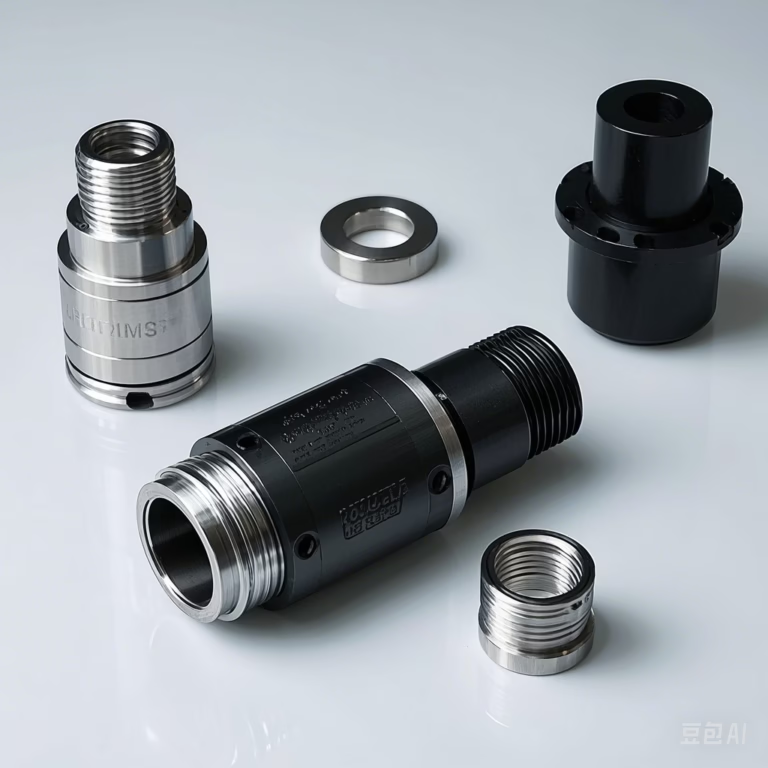
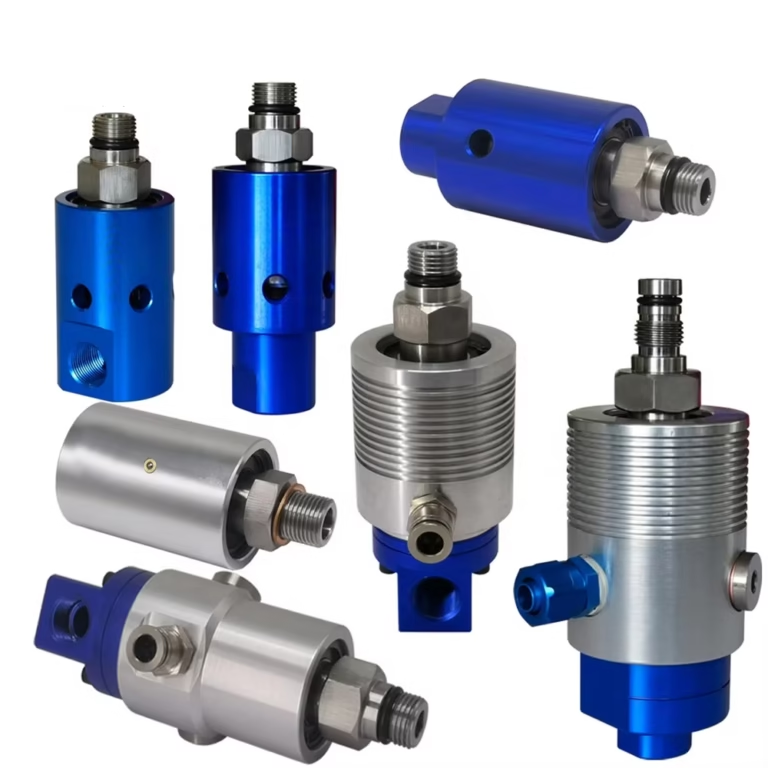
Every excavator relies on a hidden hydraulic component that rarely receives attention until it fails. This component is the rotating joint for the excavator, also known as the center joint, swivel joint, rotary manifold, or center swivel.
Although it occupies a relatively small space within the machine, it performs one of the most critical functions in the hydraulic system. Without a properly functioning rotary joint, hydraulic oil cannot be transferred between the upper structure and the undercarriage while the excavator rotates.
When a rotary joint begins to wear or leak, operators may experience symptoms such as:
- Weak travel motors
- One-sided track movement
- Hydraulic oil leakage
- Reduced digging force
- Unstable machine performance
As a manufacturer of hydraulic rotary joints and rotary unions, we have worked with distributors, repair workshops, equipment owners, and machinery manufacturers worldwide. Over the years, we have seen thousands of rotary joints returned for inspection, rebuilding, and replacement.
This article explains how excavator rotary joints work, common failure modes, how to select a replacement, and what practical lessons we have learned from manufacturing and field applications.
What is a rotating joint for an excavator?
A rotating joint for an excavator is a hydraulic transfer device installed between the upper rotating structure and the lower undercarriage.
The upper frame continuously rotates during operation, while hydraulic oil must still flow to:
- Travel motors
- Track drives
- Auxiliary hydraulic circuits
- Attachment systems
The rotary joint creates a sealed hydraulic passage between stationary and rotating components.
Without it, hoses would twist and fail every time the machine rotated.
For this reason, the rotary joint is one of the most important hydraulic components in any crawler excavator.
Industries and Applications
Although commonly associated with excavators, rotary joints are also used in many mobile hydraulic machines.
Typical applications include:
Crawler Excavators
The most common application.
Hydraulic oil passes through the center swivel to supply both travel motors and auxiliary circuits.
Material Handlers
Machines operating in scrap yards and ports often rotate continuously throughout the day.
These applications require highly durable sealing systems.
Forestry Equipment
Harsh environments introduce dirt, water, and debris.
Seal reliability becomes especially important.
Drilling Rigs
Rotary hydraulic transmission systems are essential for stable drilling performance.
Construction Machinery
Many specialized machines utilize center swivels for hydraulic power transmission between rotating sections.
Common Excavator Rotary Joint Failures
Through years of manufacturing and replacement projects, several failure modes appear repeatedly.
Understanding these failures helps reduce downtime and maintenance costs.
Hydraulic Oil Leakage
Leakage is the most common complaint.
Typical causes include:
- Worn seals
- Contaminated hydraulic oil
- Corroded internal surfaces
- Excessive operating pressure
Many operators ignore small leaks until travel performance is affected.
By that stage, the internal wear is often significant.
One Track Does Not Move Properly
This symptom frequently leads technicians to suspect travel motors.
However, the actual cause is often internal leakage within the rotary joint.
When seals fail, hydraulic oil bypasses internally rather than reaching the travel motor.
The result may include:
- Weak travel force
- One track moving slower
- Difficulty steering
Internal Scoring and Wear
Dirty hydraulic oil is one of the biggest enemies of a center swivel.
Metal particles can score sealing surfaces.
Once the internal surface is damaged, leakage increases rapidly.
Seal Hardening
Excavators working in hot climates or under continuous heavy loads expose seals to elevated temperatures.
Over time:
- Elastomers harden
- Flexibility decreases
- Leakage develops
Corrosion Damage
Machines operating near coastal environments, ports, or mining areas often experience corrosion.
This may damage sealing surfaces and shorten service life.
How We Diagnose Rotary Joint Failures
At our factory, returned rotary joints are completely disassembled and inspected.
The inspection process typically includes:
Visual Examination
Checking for:
- External damage
- Corrosion
- Seal deterioration
Bore Inspection
Evaluating wear patterns inside hydraulic passages.
Seal Analysis
Determining whether failure resulted from:
- Age
- Heat
- Contamination
- Improper installation
Dimensional Measurement
Critical tolerances are measured to determine whether rebuilding is possible.
In many cases, the root cause is not poor product quality but hydraulic contamination elsewhere in the system.
How to Select the Right Excavator Rotary Joint
Many buyers focus only on the machine brand and model.
However, proper selection requires additional information.
Machine Model
Examples include:
- CAT
- Komatsu
- Hitachi
- Hyundai
- Doosan
- Kobelco
- Volvo
Different models use different passage configurations.
Number of Hydraulic Passages
Rotary joints may contain:
- 4 passages
- 6 passages
- 8 passages
- 10 passages or more
The correct configuration is essential.
Operating Pressure
Pressure capability must match machine specifications.
Using an undersized rotary joint can lead to premature failure.
Installation Dimensions
Critical dimensions include:
- Flange diameter
- Bolt pattern
- Overall height
- Port size
Why Many Customers Choose Rotary Joint Alternatives
Over the last several years, we have seen increasing demand for replacement rotary joints.
The reasons are straightforward.
Rising OEM Spare Part Costs
Original parts often cost significantly more than equivalent replacement solutions.
Long Lead Times
Some imported rotary joints require weeks or months for delivery.
Equipment owners cannot afford extended downtime.
Discontinued Models
Older excavators frequently face spare part availability issues.
Reverse-engineered replacements become the only practical option.
Manufacturing Experience from Our Factory
Unlike trading companies, we manufacture hydraulic rotary joints ourselves.
This gives us direct control over:
- Material selection
- CNC machining
- Seal installation
- Pressure testing
- Quality inspection
Every rotary joint passes through multiple inspection stages before shipment.
Over the years, we have produced rotary joints for:
- Excavator repair companies
- Construction contractors
- Equipment dealers
- Hydraulic distributors
- OEM equipment manufacturers
This practical manufacturing experience helps us understand not only how rotary joints are built but also why they fail in the field.
Real Replacement Case
A customer operating a fleet of 20-ton crawler excavators reported recurring travel problems.
Symptoms included:
- Weak left track
- Hydraulic leakage around the center swivel
- Reduced machine productivity
Inspection revealed severe internal seal wear.
After dimensional verification, we supplied a compatible replacement rotary joint.
The result:
- Travel performance restored
- Leakage eliminated
- Downtime reduced
This type of issue is common and demonstrates the importance of selecting a properly manufactured replacement.
How to Extend Rotary Joint Service Life
Based on field experience, several maintenance practices significantly improve longevity.
Keep Hydraulic Oil Clean
Contamination is responsible for a large percentage of failures.
Regular filtration is essential.
Replace Seals Before Major Leakage Occurs
Early maintenance prevents expensive internal damage.
Monitor Operating Temperature
Excessive heat accelerates seal degradation.
Inspect During Major Service Intervals
Routine inspection often identifies problems before they become serious failures.
Frequently Asked Questions
What is the difference between a rotary joint and a center swivel?
They are generally the same component in excavator applications.
Why does my excavator travel slowly on one side?
Internal leakage within the rotary joint may be diverting hydraulic oil away from the travel motor.
Can a rotary joint be rebuilt?
Many models can be repaired if internal surfaces remain within tolerance.
How long does an excavator rotary joint last?
Service life depends on operating conditions, maintenance practices, and oil cleanliness.
Do aftermarket rotary joints perform as well as OEM units?
A properly engineered replacement can provide reliable performance when manufactured to correct specifications.
What information is required for replacement?
Provide:
- Machine model
- Part number
- Photos
- Installation dimensions
Conclusion
The rotating joint for the excavator is one of the most important hydraulic components in any crawler machine. It continuously transfers hydraulic power between rotating and stationary sections while enduring harsh operating conditions.
Understanding common failure modes, selecting the correct replacement, and maintaining hydraulic system cleanliness are essential for maximizing service life.
As a manufacturer with years of experience producing hydraulic rotary joints and rotary unions, we have learned that successful performance depends not only on design but also on machining quality, seal technology, and real-world application knowledge. Choosing the right supplier can significantly reduce downtime, maintenance costs, and equipment failures over the long term.