Complete Guide to 2-Passage Rotary Unions for Efficient Fluid Transfer
In the fast-evolving world of industrial automation and machinery, efficiency and precision are paramount. Among the many components that enable smooth operations, 2-passage rotary unions (also known as dual-passage rotary joints) play a critical role. These devices allow two different fluids—or the same fluid flowing in two separate channels—to pass between stationary and rotating machine parts without leakage or contamination.
Whether in manufacturing, construction, energy production, or food processing, understanding the principles, structure, and applications of 2-passage rotary unions can help engineers and maintenance teams optimize machine performance, reduce downtime, and extend equipment lifespan.
This comprehensive guide explores how 2-passage rotary unions work, their design features, applications across industries, key selection factors, maintenance best practices, and future innovations.
What’s a 2-Passage Rotary Union?
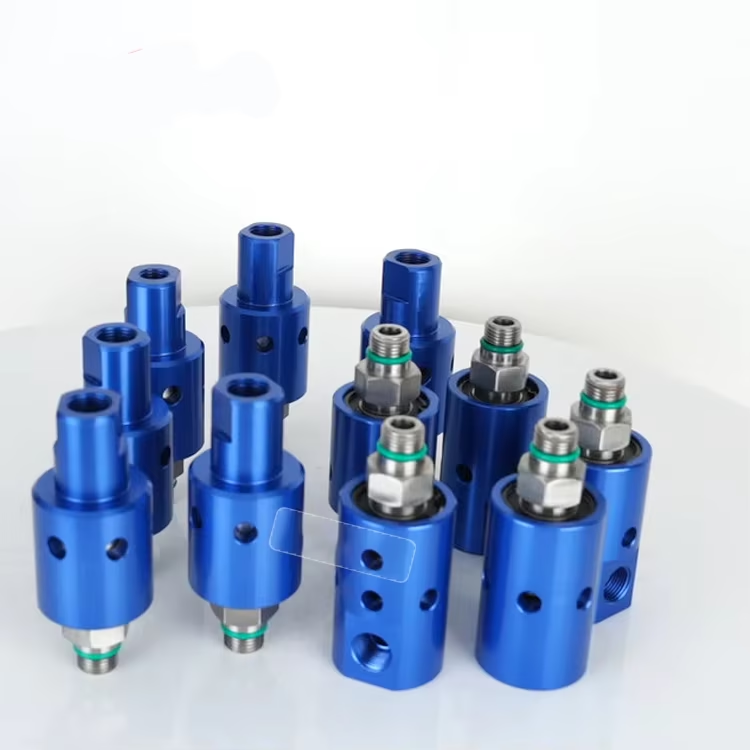
A 2-passage rotary union is a precision mechanical device designed to transfer fluids (liquids or gases) between stationary and rotating components through two independent flow passages. Each passage operates separately, ensuring that fluids such as hydraulic oil and coolant, or air and water, do not mix during transmission.
Typical construction includes:
-
Stationary housing: Fixed to the machine frame and connected to the fluid supply lines.
-
Rotating shaft: Attached to the rotating part of the machine, such as a drum, spindle, or arm.
-
Seals: Prevent fluid leakage and cross-contamination between the two passages.
-
Bearings: Support smooth rotation and minimize wear.
This design allows machines to perform multiple fluid-transfer tasks simultaneously, such as lubrication and cooling, within compact assemblies.
How Do 2-Passage Rotary Unions Work?
The operation of a 2-passage rotary union is based on a simple yet highly effective principle. When the rotating equipment is in motion, the rotary union’s shaft rotates along with it. Meanwhile, the stationary housing remains in place, connected to the fluid supply lines. As the fluids enter the union through the inlets on the housing, they are directed into their respective passages. The internal design of the union, with its carefully engineered channels and seals, guides the fluids toward the outlets on the rotating shaft.
These outlets then connect to the rotating components that require the fluids, such as hydraulic motors, spindles, or rotating cylinders. The seals within the union prevent any cross-contamination between the two passages and also stop the fluids from leaking out. High-quality seals, often made from materials like fluorocarbon rubber or PTFE, can withstand a wide range of temperatures, pressures, and chemical exposures, ensuring the union’s reliable operation over time.
For example, in a printing press, a 2-passage rotary union might be used to supply ink to the printing cylinders and coolant to the roller bearings simultaneously. The ink flows through one passage, while the coolant flows through the other, both reaching their intended destinations precisely and without any interference.
Advantages of 2-Passage Rotary Unions
Compared to single-passage rotary unions or multiple individual joints, 2-passage rotary unions offer several unique advantages:
1. Compact and Space-Saving
Combining two fluid passages into one body minimizes installation space—ideal for machines with tight assembly constraints.
2. Reduced Leak Points
Fewer fittings and connections mean fewer potential leakage sources, resulting in improved system reliability.
3. Lower Installation and Maintenance Costs
Using a single unit instead of two separate rotary joints reduces component count, setup time, and maintenance requirements.
4. Independent Fluid Control
Each passage operates independently, allowing precise control over flow rates, pressure, and fluid type.
5. Improved System Efficiency
By enabling continuous fluid transfer under high speed and pressure, these unions reduce energy losses and maintain stable performance.
Diverse Applications of 2-Passage Rotary Unions
Manufacturing Industry
In manufacturing, 2-passage rotary unions find extensive use in various processes. In metalworking, they are employed in machining centers to supply coolant to the cutting tools and lubricant to the spindle bearings. This helps to keep the tools cool, reduce friction, and extend their lifespan, ultimately improving the quality of the machined parts.
In the automotive manufacturing sector, these unions are used in robotic arms for tasks such as painting and assembly. They enable the precise delivery of paint and other fluids, ensuring a smooth and consistent finish on the vehicles. Additionally, in the production of engines and transmissions, 2-passage rotary unions play a crucial role in lubricating and cooling the moving components.
Construction and Mining
Construction equipment, such as excavators, cranes, and loaders, often relies on 2-passage rotary unions. For instance, in an excavator, a rotary union can transfer hydraulic fluid to the boom and arm cylinders while also supplying lubricant to the swivel joint. This allows the excavator to move smoothly and efficiently, even during heavy-duty operations.
In the mining industry, where large-scale machinery is constantly in motion, 2-passage rotary unions are essential for the proper functioning of equipment like drills, conveyor belts, and crushers. They ensure that hydraulic power and lubrication are delivered accurately to the various components, enabling continuous and reliable operation in harsh and demanding environments.
Food and Beverage Industry
In food and beverage production, hygiene is of utmost importance. 2-passage rotary unions designed for this industry are made from food-grade materials and are easy to clean and maintain. They are used in equipment such as mixers, fillers, and bottling machines to transfer ingredients, cleaning agents, and cooling fluids. These unions help maintain the quality and safety of the products by preventing contamination and ensuring precise fluid control.
Energy Sector
In power plants, whether they are thermal, nuclear, or renewable energy facilities, 2-passage rotary unions are used in various applications. For example, steam turbines can transfer steam for power generation and cooling water for temperature regulation. In wind turbines, these unions are employed to lubricate the rotating components and supply hydraulic fluid for pitch control systems, enhancing the efficiency and reliability of the turbines.
Selecting the Right 2-Passage Rotary Union
Consider the Fluid Type
The first and most crucial factor when selecting a 2-passage rotary union is the type of fluid it will handle. Different fluids have varying chemical properties, temperatures, and pressures. For instance, if you’re dealing with corrosive chemicals, you’ll need a union made from materials that can resist corrosion, such as stainless steel or PTFE. Similarly, for high-temperature fluids, the union should be able to withstand the heat without degrading or losing its sealing integrity.
Evaluate the Operating Conditions
Operating conditions, including speed, pressure, and temperature, play a significant role in the selection process. Higher rotational speeds require unions with better-balanced designs and high-quality bearings to minimize vibration and wear. High-pressure applications demand unions with robust seals and housings that can withstand the force without leaking. And extreme temperature ranges, whether high or low, necessitate materials and designs that can maintain their functionality across those temperatures.
Look at the Connection Types
The connection types of the rotary union, both on the stationary and rotating ends, need to match the existing piping and equipment in your system. Common connection types include threaded connections, flanged connections, and hose fittings. Ensuring a proper connection type is essential for easy installation and a leak-free operation.
Consider the Seal Design
The seal design is a critical aspect of a 2-passage rotary union’s performance. There are different types of seals, such as lip seals, mechanical seals, and o-ring seals. Lip seals are suitable for low to medium-pressure applications and offer good resistance to contaminants. Mechanical seals, on the other hand, are ideal for high-pressure and high-speed applications, providing a more reliable and long-lasting seal. O-ring seals are commonly used for their simplicity and effectiveness in a wide range of applications.
Factor in the Maintenance Requirements
Some 2-passage rotary unions require more frequent maintenance than others. Consider the ease of access for inspection, seal replacement, and general servicing. Unions with modular designs or those that can be disassembled easily are often more convenient to maintain, reducing downtime and maintenance costs in the long run.
Maintenance and Troubleshooting of 2-Passage Rotary Unions
Regular Inspection
Regularly inspecting your 2-passage rotary unions is essential for early detection of any potential issues. Check for signs of leakage, excessive vibration, or abnormal noise. Leakage can indicate worn-out seals or damaged components, while vibration and noise might suggest misalignment, bearing wear, or imbalance. Inspect the fluid flow rates and pressures to ensure they are within the normal operating range.
Lubrication
Proper lubrication of the bearings and moving parts within the rotary union is crucial for smooth operation and longevity. Follow the manufacturer’s recommendations regarding the type of lubricant and the lubrication intervals. Insufficient lubrication can lead to increased friction, heat generation, and premature wear of the components.
Seal Replacement
Seals are one of the most critical components of a rotary union and are subject to wear over time. Depending on the operating conditions and the type of seal, they may need to be replaced periodically. When replacing seals, make sure to use the correct type and size specified by the manufacturer. Also, ensure that the surfaces where the seals are installed are clean and free of any debris or damage.
Troubleshooting Common Issues
If you encounter problems such as leakage, reduced fluid flow, or excessive heat, here are some steps to troubleshoot:
Leakage:
Check the seals for wear or damage. If the seals are okay, inspect the housing and shaft for any cracks or deformities. Also, verify that the connections are tight and properly aligned.
Reduced Fluid Flow:
This could be due to a blocked passage, a damaged internal component, or incorrect installation. Clean the passages if there is debris, and check for any obstructions. Inspect the internal parts for damage and ensure that the union is installed correctly according to the manufacturer’s instructions.
Excessive Heat:
Excessive heat can be caused by insufficient lubrication, misalignment, or high operating speeds. Check the lubrication levels and quality, realign the union if necessary, and ensure that the operating speeds are within the recommended limits.
Case Studies: Real-World Success with 2-Passage Rotary Unions
Case Study 1: A Manufacturing Plant’s Efficiency Boost
A large manufacturing plant that produced metal components was facing frequent breakdowns in its machining centers due to inadequate coolant and lubricant supply. The existing rotary unions were not able to handle the high speeds and pressures of the operation, resulting in leaks and inconsistent fluid flow.
After conducting a thorough analysis, the plant decided to upgrade to high-quality 2-passage rotary unions designed specifically for their application. The new unions featured advanced mechanical seals and robust housings that could withstand harsh operating conditions. As a result, the frequency of breakdowns decreased significantly, the lifespan of the cutting tools increased, and the overall production efficiency improved by 20%.
Case Study 2: Mining Equipment Reliability Enhancement
In a mining operation, a conveyor belt system was experiencing frequent failures due to improper lubrication and hydraulic fluid transfer issues. The existing rotary unions were prone to leakage, causing downtime and costly repairs.
The mining company replaced the old unions with 2-passage rotary unions that had better seal designs and were made from materials resistant to the harsh mining environment. The new unions also had a modular design, making them easier to maintain. After the upgrade, the conveyor belt system’s reliability improved dramatically, reducing downtime by 30% and saving the company thousands of dollars in maintenance and repair costs.
The Future of 2-Passage Rotary Unions
As industries continue to evolve and demand more efficient, reliable, and sustainable solutions, the future of 2-passage rotary unions looks promising. Advancements in materials science will lead to the development of more durable and corrosion-resistant materials, enabling unions to operate in even more challenging environments.
Smart technologies, such as sensors integrated into rotary unions, will allow for real-time monitoring of parameters like temperature, pressure, and seal wear. This data can be used to predict maintenance needs, optimize performance, and prevent unexpected breakdowns. Additionally, the trend towards miniaturization and lightweight designs will make 2-passage rotary unions more suitable for use in compact and portable equipment.
FAQs About 2-Passage Rotary Unions
Q: Can a 2-passage union handle both liquids and gases?
A: Yes, but ensure the design accommodates the specific viscosity and compressibility of each medium.
Q: How do I calculate the required flow rate for each passage?
A: Use the formula:
Flow Rate (GPM)=System Demand (Gallons per Cycle)×RPM/1925
Multiply by a safety factor (typically 1.2–1.5) for peak conditions.
Q: What’s the typical lifespan of a 2-passage union?
A: 3–5 years in standard applications; 1–2 years in high-wear environments like steel mills.
Q: Can I retrofit a single-passage union with a 2-passage model?
A: Possibly, but check mounting dimensions, torque requirements, and media compatibility first.
Conclusion
2-Passage Rotary Unions are indispensable in modern industry, combining efficiency, versatility, and durability in one compact unit. Their dual-channel design allows simultaneous transfer of different fluids—enhancing machine performance, reducing installation complexity, and improving overall productivity.
By understanding their design principles, selecting the right configuration, and maintaining them properly, engineers can ensure maximum reliability and longevity. As innovation continues, the role of 2-passage rotary unions will expand further, powering the next generation of smart, connected, and energy-efficient machinery.

