Mechanical Seal Rotary Joint and Pump: Real Manufacturing Experience, Common Failures, and Industrial Sealing Solutions
Why Mechanical Seal Rotary Joints Matter in Industrial Pump Systems
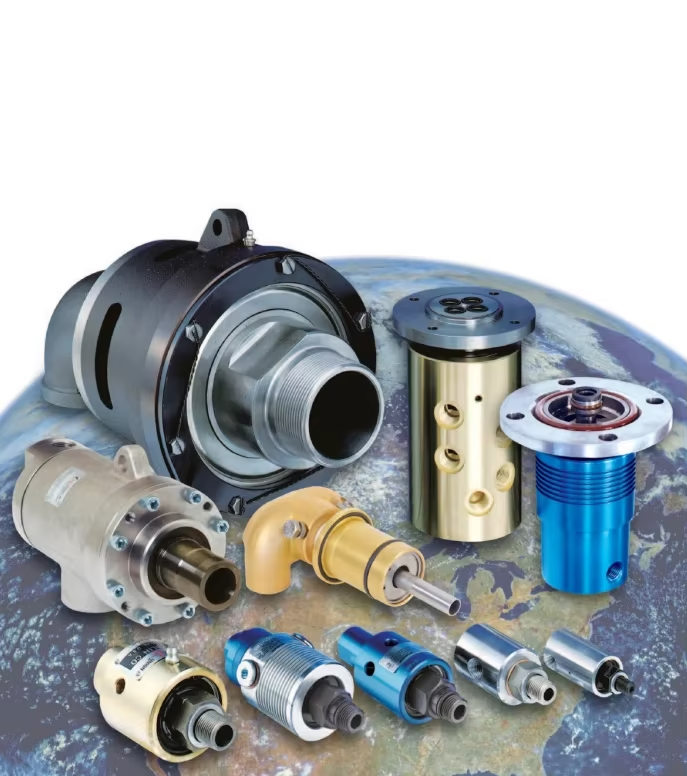
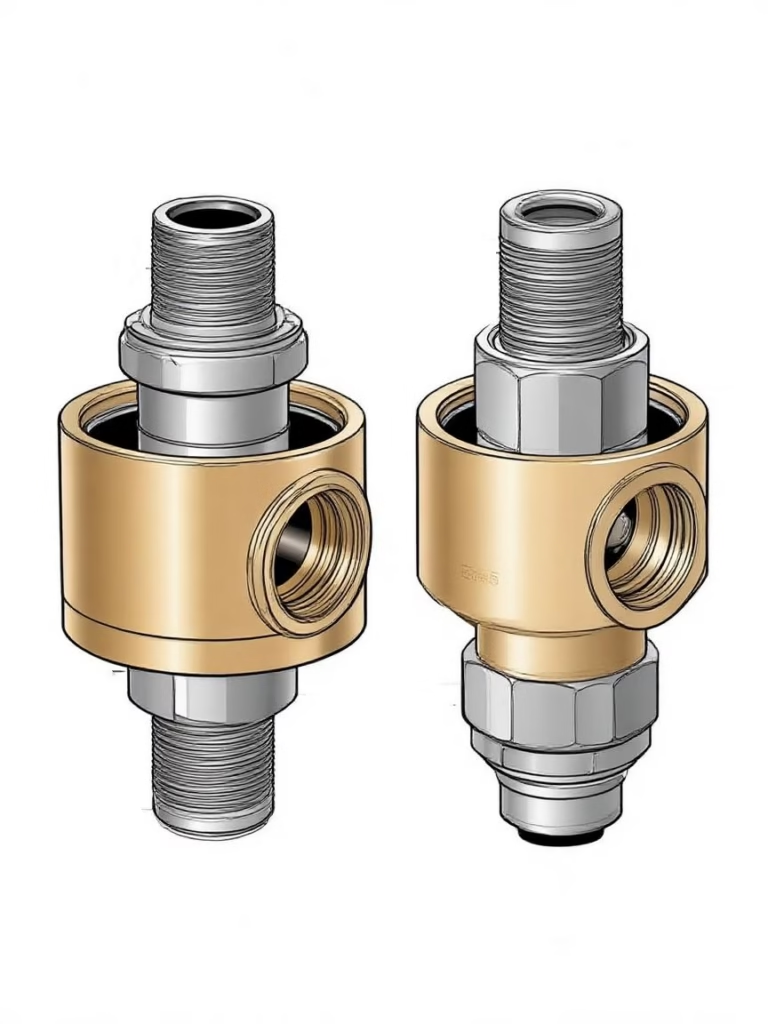
Mechanical seal rotary joints are critical components in modern industrial rotating equipment. Whether installed in pumps, rotary unions, mixers, reactors, or thermal oil systems, the sealing structure directly affects equipment reliability, maintenance cost, and operational stability.
In industrial fluid handling systems, pumps and rotary joints are often viewed as separate components. In reality, their performance is closely connected.
A pump creates flow and pressure. A rotary joint transfers that fluid into rotating equipment. Between these two components, sealing technology determines whether the system operates efficiently or suffers from leakage, contamination, and costly downtime.
After manufacturing rotary joints and sealing solutions for more than a decade, we have observed a common pattern across paper mills, steel plants, chemical factories, textile facilities, and machine tool workshops:
Most fluid transfer failures are not caused by the pump itself.
They originate from sealing problems.
Mechanical seal technology plays a critical role in maintaining pressure, protecting bearings, preventing contamination, and extending equipment life.
In this article, we share practical experience from the factory floor and customer sites, explaining how mechanical seal rotary joints work with pumps, why failures occur, and how proper engineering can dramatically improve reliability.
Understanding the Relationship Between Rotary Joints and Pumps
A pump transfers fluid from one location to another.
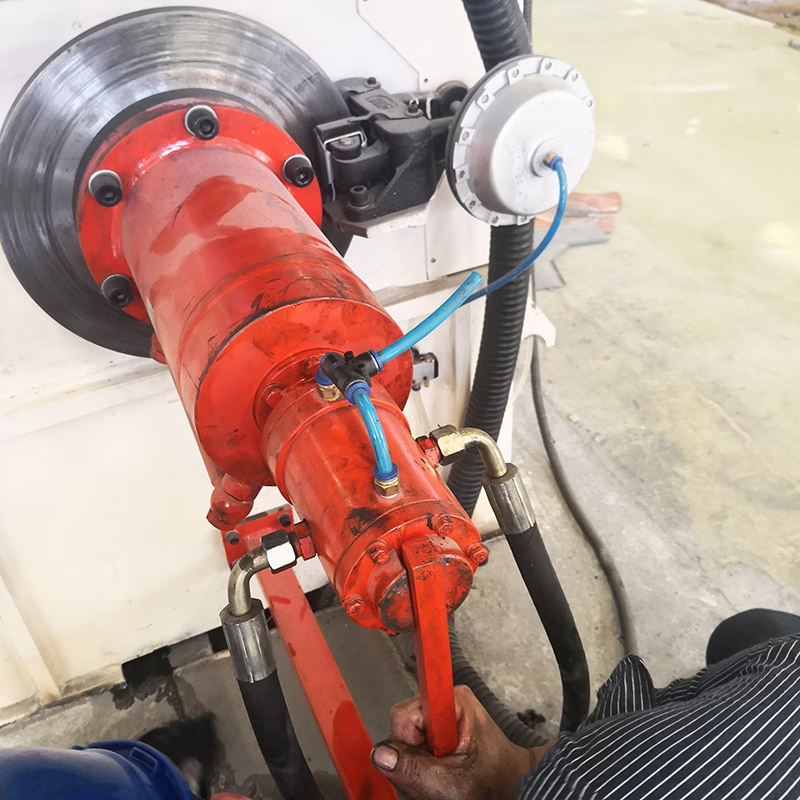
A rotary joint transfers that fluid from a stationary source into rotating equipment.
Typical examples include:
- Paper machine dryer cylinders
- Steel mill cooling rolls
- Rubber calenders
- Plastic extrusion equipment
- CNC machining centers
- Chemical reactors
The pump generates pressure.
The rotary joint maintains pressure while allowing rotation.
Without an effective sealing system, even the most efficient pump becomes ineffective.
Loss of pressure immediately affects:
- Flow rate
- Heat transfer efficiency
- Cooling performance
- Production quality
This is why mechanical seals are so important.
What is a Mechanical Seal Rotary Joint?
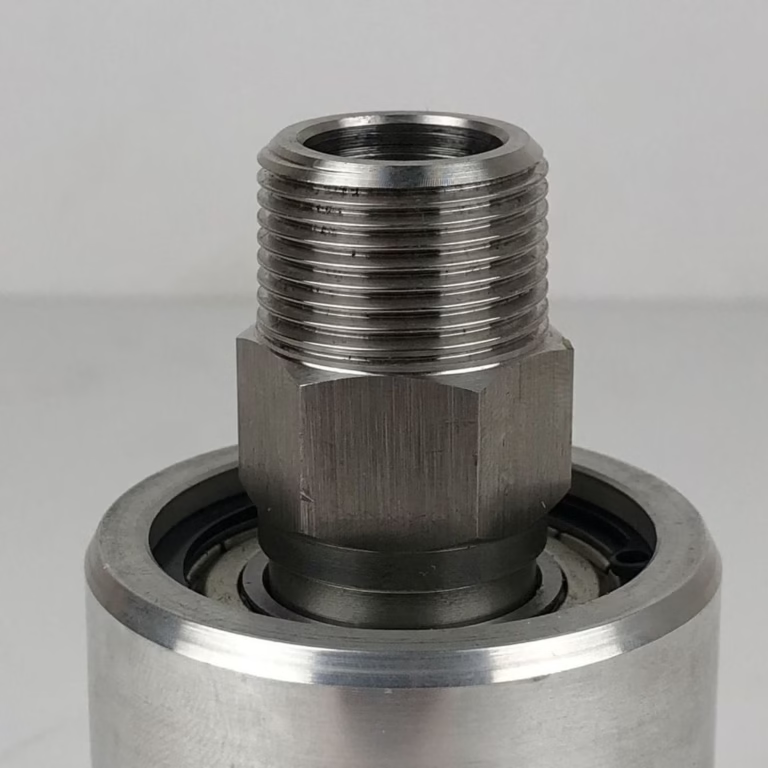
A mechanical seal rotary joint uses precision-machined seal faces to create a controlled sealing interface between rotating and stationary components.
Unlike traditional packing seals, mechanical seals rely on carefully balanced contact pressure between two mating faces.
Typically these sealing faces are manufactured from:
- Carbon graphite
- Silicon carbide
- Tungsten carbide
- Ceramic materials
The sealing faces remain in controlled contact while rotating, creating minimal leakage while reducing wear.
This design provides several advantages:
Reduced Leakage
Mechanical seals maintain consistent sealing under varying pressure conditions.
Longer Service Life
Wear is significantly lower than that of conventional packing systems.
Lower Maintenance Requirements
Operators spend less time adjusting or replacing sealing components.
Better Efficiency
Reduced leakage helps maintain system pressure and energy efficiency.
Why Pumps Depend on Reliable Mechanical Seals
Industrial pumps operate continuously under demanding conditions.
Mechanical seals are essential because they prevent leakage around the rotating pump shaft.
Without proper sealing:
- Hydraulic pressure drops
- Fluid leaks occur
- Bearings become contaminated
- Motors overload
- Equipment downtime increases
Mechanical seals replaced traditional packing systems in many industrial applications because they reduce leakage and improve equipment reliability.
Common Mechanical Seal Failures We Encounter
1. Dry Running Damage
Mechanical seals require adequate lubrication.
When pumps start without fluid supply:
- Seal faces overheat
- Friction increases dramatically
- Cracking occurs
In severe cases, seal failure happens within minutes.
2. Contaminated Media
Poor filtration introduces:
- Metal particles
- Scale
- Rust
- Process debris
These contaminants scratch seal faces and accelerate wear.
3. Thermal Shock
Steam systems frequently experience rapid temperature fluctuations.
Repeated expansion and contraction can distort sealing surfaces.
4. Excessive Shaft Misalignment
Improper installation creates uneven loading.
Consequences include:
- Increased vibration
- Bearing damage
- Seal face wear
5. Incorrect Seal Material Selection
Not every seal material suits every application.
For example:
Carbon graphite performs well in steam applications.
Silicon carbide offers superior performance with abrasive fluids.
Selecting the wrong material often causes premature failure.
How We Improve Rotary Joint Reliability
Precision CNC Machining
Machining accuracy directly affects sealing stability.
We machine critical components using CNC equipment to improve:
- Concentricity
- Surface finish
- Dimensional tolerance
- Rotational stability
Poor machining precision is one of the hidden causes of premature seal failure.
Seal Face Grinding and Lapping
Mechanical seal surfaces require extremely fine finishing.
We use grinding and lapping processes to improve:
- Surface flatness
- Seal contact stability
- Leakage resistance
Mechanical seal flatness must be controlled very precisely for high-speed operation.
Better Material Selection
Different applications require different seal materials.
We commonly use:
- Carbon graphite
- Silicon carbide
- Tungsten carbide
- Ceramic
Material selection depends on:
- Fluid type
- Pressure
- Temperature
- Speed
Dynamic Balancing
High-speed rotary joints require stable rotational balance.
Poor balance increases:
- Vibration
- Bearing load
- Seal wear
We perform balancing procedures for high-speed applications.
Our Factory Production Experience
We are not a trading company.
We manufacture rotary unions and sealing components in our own factory.
Our production facility includes:
- CNC machining centers
- Precision grinding equipment
- Seal lapping equipment
- Pressure testing systems
- Dynamic balancing equipment
- Assembly workshops
- Quality inspection department
Over the years, we have supplied rotary joints and sealing solutions for customers in:
- Steel industry
- Paper mills
- CNC machinery
- Hydraulic systems
- Chemical equipment
- Thermal oil systems
Many customers originally used imported rotary unions but later switched to our replacement solutions to reduce cost and shorten lead times.
Real Factory Experience: Paper Mill Application
Several years ago, a paper mill contacted us regarding recurring leakage from dryer cylinder rotary joints.
The maintenance team had already replaced pumps and piping components.
The problem remained unresolved.
After inspection, we discovered:
- Seal faces were severely worn.
- Condensate contamination was present.
- Bearings had begun to deteriorate.
The root cause was not pump failure.
The actual issue involved outdated sealing technology unable to handle continuous high-temperature operation.
We redesigned the rotary joint using:
- Carbon graphite mechanical seals
- Improved condensate drainage
- Upgraded bearing protection
The result:
- Reduced leakage
- Stable steam pressure
- Longer maintenance intervals
The plant eventually upgraded multiple production lines using the same design.
Real Factory Experience: Chemical Processing Plant
Chemical applications present unique sealing challenges.
One customer operated pumps circulating aggressive chemical media through rotating mixers.
Their existing rotary joints experienced frequent leakage.
Investigation revealed:
- Seal material incompatibility
- Corrosion damage
- Excessive wear
We developed a replacement solution utilizing:
- Silicon carbide seal faces
- Corrosion-resistant stainless steel components
- Enhanced spring protection
After installation, seal life increased significantly.
The customer reduced annual maintenance costs and improved production reliability.
Real Factory Experience: Steel Mill Cooling System
Steel production facilities rely heavily on cooling water systems.
One hot rolling mill reported unstable cooling performance.
Operators initially suspected pump inefficiency.
However, testing showed:
- Pump performance remained within specification.
- Rotary joint leakage caused pressure loss.
We introduced a redesigned mechanical seal rotary joint featuring:
- Improved water quality tolerance
- Enhanced seal balance ratio
- Heavy-duty bearing arrangement
The system returned to stable operation without replacing the existing pumps.
How We Manufacture Mechanical Seal Rotary Joints
Many suppliers simply assemble standard components.
Our manufacturing process focuses on sealing performance.
Precision CNC Machining
Critical dimensions are machined using CNC equipment.
Tight tolerances ensure proper seal alignment.
Seal Face Processing
Seal faces receive precision lapping and surface finishing.
Surface flatness directly affects leakage performance.
Material Selection
Different operating conditions require different materials.
Common combinations include:
- Carbon graphite vs stainless steel
- Silicon carbide vs silicon carbide
- Tungsten carbide vs carbon graphite
Material selection is based on:
- Temperature
- Pressure
- Speed
- Fluid characteristics
Assembly Inspection
Every assembly undergoes dimensional verification before testing.
Pressure Testing
Each rotary joint is tested to verify sealing performance under pressure.
Dynamic Rotation Testing
Rotating performance is verified before shipment.
This step helps identify potential issues before products reach customer facilities.
Why Cheap Rotary Joints Often Fail Quickly
Low-cost rotary joints usually reduce manufacturing cost by sacrificing:
- Bearing quality
- Seal material
- Machining precision
- Surface finishing
- Inspection procedures
These products may initially work but fail quickly in demanding industrial environments.
The result is usually:
- Leakage
- Downtime
- Increased maintenance cost
- Production interruption
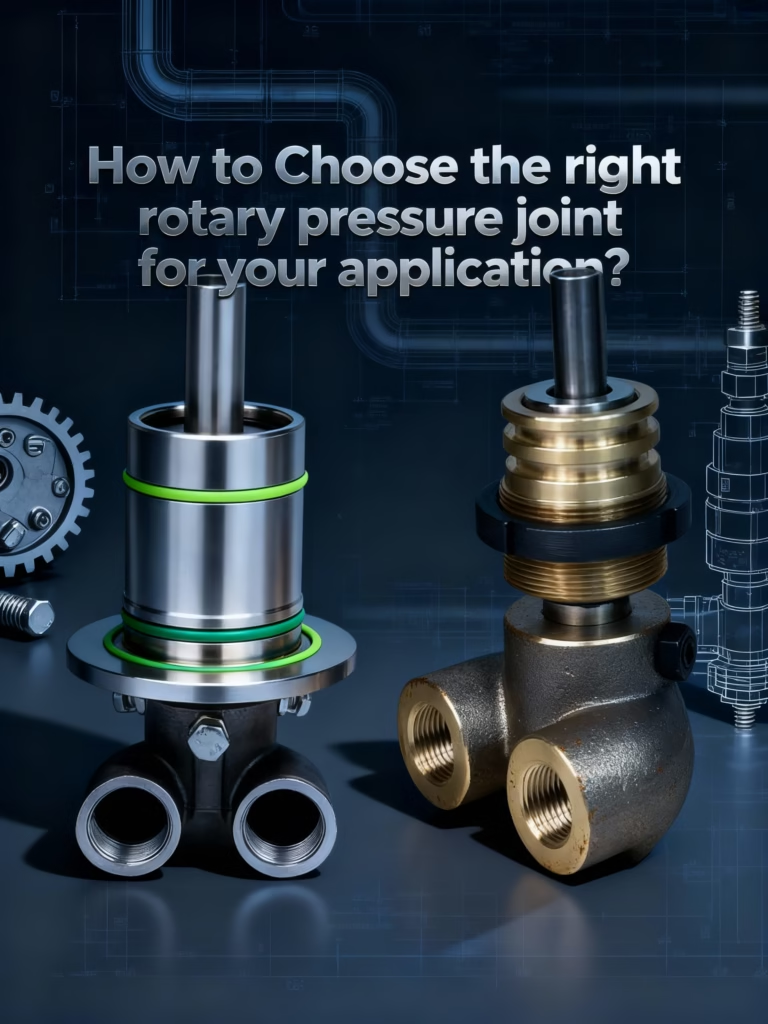
How to Select the Correct Mechanical Seal Rotary Joint
Before selecting a rotary joint, customers should confirm:
Fluid Type
Different fluids require compatible seal materials.
Operating Temperature
High-temperature systems require specialized sealing structures.
Pressure Range
Pressure affects seal loading and bearing selection.
Rotation Speed
High-speed systems require balanced sealing structures.
Environmental Conditions
Corrosive or contaminated environments require upgraded materials.
Frequently Asked Questions
Why do mechanical seal rotary joints leak?
The most common causes are seal wear, shaft vibration, bearing damage, contamination, or improper installation.
What seal materials are best for high-temperature applications?
Silicon carbide and tungsten carbide are commonly used in demanding high-temperature environments.
How long does a mechanical seal rotary joint last?
Service life depends on:
- Operating conditions
- Seal materials
- Fluid cleanliness
- Installation quality
- Rotational stability
Can you provide replacement rotary unions for imported brands?
Yes. We manufacture compatible replacement rotary unions for multiple international brands while offering shorter lead times and lower costs.
How do you test rotary joints before shipment?
Each rotary joint undergoes:
- Pressure testing
- Leakage inspection
- Rotational testing
- Assembly inspection
before delivery.
Final Thoughts
Mechanical seals and rotary joints play a critical role in the reliability of industrial pump systems.
From paper mills and steel plants to chemical processing facilities, we have repeatedly seen how proper sealing technology prevents leakage, protects equipment, and reduces maintenance costs.
The most successful solutions do not simply replace worn components. They address the root causes of failure through better materials, improved engineering, and real-world manufacturing experience.
For facilities seeking higher reliability, longer service life, and lower downtime, investing in properly engineered mechanical seal rotary joints remains one of the most effective improvements available.