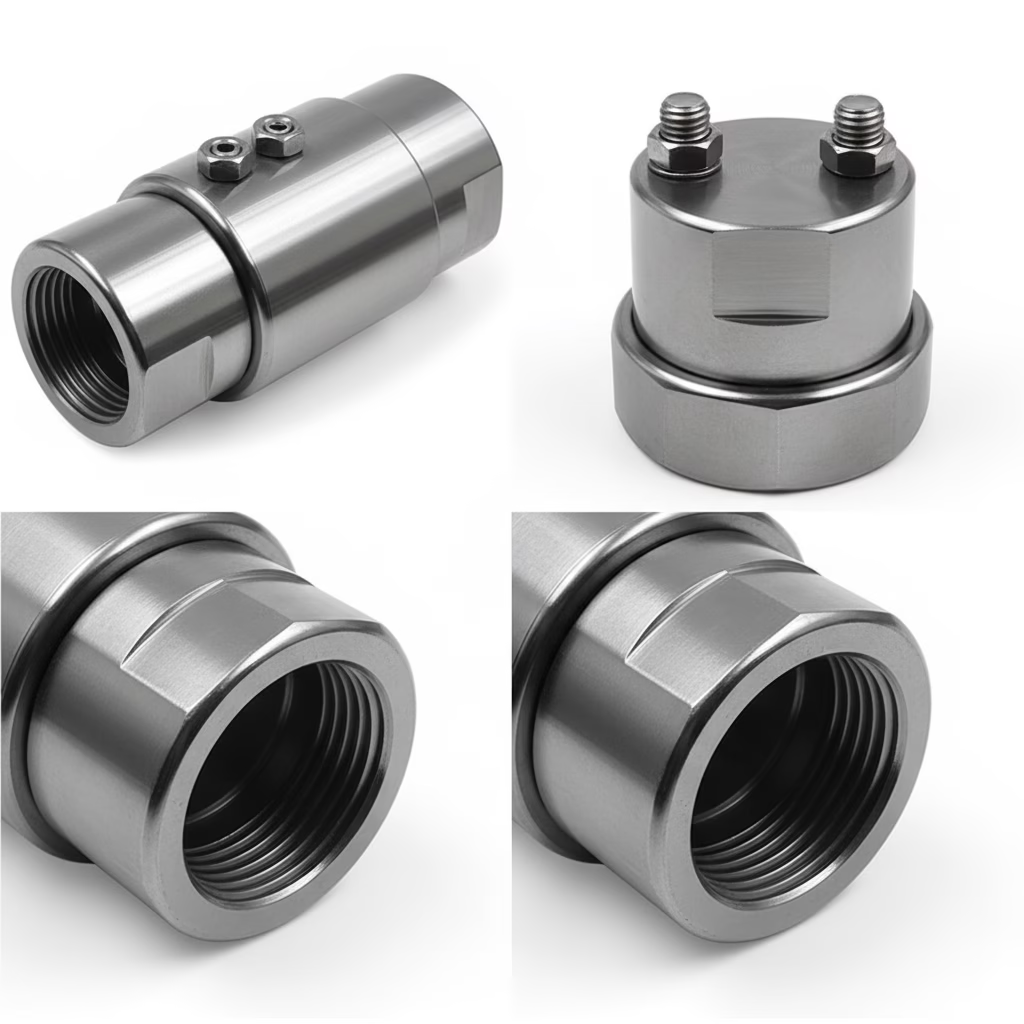
What are the key technical specifications to look for when buying hydraulic swivel joints?
When selecting hydraulic swivel joints, choosing the right technical specifications is critical to ensuring safety, reliability, and long-term performance. A poorly specified swivel joint can lead to leakage, premature seal failure, downtime, and costly maintenance—especially in high-pressure industrial applications.
In hydraulic systems, the swivel joint (or rotary union) is often the most undervalued component—until it fails. A single seal failure in a forestry grapple or an excavator attachment doesn’t just mean a $200 replacement part; it means hours of downtime, gallons of spilled hydraulic fluid, and potential safety hazards.
Many procurement managers make the mistake of selecting a swivel joint based solely on port size and max pressure. While these are important, they are only the tip of the iceberg. To ensure longevity and reliability, you must dig deeper into the engineering data.
As a manufacturer producing hydraulic swivel joints and rotary unions for construction machinery, hydraulic equipment, steel mills, marine systems, and automation machinery, we have learned that product reliability depends not only on catalog specifications, but also on machining precision, sealing technology, material selection, pressure balancing, and real operating experience.
In this article, we explain the key technical specifications of hydraulic swivel joints from a practical manufacturing perspective based on our production and field experience. This guide breaks down the most important technical specifications to evaluate when buying a hydraulic swivel joint, based on real engineering experience, industry best practices, and proven performance standards. Whether you are a procurement professional, mechanical engineer, or maintenance technician, this article will help you make a well-informed, risk-free purchasing decision.
What Is a Hydraulic Swivel Joint?
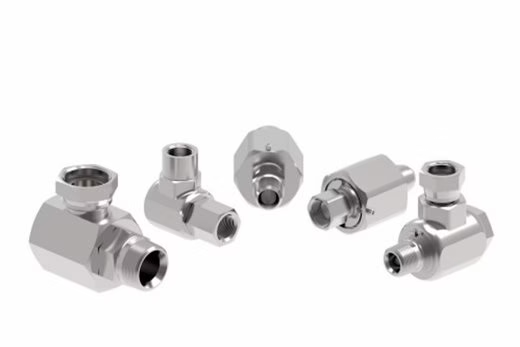
A hydraulic swivel joint is a rotating fluid connection designed to transfer hydraulic oil between stationary and rotating parts while maintaining pressure integrity.
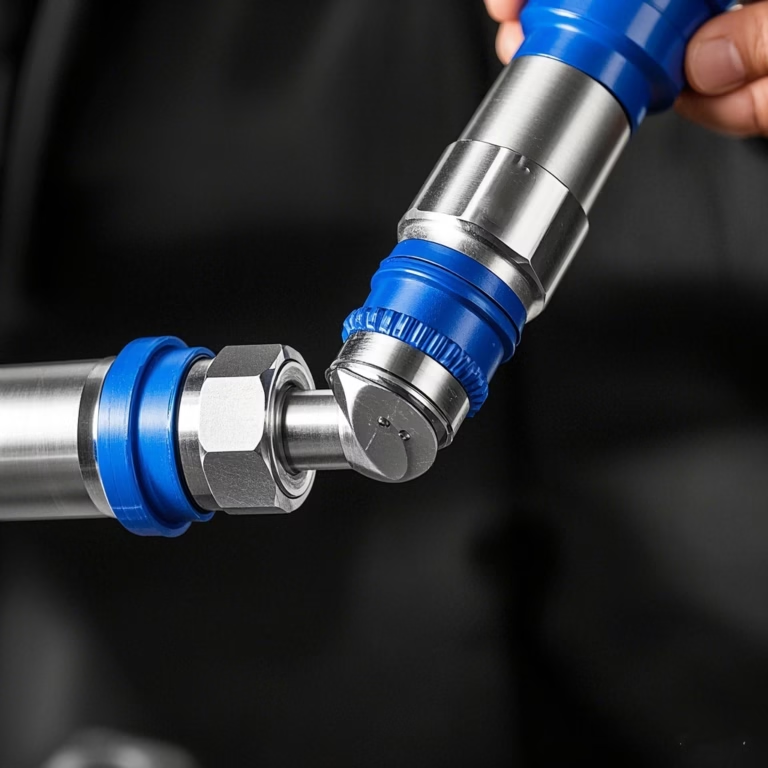
The swivel joint allows continuous rotation without twisting hoses or interrupting hydraulic flow.
Hydraulic swivel joints are commonly used in:
- excavators
- cranes
- hydraulic grabs
- offshore equipment
- rotary drilling rigs
- steel processing equipment
- rotary tables
- agricultural machinery
- marine hydraulic systems
In real industrial environments, swivel joints often operate under:
- high pressure
- vibration
- shock loads
- contamination
- temperature fluctuation
- continuous rotation
Because of these conditions, selecting the correct technical specifications becomes extremely important.
Why Technical Specifications Matter
Many users only compare dimensions and thread sizes when purchasing hydraulic swivel joints.
However, in our factory experience, most swivel joint failures are caused by incorrect specification matching rather than manufacturing defects alone.
We frequently see failures caused by:
- excessive operating pressure
- Incorrect seal material
- improper rotational speed
- poor installation alignment
- contaminated hydraulic oil
- insufficient bearing support
Understanding the real meaning behind each technical specification helps prevent these problems.
Operating Pressure
Operating pressure is one of the most critical specifications for hydraulic swivel joints.
In heavy hydraulic equipment, swivel joints often work under pressures ranging from 20 MPa to 35 MPa, while some specialized systems operate at even higher pressures.
However, actual operating pressure is often unstable.
Pressure spikes during sudden valve switching or hydraulic shock can exceed the rated pressure temporarily.
In our production experience, one of the most common causes of hydraulic swivel leakage is seal extrusion caused by pressure spikes.
To improve pressure resistance, we focus on:
- groove machining precision
- seal compression control
- material hardness
- bearing stability
- internal clearance optimization
For high-pressure applications, seal selection becomes extremely important.
Soft seals reduce friction but may deform under high pressure.
Harder seal materials improve pressure resistance but increase rotational torque.
Balancing these factors requires real application experience.
Rotational Speed
Rotational speed directly affects seal life and heat generation.
In low-speed excavator applications, swivel joints may rotate slowly but experience heavy shock loads.
In automated rotary systems, continuous rotation creates heat accumulation inside the sealing area.
Many users incorrectly assume that hydraulic swivel joints operate similarly under all speeds.
In reality, increasing rotational speed significantly increases:
- friction
- seal wear
- heat generation
- vibration sensitivity
During manufacturing, we pay special attention to dynamic balance and concentricity control for high-speed applications.
Even small shaft deviations may cause uneven seal wear.
For multi-passage swivel joints, maintaining stable internal clearance becomes even more difficult because thermal expansion affects different passages simultaneously.
Number of Passages
Hydraulic swivel joints may contain:
- single passage
- dual passage
- multi-passage configurations
Some customized systems contain more than ten separate flow channels.
As the number of passages increases, internal machining complexity rises significantly.
One major engineering challenge involves preventing internal cross-port leakage between adjacent passages.
During machining, extremely precise groove dimensions are necessary to isolate each hydraulic channel.
This becomes especially difficult in compact swivel joint designs where space is limited.
In our factory, multi-passage swivel joints require additional assembly inspection and pressure testing to ensure channel isolation.
Seal Material Selection
Seal performance determines swivel joint reliability.
In hydraulic systems, seal materials must withstand:
- pressure
- oil compatibility
- temperature
- rotational friction
- contamination
Different applications require different seal combinations.
For example:
Excavator Applications
Excavators often operate in dirty environments with vibration and shock loads.
Wear-resistant seals with high contamination resistance are preferred.
Marine Hydraulic Systems
Marine equipment requires corrosion-resistant materials and seals compatible with saltwater environments.
Stainless steel housings are commonly used.
Steel Industry Applications
Steel mill hydraulic systems involve elevated temperatures and continuous operation.
Heat-resistant sealing materials become necessary.
In practical manufacturing, seal failure rarely occurs because of a single factor.
Most leakage problems result from combined effects such as:
- contamination
- pressure spikes
- shaft vibration
- improper installation
- poor lubrication
This is why practical field experience matters more than theoretical parameter comparison.
Material Selection
Hydraulic swivel joint housing materials directly affect durability and corrosion resistance.
Common materials include:
- carbon steel
- alloy steel
- stainless steel
- brass
- aluminum alloy
For construction machinery, hardened steel provides better impact resistance.
For corrosive environments, stainless steel improves service life.
Material selection must also match the hydraulic fluid.
Some aggressive fluids may damage standard sealing materials or accelerate corrosion.
We often help customers redesign material combinations after analyzing actual working conditions.
Bearing Structure
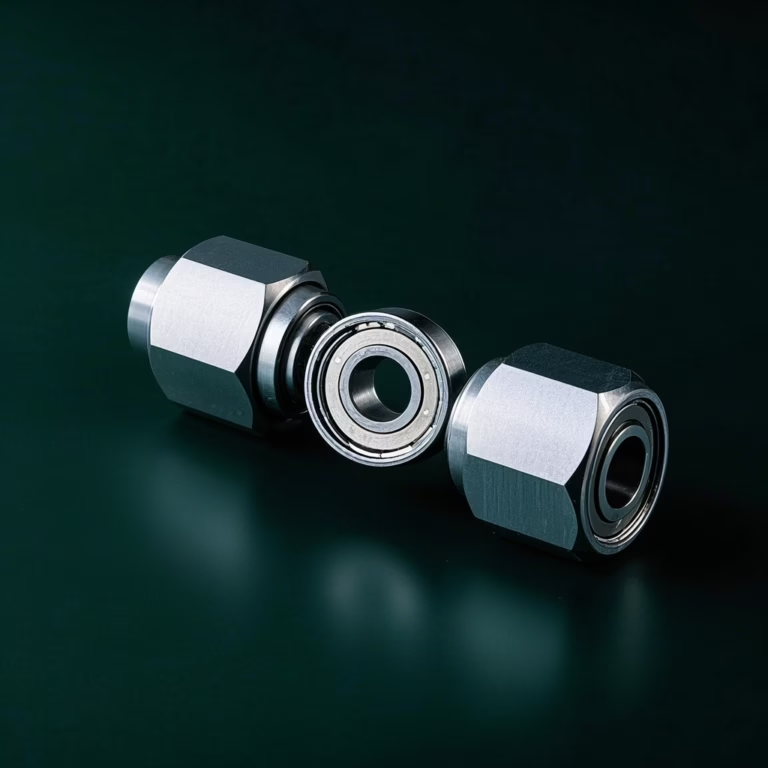
Bearings support rotational movement and maintain shaft stability.
Poor bearing quality often causes:
- shaft wobbling
- uneven seal wear
- vibration
- leakage
In some failed swivel joints returned by customers, we discovered that bearing wear caused secondary seal damage.
For heavy-duty hydraulic applications, reinforced bearing structures improve reliability significantly.
Proper bearing preload is also important.
Excessive preload increases friction and heat.
Insufficient preload creates instability during rotation.
Flow Capacity
Flow rate affects pressure drop and hydraulic system efficiency.
If internal flow passages are too small, hydraulic resistance increases.
This may cause:
- overheating
- pressure loss
- energy waste
- unstable actuator movement
During design, internal flow channels must match the required system flow rate.
In some customized projects, we optimize internal drilling dimensions to reduce turbulence and improve flow efficiency.
Leakage Control and Testing
Leakage control is one of the most important quality indicators for hydraulic swivel joints.
In our factory, every hydraulic swivel joint undergoes pressure and leakage testing before shipment.
Testing typically includes:
- hydrostatic pressure testing
- rotational leakage testing
- low-pressure sealing inspection
- passage isolation testing
For export projects, some customers request continuous operation simulation testing under actual working conditions.
This type of testing helps identify potential sealing instability before field installation.
Common Failure Problems We See in the Field
After years of manufacturing and servicing hydraulic swivel joints, several common failure patterns appear repeatedly.
Contaminated Hydraulic Oil
Dirty hydraulic oil damages seals and bearings quickly.
Metal particles inside the system often scratch sealing surfaces.
This problem is extremely common in construction equipment.
Installation Misalignment
Improper installation creates side loading on the swivel joint.
This causes uneven seal wear and premature leakage.
Excessive Pressure Spikes
Pressure shock from sudden hydraulic valve switching can damage internal seals.
Many users underestimate the effect of transient pressure spikes.
Incorrect Seal Selection
Using standard seals in high-temperature systems often leads to rapid seal hardening and cracking.
Seal selection must match actual operating conditions.
Our Practical Manufacturing Experience
As a hydraulic swivel joint manufacturer, we believe reliable performance depends heavily on practical engineering knowledge.
For example, one customer operating hydraulic grabs experienced repeated leakage every three months.
After analyzing the returned swivel joints, we found that severe vibration combined with contaminated hydraulic oil caused abnormal seal wear.
We redesigned the internal bearing structure and upgraded the sealing system.
After modification, the swivel joint’s service life improved significantly.
This type of engineering improvement comes from real production and field experience rather than theoretical design alone.

How to Choose the Right Hydraulic Swivel Joint
When selecting a hydraulic swivel joint, users should evaluate:
- operating pressure
- rotational speed
- number of passages
- hydraulic media
- temperature
- environmental conditions
- contamination level
- installation space
Choosing the lowest-cost swivel joint often increases long-term maintenance costs.
In industrial applications, reliability is usually more valuable than initial purchase price.
Hydraulic Swivel Joint Specification Checklist
Before purchasing, confirm:
- Pressure rating meets system requirements
- Flow capacity supports operating demand
- RPM rating exceeds maximum speed
- The temperature range matches the real environment
- Seal materials match fluid type
- Bearings support expected loads
- Connection type fits equipment
- Corrosion protection meets site conditions
- Manufacturer meets EEAT credibility standards
Conclusion: How to Choose the Right Hydraulic Swivel Joint
Selecting the right hydraulic swivel joint requires more than reviewing catalog numbers. The best choice comes from matching real operating conditions with verified technical specifications, supported by trusted manufacturers and proven engineering standards.
By focusing on pressure, flow, speed, seals, materials, bearings, and supplier credibility, buyers can ensure safe operation, extended service life, and optimal system efficiency.