How Steam Rotating Joint Improve Drying Efficiency
Industrial drying is a deceptively complex process. Whether you are running a paper machine, a drum dryer, a textile line, or a chemical reactor, the difference between an efficient drying system and an underperforming one often comes down to how well heat is transferred—and controlled. At the center of that heat transfer loop sits a component that rarely gets attention but has a disproportionate impact: the steam rotating joint.
As a leading manufacturer of fluid handling solutions, we understand that the stability of your drying process dictates your bottom line. This comprehensive guide explores how upgrading your steam rotary unions optimizes heat transfer, reduces energy waste, and secures long-term operational reliability.
This article explains, from an engineering and operational standpoint, how a steam rotating joint improves drying efficiency, why it directly affects energy consumption and product quality, and how to select and maintain the right solution for demanding industrial environments.
What Is a Steam Rotating Joint?
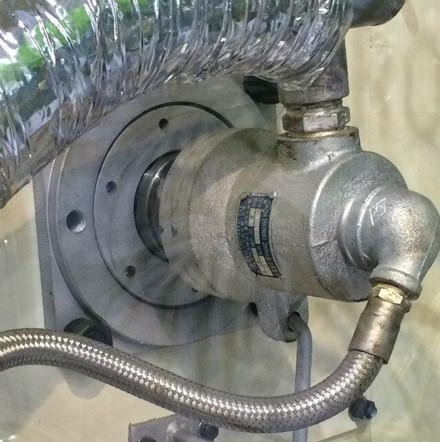
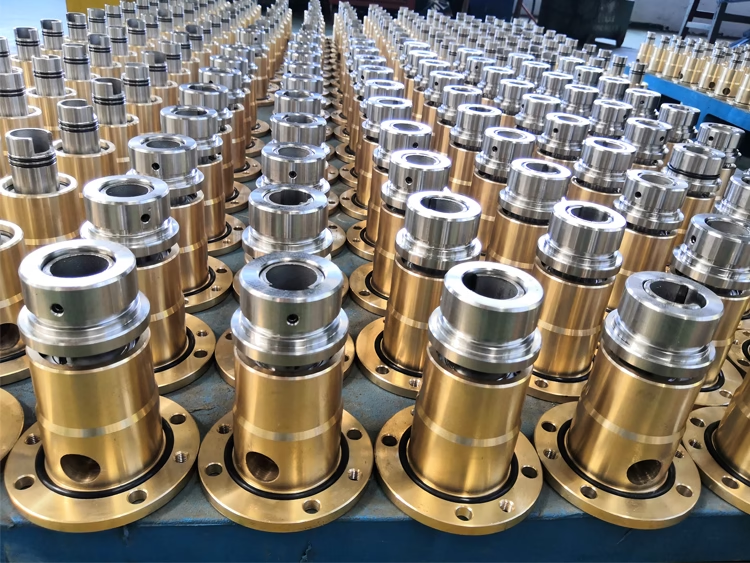
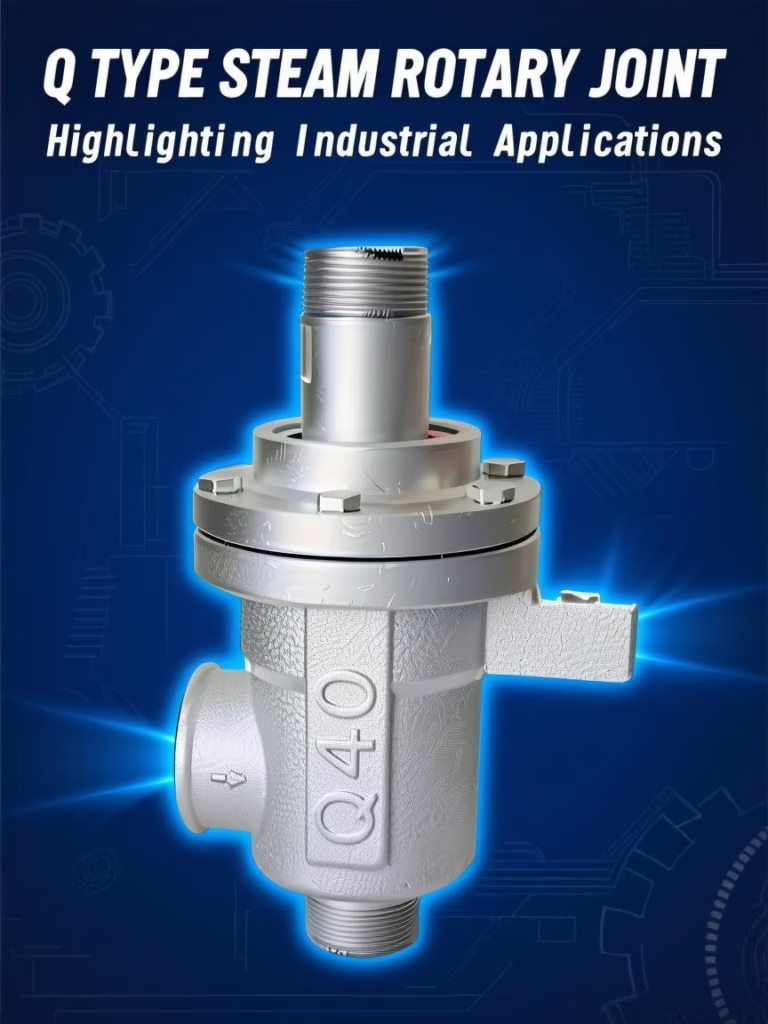
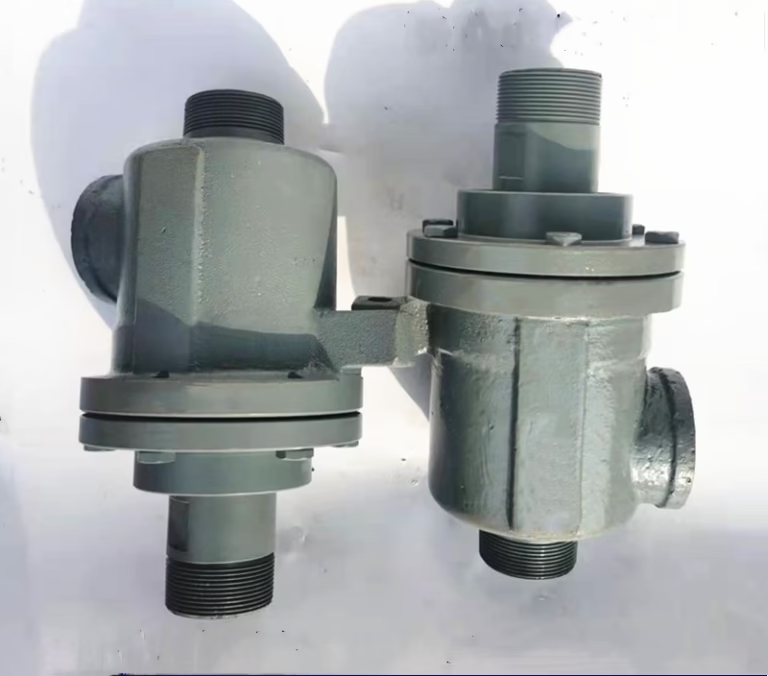
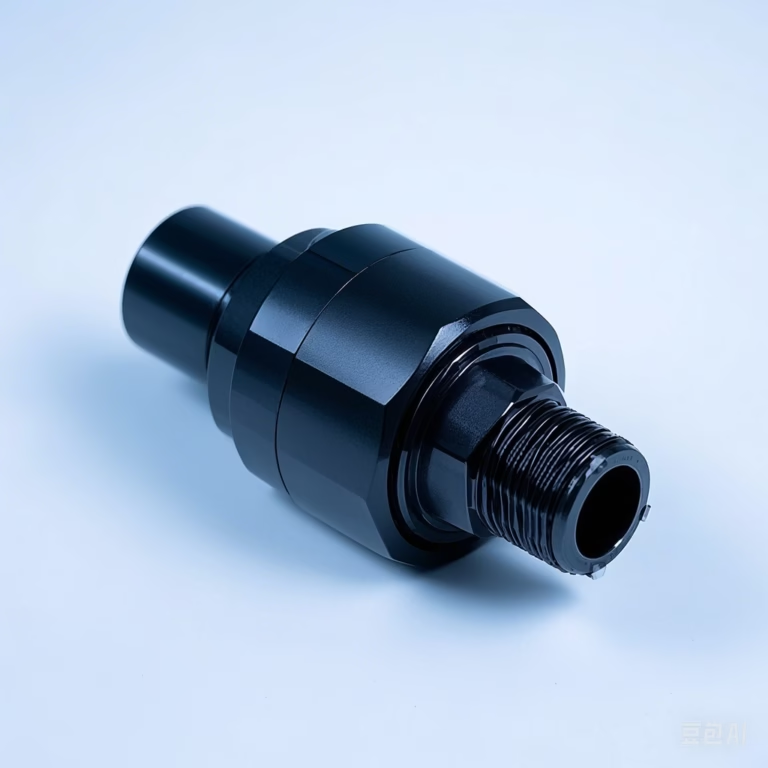
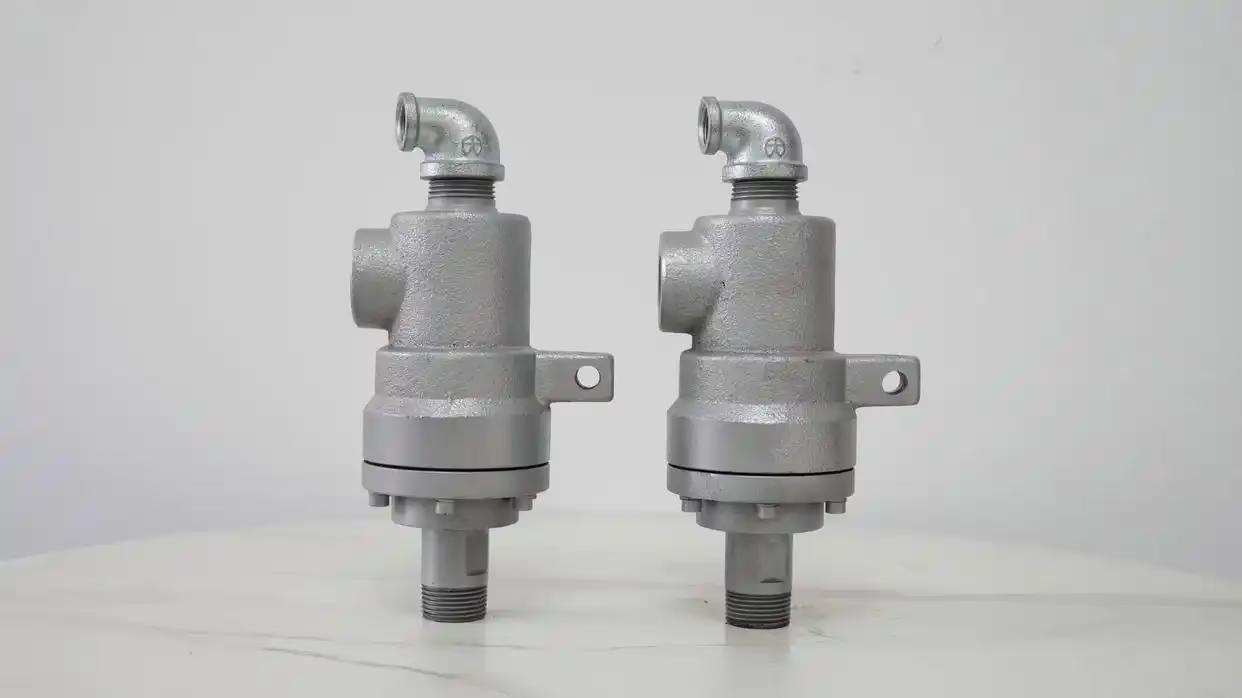
A steam rotating joint (also called a steam rotary union or steam rotary joint) is a precision mechanical device installed between a stationary pipeline and rotating equipment. Its function is to transfer steam into rotating components—such as drying cylinders, rotary drums, or heated rollers—while simultaneously allowing condensate to exit without leakage.
Furthermore, these devices perform two critical tasks simultaneously:
-
They deliver high-temperature steam into the rotating dryer.
-
They facilitate the efficient removal of condensate from the system.
Without a reliable mechanical seal, steam leakage occurs immediately. Consequently, your drying equipment loses pressure, heat distribution becomes uneven, and energy costs skyrocket.
In drying systems, this component ensures continuous energy transfer while maintaining a sealed, pressurized environment. Without a reliable steam rotating joint, even the most advanced drying equipment will suffer from inefficiencies, instability, and frequent downtime.
Why Drying Efficiency Depends on Steam Transfer
Drying is fundamentally a heat and mass transfer process. The objective is simple:
- Deliver heat efficiently to the material
- Maintain stable temperature conditions
- Remove moisture consistently
However, in real industrial conditions, several challenges arise:
- Fluctuating steam pressure
- Condensate accumulation
- Heat loss due to leakage
- Mechanical wear under continuous rotation
A properly engineered steam rotating joint addresses all of these issues simultaneously, making it a critical enabler of high-performance drying systems.
Direct Impact on Drying Efficiency
How exactly does a steam rotating joint optimize your industrial drying workflow? We break it down into four core technical advantages.
1. Maximizing Heat Transfer Efficiency
Efficient steam rotary unions feature streamlined internal flow paths. Specifically, these designs minimize pressure drops as steam enters the equipment. By ensuring the heating media reaches the dryer at the intended flow rate and pressure, you maximize thermal energy utilization. When you eliminate leaks, almost 100% of the thermal energy goes directly into the material, lowering the energy consumption per unit.
2. Stabilizing Process Temperature
Precision drying requires constant temperature control. In fact, high-quality steam joints utilize advanced friction pair materials to maintain seal integrity. This consistency prevents sudden pressure drops during rotation. By maintaining a steady thermal environment, you ensure uniform drying across every batch. Consequently, this reduces waste and improves final product consistency.
3. Supporting Continuous Production
Industrial drying is often a 24/7 operation. Unplanned downtime results in massive revenue loss and energy waste. Consequently, we engineer our steam rotating joints with wear-resistant bearings to withstand long-term rotation. Robust construction reduces the risk of mechanical failure, providing the foundation for a continuous, stable production line.
4. Managing Extreme Operational Conditions
Modern drying processes often involve high-pressure steam or thermal oil. To address these challenges, we use specialized materials like silicon carbide and tungsten carbide for seal rings. These materials resist corrosion and high temperatures. Therefore, the joint performs reliably even in dusty or chemically aggressive environments.
How Steam Rotating Joint Improves Drying Efficiency
1. Maximizing Heat Transfer Efficiency
The primary role of a steam rotating joint is to deliver steam into rotating equipment with minimal pressure loss and zero leakage.
A well-designed joint features:
- Optimized internal flow channels
- Low resistance pathways
- High-integrity sealing surfaces
This ensures that steam enters the drying cylinder at the intended pressure and temperature, maximizing thermal energy transfer.
Practical impact:
- Faster drying cycles
- Reduced steam consumption
- Lower energy cost per unit output
If leakage occurs, even at a low rate, it leads to continuous energy loss. Over time, this significantly increases operational costs.
2. Maintaining Stable Process Temperature
Drying processes require tight temperature control. Even small fluctuations can lead to:
- Uneven moisture content
- Product deformation
- Quality inconsistencies
A high-performance steam rotating joint ensures:
- Consistent steam pressure
- Stable internal temperature
- Reliable sealing under thermal expansion
Advanced sealing materials such as carbon graphite, silicon carbide, or tungsten carbide maintain integrity even under high temperatures and continuous rotation.
Result:
- Uniform drying
- Improved product consistency
- Reduced rejection rates
3. Efficient Condensate Removal
One of the most overlooked factors in drying efficiency is condensate management.
When steam releases heat, it condenses into water. If this condensate is not removed efficiently:
- Heat transfer efficiency drops
- “Cold spots” form inside the cylinder
- Water hammer risks increase
A properly engineered steam rotating joint integrates dedicated condensate discharge channels, allowing continuous removal of condensate during operation.
Engineering benefit:
- Maintains optimal heat transfer surface
- Prevents internal flooding
- Improves overall thermal efficiency
4. Enabling Continuous Operation
Industrial drying processes are typically continuous rather than batch-based. Any unplanned shutdown results in:
- Production losses
- Energy waste
- Increased maintenance costs
A durable steam rotating joint supports:
- Long operating cycles
- High rotational speeds
- Resistance to wear and fatigue
With robust bearing systems and high-quality seals, modern rotary joints can operate reliably for extended periods with minimal maintenance.
Operational outcome:
- Reduced downtime
- Higher equipment availability
- Improved overall equipment effectiveness (OEE)
5. Adapting to Harsh Industrial Conditions
Drying environments are often extreme:
- High-temperature steam
- Corrosive atmospheres
- Dust and contamination
- Mechanical vibration
Steam rotating joints designed for such environments:
- Stainless steel or alloy housings
- Corrosion-resistant seals
- Heavy-duty bearing assemblies
These features ensure long-term stability even under demanding conditions.
Deep Technical Insight: Engineering Standards for Reliability
Advanced Sealing Interfaces
In high-temperature environments, ordinary sealing materials degrade rapidly. Furthermore, we prioritize the “Hard-to-Hard” sealing interface for high-pressure steam applications. Specifically, pairing Silicon Carbide (SiC) with Tungsten Carbide (TC) offers superior thermal shock resistance. Moreover, these advanced materials prevent surface scoring from abrasive boiler scale or rust particles. Consequently, this material selection extends the seal life by up to 300% in continuous drying cycles.
Precision Siphon Systems and Condensate Management
Drying inefficiency often stems from poor condensate drainage rather than lack of heat. In fact, an optimized internal siphon system is crucial for rotating drum dryers.
-
Specifically, a fixed or rotating siphon must maintain a precise gap with the drum wall.
-
Furthermore, “Water Logging” creates a heat transfer barrier, significantly increasing your energy consumption.
-
Consequently, our precision-engineered siphon pipes ensure rapid condensate removal even at high rotational speeds.
Global Standards and Benchmarking
As a specialized manufacturer, we design components to meet or exceed international performance benchmarks. Specifically, our steam rotating joints provide a direct, high-performance alternative to brands like Deublin, Maier, and Rotoflux.
-
Furthermore, our manufacturing process adheres to strict ISO 9001 quality management standards.
-
In addition, our components comply with global pressure vessel and safety regulations.
-
Consequently, global CIS and European customers receive Tier-1 quality without the premium brand markup.
Key Technical Features That Drive Performance
Mechanical Seal Technology
Modern steam rotating joints rely on mechanical face seals, where two precision-machined surfaces rotate against each other under controlled pressure.
Key characteristics:
- Extremely low leakage rate
- High temperature resistance
- Long service life
Material pairing (e.g., graphite vs. silicon carbide) determines durability and compatibility with steam systems.
Bearing Design and Load Capacity
The joint must support both:
- Radial loads (from rotation)
- Axial loads (from piping and pressure)
High-performance designs use:
- Angular contact ball bearings
- Tapered roller bearings
These ensure stable rotation and protect sealing surfaces from misalignment and vibration.
Internal Flow Optimization
Efficient internal design reduces:
- Pressure drop
- Turbulence
- Energy loss
For steam applications, separate channels for steam and condensate are essential to maintain efficiency.
Maintenance and Serviceability
Industrial users prioritize:
- Easy seal replacement
- Modular design
- Reduced maintenance downtime
A well-designed steam rotating joint allows quick servicing, minimizing production interruptions.
Real-World Applications in Drying Systems
Steam rotating joints are widely used in:
1. Paper Industry
Drying cylinders rely on a consistent steam supply to remove moisture from paper sheets efficiently.
2. Textile Processing
Heated rollers require stable temperature control to ensure fabric quality.
3. Food Processing
Drum dryers use steam to dry products such as starch, milk powder, and cereals.
4. Chemical Industry
Rotary dryers handle bulk materials requiring precise thermal control.
5. Wood and Building Materials
Drying systems for plywood, MDF, and ceramics depend heavily on stable heat transfer.
Energy Savings and Cost Reduction
One of the most tangible benefits of optimizing steam rotating joints is energy efficiency.
By preventing steam leakage and improving heat transfer:
- Steam consumption is reduced
- Fuel usage decreases
- Carbon emissions are lowered
Over time, this leads to significant cost savings and supports sustainability goals.
Improving Product Quality and Consistency
Stable drying conditions directly affect product quality:
- Uniform moisture content
- Consistent texture and strength
- Reduced defects
In industries like food and pharmaceuticals, this is not just a performance issue—it’s a compliance requirement.
Safety and Environmental Benefits
Steam leakage is not just inefficient—it is dangerous.
Potential risks include:
- Burns from high-temperature steam
- Slippery working conditions
- Fire hazards (in oil-based systems)
A high-quality steam rotating joint eliminates these risks by ensuring leak-free operation.
Selection Guidelines for Steam Rotating Joint
Choosing the right steam rotating joint requires an accurate understanding of operating conditions:
Key Parameters:
- Steam pressure and temperature
- Rotational speed (RPM)
- Pipe size and connection type
- Type of equipment (drum, roller, cylinder)
A mismatch in any of these parameters can lead to premature failure.
Installation Best Practices
Improper installation is a leading cause of failure.
Key recommendations:
- Ensure precise alignment
- Avoid excessive pipe stress
- Install proper support brackets
- Maintain correct piping slope for condensate drainage
Maintenance Strategy
To ensure long-term performance:
- Conduct regular inspections
- Monitor for leakage or abnormal noise
- Replace seals and bearings periodically
- Keep the external surface clean
A preventive maintenance plan significantly extends service life.
Future Trends: Smart Drying Systems
Modern industrial systems are moving toward smart manufacturing.
Advanced steam rotating joints can integrate with:
- Temperature sensors
- Leakage detection systems
- Predictive maintenance platforms
This enables real-time monitoring and data-driven optimization of drying processes.
Conclusion
A steam rotating joint may appear to be a small component, but its impact on drying efficiency is substantial. From maximizing heat transfer and ensuring temperature stability to enabling continuous operation and reducing energy consumption, it plays a foundational role in modern industrial drying systems.
For manufacturers aiming to improve productivity, reduce operational costs, and achieve consistent product quality, investing in a high-performance steam rotating joint is not optional—it is essential.
In a competitive industrial landscape where efficiency and reliability define success, optimizing every component matters. And in the drying process, the steam rotating joint is where that optimization begins.