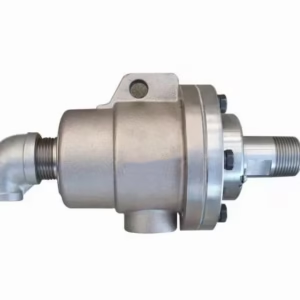
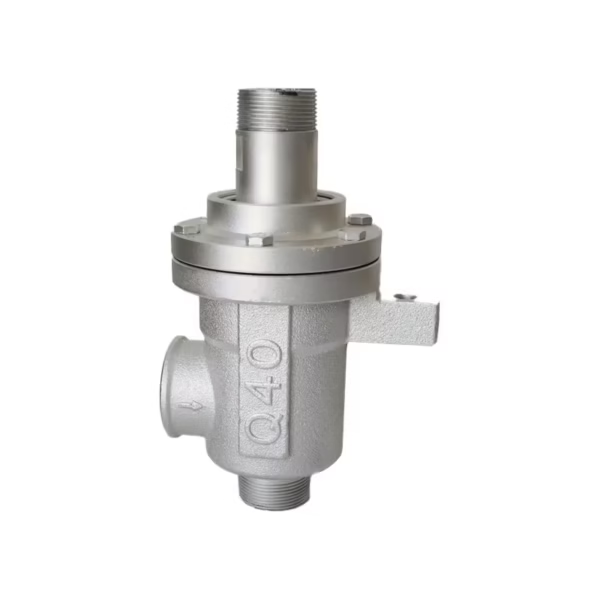
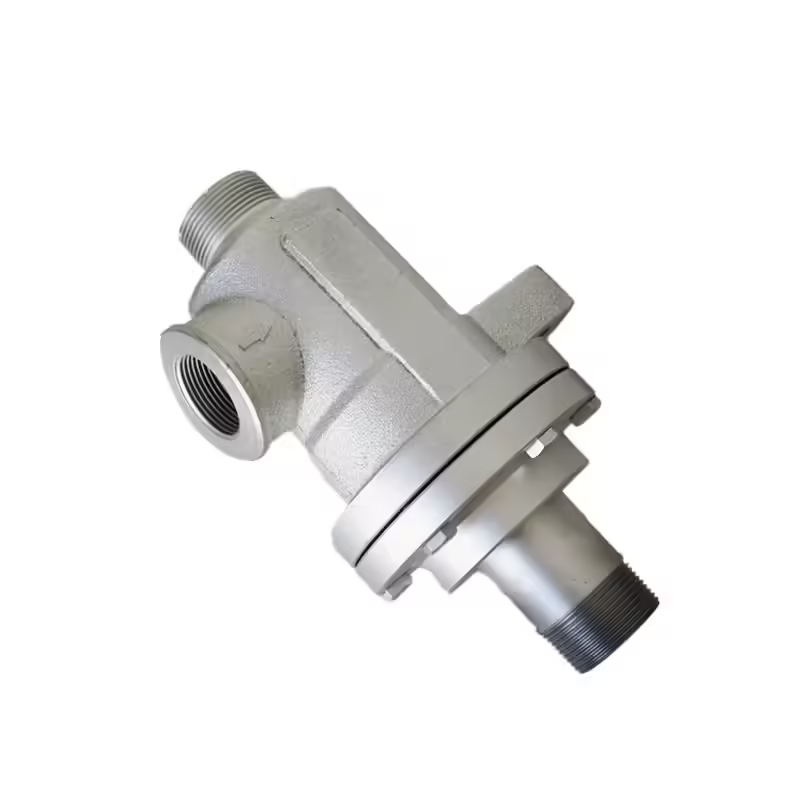
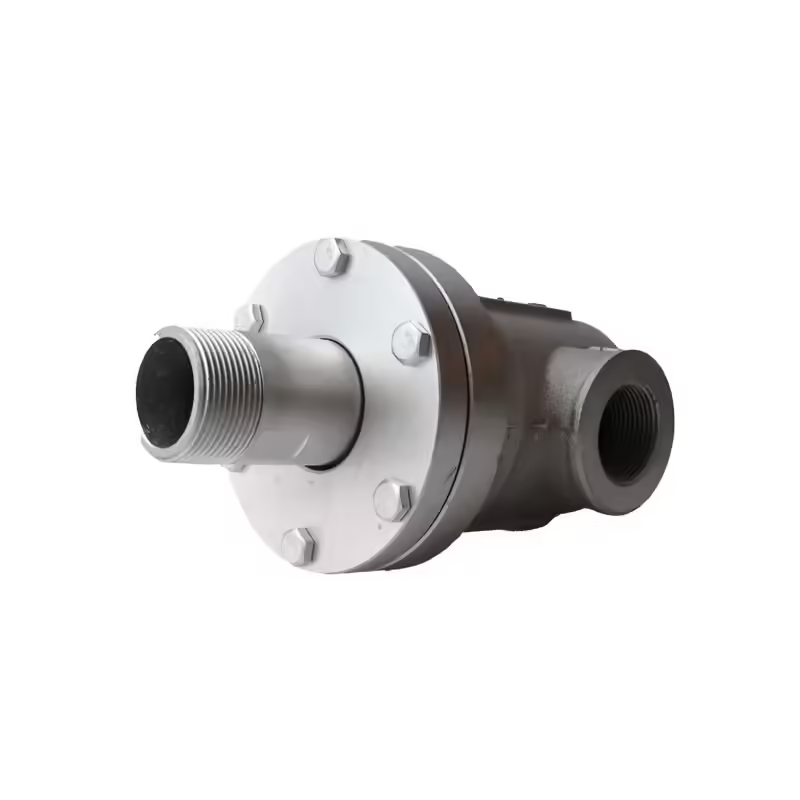
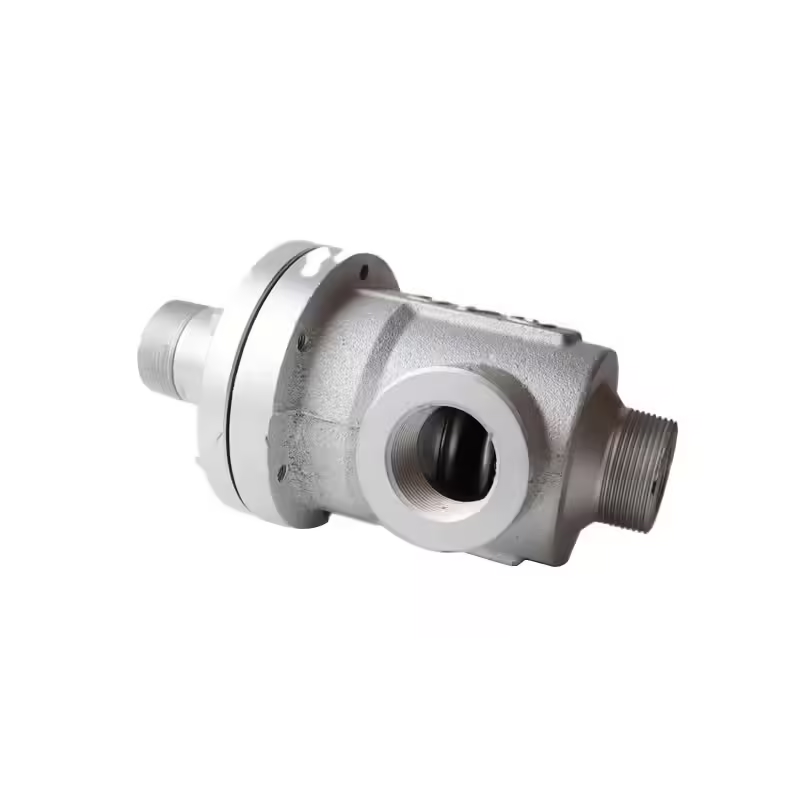

Rotary Union for Steam – Q Series for Heat Transfer Equipment
Original price was: $15.00.$13.00Current price is: $13.00.
- Model: Q Series
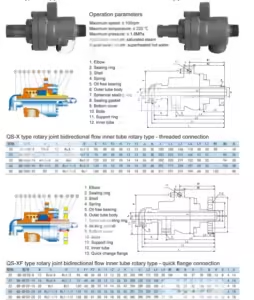
- Medium: Steam, Hot Oil
- Passages: Single Flow
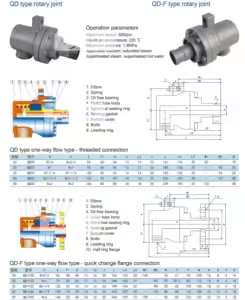
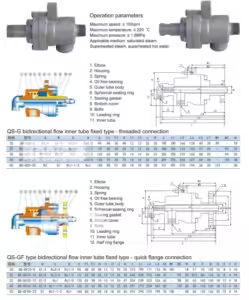
- Pressure Rating: Up to 150 PSI
- Temperature: Up to 200°C / 392°F
- Speeds: Up to 1,000 RPM
- Connection Types: NPT, BSPT, Custom Threading Available
- Material: Ductile Iron Housing, Hardened Steel Rotor, Graphite Seals
Description
Industrial production equipment depends on reliable fluid transfer between stationary piping and rotating machinery. Whether the application involves steam heating, cooling water circulation, thermal oil systems, or other industrial media, the rotary union is one of the most critical components affecting equipment efficiency and uptime. The Q Series Rotary Union is engineered for medium- to high-demand operating environments where stable sealing performance, long service life, and low maintenance are essential. It is widely used in paper mills, steel processing lines, textile machinery, plastic extrusion equipment, rubber manufacturing, printing machines, and other industrial applications requiring continuous rotary fluid transmission.
At Dann Hydraulic, we manufacture high-quality Q Series Rotary Unions as cost-effective alternatives to internationally recognized brands. Our engineering team focuses on precision machining, reliable sealing technology, and consistent production quality to help customers reduce maintenance costs while improving equipment reliability.
Unlike standard catalog products, our rotary unions can also be customized to meet different operating pressures, temperatures, rotational speeds, connection types, and installation requirements.
Why Choose a Q Series Rotary Union?
Industrial machinery often operates continuously for thousands of hours each year. Any leakage, excessive wear, or seal failure can result in production interruptions, increased maintenance costs, and unnecessary downtime.
The Q Series Rotary Union is designed to solve these challenges by combining durable mechanical sealing technology with precision bearing support.
Its design offers several practical advantages:
- Stable sealing under continuous operation
- Excellent resistance to pressure fluctuations
- Reliable performance at elevated temperatures
- Reduced friction during rotation
- Longer bearing and seal service life
- Easy installation and maintenance
- Compatibility with multiple industrial media
These characteristics make the Q Series Rotary Union suitable for both OEM equipment manufacturers and maintenance replacement projects.
Typical Working Media
The Q Series Rotary Union supports a wide variety of industrial fluids depending on seal material selection and operating conditions.
Typical applications include:
- Steam
- Hot water
- Cooling water
- Thermal oil
- Hydraulic oil
- Lubricating oil
- Compressed air
- Vacuum
- Coolant
Our engineering team can recommend appropriate seal materials based on the operating medium to maximize service life.
Main Features
Precision Mechanical Seal Design
The sealing system is the heart of every rotary union.
The Q Series Rotary Union incorporates precision-machined sealing faces manufactured under strict dimensional tolerances. Stable seal contact helps reduce leakage while minimizing wear during continuous rotation.
Depending on the application, different seal material combinations can be selected to balance durability, friction, and temperature resistance.
Heavy-Duty Bearing Support
Reliable bearing support maintains shaft stability throughout operation.
High-quality bearings help reduce vibration, improve concentricity, and minimize radial movement, which contributes directly to longer seal life.
This is particularly important in high-speed rotating equipment where shaft stability affects both sealing performance and overall machine reliability.
Optimized Flow Passage
Internal flow channels are designed to reduce unnecessary pressure loss while maintaining smooth fluid transfer.
Optimized flow paths help improve thermal efficiency in heating applications and reduce energy consumption in hydraulic or cooling systems.
Corrosion-Resistant Materials
Industrial environments often expose rotary unions to moisture, chemicals, and elevated temperatures.
Depending on application requirements, Q Series Rotary Unions can be manufactured using:
- Carbon steel
- Stainless steel
- Brass
- Aluminum alloy
- Special corrosion-resistant materials
Material selection is customized according to the customer’s operating environment.
Easy Maintenance
Maintenance efficiency is increasingly important for modern manufacturing facilities.
The Q Series Rotary Union is designed with serviceability in mind, allowing faster inspection and replacement of wear components when required.
Routine maintenance helps extend equipment life while reducing unexpected downtime.
Common Operating Problems and Practical Solutions
Even a well-designed rotary union can experience performance issues if the operating conditions exceed its design limits or if installation and maintenance procedures are overlooked. Understanding the root causes of common failures helps maintenance teams reduce unplanned downtime and extend component life.
At Dann Hydraulic, our engineering team reviews customer feedback from a wide range of industrial applications. The following issues are among the most frequently encountered in the field.
Problem 1: Leakage During Operation
Fluid leakage is the most common issue reported with rotary unions. While minor leakage may appear insignificant at first, it often indicates that sealing performance has started to decline.
Possible Causes
- Worn mechanical seal faces
- Shaft misalignment
- Excessive vibration
- Contaminated working media
- Incorrect installation torque
- Operating pressure beyond design limits
Recommended Solution
Inspect the rotary union for shaft alignment before replacing the seals. Verify that the operating pressure and temperature remain within the specified range. If the media contains abrasive particles, install an appropriate filtration system to protect the sealing surfaces.
For long-term reliability, always replace worn seal components with precision-manufactured parts designed for the original rotary union.
Problem 2: Premature Seal Wear
Mechanical seals are designed to operate with a controlled contact force. Excessive wear usually indicates abnormal operating conditions rather than poor seal quality.
Typical Causes
- Dry running
- Frequent start-stop cycles
- High rotational speed
- Poor lubrication
- Incorrect seal material selection
Practical Recommendation
Choose seal materials that match the operating medium. Carbon graphite, silicon carbide, tungsten carbide, and ceramic sealing faces each offer different advantages depending on temperature, pressure, and chemical compatibility.
Our engineering team evaluates these operating conditions before recommending a seal configuration, helping customers maximize service life.
Problem 3: Bearing Failure
Bearings support the rotating shaft and maintain sealing stability. When bearings begin to wear, vibration increases, and sealing performance quickly deteriorates.
Common Reasons
- Excessive radial load
- Misalignment
- High operating temperature
- Lack of lubrication
- Contaminated environment
Solution
Regularly monitor bearing temperature and vibration. Replace bearings before severe wear damages the shaft or seal assembly. Preventive maintenance is significantly less expensive than emergency equipment repairs.
Problem 4: Overheating
Excessive operating temperature shortens seal life and accelerates bearing degradation.
Possible causes include:
- Excessive rotational speed
- Inadequate cooling
- Steam pressure fluctuations
- Incorrect thermal oil circulation
- Restricted internal flow passages
Maintaining stable operating conditions helps prevent thermal stress on sealing components.
Problem 5: Reduced Flow Performance
If the equipment no longer receives sufficient cooling water, steam, or hydraulic oil, the problem may originate inside the rotary union.
Potential causes include:
- Internal scaling
- Blocked passages
- Contaminated media
- Incorrect piping installation
- Damaged internal components
Periodic inspection and cleaning of the flow passages can restore performance before major maintenance becomes necessary.
Best Installation Practices
Proper installation has a direct impact on rotary union performance. Even a premium rotary union may fail prematurely if installed incorrectly.
For reliable operation, follow these recommendations:
- Verify shaft concentricity before installation.
- Ensure that all pipework is independently supported and does not apply external loads to the rotary union.
- Tighten threaded connections according to the recommended torque values.
- Avoid forcing misaligned piping into position.
- Flush the piping system before installation to remove welding slag, rust, and debris.
- Confirm that the working pressure, temperature, and rotational speed match the product specifications.
These simple precautions help protect the sealing surfaces during the first hours of operation and reduce the risk of early failure.

Typical Industry Applications
Paper Manufacturing
Paper machines require continuous steam and condensate transfer to drying cylinders.
The Q Type Rotary Union provides stable sealing performance under elevated temperatures while maintaining efficient heat transfer throughout the production process.
Typical applications include:
- Paper dryers
- Tissue machines
- Corrugated paper production
- Packaging paper lines
Steel Processing
Steel mills operate under demanding conditions involving cooling water, hydraulic systems, and lubrication.
The Q Series Rotary Union is suitable for:
- Continuous casting equipment
- Rolling mills
- Coil processing lines
- Steel strip production
Reliable sealing minimizes leakage and supports stable production.
Plastic Extrusion
Extrusion equipment relies on precise temperature control.
Rotary unions circulate cooling water or thermal oil through rotating components, helping maintain consistent product quality while improving production efficiency.
Typical equipment includes:
- Plastic extruders
- Blown film lines
- Pipe extrusion machines
- Sheet production lines
Rubber and Tire Manufacturing
Temperature control is essential during rubber processing and tire vulcanization.
Q Series Rotary Unions transfer steam or thermal oil efficiently, contributing to uniform heating and improved production consistency.
Textile Machinery
Textile equipment often requires continuous cooling and lubrication for rotating rollers.
The Q Type Rotary Union supports reliable operation in spinning, dyeing, and finishing processes.
Machine Tools
Modern CNC machining centers frequently require coolant delivery through rotating spindles.
The Q Series Rotary Union provides dependable coolant transfer that supports precision machining while helping extend tool life.

Why Manufacturers Select Dann Hydraulic
Purchasing a rotary union involves more than selecting dimensions and pressure ratings.
Customers also expect:
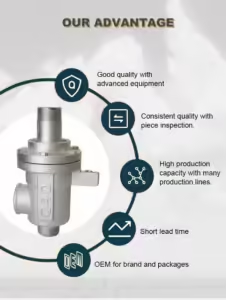
- Consistent manufacturing quality
- Reliable technical support
- Fast production
- Stable product performance
- Long-term parts availability
Dann Hydraulic combines manufacturing experience with practical engineering knowledge to support OEM manufacturers, equipment maintenance companies, distributors, and industrial end users worldwide.
Every project begins with a detailed review of operating conditions, ensuring that each rotary union is matched to the customer’s specific application rather than supplied as a generic catalog item.
This engineering-first approach helps improve equipment reliability while reducing lifecycle maintenance costs.

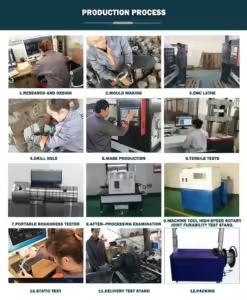
Quality Control at Dann Hydraulic
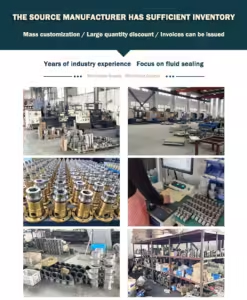
Consistent product quality starts with controlled manufacturing.
Each Q Series Rotary Union undergoes multiple inspection stages before shipment.
Precision CNC Machining
Critical dimensions are machined using CNC equipment to maintain tight tolerances and ensure an accurate fit between rotating and stationary components.
Incoming Material Inspection
Raw materials are inspected before production to verify dimensional accuracy and material consistency.
Assembly Inspection
Each rotary union is assembled according to standardized procedures to ensure correct seal installation and bearing preload.
Pressure Testing
Finished products are pressure tested to verify sealing integrity before shipment.
Leakage Inspection
Every unit is checked for leakage under test conditions to confirm stable sealing performance.
Final Appearance Inspection
Before packaging, products are inspected for surface finish, identification markings, and overall workmanship.
These inspection procedures help ensure that every rotary union delivered to customers meets consistent quality standards.

FAQ
Q: Can this rotary union handle superheated steam?
A: Yes, the Q Series is designed to tolerate superheated steam up to 200°C and 150 PSI, making it suitable for high-temperature processes.
Q: Is this rotary union compatible with hot oil applications?
A: While primarily designed for steam and hot water, Q Series Unions may be customized for hot oil. Please contact us to discuss your requirements in detail.
Q: What industries can benefit from this rotary union?
A: Industries such as printing, textile, paper, chemical, food processing, and energy — any application requiring reliable rotary steam/hot water transfer.
Q: What is the maintenance schedule?
A: The optimized seal and robust build ensure maintenance-free performance, reducing downtime and labor costs.
Q: Can the Q Series be customized for special operating conditions?
A: Yes, we offer customizable designs to meet non-standard temperature, pressure, or mounting configurations.

Global Shipping & Support
We ship Q Series rotary joints worldwide with expedited options available. All units are tested before dispatch and backed by a 12-month warranty. Our technical team can assist with installation, troubleshooting, or custom design needs.

Customer Reviews
“Great value for steam drying lines. We’ve replaced Deublin models with these and saved 40% without sacrificing performance.”
— Zhao W., Textile Plant Engineer, Vietnam
“Solid rotary union for our food kettle systems. Easy to install, runs cool and tight.”
— Carlos M., Process Engineer, Mexico
“Needed custom BSPT threading and they delivered in 5 days. Will buy again for sure.”
— James K., OEM Machinery Integrator, UK

Conclusion
A reliable rotary union plays an essential role in maintaining the efficiency and stability of industrial equipment. Selecting the correct Q Series Rotary Union requires more than matching thread sizes or pressure ratings—it requires careful consideration of operating conditions, media compatibility, sealing technology, and long-term maintenance requirements.
At Dann Hydraulic, we combine precision manufacturing, engineering expertise, and practical industry experience to deliver rotary unions that perform reliably in demanding industrial environments.
Whether you need a replacement for an existing rotary union or a custom solution for new equipment, our engineering team is ready to assist you with product selection, technical consultation, and manufacturing support.
Contact us today to discuss your application and discover how our Q Type Rotary Union solutions can help improve equipment reliability while reducing maintenance costs.
Related products
-
Sale!

Steam Rotary Union for Paper Mills and Industrial Heating Systems
Original price was: $20.00.$15.00Current price is: $15.00. -
Sale!
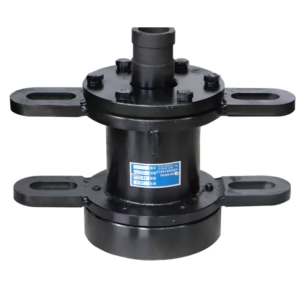
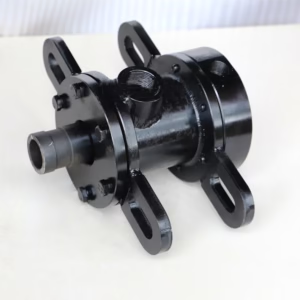
Q Type High Temperature Steam Corrugated Paper Machine Rotary Joint
Original price was: $50.00.$45.00Current price is: $45.00. -
Sale!

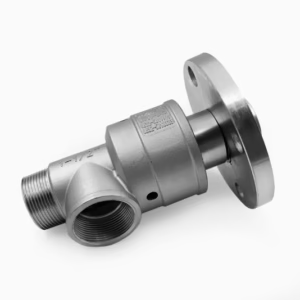
High Speed Rotary Joints Hydraulic Rotary Swivel Joint
Original price was: $25.00.$23.00Current price is: $23.00. -