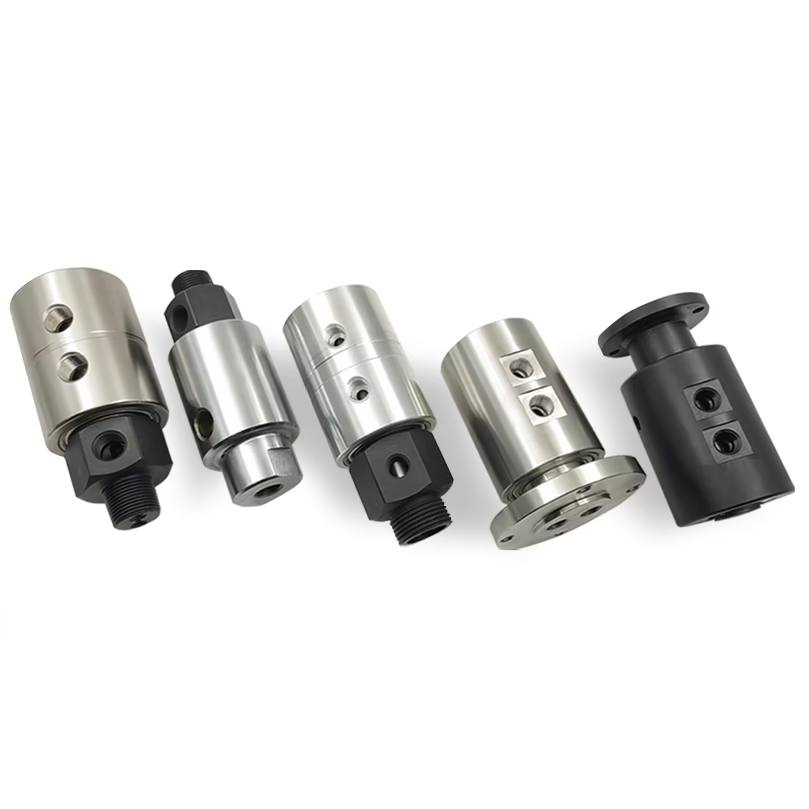
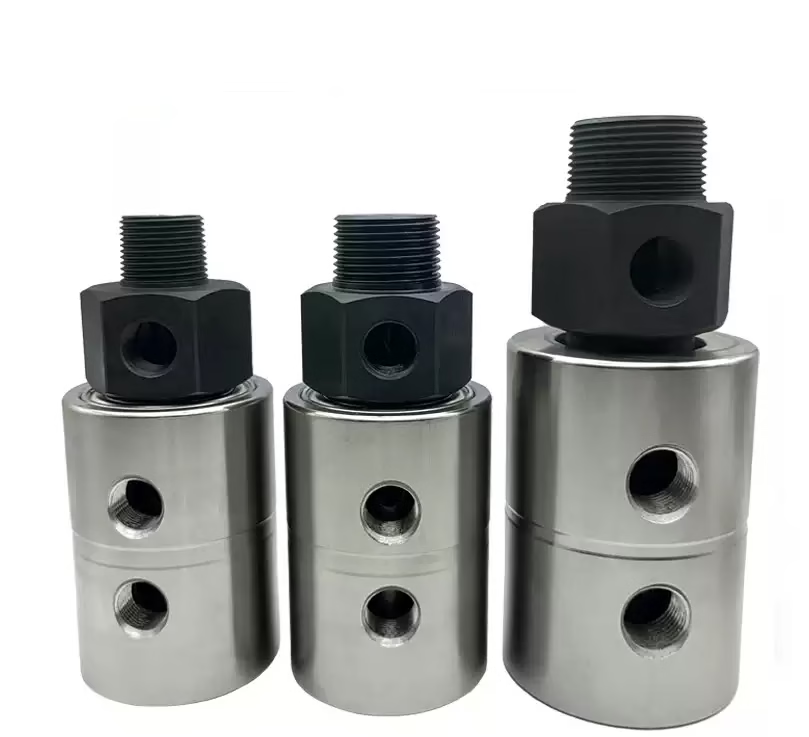
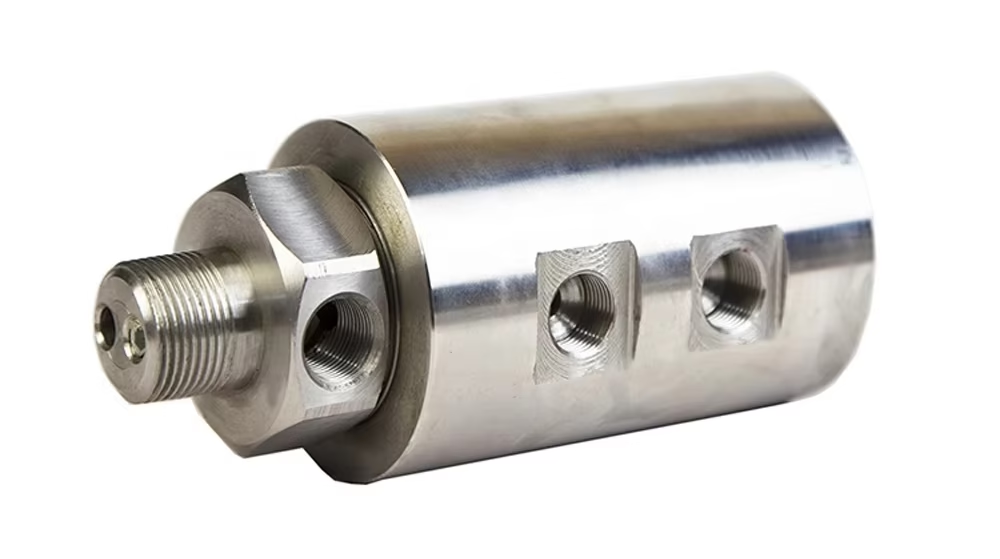
Dual Flow Rotary Union Manufacturer for Industrial Cooling and Heating Systems
Original price was: $100.00.$90.00Current price is: $90.00.
- Maximum Pressure: Up to 400 bar (5800 PSI)
- Maximum Rotational Speed: Up to 42,000 RPM
- Fluid Compatibility: Hydraulic oil, air, water, coolants
- Size Range: Customizable to fit specific needs
- Temperature Range: -20°C to 120°C
Description
In many industrial production processes, rotating equipment requires a continuous supply and return of cooling water, thermal oil, hydraulic oil, or other process media. Unlike a single-passage rotary union that transfers only one flow path, a Dual Flow Rotary Union features two independent internal passages, allowing one medium to enter the rotating shaft while another exits simultaneously. This closed-loop circulation improves heat transfer efficiency, stabilizes process temperature, and supports continuous operation in demanding industrial environments.
Dual flow rotary unions are widely used in cooling rolls, heated rollers, calender machines, steel processing lines, paper machines, rubber equipment, plastic film production, textile machinery, and many other applications where precise temperature control directly affects product quality.
At Dann Hydraulic, we manufacture high-quality dual-flow rotary unions for customers worldwide. As a factory specializing in rotary unions and rotary joints, we focus on machining accuracy, sealing reliability, pressure resistance, and long service life rather than simply copying existing products.
Every rotary union is manufactured using precision CNC equipment, assembled by experienced technicians, and subjected to multiple inspection procedures before shipment. Our goal is to provide customers with reliable rotary unions that perform consistently under continuous industrial operation while offering competitive factory-direct pricing and dependable technical support.
Whether you are replacing an existing rotary union, designing new industrial equipment, or looking for an OEM manufacturing partner, our engineering team can provide solutions tailored to your application.
What Is a Dual Flow Rotary Union?
A Dual Flow Rotary Union (also known as a Dual Passage Rotary Union, Two-Passage Rotary Joint, or Dual Channel Rotary Union) is a mechanical sealing device that transfers two separate fluid circuits between stationary piping and rotating equipment.
Unlike a single-flow rotary union, which provides only one fluid passage, a dual-flow design contains two independent channels inside the rotating shaft.
Typically:
- One passage delivers cooling or heating media into the roll or drum.
- The second passage returns the medium to the circulation system.
Because the supply and return circuits remain completely separated, the medium continuously circulates through the rotating equipment without external leakage or cross-contamination.
This closed-loop design provides several important advantages:
- More efficient heat transfer
- Uniform roll temperature
- Reduced thermal deformation
- Improved product consistency
- Lower energy consumption
- Continuous operation without hose twisting
For many modern production lines, dual-flow rotary unions have become an essential component of temperature control systems.
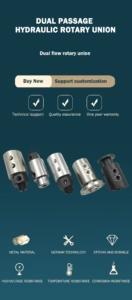
Technical Specifications of Dual Flow Rotary Union
| Parameter | Channel 1 (High-Pressure) | Channel 2 (Low-Pressure) | Industrial Impact |
|---|---|---|---|
| Max. Pressure | 5,000 PSI (hydraulic) | 300 PSI (pneumatic) | Handles mixed systems |
| Max. Flow Rate | 25 GPM | 50 SCFM | Optimizes fluid/pneumatic supply |
| Temp. Range | -40°F to +450°F (-40°C to 232°C) | -40°F to +300°F (-40°C to 149°C) | Cryogenic to foundry-ready |
| Seal Materials | Tungsten Carbide/Viton® (HP) | PTFE/Viton® (LP) | Media-specific optimization |
| Port Options | SAE J518, 1" NPT | 1/2" BSPP, JIC 37° | Global compatibility |
| Housing Material | 316L Stainless Steel (standard) | Anodized Aluminum (lightweight) | Corrosion/Washdown resistance |
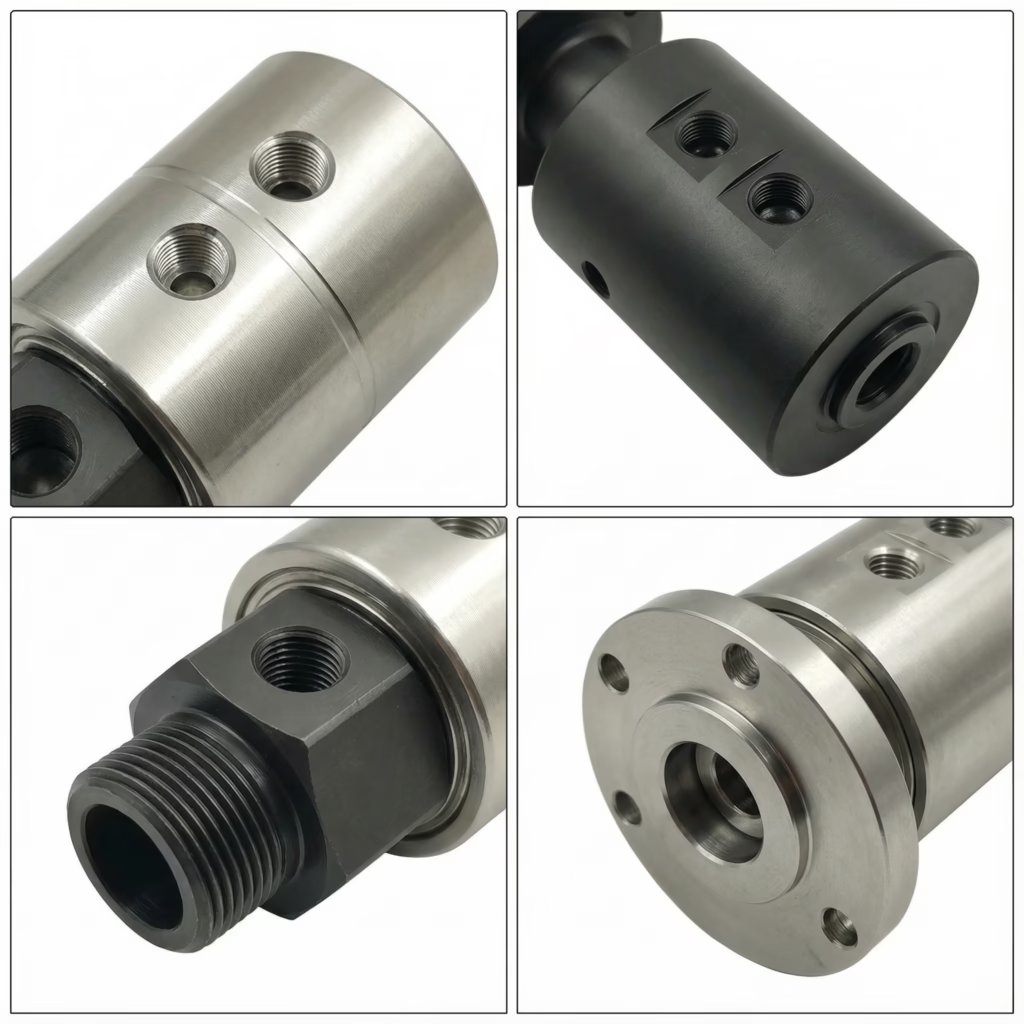
How Does a Dual Flow Rotary Union Work?
Understanding the operating principle helps explain why machining accuracy and sealing quality are so important.
When the machine starts operating, the stationary piping remains fixed while the shaft, roll, or drum rotates continuously.
The rotary union creates a sealed connection between these moving and stationary components.
The working process generally follows these steps:
Step 1 – Medium Enters the Rotary Union
Cooling water, thermal oil, hydraulic oil, or another process fluid enters the stationary housing through the inlet port.
Step 2 – Fluid Travels Through the Internal Passage
The fluid flows through the first internal channel into the rotating roll or drum.
Because the rotating shaft is continuously sealed by precision mechanical seals, pressure is maintained throughout operation.
Step 3 – Heat Exchange Takes Place
Inside the rotating equipment, the medium absorbs or releases heat depending on the application.
Examples include:
- Cooling steel rolls
- Heating rubber calenders
- Maintaining paper drying temperatures
- Controlling plastic film roll temperature
- Cooling aluminum processing rollers
Efficient circulation helps maintain stable production conditions.
Step 4 – Return Flow Leaves Through the Second Passage
After circulating inside the roll, the medium returns through the second internal passage.
The return flow exits the rotary union through an independent outlet port before entering the cooling or heating system again.
This continuous circulation ensures stable process temperature throughout long production cycles.
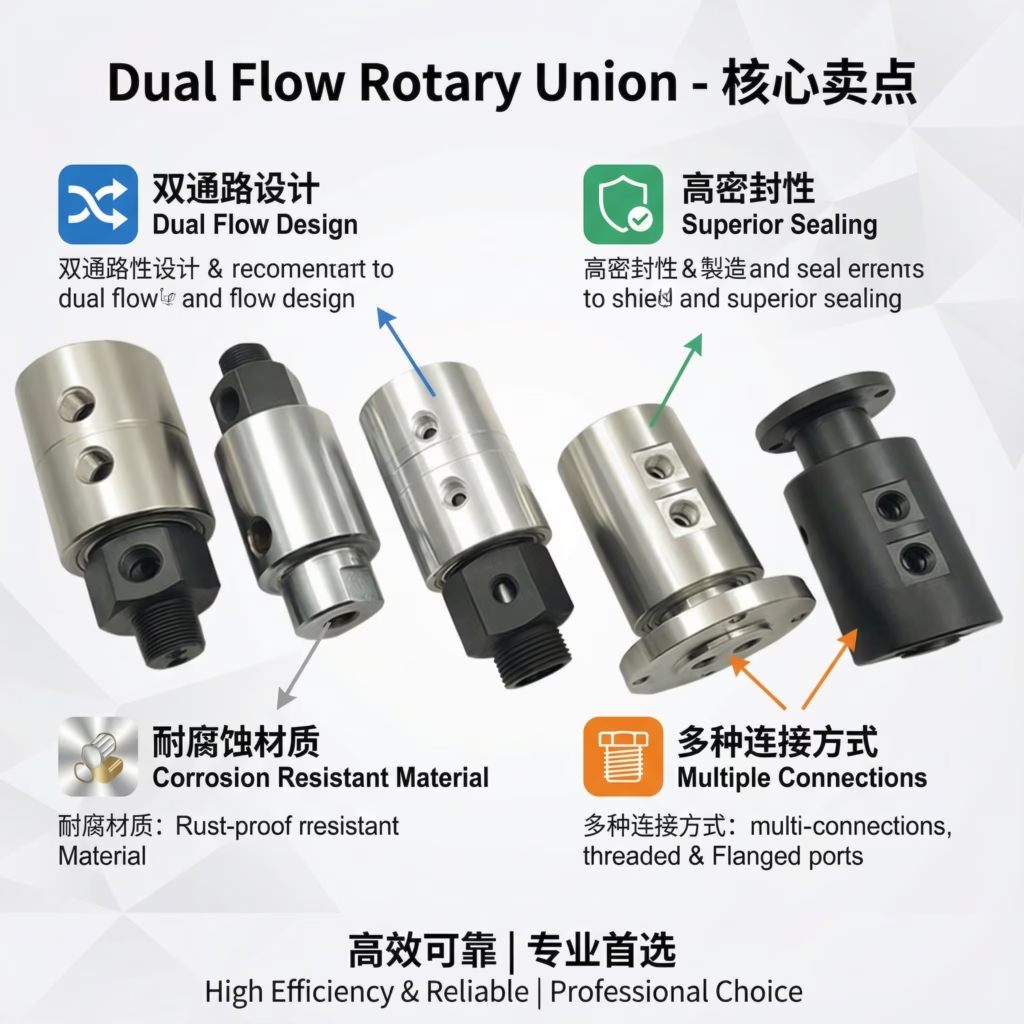
Why Dual Flow Design Is Better Than Single Flow
Although single-passage rotary unions are suitable for many applications, they cannot provide independent supply and return flow.
Dual-flow rotary unions offer several operational advantages.
Continuous Closed-Loop Circulation
The medium continuously circulates without interruption, improving heat transfer efficiency.
Uniform Temperature Distribution
Balanced circulation reduces temperature differences across the roll surface, improving product quality.
Higher Cooling Efficiency
Fresh coolant constantly replaces heated coolant, maintaining stable operating temperatures.
Reduced Thermal Stress
Uniform heating or cooling minimizes thermal expansion that could affect dimensional accuracy.
Improved Production Stability
Stable temperature control leads to more consistent product quality and fewer production interruptions.
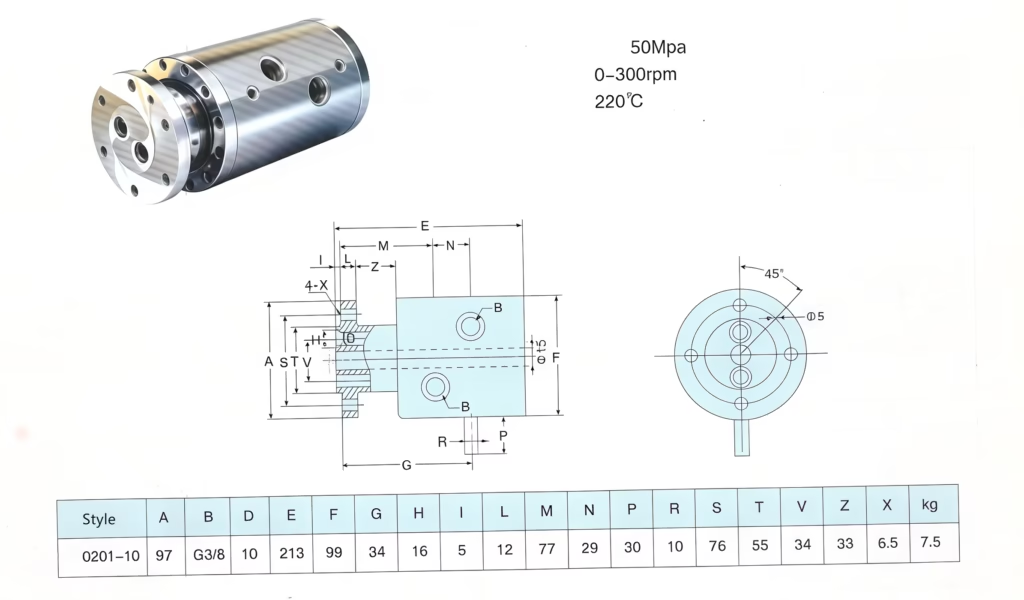
Why Choose Dann Hydraulic?
Industrial rotary unions are expected to operate reliably under demanding conditions, often running continuously for thousands of hours each year. Choosing a supplier with real manufacturing capability is essential for maintaining equipment performance and reducing maintenance costs.
At Dann Hydraulic, we combine engineering expertise, precision manufacturing, and strict quality management to deliver rotary unions trusted by equipment manufacturers, industrial distributors, and maintenance companies worldwide.
Specialized Rotary Union Manufacturer
We focus on the design and manufacture of rotary unions for industrial fluid transfer applications.
Our product range includes:
- Single Passage Rotary Unions
- Dual Flow Rotary Unions
- Multi-Passage Rotary Unions
- High-Pressure Rotary Unions
- High-Speed Rotary Unions
- Hydraulic Rotary Joints
- Customized Rotary Union Solutions
By concentrating on rotary union technology, we continuously improve our products based on practical manufacturing experience and customer feedback.
Advanced Manufacturing Equipment
Consistent product quality begins with precision manufacturing.
Our production facility is equipped with modern CNC machining centers and precision inspection instruments, allowing us to maintain tight tolerances on critical components.
Careful machining of bearing seats, sealing surfaces, and internal flow passages contributes directly to stable sealing performance and smooth operation.
Strict Quality Management
Every rotary union follows a documented production and inspection process.
Our quality procedures include:
- Incoming raw material inspection
- In-process dimensional control
- Mechanical seal verification
- Bearing inspection
- Air leakage testing
- Hydraulic pressure testing
- Rotation performance testing
- Final inspection before shipment
This systematic approach helps ensure consistent quality across every production batch.
Engineering Support for Every Project
Selecting the correct rotary union requires understanding the customer’s equipment and operating conditions.
Our engineering team provides technical support throughout the project, including:
- Product selection
- Technical drawing review
- Material recommendations
- OEM development
- Installation guidance
- Troubleshooting assistance
By working closely with customers from the beginning, we help reduce engineering risks and improve equipment reliability.
Global Supply Experience
Our rotary unions are used by customers in Europe, North America, South America, Southeast Asia, the Middle East, and other international markets.
We work with:
- Machine builders
- Industrial distributors
- OEM manufacturers
- Maintenance service providers
- Engineering companies
- End users across a wide range of industries
This international experience allows us to understand diverse technical standards and customer requirements.
Flexible OEM Manufacturing
Many customers require products tailored to their equipment or brand.
We offer comprehensive OEM services, including:
- Customized dimensions
- Thread modifications
- Material selection
- Surface treatments
- Laser logo engraving
- Private-label packaging
- Product optimization based on application requirements
Our engineering and production teams work together to deliver customized solutions without compromising quality.


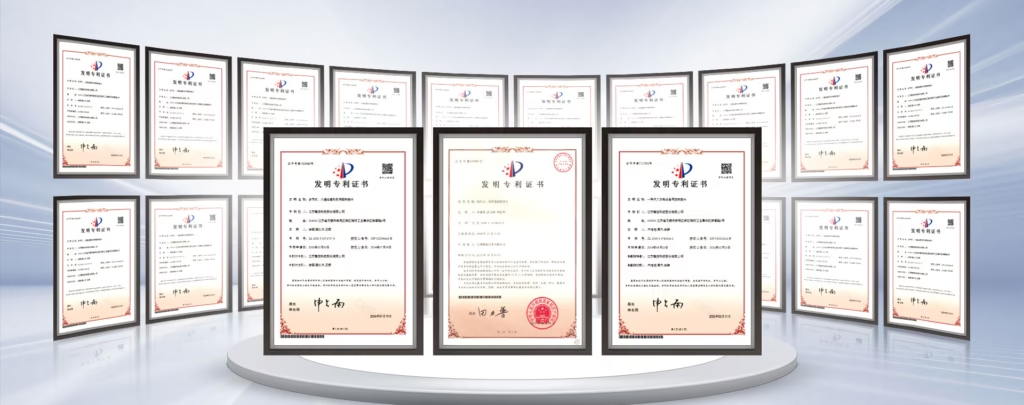
Manufacturing Reliable Dual Flow Rotary Unions Requires More Than Copying Dimensions
At first glance, many dual-flow rotary unions available on the market appear almost identical. The mounting flange, threaded ports, and overall dimensions may look the same, yet their performance in continuous industrial service can vary significantly.
From our experience, the difference is rarely visible from the outside. Long service life depends on machining precision, seal technology, bearing quality, assembly accuracy, and testing procedures.
At Dann Hydraulic, we manufacture rotary unions with the understanding that they often operate 24 hours a day in production lines where unplanned downtime is extremely expensive. A leaking rotary union on a paper machine, steel rolling mill, or plastic film line can interrupt production, damage finished products, and increase maintenance costs.
For this reason, our engineering philosophy focuses on long-term reliability rather than simply producing a dimensionally compatible component.
Engineering Begins Before Production
Every dual-flow rotary union starts with an engineering review instead of immediate machining.
Before production begins, our engineering team evaluates:
- Customer drawings
- Operating pressure
- Rotational speed
- Working medium
- Shaft dimensions
- Installation space
- Pipe connection type
- Temperature requirements
- Expected service life
This information allows us to select the appropriate sealing materials, bearing configuration, housing material, and machining tolerances.
For OEM projects, we also review the customer’s complete operating conditions to recommend improvements where possible, rather than simply reproducing an existing design.
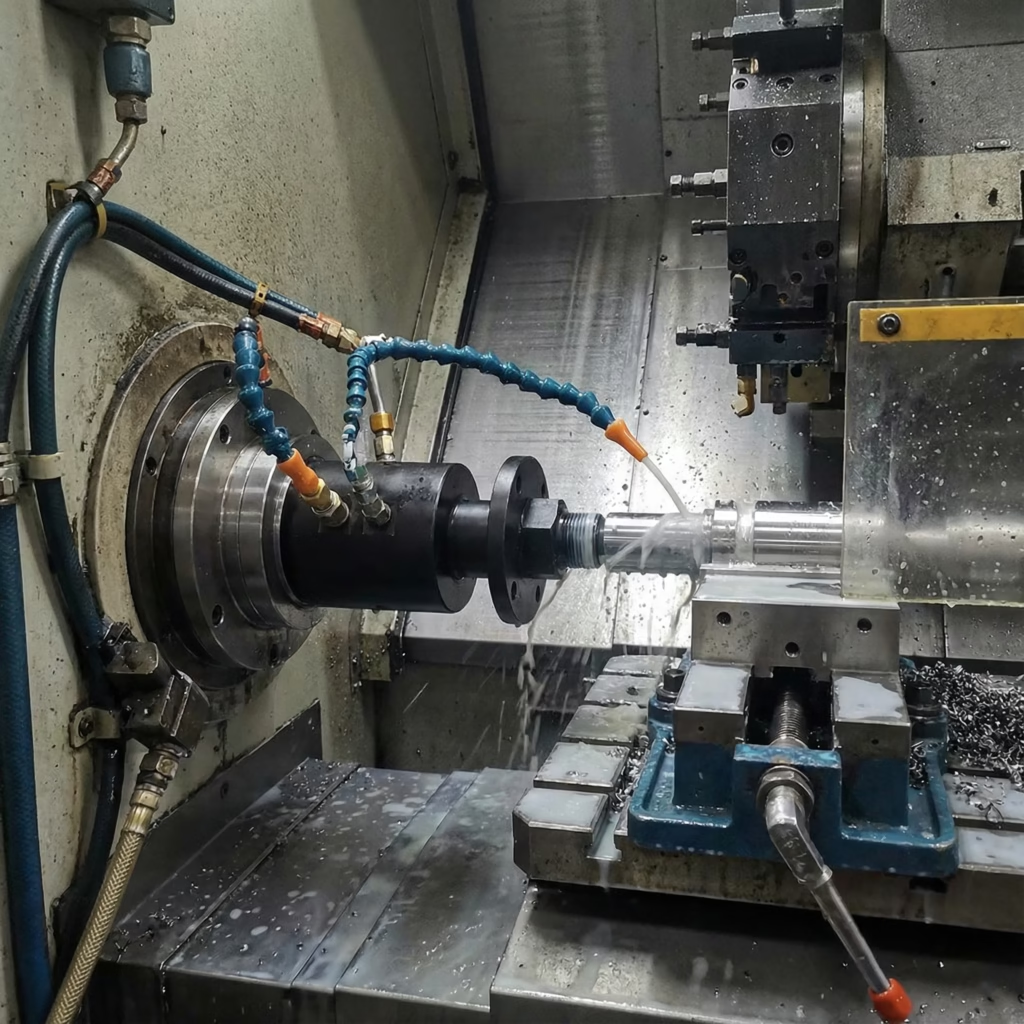
Precision CNC Machining
A rotary union is only as accurate as the components from which it is manufactured.
Our production workshop uses CNC machining centers to manufacture critical components with consistent dimensional accuracy.
Key machining operations include:
- Housing machining
- Shaft turning
- Thread machining
- Seal groove machining
- Bearing seat machining
- Flow channel drilling
- Surface finishing
Each machining process is performed according to documented production procedures to ensure consistency across every production batch.
Particular attention is given to concentricity between the rotating shaft and bearing seats because even small deviations can increase vibration and reduce seal life.
Internal Flow Passage Design
The performance of a dual-flow rotary union depends heavily on the design of its internal flow channels.
Unlike a single-passage rotary union, a dual-flow design must keep the supply and return circuits completely separated while maintaining efficient fluid circulation.
Our engineers optimize the internal flow path to achieve several objectives:
- Minimize pressure loss
- Improve flow distribution
- Reduce turbulence
- Maintain separation between flow channels
- Improve overall heat transfer efficiency
By carefully controlling the geometry of the internal passages, we help customers achieve more stable cooling or heating performance throughout continuous production.
Material Selection Based on Application
Different industries place different demands on rotary unions.
Rather than offering only one standard configuration, we select materials according to the customer’s operating conditions.
Mechanical Seal Manufacturing
The mechanical seal is the heart of every rotary union.
Even minor imperfections on the seal faces can significantly reduce service life.
To achieve reliable sealing performance, the sealing faces undergo multiple manufacturing processes, including:
- Precision grinding
- Fine lapping
- Surface inspection
- Flatness verification
- Cleaning before assembly
The objective is to create an extremely smooth sealing interface that minimizes friction while maintaining stable contact during rotation.
Depending on the application, we provide different material combinations.
Bearing Selection and Assembly
Bearings support the rotating shaft throughout continuous operation.
Poor bearing installation can shorten the service life of both the bearings and mechanical seals.
During assembly, technicians carefully verify:
- Bearing dimensions
- Surface condition
- Lubrication
- Installation alignment
- Axial positioning
- Rotational smoothness
Correct bearing installation reduces vibration while improving sealing stability.
Assembly Procedures
Assembly is performed according to standardized work instructions developed through years of production experience.
Technicians verify:
- Seal orientation
- Spring installation
- Torque values
- Bearing position
- O-ring installation
- Internal clearance
- Rotation resistance
Every completed assembly is inspected before testing begins.

Typical Industrial Applications
Dual-flow rotary unions are used wherever rotating equipment requires continuous heating or cooling.
Below are some of the most common industries we serve.
Paper Manufacturing Industry
Paper mills rely heavily on heated and cooled rolls during production.
Dual-flow rotary unions transfer steam, condensate, water, or thermal oil to maintain stable roll temperatures.
Typical applications include:
- Paper drying cylinders
- Calendar rolls
- Coating machines
- Paper finishing equipment
- Tissue converting machinery
Reliable rotary unions help improve paper surface quality, reduce energy consumption, and minimize unexpected downtime.
Steel Processing Industry
Steel mills operate under extremely demanding conditions.
Cooling rolls are exposed to:
- High temperatures
- Heavy mechanical loads
- Continuous operation
- Water contamination
- Severe vibration
Dual-flow rotary unions maintain continuous cooling circulation to protect rolls and improve production efficiency.
Typical equipment includes:
- Continuous casting machines
- Hot rolling mills
- Cold rolling mills
- Leveling machines
- Strip processing lines
Plastic Film Manufacturing
Plastic extrusion lines require precise roll temperature control.
If cooling efficiency decreases, manufacturers may experience:
- Uneven film thickness
- Surface defects
- Dimensional instability
- Reduced production speed
Dual-flow rotary unions maintain stable cooling water circulation inside chill rolls, ensuring consistent product quality throughout continuous production.
Rubber and Tire Manufacturing
Rubber processing equipment often uses heated rolls supplied with thermal oil or steam.
Applications include:
- Rubber calenders
- Tire building equipment
- Mixing mills
- Laminating machines
- Conveyor belt production
Stable heating improves rubber processing consistency while reducing production defects.
Textile Machinery
Many textile finishing machines rely on heated drums to dry, press, or finish fabrics.
Dual-flow rotary unions circulate thermal oil or hot water to maintain precise process temperatures, contributing to improved fabric quality and reduced energy consumption.
Printing and Packaging Equipment
Printing cylinders and laminating rollers require controlled temperatures to achieve consistent print quality and adhesive performance.
Dual-flow rotary unions support continuous circulation while eliminating hose twisting and leakage problems during rotation.
Food Processing Equipment
In food production, rotating drums are often used for cooling, heating, or drying products.
Typical applications include:
- Cooling drums
- Chocolate processing
- Sugar production
- Snack food equipment
- Dairy processing
Depending on the working medium and hygiene requirements, stainless steel rotary unions are commonly selected for these applications.
Chemical and Pharmaceutical Equipment
Some reactors, dryers, and mixers use rotating drums that require precise temperature control.
Dual-flow rotary unions safely transfer thermal oil, cooling water, or other compatible media while maintaining reliable sealing under continuous operation.
Customer Pain Points & Solutions
1. Leakage and Cross-Contamination
Pain Point: Mixing of fluids or leaks can cause equipment damage and contamination.
Solution: Independent dual flow channels with high-precision seals prevent leakage and media mixing.
2. Frequent Maintenance and Downtime
Pain Point: Poorly designed unions require frequent servicing, increasing downtime.
Solution: Durable materials, advanced sealing, and bearing isolation systems extend service intervals.
3. Installation Flexibility
Pain Point: Limited connection options restrict compatibility with existing systems.
Solution: Multiple thread types and mounting options simplify integration into diverse setups.
4. High-Speed Operation Challenges
Pain Point: Rotary unions may fail or wear quickly at high rotational speeds.
Solution: Precision bearings and balanced seal assemblies enable smooth operation at speeds up to 3,500 RPM.

Frequently Asked Questions (FAQ)
1. What is a Dual Flow Rotary Union?
A dual-flow rotary union is a rotary sealing device designed with two independent internal passages. One passage delivers the working medium into the rotating equipment, while the second passage returns it to the circulation system. This closed-loop design enables continuous heating or cooling without hose twisting or fluid leakage.
It is commonly used in cooling rolls, heated rollers, drums, calenders, and other rotating equipment requiring stable temperature control.
2. What is the difference between a Single Flow and a Dual Flow Rotary Union?
The main difference is the number of fluid passages.
A single-flow rotary union transfers one medium through a single passage and usually requires another return path outside the shaft.
A dual-flow rotary union integrates both the supply and return circuits inside the same rotary union, providing:
- Higher cooling efficiency
- More stable temperature control
- Cleaner piping layout
- Better energy efficiency
- Reduced installation space
For applications involving continuous heating or cooling of rolls, a dual flow design is generally the preferred solution.
3. Which media can a Dual Flow Rotary Union transfer?
Our dual flow rotary unions are suitable for a wide range of industrial media, including:
- Cooling water
- Hot water
- Thermal oil
- Hydraulic oil
- Steam and condensate
- Compressed air
- Vacuum
- Certain chemical fluids (with compatible seal materials)
If your application involves aggressive chemicals or high temperatures, our engineers can recommend the appropriate material combination.
4. Which industries commonly use Dual Flow Rotary Unions?
Dual flow rotary unions are widely used in:
- Paper and pulp mills
- Steel processing plants
- Plastic film and sheet extrusion
- Rubber and tire manufacturing
- Textile machinery
- Printing and packaging equipment
- Food processing machinery
- Chemical processing equipment
- Battery production lines
- General industrial machinery
These industries rely on stable heat transfer to maintain product quality and production efficiency.
5. Can the two internal passages leak into each other?
Under normal operating conditions, the two flow passages remain completely separated.
However, after long-term operation, worn mechanical seals or damaged internal components may allow internal cross-port leakage.
This is why every rotary union manufactured by Dann Hydraulic undergoes pressure and leakage testing before shipment to verify the integrity of both flow circuits.
6. How do I know when the rotary union should be replaced?
Common signs include:
- External leakage
- Reduced cooling or heating efficiency
- Pressure loss
- Increased vibration
- Bearing noise
- Higher operating temperature
- Cross-port leakage
- Reduced product quality
Replacing the rotary union during planned maintenance is usually more economical than waiting for complete failure.
7. What seal materials are available?
We offer multiple sealing combinations to suit different applications:
- Silicon Carbide + Carbon Graphite
- Silicon Carbide + Silicon Carbide
- Tungsten Carbide combinations
- Customized seal materials for special applications
Our engineers recommend the optimal seal configuration based on the working medium, pressure, temperature, and rotational speed.
8. Can you manufacture customized Dual Flow Rotary Unions?
Yes.
As a factory specializing in rotary unions, we provide OEM and customized manufacturing services.
Customization options include:
- Thread standards
- Flange dimensions
- Housing materials
- Seal materials
- Number of passages
- Surface treatments
- Laser logo engraving
- Private-label packaging
Customers can provide drawings, samples, or technical specifications for evaluation.
9. How do you ensure product quality?
Quality control is integrated into every stage of production.
Each rotary union undergoes:
- Raw material inspection
- CNC machining inspection
- Dimensional measurement
- Mechanical seal inspection
- Assembly verification
- Air leakage testing
- Hydraulic pressure testing
- Rotation performance testing
- Final visual inspection
Only products that pass all inspections are approved for shipment.
10. What information should I provide for a quotation?
To recommend the correct rotary union quickly, please provide:
- Equipment name
- Industry or application
- Working medium
- Operating pressure
- Operating temperature
- Rotational speed
- Connection type
- Installation dimensions
- Photos or technical drawings (if available)
This information enables our engineering team to verify compatibility and recommend the most suitable solution.
11. Do you support OEM and private-label production?
Yes.
We regularly cooperate with:
- Equipment manufacturers
- Industrial distributors
- Maintenance companies
- Engineering contractors
OEM services include customized products, laser marking, branded packaging, and confidential manufacturing according to customer specifications.
12. Why choose Dann Hydraulic instead of a trading company?
Working directly with a manufacturer offers several advantages:
- Direct communication with engineers
- Stable production quality
- Shorter lead times
- Flexible customization
- Better cost efficiency
- Long-term technical support
- Consistent supply for repeat orders
For customers requiring reliable industrial components, factory-direct cooperation often delivers greater long-term value.

Partner with a Reliable Rotary Union Manufacturer
A dual flow rotary union may represent only a small part of your production equipment, but its performance directly influences:
- Temperature control
- Heat transfer efficiency
- Product quality
- Equipment reliability
- Maintenance costs
- Production uptime
Choosing a high-quality rotary union helps reduce unexpected downtime, improve operating efficiency, and extend the service life of your rotating equipment.
At Dann Hydraulic, we are committed to providing precision-manufactured rotary unions backed by engineering expertise, reliable quality control, and responsive technical support.
Whether you need a standard product, a customized solution, or long-term OEM cooperation, we are ready to support your project.
Request a Quote Today
Looking for a dependable Dual Flow Rotary Union for your industrial equipment?
Our engineering team can recommend the most suitable solution based on your application.
We provide:
- Factory-direct pricing
- OEM and customized manufacturing
- Precision CNC machining
- Strict pressure and leakage testing
- Fast technical support
- Stable production capacity
- Worldwide delivery
Simply send us your drawings, dimensions, or application details, and we will recommend the right rotary union for your equipment.
Related products
-
Sale!
Hydraulic High Pressure Right Angle 90 Degree Rotary Union
Original price was: $30.00.$26.00Current price is: $26.00. -
Sale!
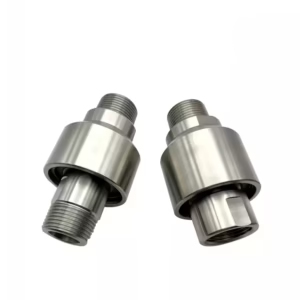
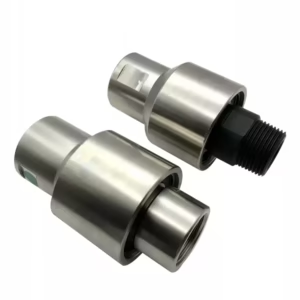
Inline 360 Degree Straight High Pressure Rotary Union
Original price was: $30.00.$24.00Current price is: $24.00. -
Sale!
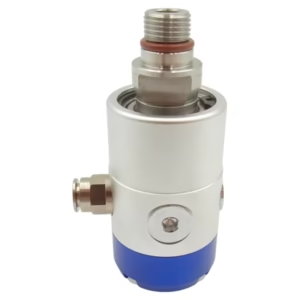

Coolant Rotary Joint Supplier | High-Speed 5000 RPM Replacement for Deublin
Original price was: $60.00.$58.00Current price is: $58.00. -
Sale!
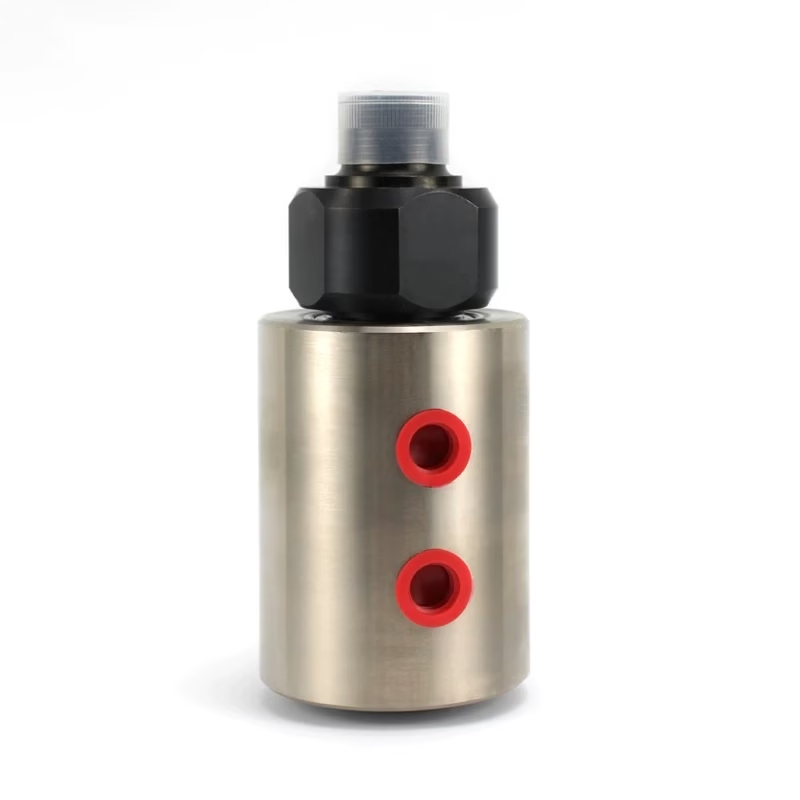
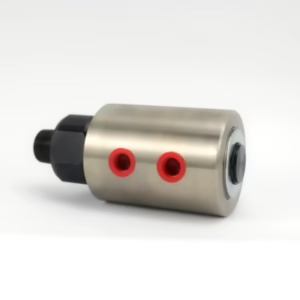
Dual Pneumatic Rotary Union-Precision Air Transfer with Dual Passages
Original price was: $100.00.$90.00Current price is: $90.00.