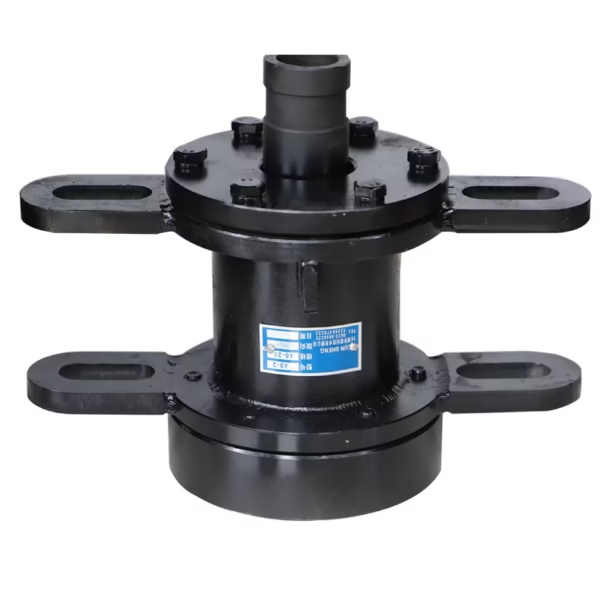
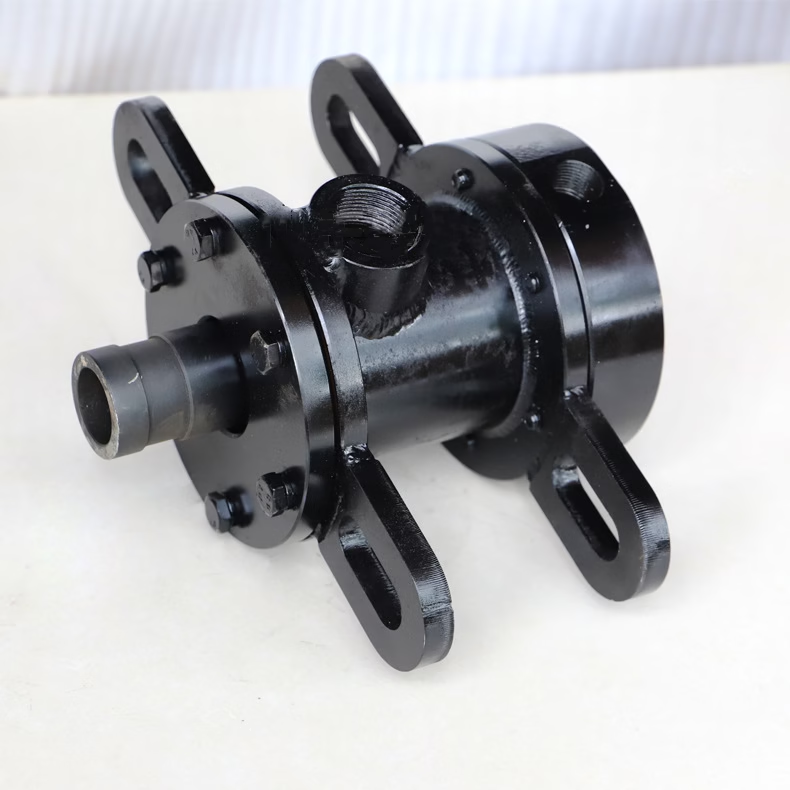
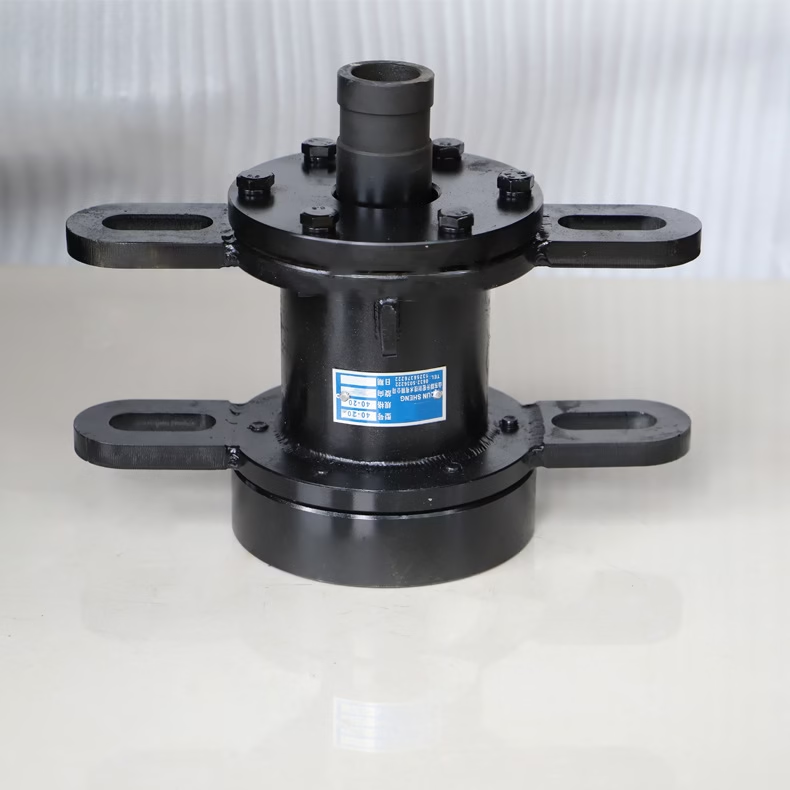
Q Type High Temperature Steam Corrugated Paper Machine Rotary Joint
Original price was: $50.00.$45.00Current price is: $45.00.
- Maximum Pressure: 1.8 MPa (18 bar)
- Maximum Temperature: 220 °C
- Maximum Speed: 150 RPM
- Materials: Cast Iron, Gray Iron, Ductile Iron, 45# Steel
- Seal Type: Q-Face Sealing Structure
Description
High-temperature steam rotary joint operates under one of the most demanding working conditions in industrial fluid transfer systems. Unlike standard rotary unions for water or hydraulic oil, steam applications involve thermal expansion, condensate formation, pressure fluctuations, and severe sealing stress.
Our High Temperature Steam Rotary Joint is engineered specifically for continuous steam service in rotating cylinders, drying systems, and industrial heating equipment. It provides stable sealing performance under high thermal load, reduced leakage risk, and long service life in harsh operating environments.
As a professional rotary joint manufacturer in China, we design and produce replacement solutions compatible with major international brands while maintaining cost efficiency and engineering reliability.
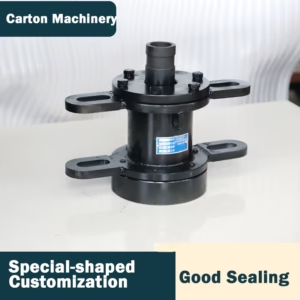
The Significance of Rotary Joints in Corrugated Paper Machines
Rotary joints play a crucial role in the functionality of corrugated paper machines. These specialized devices facilitate the transfer of various media between stationary and rotating components of the machine. By ensuring a leak-free and efficient connection, rotary joints enable the continuous flow of energy and materials, which is crucial for producing high-quality corrugated paper.
Without reliable rotary joints, corrugated paper machines would be prone to leaks, inefficiencies, and breakdowns, leading to costly downtime and reduced productivity. We engineer our rotary joints to withstand the demanding conditions of paper manufacturing, deliver long-lasting performance, and minimize maintenance requirements.
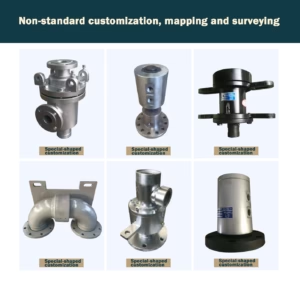
Industrial Applications
Steam rotary joints are widely used in continuous thermal processing systems where rotating cylinders require constant heat transfer.
Paper Industry Dryer Cylinders
Steam is introduced into rotating dryer cylinders to remove moisture from paper webs.
Typical applications include:
- Yankee dryer cylinders
- Multi-cylinder paper drying sections
- Tissue machine drying systems
Key requirements:
- Stable steam pressure transfer
- Condensate discharge control
- Long-term sealing reliability
Textile Drying and Heat-Setting Equipment
In textile production, steam heating ensures fabric dimensional stability and surface finishing quality.
Applications include:
- Fabric drying drums
- Heat-setting machines
- Continuous finishing lines
The rotary joint must withstand frequent temperature cycling and high humidity conditions.
Rubber and Tire Manufacturing
Steam is used for vulcanization and heat curing processes.
Equipment includes:
- Vulcanizing drums
- Rubber curing cylinders
- Heating rollers
Reliable steam transfer is essential to maintain uniform product quality.
Corrugated Board and Packaging Industry
Steam heating rollers are widely used in corrugated paper production lines.
Functions include:
- Adhesive activation
- Paper shaping and drying
- Temperature stabilization of rollers
Key Features of High Temperature Steam Rotary Joint
Advanced Q-Face Sealing Structure
The unique Q-face seal design provides automatic centering and compensation, ensuring a tight, reliable seal even under low-speed conditions and slight misalignment. This results in minimal leakage and enhanced operational safety.
High Temperature and Pressure Capability
Supports steam pressures up to 1.8 MPa (approximately 18 bar) and temperatures reaching 220°C, making it ideal for high-temperature steam applications in corrugated board production.
Robust Material Construction
Manufactured from durable materials such as cast iron, gray iron, ductile iron, and 45# steel, the rotary joint withstands harsh industrial environments, ensuring longevity and resistance to wear.
No Lubrication Required
The design eliminates the need for external lubrication, reducing maintenance efforts and operational costs while enhancing reliability.
Self-Compensating and Self-Centering
The spring-loaded mechanism compensates for seal wear and axial movement, maintaining optimal sealing performance over extended service periods.
Suitable for Low-Speed and Low Coaxiality Equipment
Perfectly suited for corrugating machines operating at speeds up to 150 RPM, the joint accommodates slight shaft misalignments without compromising seal integrity.
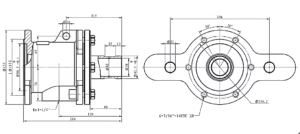
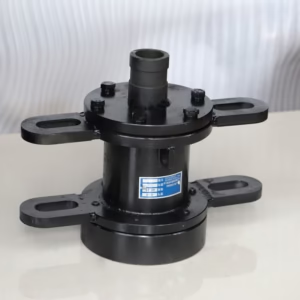
| Item | Valve |
|---|---|
| Speed | 100-350 RPM |
| Temperature | 355 ℃/ 671 ℉ |
| Pressure | 18 Bar/260 Psi |
| Medium | Steam |
Common Problems in Steam Rotary Joints
Seal Leakage Under High Temperature
Steam leakage is typically caused by thermal distortion of sealing faces.
Root causes:
- Uneven thermal expansion
- Seal face wear (carbon/graphite degradation)
- Pressure fluctuations in the steam supply
Engineering solution:
- High-stability sealing geometry
- Optimized thermal expansion compensation design
- Precision lapped seal faces
Condensate Accumulation and Water Hammer
Condensate inside the rotary system can lead to pressure shock and mechanical stress.
Root causes:
- Poor drainage design
- Improper steam trap configuration
- Low-speed intermittent operation
Solution:
- Integrated condensate discharge channels
- Optimized internal flow path design
- Stable steam distribution structure
Seal Cracking and Thermal Fatigue
Repeated heating and cooling cycles may damage sealing materials.
Root causes:
- Thermal cycling stress
- Improper material selection
- Dry running during startup/shutdown
Solution:
- High-temperature resistant sealing materials
- Controlled start-up procedures
- Balanced sealing force design
Bearing Damage in High Temperature Conditions
Bearings may fail due to heat ingress or contamination.
Root causes:
- Steam leakage into the bearing chamber
- Lubricant degradation
- Misalignment during installation
Solution:
- Isolated bearing chamber design
- High-temperature grease options
- Precision machining for alignment control
Engineering Design Features
Our steam rotary joints are designed with industrial reliability in mind:
- High-temperature resistant sealing system
- Carbon, graphite, and silicon carbide seal faces
- Thermal expansion balanced structure
- Precision CNC-machined housing
- Optional condensate drainage design
- Stable operation under continuous steam service
Compatible media:
- Saturated steam
- Superheated steam (depending on model design)
- Hot condensate
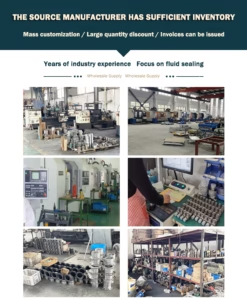
Pain Points of Steam Corrugated Paper Machine Rotary Joint
Pain Point 1: Sealing Failure
Under high-temperature and high-pressure steam environments, traditional seals are prone to aging, deformation, and leakage. Leakage not only causes steam waste but also affects the normal operation of the corrugated paper machine, resulting in production interruptions and increased maintenance costs.
Solution 1: Advanced Sealing Technology
Adopt high-performance sealing materials such as graphite-filled PTFE or special composite materials with excellent high-temperature and wear resistance. These materials can maintain good sealing performance under high-temperature and high-pressure steam conditions, reducing the risk of leakage and extending the seal’s service life. In addition, use double-seal or multi-seal structures to enhance the sealing effect further.
Pain Point 2: Corrosion and Wear
High-temperature steam contains certain impurities and moisture, which can cause serious corrosion and wear to the rotary joint materials. This reduces the service life of the rotary joint, requires frequent replacement, and increases equipment operation costs.
Solution 2:Material Upgrade
Use high-quality stainless steel or special alloy materials with excellent corrosion-resistance and wear-resistance for the rotary joint body and key components. Coat the internal surface of the joint with anti-corrosion and wear-resistant coatings, such as ceramic coatings or nickel-based alloy coatings, to improve the corrosion and wear resistance of the joint and extend its service life.
Pain Point 3: High Energy Consumption
Inefficient heat transfer and steam leakage lead to high energy consumption. The machine needs to consume more steam to maintain the required temperature, increasing production costs and hurting the environment.
Solution 3: Energy-Saving Design
Optimize the internal structure of the rotary joint to improve heat transfer efficiency and reduce steam leakage. Install heat-insulation layers on the outer surface of the rotary joint to minimize heat loss. Use energy-efficient steam control systems to precisely regulate steam flow and pressure, reducing unnecessary steam consumption.
Pain Point 4: Poor Rotational Stability
During the high-speed rotation of the corrugated paper machine, the rotary joint may experience vibration and instability, which can damage the internal structure of the joint, reduce its sealing performance, and affect the quality of corrugated paper production.
Solution 4: Enhanced Rotational Stability
Install high-precision bearings and balance the rotary joint during the manufacturing process to ensure stable rotation at high speeds. Use vibration-damping and shock-absorbing devices to reduce the impact of vibration on the rotary joint, improving its operational stability and protecting the internal structure of the joint.
Pain Points 5: Difficult Installation and Maintenance
The complex structure of the rotary joint makes installation and maintenance time-consuming and labor-intensive. Specialized tools and technical personnel often extend maintenance time and reduce production efficiency.
Solution 5: Simplified Design for Easy Installation and Maintenance
Redesign the structure of the rotary joint to make it more modular and user-friendly. Provide detailed installation and maintenance manuals and online video tutorials to help users install and maintain the rotary joint more easily. Develop quick-release and easy-replaceable components to reduce maintenance time and labor costs, minimizing production downtime.
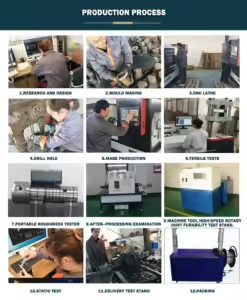
Manufacturing Capability and Quality Assurance
We operate a dedicated rotary union manufacturing facility equipped with:
- CNC machining centers for precision components
- High-temperature steam testing systems
- Pressure and leakage test stations
- Seal face flatness inspection equipment
- Assembly and dynamic balance testing lines
Each steam rotary joint undergoes strict inspection before shipment, including pressure holding tests and thermal stability verification.
We also support OEM and replacement solutions for international brands such as Deublin and Kadant equivalent systems.


Why Choose Our Steam Rotary Joints
- Proven industrial application experience in the paper and textile industries
- Cost-effective replacement for imported rotary unions
- Stable sealing performance under thermal cycling
- Engineering support for custom configurations
- Long service life under continuous steam operation

Frequently Asked Questions
What temperature can a steam rotary joint handle?
Depending on the seal configuration, most designs operate safely under high-temperature steam conditions above 150°C, with specialized models handling even higher ranges.
Can your product replace Deublin steam rotary unions?
Yes. We provide compatible replacement solutions for multiple Deublin steam rotary union models.
What causes steam leakage in rotary joints?
The most common causes are thermal expansion mismatch, worn sealing faces, and unstable steam pressure.
How can condensate affect performance?
Condensate can create water hammer effects, leading to mechanical shock and accelerated wear of internal components.
Do you offer custom designs?
Yes. We provide OEM customization based on pressure, temperature, rotation speed, and installation constraints.
What industries use steam rotary joints the most?
Paper manufacturing, textile production, rubber vulcanization, and corrugated packaging industries are the primary users.

Contact for Engineering Support
If you are replacing a failed steam rotary joint or designing a new thermal system, our engineering team can provide application-based selection support, CAD drawings, and customized solutions for your equipment.
Related products
-
Sale!

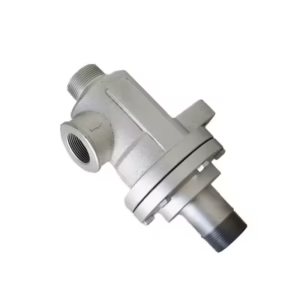
Rotary Union for Steam – Q Series for Heat Transfer Equipment
Original price was: $15.00.$13.00Current price is: $13.00. -
Sale!

High Pressure and High Temperature Universal Rotary Union
Original price was: $15.00.$13.00Current price is: $13.00. -
Sale!

Q Style High Temperature Rotary Unions
Original price was: $15.00.$13.00Current price is: $13.00. -
Sale!

9000 Series Steam and Hot Oil Unions Rotary Union Manufacturing
Original price was: $130.00.$120.00Current price is: $120.00.