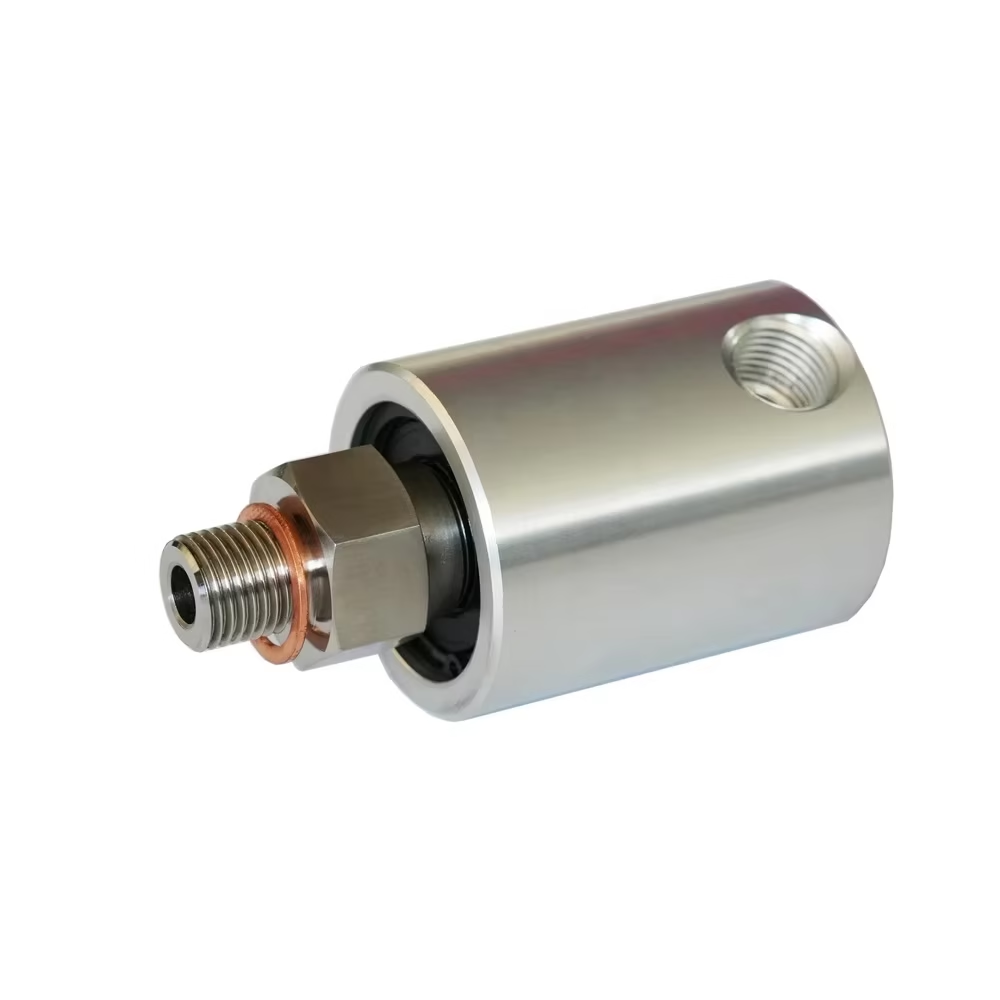
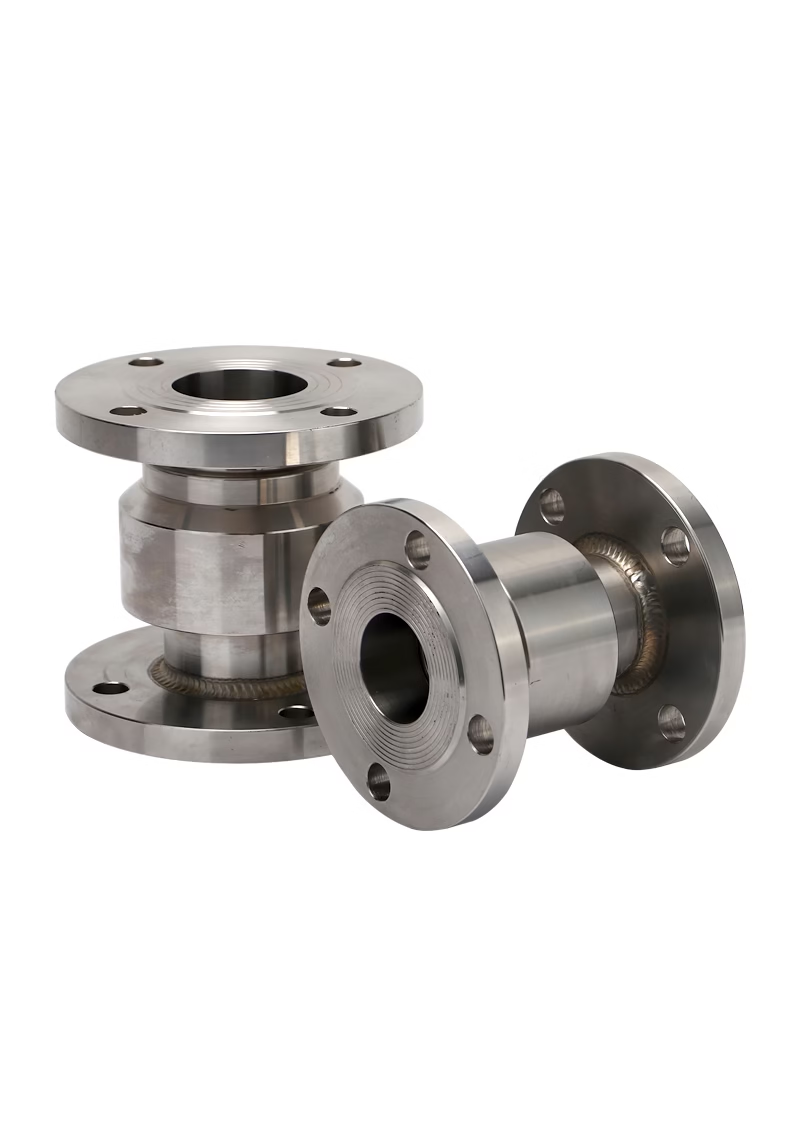
Hydraulic Rotary Joint Manufacturer | High Pressure Rotary Joint for Industrial Equipment
Original price was: $35.00.$31.00Current price is: $31.00.
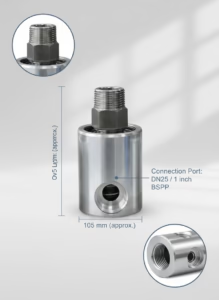
- Size Range: 1/8″(DN06) to 1 1/2″ (DN40)
- Maximum Pressure: Up to 400 bar
- Maximum Temperature: Up to 120°C
- Speed Capability: High-speed options available
- Thread Types: LH & RH UNF, Metric, BSP & NPT
Description
Hydraulic systems are designed to transmit power efficiently, but whenever hydraulic hoses or pipelines must connect to a continuously rotating component, a conventional fixed connection is no longer suitable. Twisted hoses, oil leakage, pressure loss, and premature hose failure quickly become major reliability issues. This is where a hydraulic rotary joint plays a critical role.
A hydraulic rotary joint, also known as a hydraulic rotary union, hydraulic swivel joint, rotary hydraulic joint, or hydraulic rotary coupling, provides a leak-free connection between stationary hydraulic circuits and rotating equipment. It allows hydraulic oil or other pressurized fluids to transfer continuously while the shaft, drum, or rotary table rotates freely through 360 degrees.
Today, hydraulic rotary joints are widely used in construction machinery, CNC machine tools, offshore equipment, steel mills, injection molding machines, forestry equipment, wind turbines, packaging machinery, and automated production systems. Whether transferring hydraulic oil to a rotating actuator or supplying coolant to a high-speed spindle, the rotary joint directly influences equipment efficiency, operating safety, and maintenance costs.
Although the operating principle appears simple, manufacturing a reliable hydraulic rotary joint is far from easy. It requires precise machining, high-performance sealing technology, accurate bearing selection, and rigorous pressure testing. A poorly designed rotary joint may operate normally during initial installation but begin leaking after only a few months of continuous service, resulting in costly downtime and unplanned maintenance.
At Dann Hydraulic, we specialize in designing and manufacturing custom hydraulic rotary joints for OEM machine builders and industrial users worldwide. As a Chinese manufacturer with years of practical production experience, we control every stage of manufacturing in-house—from engineering design and CNC machining to precision assembly, pressure testing, and final quality inspection.
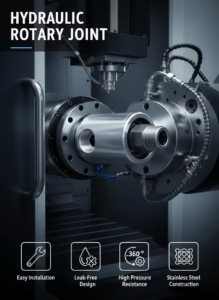
What Is a Hydraulic Rotary Joint?
A hydraulic rotary joint is a precision mechanical device designed to transfer hydraulic oil or other pressurized fluids from a stationary source to a rotating component without interrupting fluid flow.
Unlike traditional pipe connections, which become twisted during continuous rotation, a rotary joint allows unrestricted rotation while maintaining a sealed hydraulic passage.
Inside the rotary joint, several precision-engineered components work together to achieve continuous fluid transfer:
- Rotor (rotating shaft)
- Housing (stationary body)
- Mechanical seal
- Precision bearings
- O-rings and secondary seals
- Internal flow passages
- Retaining components
As the rotor rotates, the mechanical seal maintains constant contact with the stationary sealing surface, preventing hydraulic oil from escaping even under high pressure.
Meanwhile, precision bearings support the rotating shaft, minimizing friction and maintaining concentricity during operation.
This combination allows hydraulic systems to operate continuously without twisting hoses or interrupting fluid transmission.
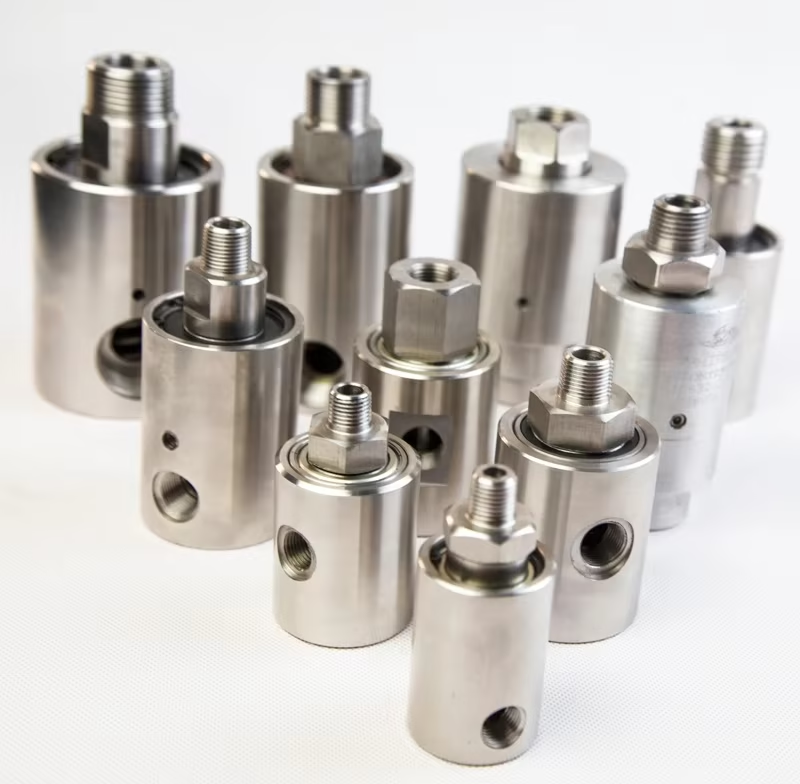
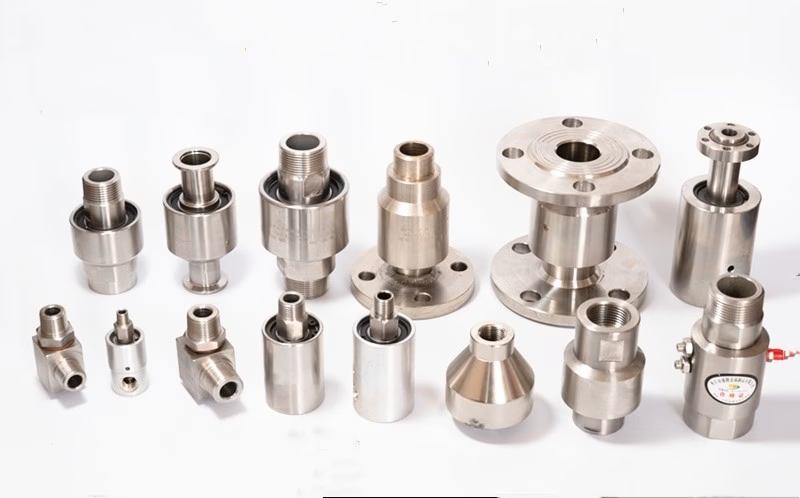
Because different applications require different operating conditions, hydraulic rotary joints are available in many configurations, including:
- Single-passage hydraulic rotary joints
- Dual-passage hydraulic rotary joints
- Multi-passage hydraulic rotary joints
- High-pressure hydraulic rotary joints
- Through-bore hydraulic rotary joints
- Compact hydraulic rotary unions
- Custom hydraulic rotary joints
Each design is optimized according to pressure, rotational speed, flow rate, installation space, and the number of fluid circuits required.
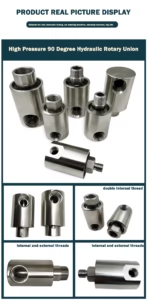
Key Features
High-Pressure Performance
Engineered for hydraulic service, these hydraulic rotary joints are designed to withstand very high pressures (commonly up to 250–350 bar and beyond in specialized units). Precision mechanical seals (balanced face seals or lip seals) maintain leak-free operation even under extreme pressure.
Wear-Resistant Materials
Critical components (housings, shafts) are made of stainless steel, alloy steel, or aluminum, providing excellent corrosion and abrasion resistance. Robust bearings and hard-wearing seal materials ensure long life in harsh conditions.
Multi-Passage Capability
Available with multiple fluid passages (from single-circuit up to 24 channels), our rotary unions can simultaneously transfer multiple media (e.g., separate hydraulic circuits or oil+coolant) through a single compact unit. Engineers individually seal each channel to prevent cross-contamination.
360° Continuous Rotation
The swivel design permits unlimited rotation without twisting hoses, supporting continuous 360° motion. Advanced bearing arrangements and precision machining keep friction low, reducing wear and heat build-up.
High-Speed Compatibility
Specialized versions with gap seals or dynamic sealing can operate at high RPM. Gap-seal rotary joints, for example, allow smooth rotation at speeds up to ~1000 RPM or more without excessive friction. Low-torque designs minimize inertia on the drive.
Durable, Low-Maintenance Design
Leading manufacturers emphasize long service life and minimal maintenance. Manufacturers conduct rigorous testing on each unit and can integrate predictive-maintenance sensors to monitor performance. Overall, engineers design these rotary unions to operate reliably year after year under heavy-duty cycles.
Versatile Media Handling
In addition to hydraulic oil, they support various fluids – water, coolants, air/gas, and other process media. Models are offered for a wide temperature range (typically –40°C to +200°C, with special designs up to +390°C) and for aggressive or non-Newtonian fluids as needed.
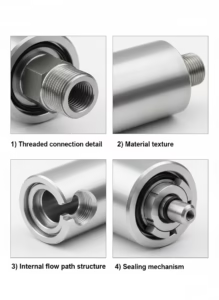
Common Hydraulic Rotary Joint Problems
Although hydraulic rotary joints are designed for demanding industrial environments, failures still occur when products are incorrectly selected, improperly installed, or poorly maintained.
Based on our factory’s technical support experience, several issues account for the majority of customer service requests.
Understanding these failure modes allows users to prevent problems before they lead to equipment downtime.
Problem 1 – Hydraulic Oil Leakage
Oil leakage is by far the most common issue affecting hydraulic rotary joints.
In many cases, leakage develops gradually rather than appearing suddenly.
Common causes include:
- Worn mechanical seals
- Incorrect seal material selection
- Excessive operating pressure
- Shaft misalignment
- Damaged sealing surfaces
- Contaminated hydraulic oil
Some users assume that replacing the seal alone will solve the problem.
However, repeated seal failures usually indicate an underlying design or installation issue.
Our Engineering Solution
Rather than simply changing the seal, we first identify the root cause.
Depending on the application, improvements may include:
- Silicon carbide mechanical seals for higher wear resistance
- Optimized seal geometry to reduce contact pressure
- Improved shaft concentricity
- Better hydraulic oil filtration
- More suitable elastomer materials such as FKM or PTFE
In many cases, these engineering improvements significantly extend seal life without changing the overall machine design.
Problem 2 – Bearing Failure
Bearings support the rotating shaft while maintaining precise alignment between moving and stationary components.
When bearings fail, excessive shaft movement increases seal wear and often results in oil leakage.
Typical causes include:
- Overloading
- Poor lubrication
- High rotational speed
- Incorrect installation
- Contamination
- Inferior bearing quality
Our Engineering Solution
For demanding industrial applications, we commonly specify premium bearings from internationally recognized manufacturers such as SKF or FAG.
In addition, our engineers carefully calculate bearing preload and support spacing to reduce vibration and improve long-term stability.
Proper bearing selection is one of the most effective ways to extend the service life of a hydraulic rotary joint.
Problem 3 – Pressure Loss
Customers occasionally report that hydraulic actuators no longer receive sufficient pressure, even though the hydraulic pump is operating normally.
While several hydraulic system components may contribute to pressure loss, the rotary joint itself can also become a restriction.
Possible causes include:
- Internal flow restrictions
- Worn sealing surfaces
- Incorrect passage design
- Debris blocking internal channels
Our Engineering Solution
During product development, we optimize the internal flow path using practical engineering experience rather than simply copying existing designs.
Smooth internal passages reduce turbulence, improve flow efficiency, and minimize pressure loss under continuous operation.
Problem 4 – Overheating During Continuous Operation
Heat is another common cause of premature hydraulic rotary joint failure.
Excessive operating temperature accelerates seal wear, reduces lubricant performance, and shortens bearing life.
Overheating is often caused by:
- Excessive seal friction
- Incorrect bearing preload
- Poor lubrication
- Overspeed operation
- Continuous operation beyond the original design limits
Our Engineering Solution
To control operating temperature, our engineers focus on reducing internal friction through:
- Precision machining
- Optimized seal loading
- Dynamic balancing
- Premium bearing selection
- Accurate shaft alignment
These improvements help maintain stable operating temperatures even during long production cycles.
Engineering the Right Solution Instead of Selling a Standard Product
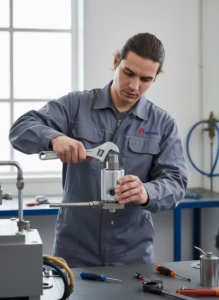
One lesson we have learned after years of manufacturing hydraulic rotary joints is that no two machines are exactly alike.
Even equipment performing similar tasks may require different sealing systems, bearing arrangements, or housing materials depending on operating pressure, rotational speed, environmental conditions, and maintenance schedules.
For this reason, our engineering process always begins with understanding the customer’s application rather than recommending the nearest standard model.
By combining practical field experience with precision manufacturing, we help OEM machine builders and industrial users improve equipment reliability, reduce maintenance costs, and extend service life.
Industrial Applications
A hydraulic rotary joint may look like a relatively small component, but in many machines it performs one of the most demanding tasks in the entire hydraulic system—transferring pressurized fluid while rotating continuously.
Every industry places different demands on a rotary joint. Pressure, rotational speed, contamination, operating temperature, and duty cycle all influence the internal design. A rotary joint that performs perfectly in a CNC machining center may not survive in a steel mill or offshore crane.
This is why experienced manufacturers never recommend the same hydraulic rotary joint for every application. Instead, the product should be engineered around the machine’s actual working conditions.
At Dann Hydraulic, our engineering team has developed custom hydraulic rotary joints for OEM equipment manufacturers, hydraulic system integrators, and maintenance companies worldwide. The following are some of the industries where our products are commonly used.
Construction Machinery
Construction equipment operates in some of the harshest environments imaginable.
Hydraulic rotary joints are widely used in:
- Excavators
- Truck-mounted cranes
- Concrete pump trucks
- Rotary drilling rigs
- Piling machines
- Aerial work platforms
- Road milling machines
These machines are exposed to continuous vibration, heavy shock loads, mud, dust, rain, and wide temperature fluctuations.
The biggest challenge is maintaining stable sealing performance while the equipment works under high hydraulic pressure and continuous rotation.
To improve reliability, we typically recommend:
- Heavy-duty bearing arrangements
- High-pressure mechanical seals
- Hardened rotating shafts
- Corrosion-resistant surface treatments
- Reinforced housing structures
These design features help extend service life while reducing unexpected maintenance.
CNC Machine Tools
Modern CNC machining centers rely on hydraulic rotary joints for spindle clamping systems, hydraulic fixtures, rotary indexing tables, and automatic tool-changing mechanisms.
Compared with construction equipment, CNC machines require much higher rotational accuracy.
Even minor internal vibration can affect machining precision.
For CNC applications, our hydraulic rotary joints are designed with:
- Precision-machined bearing seats
- Premium SKF or FAG bearings
- Optimized internal flow channels
- Low-friction mechanical seals
- High concentricity rotor design
Reducing vibration not only improves rotary joint life but also helps maintain machining accuracy throughout long production cycles.
Steel and Metallurgical Equipment
Steel production places extraordinary demands on rotating hydraulic systems.
Hydraulic rotary joints are commonly installed on:
- Rolling mills
- Coil handling equipment
- Continuous casting machines
- Rotary tables
- Strip processing lines
These environments expose equipment to:
- High temperatures
- Water scale
- Metal dust
- Continuous operation
- Heavy radial loads
Under these conditions, contamination becomes one of the primary causes of seal failure.
To improve durability, our engineers often incorporate multiple sealing barriers and enhanced bearing protection to prevent contaminants from entering critical components.
Wind Energy and Renewable Power
Hydraulic rotary joints are increasingly used in wind turbine pitch control systems.
The equipment must operate reliably for years while exposed to:
- Rain
- Snow
- Salt spray
- UV radiation
- Temperature changes
- Continuous vibration
Because maintenance at height is expensive, reliability is more important than minimizing initial purchase cost.
For wind power applications, we typically recommend corrosion-resistant stainless steel components together with long-life sealing systems designed for extended maintenance intervals.
Marine and Offshore Equipment
Marine hydraulic systems operate in one of the world’s most aggressive environments.
Saltwater corrosion combined with continuous humidity can significantly shorten the life of conventional hydraulic components.
Typical applications include:
- Deck cranes
- Winches
- Offshore drilling equipment
- Marine handling systems
- Port machinery
For these projects, stainless steel housings, anti-corrosion coatings, and marine-grade sealing materials are commonly selected to improve long-term reliability.
Industrial Automation
Modern automated production lines increasingly require hydraulic rotary joints for:
- Rotary indexing tables
- Robotic systems
- Packaging equipment
- Assembly machines
- Material handling equipment
Automation equipment often operates continuously for 24 hours a day.
Instead of withstanding extremely high pressure, these applications emphasize:
- Long service life
- Stable sealing
- Low maintenance
- Smooth rotation
Our compact hydraulic rotary joints are frequently customized to fit limited installation spaces while maintaining excellent sealing performance.
Why Choose Us
Proven Expertise
Backed by decades of experience and in-house R&D, we design and produce hydraulic rotary joints with precision engineering. Our team understands the challenges of rotary fluid transfer in North American and European markets.
Certified Quality & Materials
We maintain strict quality control and comply with international standards (PED 2014/68/EU, AD2000-HPO, EN ISO 3834, etc.). All critical parts come from audited suppliers, and each unit is fully tested before shipment. This yields reliable performance and longer uptime.
Customized Solutions
With numerous patents and a full prototyping capability, we tailor joint designs to your needs – special media, extreme pressures or temperatures, multi-circuit configurations, etc. Every rotary joint is engineered to match the precise application requirements.
Global & Local Support
We offer worldwide logistics and on-site service. Our distribution network spans North America and Europe, including authorized service centers (USA, Italy, etc.) and 24/7 spare-parts supply. Local teams are available to assist with installation, start-up, and maintenance anywhere in NA/EU.
Comprehensive Service
From initial inquiry through the product life cycle, we provide technical guidance, digital documentation, and maintenance support. Advanced options like integrated sensors for condition monitoring (Industry 4.0) and ATEX-certified versions are available to meet stringent industrial requirements.

Frequently Asked Questions
What is the difference between a hydraulic rotary joint and a hydraulic swivel joint?
The terms are often used interchangeably in industrial applications. Both refer to a device that transfers hydraulic fluid between stationary and rotating components. However, some industries use hydraulic swivel joints for heavy-duty construction equipment and hydraulic rotary unions for precision industrial machinery. Regardless of the terminology, the design should always be selected according to the application’s pressure, speed, and operating environment.
Can hydraulic rotary joints rotate continuously?
Yes.
Most industrial hydraulic rotary joints are specifically designed for continuous 360-degree rotation while maintaining uninterrupted hydraulic fluid transfer.
The allowable rotational speed depends on the bearing arrangement, sealing system, and application.
What pressure can a hydraulic rotary joint handle?
Pressure ratings vary depending on the design.
Standard industrial models typically operate under medium to high hydraulic pressures, while custom-engineered solutions can be developed for demanding high-pressure systems.
Our engineering team recommends the appropriate design after evaluating operating pressure and safety requirements.
What causes hydraulic rotary joint leakage?
Common causes include:
- Worn mechanical seals
- Contaminated hydraulic oil
- Bearing wear
- Excessive pressure
- Incorrect installation
- Shaft misalignment
- Incompatible sealing materials
Identifying the root cause is essential before replacing components.
Can you manufacture hydraulic rotary joints according to our drawings?
Yes.
We regularly manufacture custom hydraulic rotary joints based on:
- Engineering drawings
- CAD files
- Existing samples
- Customer specifications
If drawings are unavailable, we also provide reverse engineering services.
Can you replace imported hydraulic rotary joints?
Yes.
We manufacture compatible replacement solutions for many international rotary union brands.
Where appropriate, our engineers also optimize materials, sealing structures, and bearing configurations to improve durability and reduce maintenance requirements.
Which industries use hydraulic rotary joints?
Our products are widely used in:
- Construction machinery
- Hydraulic equipment
- CNC machine tools
- Steel and metallurgy
- Marine engineering
- Wind energy
- Industrial automation
- Injection molding
- Forestry machinery
- Mining equipment
- Packaging machinery
- Material handling systems
How long does a hydraulic rotary joint last?
Service life depends on several factors, including:
- Operating pressure
- Rotational speed
- Fluid cleanliness
- Seal material
- Installation quality
- Maintenance practices
Under suitable operating conditions and with proper maintenance, a high-quality hydraulic rotary joint can provide many years of reliable service.
Do you provide OEM manufacturing services?
Yes.
We support OEM customers with:
- Customized dimensions
- Private labeling
- Batch production
- Prototype development
- Engineering optimization
- Long-term production partnerships

Final Thoughts
A hydraulic rotary joint is much more than a connection between two hydraulic lines. It is a precision-engineered component that enables continuous fluid transfer while maintaining reliable sealing under rotation, pressure, and demanding industrial conditions.
Throughout this guide, we have explored every critical aspect of hydraulic rotary joint design and manufacturing—from understanding the operating principle and selecting appropriate materials to evaluating industry-specific applications, solving common failure problems, and implementing strict quality control throughout production.
At Dann Hydraulic, our philosophy is straightforward: every hydraulic rotary joint should be engineered for the application, not adapted from a standard catalog. By combining experienced engineers, advanced CNC machining, premium materials, precision assembly, and 100% pressure testing, we deliver products that help OEM manufacturers and industrial users improve equipment reliability, reduce maintenance costs, and maximize operational efficiency.
Whether you need a standard hydraulic rotary union, a multi-passage hydraulic rotary joint, or a fully customized solution for a unique application, our engineering team is ready to support your project from concept to production.
If you are looking for a reliable hydraulic rotary joint manufacturer, OEM supplier, or custom rotary union partner, contact Dann Hydraulic to discuss your application. We are committed to delivering durable, high-performance hydraulic rotary joints that keep your equipment operating safely and efficiently for years to come.
Related products
-
Sale!
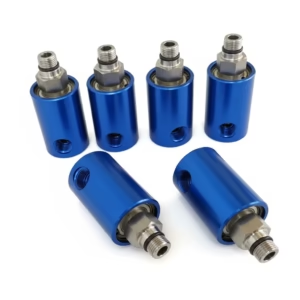
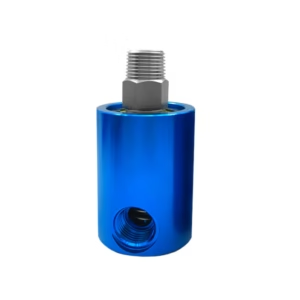
High Speed Pneumatic Rotary Union for Industrial Systems
Original price was: $35.00.$30.00Current price is: $30.00. -
Sale!

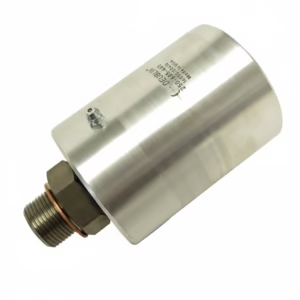
Deublin 250 Series Large Rotary Union Cost-Effective Alternative Manufacturer
Original price was: $280.00.$270.00Current price is: $270.00. -
Sale!
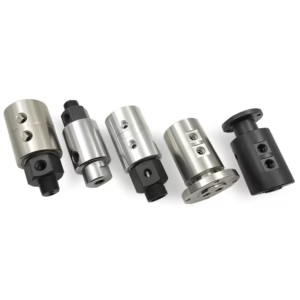
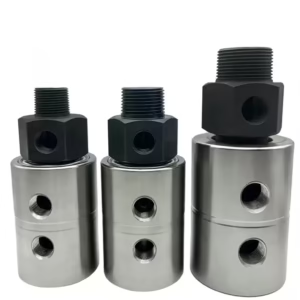
Dual Flow Rotary Union Manufacturer for Industrial Cooling and Heating Systems
Original price was: $100.00.$90.00Current price is: $90.00. -
Sale!

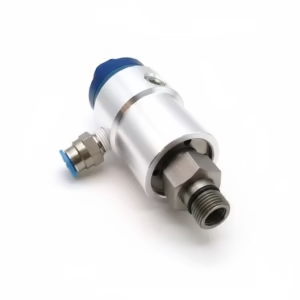
Deublin 902-141-192 Rotary Union Replacement | OEM Supplier
Original price was: $130.00.$116.00Current price is: $116.00.