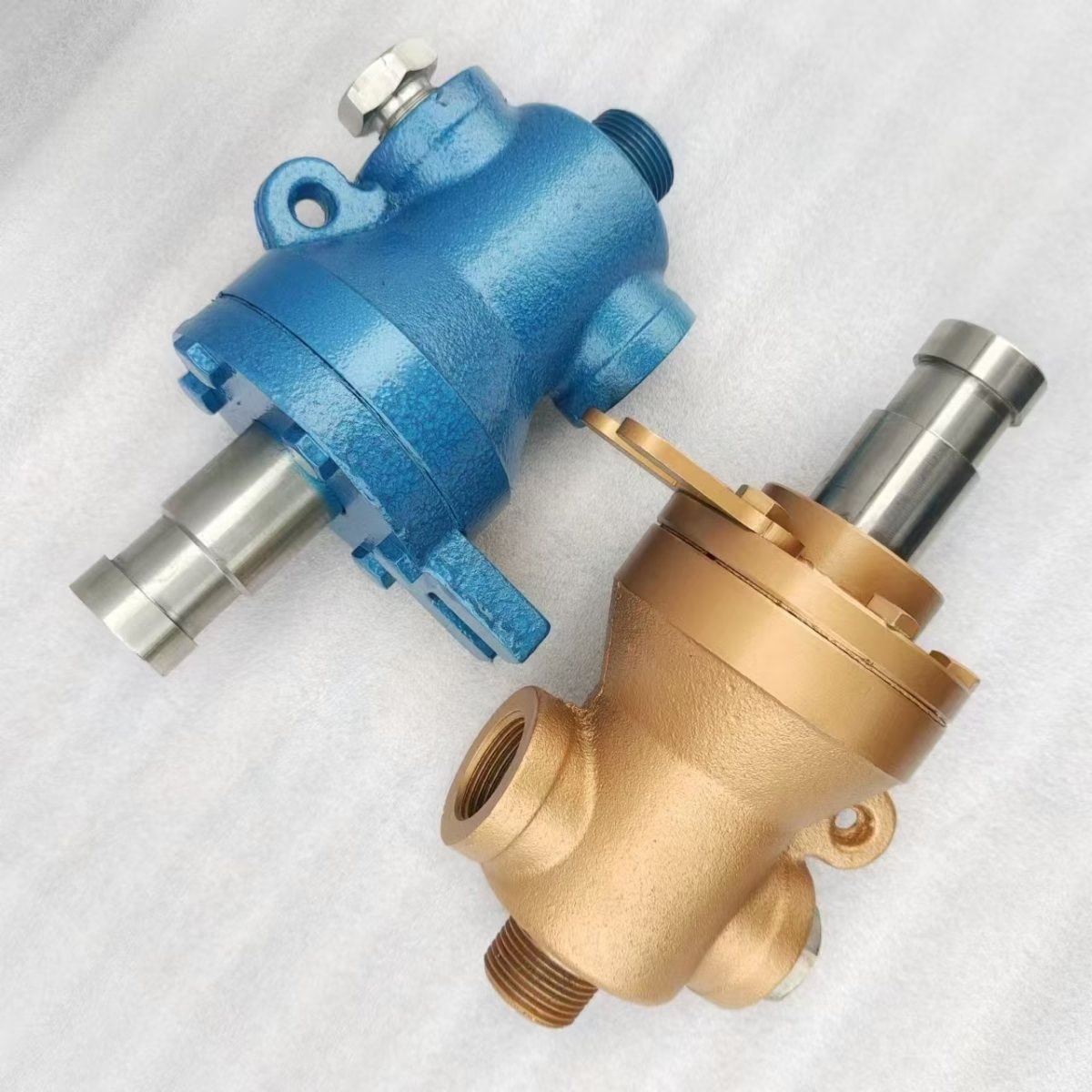


Rotary Union for Textile Sizing Machine | Reliable Rotary Joint Manufacturer
Original price was: $35.00.$30.80Current price is: $30.80.
- Flow Rate: 0.5 to 10 liters per minute (L/min)
- Pressure Rating: Up to 20 bar (290 psi)
- Temperature Range : 20°C to +100°C (68°F to +212°F)
- Material Construction: Stainless Steel, Brass, PTFE Seals
- Sealed Integrity: Advanced sealing technology for leak-free operation
- Rotational Speed: Up to 1,000 rpm
- Connection Types: Metric or NPT threads, quick-connect couplings
- Corrosion Resistance: High resistance to chemicals and moisture
- Durability and Maintenance: Robust design with serviceable seals for longevity
Description
Modern textile production demands high efficiency, continuous operation, and stable process control. Whether you are producing woven fabrics, denim, industrial textiles, or technical fabrics, every interruption caused by steam leakage, bearing failure, or seal wear directly affects productivity and product quality. A reliable rotary union for a textile sizing machine plays a critical role in ensuring consistent heat transfer and fluid delivery throughout the manufacturing process.
Dann Hydraulic manufactures rotary unions for textile sizing machines, warp sizing lines, and other textile production equipment requiring reliable fluid transfer between stationary piping and rotating rollers, shafts, or cylinders.
Sizing equipment operates continuously and places demanding requirements on rotating seals. Water, coolant, hydraulic oil, compressed air, and other process media may need to enter or leave a rotating component while the machine continues running.
A correctly selected rotary union helps maintain stable media flow while preventing connected hoses from twisting during rotation.
For textile machinery manufacturers, maintenance companies, and replacement-part distributors, Dann Hydraulic provides both standard and customized rotary unions according to drawings, samples, operating conditions, and original model information.

Product Specifications
| Parameter | Standard Specification |
|---|---|
| Product | Rotary Union for Textile Sizing Machine |
| Flow Rate | 0.5–10 L/min |
| Maximum Pressure | Up to 20 bar / 290 psi |
| Temperature Range | 20°C to 100°C |
| Rotational Speed | Up to 1,000 RPM |
| Main Materials | Stainless Steel / Brass |
| Seal Material | PTFE or application-specific sealing material |
| Connections | Metric / NPT / Custom |
| Working Media | Water / Coolant / Hydraulic Oil / Compressed Air |
| Flow Configuration | Single Flow / Dual Flow / Custom |
| Custom Manufacturing | Available |
The values above apply to the standard configuration shown on this page. Final pressure, temperature, speed, media compatibility, and connection dimensions should be confirmed according to the actual machine operating conditions.
For steam-heated drying cylinders requiring temperatures above the standard range, a dedicated high-temperature or steam rotary union configuration should be selected instead of using the standard model without engineering confirmation.

What Does a Rotary Union Do in a Sizing Machine?
A rotary union provides a sealed connection between stationary piping and a rotating machine component.
In a textile sizing line, rollers, shafts, and cylinders rotate continuously while process media may still need to enter or leave the rotating equipment.
Connecting ordinary fixed piping directly to the rotating component is not practical, while a conventional hose can become twisted as the shaft rotates.
The rotary union solves this problem by creating a controlled rotating interface.
The stationary side connects to the machine’s fluid supply system, while the rotor connects to the rotating shaft or cylinder.
This allows the machine to continue rotating while maintaining continuous fluid transmission.

Where Is the Rotary Union Used in a Textile Sizing Line?
Rotary unions can be used at different locations depending on the design of the sizing machine.
Rotating Rollers
Some sizing and textile-processing machines require temperature-controlled rollers.
Water or another compatible medium can circulate through the roller to help control its operating temperature.
The rotary union provides the connection between the stationary supply pipe and the rotating roller.
Cooling Sections
Certain textile machinery designs use internally cooled rotating components.
In these applications, cooling water passes through a rotary joint into the rotating shaft or roller and returns through the system after absorbing heat.
Hydraulic or Pneumatic Rotating Equipment
Where rotating mechanisms require hydraulic oil or compressed air, an appropriate rotary union can maintain media transfer without twisting the supply lines.
Drying Cylinders
Warp sizing lines commonly use heated drying cylinders after yarn passes through the sizing section.
Where steam is used for cylinder heating, the rotary joint must be specifically designed for the required steam temperature, pressure,e and condensate arrangement.
A standard water or hydraulic rotary union should not automatically be assumed to be suitable for steam service.

Why Rotary Union Reliability Matters in Sizing Machines
Sizing is an important preparation stage before weaving. Stable machine operation affects yarn quality, production efficiency, and downstream weaving performance.
A rotary union operating on a textile production line may run continuously for long production cycles.
Leakage or abnormal wear can therefore create much more than a small maintenance issue.
Fluid leakage can contaminate the surrounding machine area, pressure instability can affect process control, and unexpected rotary union failure may stop an entire production line.
For this reason, sizing-machine rotary unions should be selected according to actual operating conditions rather than simply matching thread dimensions.

Common Causes of Rotary Union Failure on Textile Machinery
Incorrect Media Selection
Different seals are suitable for different media.
A seal configuration intended for water may not provide the same performance with hydraulic oil, thermal oil, oil, or steam.
The operating medium should therefore be confirmed before production.
Excessive Shaft Runout
Poor concentricity places additional radial load on the rotary union.
This can increase seal wear, bearing load, and vibration.
The machine shaft and rotary union should be correctly aligned during installation.
External Pipe Stress
Rigid piping or incorrectly positioned hoses can apply side loading to the rotary union housing.
Flexible connections should be installed according to the equipment configuration so that external pipe forces are not transferred directly to the rotary union.
Contamination
Textile factories may contain airborne fibers, dust, and process contamination.
Contaminated fluid can also damage precision sealing surfaces.
Clean media and correct filtration help improve rotary union service life.
Operating Outside Rated Conditions
Pressure, temperature, and rotational speed work together.
A rotary union should not be selected based on only one parameter.
Continuous operation above the specified pressure, temperature, or speed can accelerate seal and bearing wear.

Custom Rotary Unions for Textile Machinery
Not every textile machine uses the same connection dimensions or operating conditions.
We can manufacture rotary unions according to an existing drawing, physical sample, or required installation dimensions.
Customization can include connection threads, rotor dimensions, housing dimensions, mounting arrangement, number of flow passages, sealing materials, and working media.
When requesting a custom sizing-machine rotary union, providing the original model number, technical drawing, installation dimensions, or a sample can significantly improve matching accuracy.

Replacement Rotary Union for Existing Textile Machinery
Older textile production lines may use imported rotary unions that have become expensive, difficult to source, or subject to long delivery times.
Dann Hydraulic provides replacement rotary union solutions for textile machinery according to the existing component and actual machine conditions.
Instead of relying only on external dimensions, our engineering process considers the working medium, pressure, temperature, rotational speed, connection arrangement, and installation space.
This allows the replacement unit to be matched more closely to the actual application.
- Industry: Textile Manufacturing
- Machine: Fabric Dyeing Equipment
- Original Component: Imported Rotary Union
- Dann Hydraulic Solution: Custom Multi-Passage Rotary Union
- Media: Hot Water / Steam
- Operating Condition: Continuous rotation/ High temperature/ Chemical exposure
- Solution Benefits: Improved sealing reliability/ Reduced leakage risk/ Longer maintenance interval
Case 1: Textile Finishing Machine Rotary Union Installation
Project name: Rotary Union for Textile Finishing Machine
Application equipment: Textile finishing line
Fabric processing machine
Roller heating system
Working medium: Steam/Hot water/Thermal oil/Cooling water
Case description: Rotary unions installed on textile finishing machines provide continuous fluid transfer between stationary pipelines and rotating rollers. They maintain stable temperature control during fabric processing and improve production consistency.

Case 2: Rotary Joint for Textile Dyeing Machine
- Project Name: High-Temperature Rotary Union for Textile Dyeing Equipment
- Applications: Fabric dyeing machine/jet dyeing machine/Textile treatment equipment/
- Operating Environment: High temperature/ Chemical environment/ Continuous operation
- Rotary Joint Requirements: Chemical resistance/ Temperature resistance/ Leak prevention

Case 3: Rotary Union for Textile Calender Machine
- Project Name: Rotary Union Solution for Textile Calender Roller
- Application: Calender rollers are used for:
Fabric finishing
Surface smoothing
Gloss improvement - Function of the Rotary Union:
Transfer heating medium
Maintain roller temperature
Support continuous rotation


How to Select a Rotary Union for a Sizing Machine
Before selecting a rotary union, confirm the working medium first.
Then determine the normal pressure, maximum pressure, rotational speed, operating temperature, required flow rate, connection type, shaft dimensions, and whether the system requires single-flow or dual-flow circulation.
For an existing machine, photographs and dimensions of the original rotary union can also help identify the correct replacement configuration.
If the machine uses steam on drying cylinders, provide the actual steam pressure and operating temperature so that a suitable steam rotary joint can be selected.
Installation Recommendations
Correct installation has a significant influence on rotary union service life.
The rotary union should be installed concentrically with the rotating shaft and should not be forced into alignment by connected piping.
Before installation, clean the piping to remove metal chips, dirt, and other contamination.
Where appropriate, use flexible connections to isolate external piping forces from the rotary union.
After installation, rotate the system at low speed and check for abnormal resistance, vibration,n or leakage before returning the machine to full production.

Why Choose Dann Hydraulic?
Dann Hydraulic specializes in rotary unions and rotary joints for industrial machinery.
For textile machinery applications, we support OEM equipment manufacturers, replacement-parts distributors, and maintenance companies that require standard or custom rotary unions.
Our capabilities include CNC machining, customized dimensions, seal selection according to working media, pressure and leakage testing, sample-based replacement development, and small-batch production.
If an existing rotary union is no longer available, send us the model number, drawing, photographs, or physical sample together with your operating conditions.
Our engineers can evaluate the application and recommend an appropriate replacement configuration.

Frequently Asked Questions
What is a rotary union used for in a textile sizing machine?
A rotary union transfers a fluid or gas between stationary piping and a rotating roller, shaft, or cylinder while allowing the machine component to continue rotating.
What media can a sizing-machine rotary union transfer?
Depending on its design, a rotary union may transfer water, coolant, hydraulic oil, or compressed air. Steam applications require a rotary union specifically rated for the required steam temperature and pressure.
Can you manufacture a replacement from an existing rotary union?
Yes. Replacement rotary unions can be developed according to the original model, drawing, installation dimensions, or physical sample.
Can you customize the connection dimensions?
Yes. Thread type, port position, rotor dimensions, housing dimensions, and other interfaces can be customized according to the machine.
Do sizing machines require dual-flow rotary unions?
It depends on the machine design. Applications requiring continuous circulation through a rotating roller may use supply and return passages, while other applications may only require a single flow path.
Why does a rotary union leak shortly after installation?
Common causes include shaft misalignment, external pipe loading, incorrect sealing material, contaminated fluid, excessive pressure or operating outside the rated temperature and speed.

Need a Rotary Union for Your Sizing Machine?
Send us your existing rotary union model, drawing, photographs, or installation dimensions.
Please also provide the working medium, pressure, temperature, and rotational speed.
Dann Hydraulic can help you select or manufacture a rotary union suitable for your textile sizing machine.
Related products
-
Sale!

Hydraulic Stainless Steel Rotary Union for High-Pressure Fluid Transfer
Original price was: $26.00.$22.80Current price is: $22.80. -
Sale!
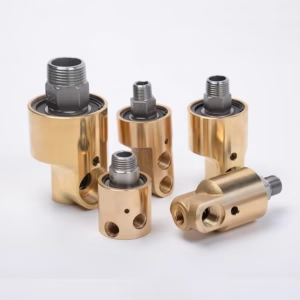
Brass High Speed Hydraulic Rotary Union Supplier
Original price was: $60.00.$55.00Current price is: $55.00. -
Sale!

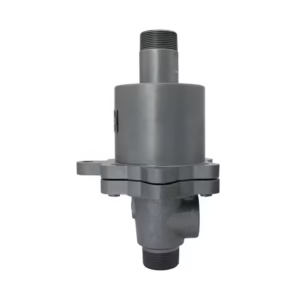
Steam Rotary Union for Corrugated & Ironing Machine
Original price was: $30.00.$22.00Current price is: $22.00. -
Sale!
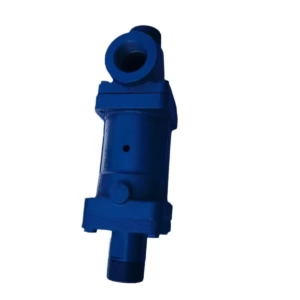
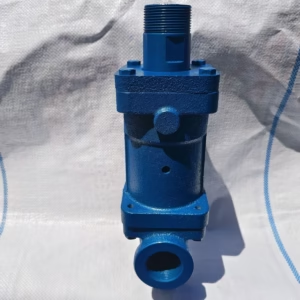
D Type Dual Flow Rotary Union for Two Independent Fluid Circuits
Original price was: $55.00.$45.00Current price is: $45.00.