
Hydraulic Rotary Union for High-Pressure Fluid Transfer Applications
Original price was: $60.00.$55.00Current price is: $55.00.
- Size Range: 1/8″ (DN06) to 1 1/2″ (DN40)
- Maximum Pressure: Up to 400 bar
- Maximum Temperature: Up to 120°C
- Speed Capability: High-speed options available
- Thread Types: LH & RH UNF, Metric, BSP & NPT
Description
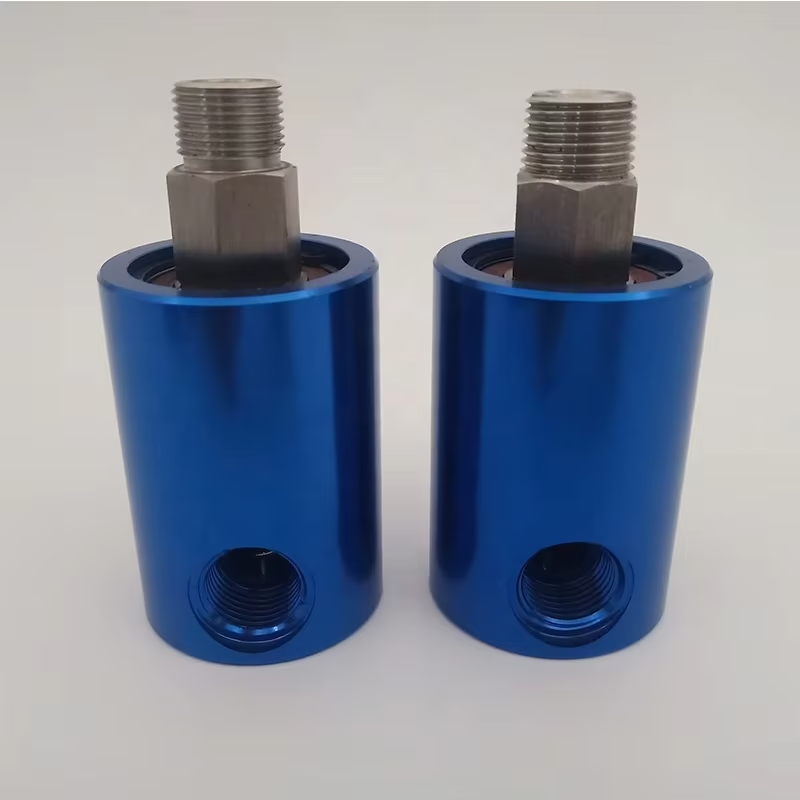
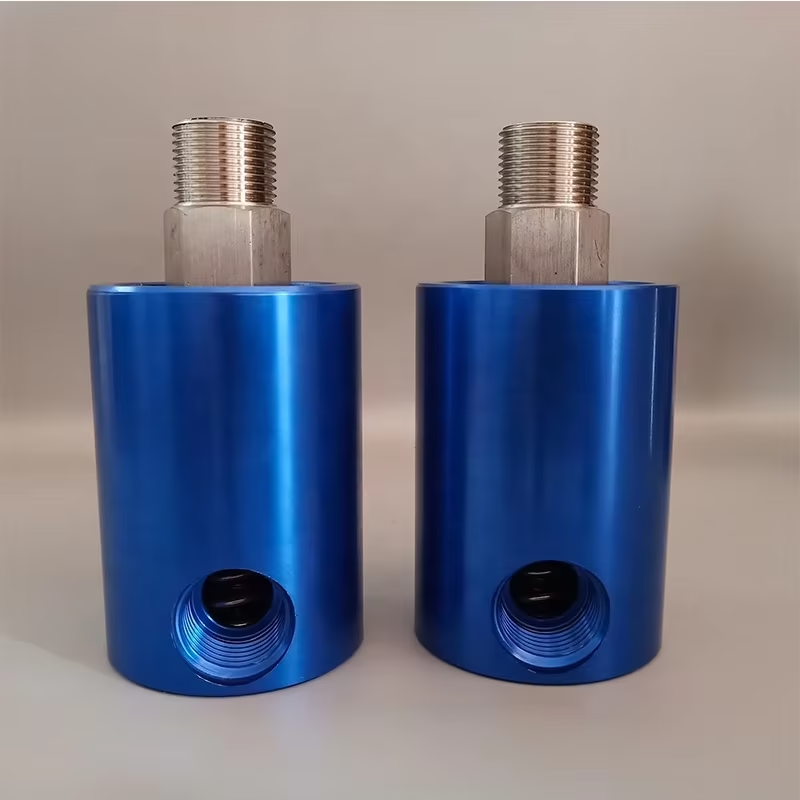
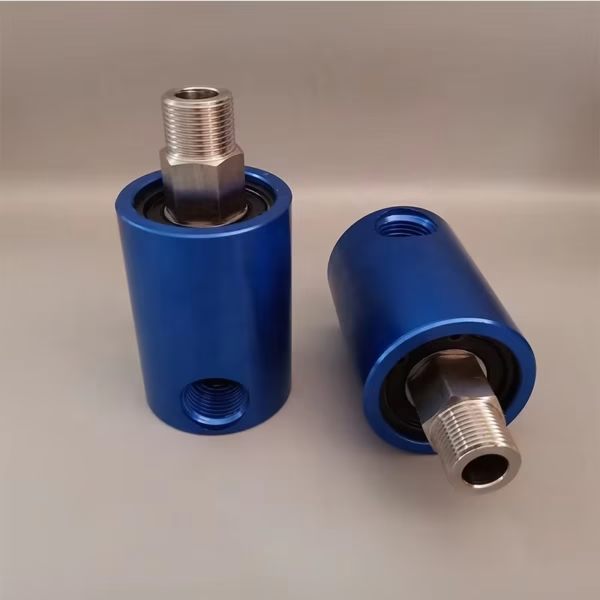
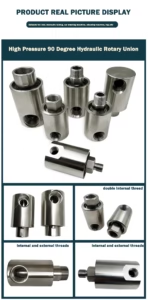
A Hydraulic Rotary Union is a precision-engineered component designed to transfer hydraulic oil between stationary and rotating parts while maintaining a secure, leak-free connection under pressure.
Hydraulic rotary unions play a critical role in modern industrial equipment. They enable continuous hydraulic power transmission in applications where hoses cannot be directly connected to rotating components.
Whether used in construction machinery, automated production equipment, rotary indexing tables, cranes, forestry machines, or offshore systems, a properly designed hydraulic rotary union improves system reliability, reduces downtime, and extends equipment service life.
As a rotary union manufacturer with years of experience serving OEMs and industrial maintenance companies worldwide, we understand that successful hydraulic fluid transfer depends on far more than pressure ratings alone. Seal technology, bearing design, machining precision, and application-specific engineering all contribute to long-term performance.

Typical Applications of Hydraulic Rotary Unions
Hydraulic rotary unions are widely used across industries requiring continuous hydraulic flow during rotation.
Construction Equipment
Excavators, drilling rigs, and pile-driving machines often require hydraulic power transfer through rotating structures.
A hydraulic rotary union allows oil flow while the equipment rotates continuously.
Common applications include:
- Excavator attachments
- Hydraulic grapples
- Rotary drilling heads
- Crane systems
Rotary Indexing Tables
Manufacturing equipment frequently relies on rotary tables that must deliver hydraulic pressure to clamping devices and workholding systems.
Hydraulic rotary unions provide a compact solution while eliminating hose twisting problems.
Automation Equipment
Automated production lines increasingly use rotating stations for assembly, testing, and material handling.
Hydraulic rotary unions ensure uninterrupted fluid delivery while maintaining precise motion control.
Wind Energy Equipment
Certain wind turbine systems utilize hydraulic circuits for blade pitch control and braking mechanisms.
Reliable rotary fluid transmission is essential for safe operation.
Marine and Offshore Equipment
Hydraulic rotary unions are commonly used in offshore cranes, winches, and lifting systems where equipment reliability directly impacts safety.

Key Design Features of Our Hydraulic Rotary Union
High-Pressure Capability
Hydraulic systems require reliable sealing under substantial operating pressures.
Our rotary unions are engineered to support demanding industrial environments while maintaining sealing integrity.
Precision Bearing System
Stable bearing support contributes to:
- Lower vibration
- Longer service life
- Improved sealing performance
Optimized Internal Flow Design
Efficient flow paths reduce turbulence and pressure loss.
Benefits include:
- Better hydraulic efficiency
- Reduced energy consumption
- Improved actuator performance
Compact Structure
Many applications require installation in limited spaces.
Compact designs simplify integration into new and existing equipment.

Common Hydraulic Rotary Union Problems and Solutions
After supporting hundreds of industrial customers, we have observed recurring issues across hydraulic systems.
Understanding these failure modes helps improve reliability and reduce maintenance costs.
Problem 1: Hydraulic Oil Leakage
Leakage is one of the most common field complaints.
Typical causes include:
- Seal wear
- Pressure spikes
- Shaft misalignment
- Contaminated hydraulic oil
Even minor leakage can lead to pressure loss and environmental concerns.
Our Solution
We utilize balanced mechanical seal designs and application-specific sealing materials to reduce wear and improve sealing performance under high-pressure conditions.
Problem 2: Premature Seal Failure
Many hydraulic systems operate continuously under demanding conditions.
Common causes of seal damage include:
- Excessive pressure
- Dry operation
- Abrasive contamination
- Thermal cycling
Our Solution
Seal materials are selected according to:
- Pressure
- Temperature
- Fluid type
- Rotational speed
Depending on application requirements, we utilize Carbon Graphite, Silicon Carbide, Tungsten Carbide, and advanced engineering materials.
Problem 3: Bearing Damage
Bearing failure often leads to complete rotary union replacement.
Common causes include:
- Excessive radial loads
- Vibration
- Misalignment
- Poor lubrication
Our Solution
Our hydraulic rotary unions incorporate precision bearings engineered to withstand demanding operating conditions.
Additional protection structures help isolate bearings from contamination.
Problem 4: Pressure Loss
Customers sometimes report insufficient hydraulic pressure reaching actuators.
Potential causes include:
- Internal restrictions
- Incorrect rotary union sizing
- Seal damage
- Flow capacity limitations
Our Solution
Internal passages are optimized to reduce pressure drop while maintaining efficient fluid transfer.
Why Hydraulic Rotary Union Selection Matters
Selecting the wrong rotary union often results in:
- Frequent maintenance
- Leakage problems
- Short service life
- Increased operating costs
When evaluating a hydraulic rotary union, engineers should consider:
Operating Pressure
Higher pressure requires stronger sealing systems.
Rotational Speed
Speed directly affects seal wear and bearing performance.
Hydraulic Fluid Type
Different oils may require different sealing materials.
Environmental Conditions
Dust, moisture, and temperature variations influence product selection.
Manufacturing Experience Behind Every Rotary Union
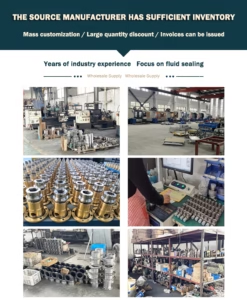
Hydraulic rotary unions appear simple from the outside, but manufacturing precision determines field performance.
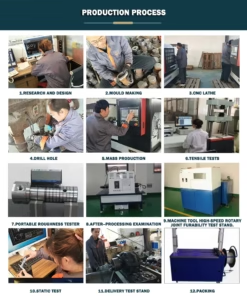
At our production facility, every rotary union undergoes multiple manufacturing and inspection stages.
CNC Precision Machining
Critical components are machined using CNC equipment to ensure dimensional consistency.
Seal Matching
Seal materials and configurations are selected according to operating requirements.
Pressure Testing
Each assembly is tested before shipment to verify sealing performance.
Rotational Testing
Operational testing confirms smooth rotation and proper functionality.
Quality Inspection
Dimensional verification and visual inspection are performed throughout production.
These processes help maintain product consistency and long-term reliability.
Practical Project Experience
One equipment manufacturer contacted us regarding repeated failures of imported hydraulic rotary unions used on rotary welding positioners.
The original units experienced leakage after approximately six months of operation.
After reviewing the application, our engineering team identified:
- Pressure fluctuations
- Excessive vibration
- Inadequate bearing support
We redesigned the sealing structure and optimized the bearing arrangement.
Results included:
- Significantly longer service intervals
- Reduced leakage incidents
- Improved production uptime
Projects like this have helped us refine our designs and improve product reliability across demanding applications.

Why Work Directly with a Manufacturer?
A manufacturer provides more than a product.
Advantages include:
- Technical consultation
- Custom engineering
- Application analysis
- Material recommendations
- Faster problem-solving
For hydraulic rotary unions, application details often determine product success more than catalog specifications alone.

Installation and Maintenance Tips
Proper Shaft Alignment
Ensure precise alignment between the rotary union and rotating shaft to prevent uneven seal wear.
Regular Lubrication
Use the oil port to lubricate bearings and seals periodically, especially in continuous operation.
Thread Compatibility
Confirm NPT or BSP thread type before installation to ensure a secure, leak-free connection.
Operating Speed Compliance
Do not exceed the recommended maximum speed of 1000 RPM to maintain seal integrity.
Routine Inspection
Check for signs of leakage or wear and replace seals as necessary to avoid unexpected downtime.

Frequently Asked Questions
What is a hydraulic rotary union?
A hydraulic rotary union transfers hydraulic fluid between stationary and rotating components while maintaining a sealed connection.
What industries use hydraulic rotary unions?
Common industries include construction equipment, automation, manufacturing, marine systems, wind energy, and heavy machinery.
Why is my hydraulic rotary union leaking?
Leakage may result from seal wear, contamination, misalignment, pressure spikes, or improper product selection.
Can hydraulic rotary unions handle high pressure?
Yes. Properly engineered hydraulic rotary unions are designed for demanding high-pressure applications.
Can you provide customized hydraulic rotary unions?
Yes. We support customized solutions based on operating pressure, speed, fluid type, mounting dimensions, and installation requirements.

Your Reliable Hydraulic Rotary Union Manufacturer
Reliable hydraulic fluid transfer requires more than a standard rotary union. It requires application-specific engineering, precision manufacturing, proven sealing technology, and long-term technical support.
As a specialized rotary union manufacturer, we combine practical field experience with advanced manufacturing capabilities to help customers improve equipment reliability, reduce downtime, and lower maintenance costs.
Whether you need a standard hydraulic rotary union or a custom-engineered solution, our team can assist with product selection, application analysis, and technical support throughout the project lifecycle.
📞 Call: +86-15122592153
📩 Email: sales@dannhydraulic.com
🌐 Online Inquiry: www.dannhydraulic.com
Related products
-
Sale!

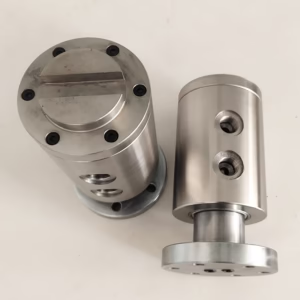
Customizable Multi Passage Rotary Union for Diverse Industries
Original price was: $90.00.$80.00Current price is: $80.00. -
Sale!


360 Degree Tower Crane Rotary Joint for Spray Systems | Heavy Duty Swivel Union
Original price was: $35.00.$32.00Current price is: $32.00. -
Sale!
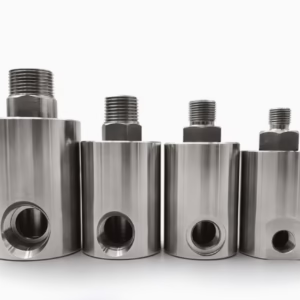
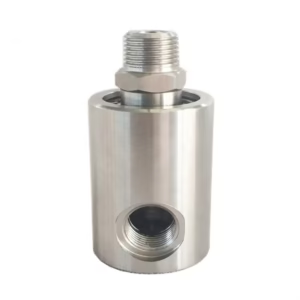
High Pressure High Speed Stainless Steel Rotary Joint Supplier
Original price was: $40.00.$35.00Current price is: $35.00. -
Sale!
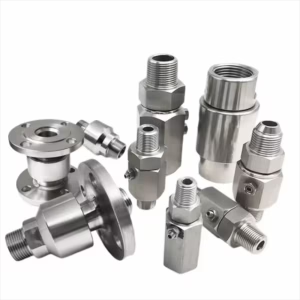
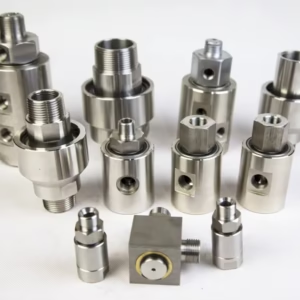
Corrosion-Resistant Stainless Steel Rotary Joint for Industrial Applications
Original price was: $50.00.$35.00Current price is: $35.00.