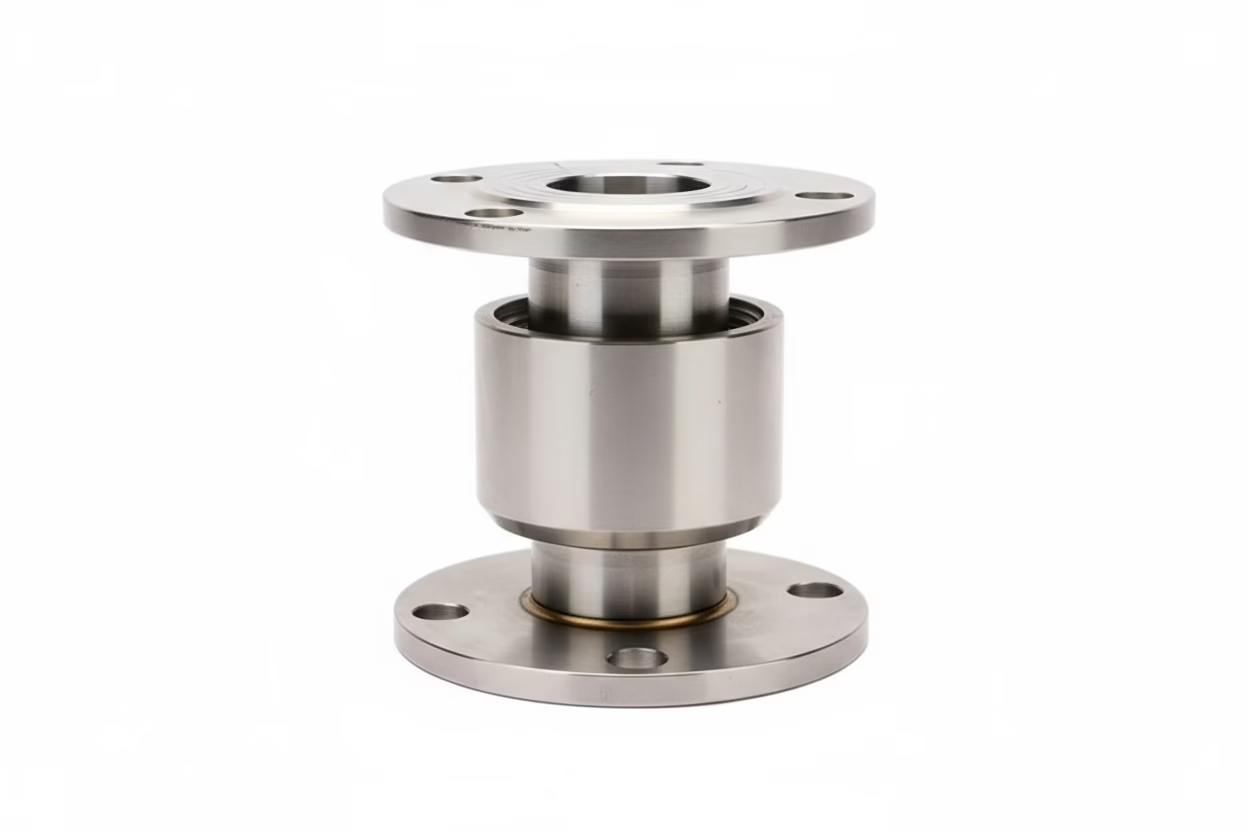
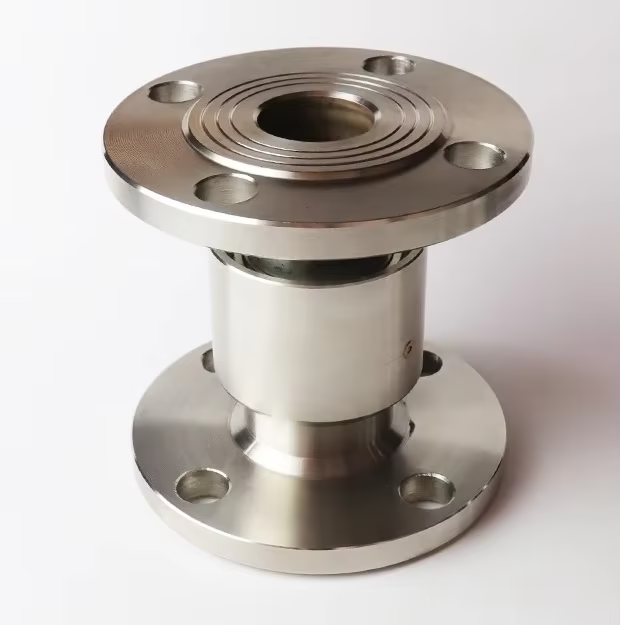
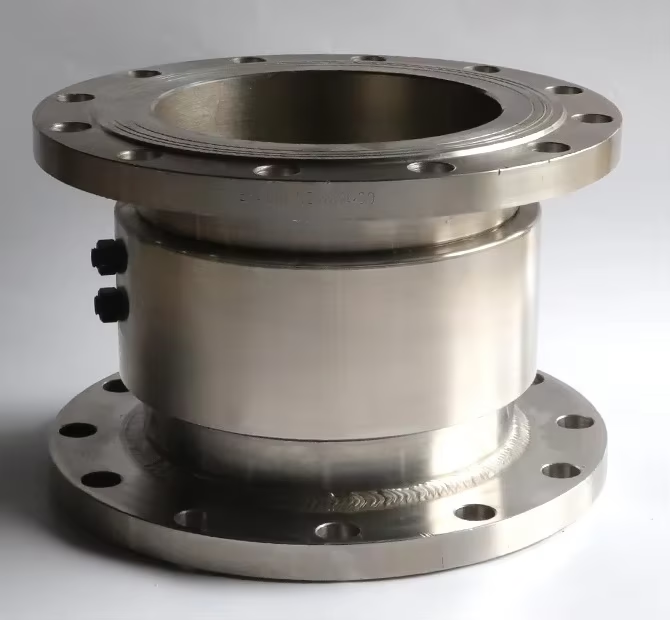
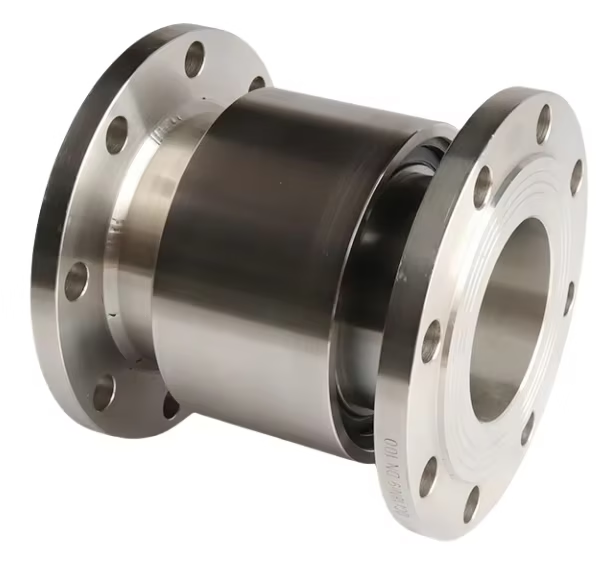


OEM Replacement Stainless Steel Rotary Union Manufacturer
Original price was: $50.00.$38.00Current price is: $38.00.
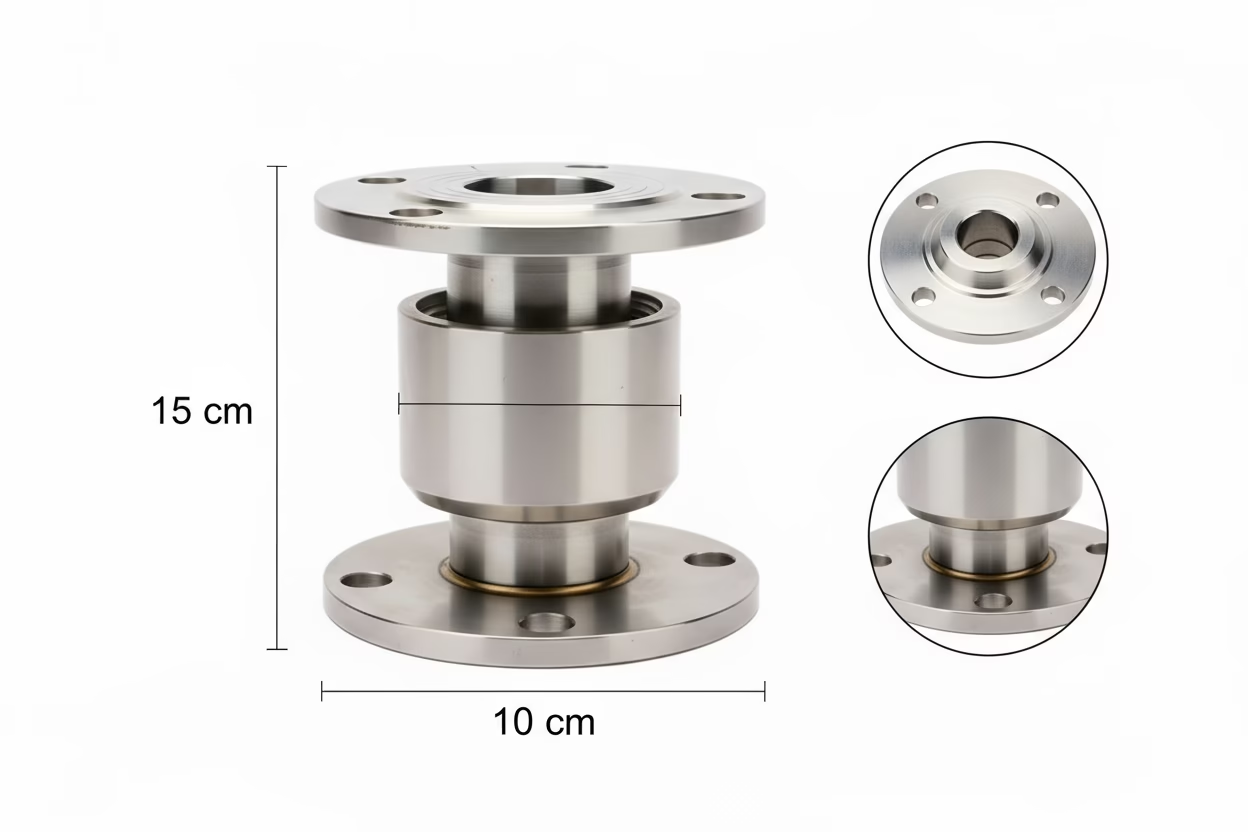
- Product size: from DN20 to DN350
- Maximum pressure: 20 MPa,
- Maximum temperature: 300℃(customizable according to different requirements)
- Rotation speed: ≤50 rpm,
- Applicable media: water, steam, oil, air;
- Main material: stainless steel or carbon steel
Description
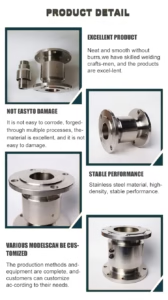
In many industrial environments, standard brass or carbon steel rotary unions simply do not last. Exposure to water, chemicals, cleaning agents, food products, humidity, salt air, or corrosive fluids can rapidly damage conventional rotary unions, leading to leakage, contamination, and costly downtime. This is why engineers increasingly choose a Stainless Steel Rotary Union.
Designed for corrosion resistance, durability, and long service life, stainless steel rotary unions provide reliable fluid transfer between stationary piping and rotating equipment in industries where cleanliness, chemical resistance, and operational reliability are critical.
As a professional rotary union manufacturer in China, we produce stainless steel rotary unions for customers operating in food processing, pharmaceuticals, chemical production, marine equipment, water treatment systems, packaging machinery, and other demanding industrial environments.
What Is a Stainless Steel Rotary Union?
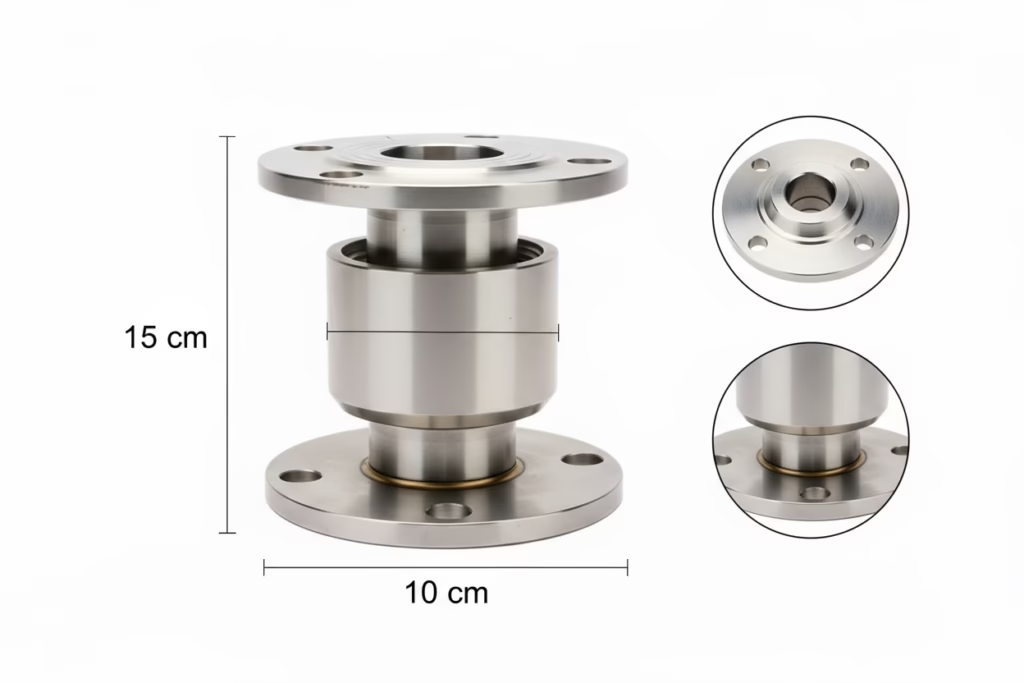
A Stainless Steel Rotary Union is a mechanical sealing device that transfers fluids from a stationary source into rotating equipment while preventing leakage.
Unlike standard brass or carbon steel models, stainless steel rotary unions offer superior resistance to:
- Corrosion
- Oxidation
- Chemical attack
- Moisture exposure
- Saltwater environments
Common media include:
- Water
- Hot Water
- Steam
- Compressed Air
- Vacuum
- Hydraulic Oil
- Cleaning Chemicals
- Food-Grade Liquids
These rotary unions are widely used where hygiene standards or corrosion resistance are essential.
Why Stainless Steel Matters
Many industrial users discover that standard rotary unions fail prematurely because of environmental exposure rather than mechanical wear.
Typical problems include:
Rust Formation
Carbon steel housings exposed to moisture can corrode rapidly.
Internal Contamination
Corrosion particles may enter process systems and damage equipment.
Seal Surface Damage
Corrosion can affect sealing surfaces and cause leakage.
Reduced Service Life
Aggressive media accelerate material degradation.
Stainless steel significantly reduces these risks.
Common Failure Problems and Solutions
Problem 1: External Leakage
Causes
- Seal wear
- Improper installation
- Excessive pressure
Solution
We use precision-machined sealing surfaces and application-specific seal materials to maximize sealing performance.
Problem 2: Corrosion Damage
Causes
- Saltwater
- Chemical exposure
- Humidity
Solution
316 stainless steel construction significantly improves corrosion resistance compared to standard materials.
Problem 3: Bearing Failure
Causes
- Contamination
- Water ingress
- Misalignment
Solution
Our designs incorporate protected bearing arrangements and effective sealing systems.
Problem 4: Premature Seal Wear
Causes
- Dry running
- Contaminated media
- Incorrect operating conditions
Solution
Proper material selection and engineering evaluation dramatically extend seal life.
Engineering Considerations When Selecting a Stainless Steel Rotary Union
Before selecting a rotary union, engineers should evaluate:
Media Type
Water, steam, chemicals, oil, air, or food products.
Pressure
Maximum operating and peak pressure.
Temperature
Process temperatures influence seal selection.
Speed
Rotational speed affects bearing and seal design.
Environmental Conditions
Indoor, outdoor, washdown, marine, or chemical exposure.
Providing complete operating information allows proper product selection.
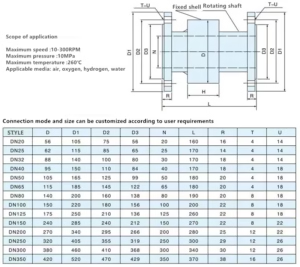
| Model | D (mm) | D1 (mm) | D2 (mm) | D3 (mm) | N (mm) | L (mm) | R (mm) | T (mm) | U (mm) |
|---|---|---|---|---|---|---|---|---|---|
| DN20 | 56 | 105 | 75 | 56 | 20 | 160 | 16 | 4 | 14 |
| DN25 | 62 | 115 | 85 | 65 | 25 | 170 | 14 | 4 | 14 |
| DN32 | 88 | 140 | 100 | 80 | 30 | 170 | 18 | 4 | 14 |
| DN40 | 95 | 150 | 110 | 84 | 40 | 170 | 18 | 4 | 18 |
| DN50 | 105 | 165 | 125 | 99 | 50 | 180 | 20 | 4 | 18 |
| DN65 | 115 | 185 | 145 | 122 | 65 | 180 | 20 | 4 | 18 |
| DN80 | 140 | 200 | 160 | 138 | 80 | 190 | 20 | 8 | 18 |
| DN100 | 150 | 220 | 180 | 156 | 100 | 200 | 22 | 8 | 18 |
| DN125 | 175 | 250 | 210 | 136 | 125 | 260 | 22 | 8 | 18 |
| DN150 | 240 | 280 | 240 | 212 | 150 | 270 | 22 | 12 | 22 |
| DN200 | 270 | 340 | 295 | 266 | 200 | 280 | 25 | 12 | 22 |
| DN250 | 320 | 405 | 355 | 319 | 250 | 300 | 29 | 12 | 26 |
| DN300 | 380 | 460 | 410 | 368 | 300 | 340 | 30 | 12 | 26 |
| DN350 | 420 | 520 | 470 | 429 | 350 | 370 | 38 | 16 | 26 |
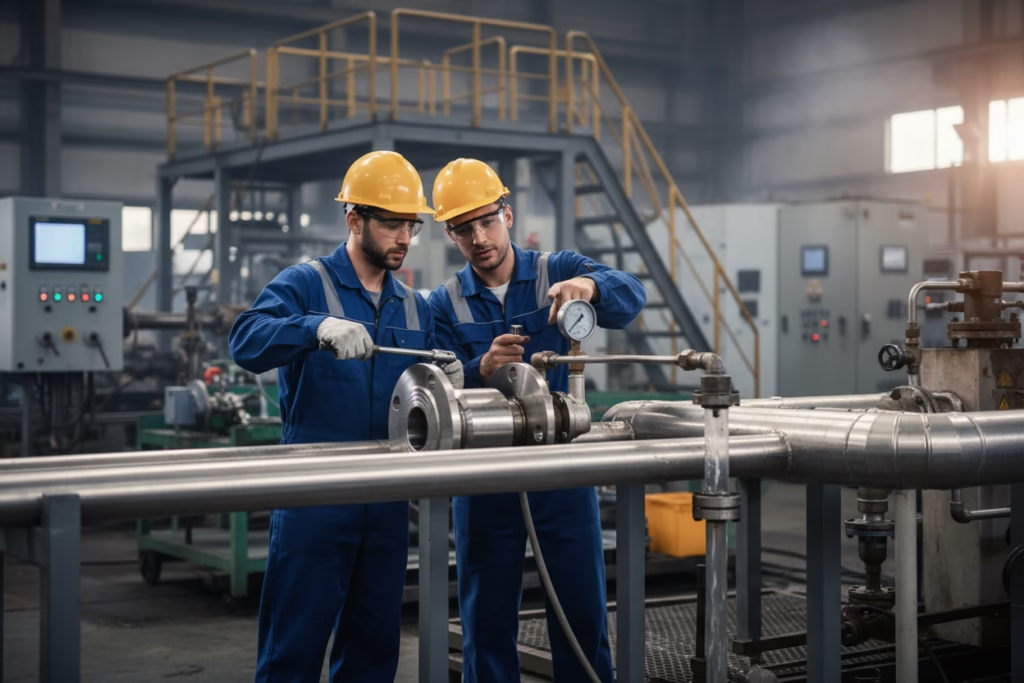
Quality Assurance of Stainless Steel Rotary Union
Manufacturing Processes
The production of the stainless steel flange rotary joint pipe involves a series of strict manufacturing processes. These include cutting the stainless steel pipes to the required length, machining the flanges to the precise dimensions and surface finishes, assembling the rotary joint components, and performing various tests to ensure the quality and functionality of the product.
Testing Procedures
- Pressure Testing: Technicians pressure-test each joint pipe to ensure it withstands the specified maximum working pressure without leakage. They fill the pipe with a suitable fluid, such as water or air, then apply pressure up to the test level—typically higher than the maximum working pressure—and monitor for any signs of leakage or deformation.
- Leakage Testing: Technicians also perform leakage testing using methods such as bubble testing for air-filled pipes or sensitive leak detection instruments. This ensures that the seal between the flanges and the rotary joint is tight and that there is no leakage of the fluid or gas passing through the pipe.
- Rotation Testing: We tested the rotary functionality of the joint pipe to ensure it rotated smoothly at the specified speed without any abnormal noise or vibration. This is important to ensure that the joint pipe can operate efficiently in the intended applications.
Quality Certifications
The product holds various quality certifications, such as ISO 9001. It also complies with relevant industry standards and regulations, providing customers with confidence in the product’s quality and safety.

Real Customer Application Example
A beverage equipment manufacturer experienced repeated corrosion failures in a humid production environment.
The original carbon steel rotary unions required replacement every six months.
After switching to a customized 316 stainless steel rotary union:
- Leakage incidents decreased significantly.
- Maintenance frequency was reduced.
- Equipment uptime improved.
- Total maintenance costs declined.
The improvement came not only from material selection but also from optimized seal design and bearing protection.


Typical Industry Applications
Food Processing Equipment
Food manufacturers require hygienic fluid transfer systems.
Applications include:
- Mixing systems
- Filling machines
- Rotary tables
- Food packaging equipment
- Dairy processing systems
Benefits include:
- Corrosion resistance
- Easy cleaning
- Long service life
- Improved sanitation
Beverage Production
Rotary unions are frequently installed on:
- Bottling lines
- Can filling equipment
- Rotary rinsing systems
Frequent washdown procedures make stainless steel essential.
Chemical Processing Industry
Chemical plants often handle aggressive fluids.
Examples include:
- Acids
- Alkaline solutions
- Solvents
- Cleaning agents
A properly selected stainless steel rotary union can dramatically increase equipment reliability.
Water Treatment Facilities
Water treatment systems expose equipment to:
- Moisture
- Chemicals
- Outdoor environments
Stainless steel housings provide excellent long-term corrosion protection.
Marine and Offshore Applications
Saltwater environments are among the most challenging operating conditions.
Common applications include:
- Shipboard machinery
- Offshore platforms
- Desalination systems
Corrosion-resistant construction becomes critical for long-term operation.
Pharmaceutical Manufacturing
Pharmaceutical production requires:
- Cleanability
- Reliability
- Process integrity
Stainless steel rotary unions help maintain contamination-free operation.


Our Manufacturing Experience
Selecting a rotary union supplier involves more than comparing prices.
Reliable performance begins with manufacturing quality.
Precision CNC Machining
We manufacture critical components using advanced CNC machining centers.
Tight tolerance control helps ensure sealing performance and rotational accuracy.
Material Expertise
Our engineering team selects materials according to actual application requirements.
Available materials include:
- 304 Stainless Steel
- 316 Stainless Steel
- Duplex Stainless Steel
- Tungsten Carbide
- Silicon Carbide
Each material serves specific operating environments.
Seal Technology
Depending on media and operating conditions, we offer:
- Mechanical Seals
- Balanced Seals
- Carbon Graphite Seals
- Silicon Carbide Seals
to maximize service life.
Quality Control
Every rotary union undergoes:
- Dimensional Inspection
- Pressure Testing
- Leakage Testing
- Rotation Testing
before shipment.
This process ensures consistent quality and reliability.
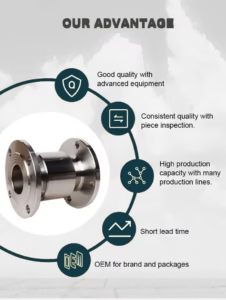
OEM Replacement Capability
Many customers seek alternatives to expensive imported rotary unions.
We manufacture replacement solutions compatible with numerous international rotary union brands while providing:
- Competitive pricing
- Flexible customization
- Shorter lead times
- Technical support
For many applications, customers achieve equivalent performance while reducing procurement costs.

Why Customers Choose Our Factory
Customers choose us because we combine:
- Manufacturing experience
- Engineering support
- Custom design capability
- Strict quality control
- Global export experience
Rather than supplying generic catalog products, we work with customers to develop rotary union solutions tailored to actual operating conditions.

Frequently Asked Questions
What is the advantage of a stainless steel rotary union?
Superior corrosion resistance, longer service life, and suitability for hygienic or aggressive environments.
Is 316 stainless steel better than 304?
For chemical and marine environments, 316 stainless steel generally provides better corrosion resistance.
Can stainless steel rotary unions handle hot water?
Yes. Properly designed models can operate in hot water and elevated temperature applications.
Are they suitable for food processing?
Yes. Stainless steel rotary unions are widely used in food and beverage production equipment.
Can you customize connections and sizes?
Yes. BSP, NPT, SAE, Metric, and custom configurations are available.
Do you provide replacement rotary unions for imported brands?
Yes. We manufacture cost-effective replacement solutions compatible with many internationally used rotary union designs.

Partner with an Experienced Stainless Steel Rotary Union Manufacturer
A Stainless Steel Rotary Union is often the best choice when corrosion resistance, hygiene, and long-term reliability are essential. Whether your equipment operates in food processing, chemical manufacturing, water treatment, pharmaceutical production, or marine environments, selecting the correct rotary union can significantly improve uptime and reduce maintenance costs.
With extensive manufacturing experience, advanced production capabilities, and strict quality control procedures, our factory provides stainless steel rotary union solutions designed to perform reliably in demanding industrial applications worldwide.
Related products
-
Sale!

Continuous Casting Machine Stainless Steel Rotary Union
Original price was: $50.00.$42.00Current price is: $42.00. -
Sale!
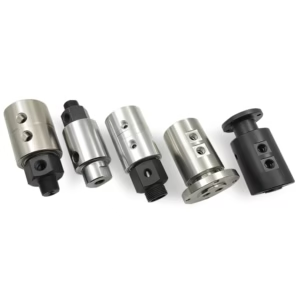
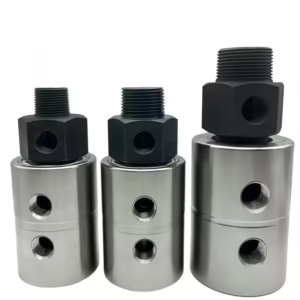
Dual Flow Rotary Union Manufacturer for Industrial Cooling and Heating Systems
Original price was: $100.00.$90.00Current price is: $90.00. -
Sale!

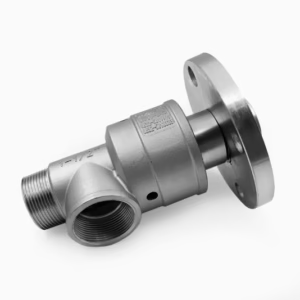
High Speed Rotary Joints Hydraulic Rotary Swivel Joint
Original price was: $25.00.$23.00Current price is: $23.00. -
Sale!


Hydraulic Rotary Joint Manufacturer | High Pressure Rotary Joint for Industrial Equipment
Original price was: $35.00.$31.00Current price is: $31.00.