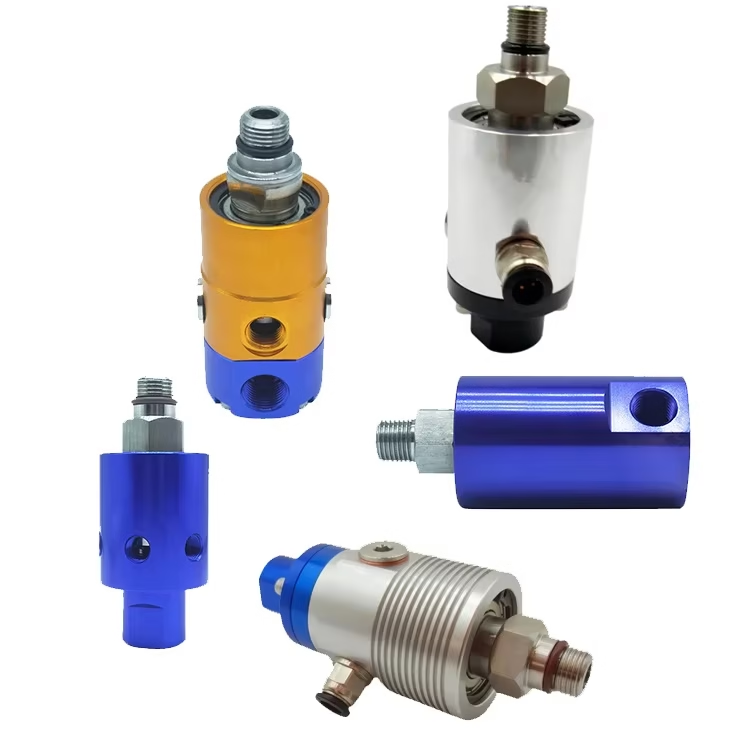
How We Manufacture Customized Rotary Joint Solutions for Special Industrial Conditions
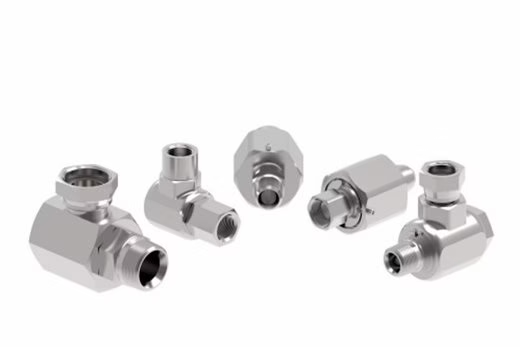
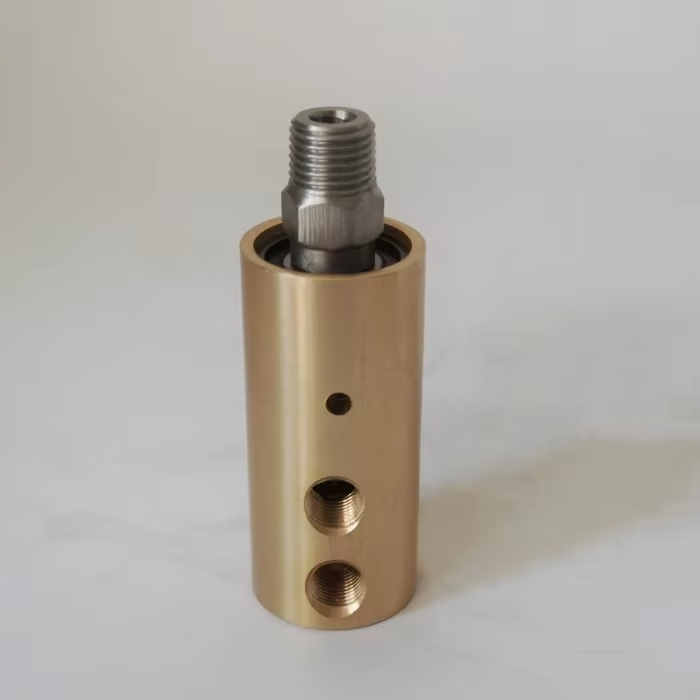
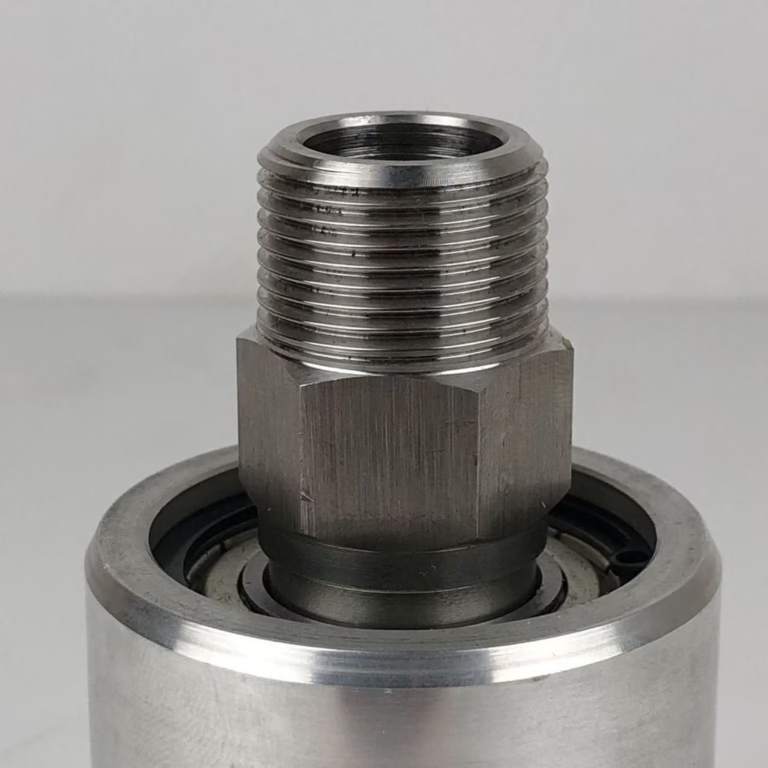
In industrial fluid transfer systems, standard rotary joints are widely used for common operating conditions. However, many industrial applications require specialized rotary joint solutions because standard designs cannot handle the actual operating environment.
As a factory manufacturer with years of experience producing customized rotary unions and rotary joints, we have worked on many specialized applications involving:
- high rotational speed
- high pressure
- steam systems
- corrosive media
- thermal oil
- multi-passage structures
- limited installation space
- continuous heavy-duty operation
In these applications, standard rotary joints often fail because real industrial conditions are much more demanding than catalog specifications.
This article explains our practical manufacturing experience in producing specialized rotary joint solutions for industrial customers.
Why Standard Rotary Joints Often Fail in Specialized Applications
Many industrial users initially select standard rotary joints based only on dimensions or pressure ratings.
However, in real operating environments, failure problems often appear quickly.
Common problems include:
- seal leakage
- abnormal vibration
- overheating
- premature bearing wear
- internal corrosion
- thermal cracking
- insufficient flow capacity
In our field experience, these failures are usually caused by a mismatch between the rotary joint structure and the actual operating conditions.
For example, a rotary joint operating normally in a low-speed cooling system may fail rapidly in a high-speed spindle application.
Likewise, a standard water rotary union may not survive in contaminated cooling systems or high-temperature environments.
This is why a specialized rotary joint design becomes necessary.
What Makes a Rotary Joint “Specialized”?
A specialized rotary joint is not simply a modified standard product.
It is usually designed specifically for unique operating requirements that standard rotary joints cannot handle reliably.
Specialized rotary joints often involve:
- customized seal structures
- reinforced bearing arrangements
- multi-passage channels
- corrosion-resistant materials
- compact installation design
- balanced rotating components
- high-temperature sealing systems
In our manufacturing experience, every specialized rotary joint project requires a detailed analysis of:
- operating pressure
- rotational speed
- media type
- temperature
- contamination level
- installation space
- operating cycle
Without understanding these conditions, even expensive rotary joints may fail prematurely.
High-Speed Specialized Rotary Joints
One of the most challenging applications involves high-speed rotating equipment.
Examples include:
- CNC machining centers
- spindle cooling systems
- high-speed grinding machines
- automated rotating equipment
At high rotational speeds, rotary joints experience:
- increased friction
- heat generation
- vibration sensitivity
- seal instability
In several customer cases, we analyzed failed imported rotary unions that suffered repeated leakage after only a short operating period.
The main causes included:
- poor balancing
- spindle vibration
- coolant contamination
- improper seal pressure
For high-speed applications, we focus heavily on:
- dynamic balancing
- precision machining
- lightweight rotating structures
- balanced mechanical seals
- bearing stability
Even small concentricity deviations may significantly shorten service life.
Specialized Rotary Joints for High-Temperature Applications
Steam and thermal oil systems create completely different engineering challenges.
Thermal expansion affects:
- seal pressure
- internal clearance
- bearing stability
- housing deformation
In paper mills and rubber machinery, we frequently see standard rotary joints fail because seal materials cannot tolerate prolonged heat exposure.
For these applications, we often use:
- carbon graphite seals
- stainless steel structures
- heat-resistant elastomers
- reinforced bearing support
Thermal oil applications also require careful seal material compatibility.
Incorrect material selection may cause seal swelling or hardening.
Multi-Passage Specialized Rotary Joints
Modern industrial equipment increasingly requires multiple media channels integrated into one rotary joint.
These systems may combine:
- cooling water
- compressed air
- hydraulic oil
- vacuum channels
- electrical signal transfer
inside a compact structure.
Manufacturing multi-passage rotary joints is significantly more difficult than producing standard single-passage designs.
One major challenge involves preventing internal leakage between adjacent passages.
As the number of passages increases, machining complexity rises sharply.
In compact designs, maintaining sufficient sealing distance becomes extremely difficult.
Our factory performs additional testing and assembly inspection for multi-passage rotary joints to ensure stable channel isolation.
Corrosion-Resistant Specialized Rotary Joints
In chemical plants, marine environments, and humid cooling systems, corrosion resistance becomes extremely important.
Standard carbon steel rotary joints may corrode internally after prolonged exposure to aggressive fluids.
For these conditions, we commonly manufacture rotary joints using:
- stainless steel
- special alloy materials
- corrosion-resistant coatings
In some cooling water systems, mineral contamination and chemical additives accelerate internal corrosion.
We have helped customers redesign rotary joints after repeated leakage caused by corrosion damage.
Compact Customized Rotary Joint Designs
Some industrial machinery provides very limited installation space.
In these situations, standard rotary joints may not fit physically.
Customized compact structures become necessary.
However, reducing size creates additional engineering difficulties.
Smaller rotary joints must still maintain:
- sealing stability
- bearing support
- pressure resistance
- flow capacity
Balancing compact dimensions with reliable performance requires significant manufacturing experience.
Seal Technology in Specialized Rotary Joints
Seal performance is the most critical factor in rotary joint reliability.
Different applications require completely different sealing strategies.
For example:
High-Speed Systems
Balanced mechanical seals reduce friction and heat generation.
Contaminated Systems
Wear-resistant sealing materials improve durability.
Steam Systems
Carbon graphite seals provide thermal stability.
High-Pressure Hydraulic Systems
Reinforced sealing structures improve extrusion resistance.
In our factory experience, improper seal selection remains one of the most common causes of rotary joint failure.
Many users focus only on dimensions while ignoring actual operating conditions.
Manufacturing Process of Specialized Rotary Joints
Reliable specialized rotary joints require far more precise manufacturing control than standard products.
Our production process typically includes:
CNC Precision Machining
Critical dimensions such as:
- shaft concentricity
- seal cavity tolerance
- bearing fit
- internal flow path geometry
must remain within strict tolerances.
Poor machining precision often causes vibration and leakage.
Seal Face Lapping
Mechanical seal faces require extremely flat surfaces to maintain stable sealing performance.
Improper lapping quickly causes leakage during operation.
Dynamic Balancing
For high-speed applications, balancing becomes essential.
Unbalanced rotating components increase vibration and damage seals.
Pressure and Leakage Testing
Before shipment, rotary joints undergo:
- hydrostatic pressure testing,
- leakage testing,
- rotational testing,
- passage isolation testing
Some customers also request continuous operation simulation under actual working conditions.
Common Failure Problems We Analyze
Over the years, we have inspected many failed rotary joints returned from industrial sites.
The most common problems include:
Coolant Contamination
Metal particles damage sealing surfaces and bearings.
Improper Installation
Misalignment creates side loading and unstable seal contact.
Thermal Expansion
Temperature fluctuation changes internal clearance and seal pressure.
Excessive Vibration
Machine vibration transfers directly into the rotary joint.
Incorrect Material Selection
Standard materials may fail rapidly in corrosive or high-temperature environments.
Why Factory Experience Matters
Specialized rotary joint manufacturing depends heavily on practical engineering experience.
Catalog data alone cannot predict actual operating problems.
As a factory manufacturer, we continuously improve our products through:
- field failure analysis
- returned product inspection
- customer operating feedback
- long-term application observation
- production process optimization
For example, one customer operating high-temperature rubber machinery experienced repeated seal cracking.
After analyzing the operating conditions, we redesigned the seal combination and improved thermal stability.
The service life increased significantly after the modification.
This type of improvement comes from practical manufacturing experience rather than theoretical design alone.
How to Choose the Right Specialized Rotary Joint
Industrial users should evaluate:
- operating speed
- pressure
- temperature
- media compatibility
- contamination level
- installation space
- operating cycle
- maintenance conditions
before selecting a rotary joint.
Choosing the wrong structure often increases maintenance costs and equipment downtime.
Future Trends in Specialized Rotary Joint Technology
Industrial equipment continues moving toward:
- higher speed
- automated operation
- compact machinery
- continuous production
- integrated multi-media transfer
As a result, specialized rotary joints are evolving toward:
- improved sealing systems
- compact multi-passage structures
- higher balancing precision
- longer service life
- enhanced corrosion resistance
Manufacturers must continuously improve machining capability and engineering knowledge to meet these requirements.
Conclusion
Specialized rotary joints play a critical role in demanding industrial applications where standard rotary unions cannot provide stable long-term performance.
After years of manufacturing customized rotary joints for various industries, we understand that reliable operation depends on far more than dimensions alone.
Precision machining, seal technology, balancing control, material selection, and practical engineering experience all directly affect rotary joint reliability.
As a factory manufacturer, we continue improving our specialized rotary joint solutions based on real industrial operating conditions and customer application experience.
For industrial users, choosing a manufacturer with genuine production capability and practical field knowledge is often the key to reducing leakage, downtime, and maintenance problems.