What is a Hydraulic Rotary Union?
In modern industrial systems, the reliable transmission of hydraulic fluid between stationary and rotating components is a fundamental engineering challenge. From CNC machine tools and rotary tables to steel manufacturing lines, wind turbines, and heavy-duty automation equipment, countless applications depend on uninterrupted hydraulic power during continuous rotation. This is where the Hydraulic Rotary Union plays a critical role.
A Hydraulic Rotary Union is a precision-engineered mechanical component designed to transfer pressurized hydraulic fluid from a fixed supply line to a rotating shaft or drum without leakage, pressure loss, or interruption. Although compact in size, it is a mission-critical element that directly affects system efficiency, safety, uptime, and operating costs.
This article provides a comprehensive, experience-driven, and technically authoritative explanation of what a hydraulic rotary union is, how it works, where it is used, and how to select the right solution. Written from an engineering and industrial perspective, this guide follows Google EEAT principles—Experience, Expertise, Authoritativeness, and Trustworthiness—to support both technical decision-makers and procurement professionals.
What Is a Hydraulic Rotary Union?
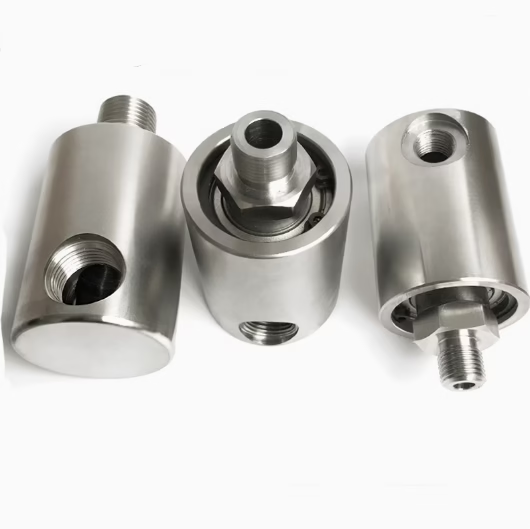
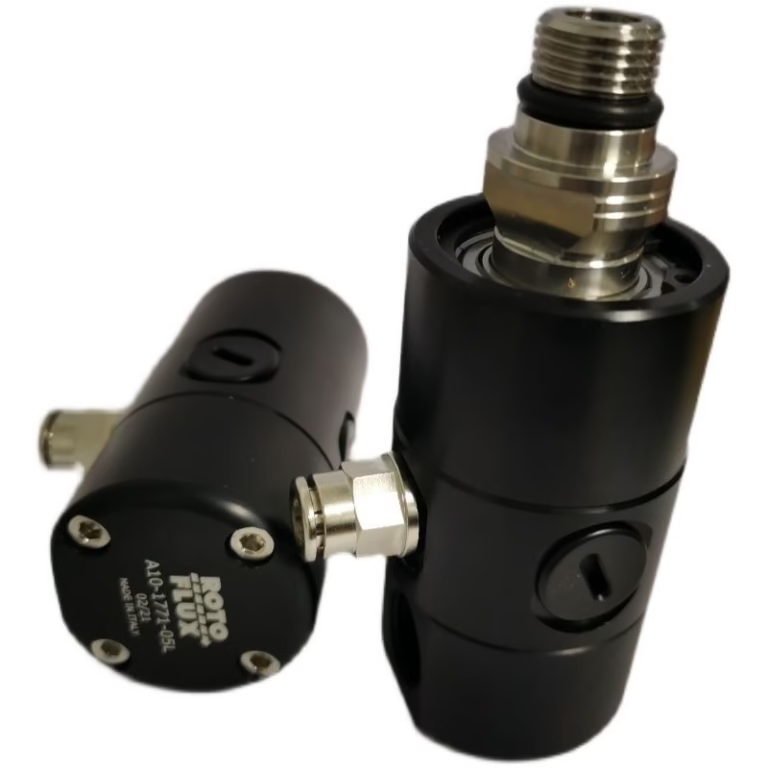
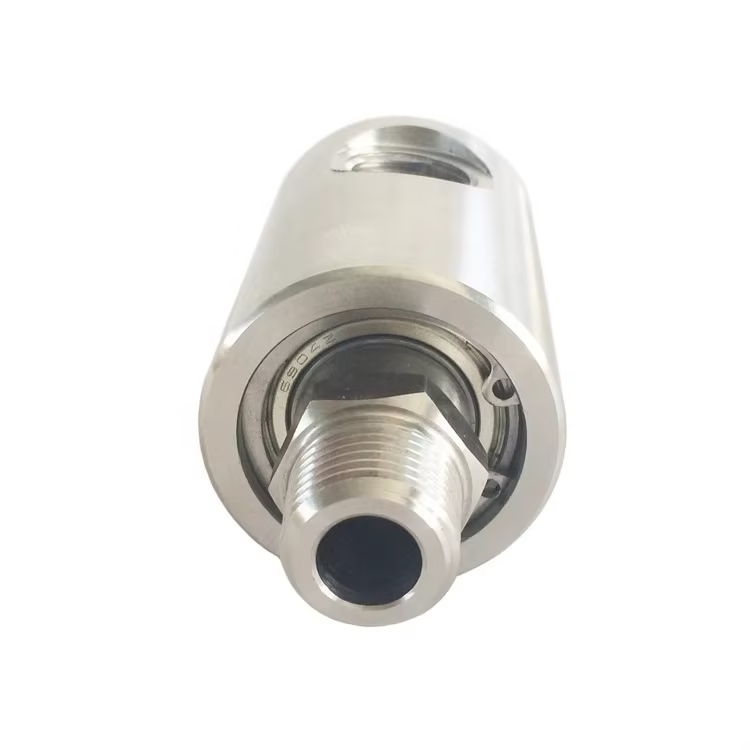
A Hydraulic Rotary Union (also known as a hydraulic rotary joint) is a mechanical sealing device that enables the transfer of hydraulic oil or other pressurized fluids between stationary piping and rotating machinery. It allows one part of the system to rotate freely while maintaining a sealed flow path for high-pressure hydraulic media.
Unlike standard pipe fittings or flexible hoses, hydraulic rotary unions are specifically designed to withstand:
- High operating pressures
- Continuous or intermittent rotation
- Axial and radial loads
- Elevated temperatures
- Long service cycles under demanding industrial conditions
In essence, the hydraulic rotary union acts as a controlled interface between motion and fluid power.
Core Functions of a Hydraulic Rotary Union
The primary function of a hydraulic rotary union is simple in concept but complex in execution:
- Seal high-pressure hydraulic fluid during rotation
- Allow smooth, low-friction rotational movement
- Prevent leakage, contamination, and pressure drop
To achieve this, the rotary union integrates precision bearings, engineered sealing materials, hardened shafts, and robust housings into a compact assembly. Any failure in these elements can lead to oil leakage, system downtime, or even catastrophic equipment damage.
How Does a Hydraulic Rotary Union Work?
From an engineering standpoint, a hydraulic rotary union operates by combining a stationary housing with a rotating shaft (or rotor). Hydraulic fluid enters the stationary port, passes through internal flow channels, and exits through the rotating side into the connected equipment.
Key Working Components
- Housing: Fixed to the stationary supply line
- Rotor / Shaft: Rotates with the machine element
- Seals: Prevent fluid leakage between rotating and stationary parts
- Bearings: Support rotation and absorb mechanical loads
- Ports / Passages: Direct fluid flow internally
The seals are the most critical element. Depending on application requirements, seals may be made from carbon graphite, tungsten carbide, silicon carbide, PTFE, or high-performance elastomers. Advanced designs use balanced mechanical seals to reduce wear and extend service life.
Types of Hydraulic Rotary Unions
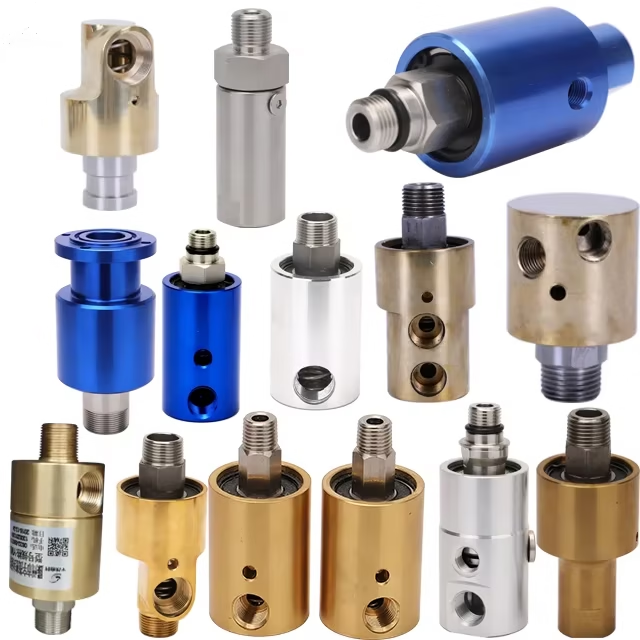
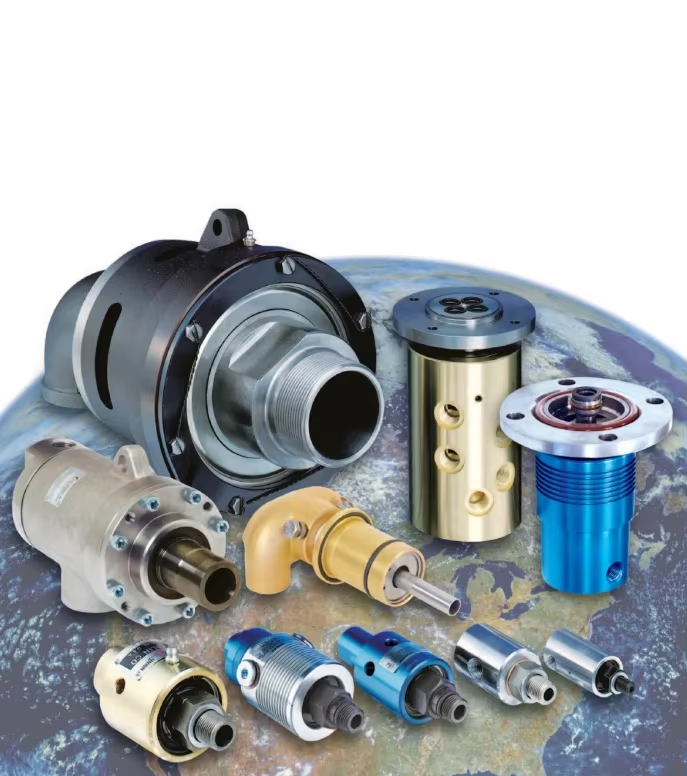
They are not one-size-fits-all. Manufacturers engineer these rotary unions in multiple configurations to match specific operating conditions.
Single-Passage Rotary Union
Designed for applications requiring one hydraulic fluid line. Common in clamping systems, chuck actuation, and simple rotary cylinders.
Multi-Passage Hydraulic Union
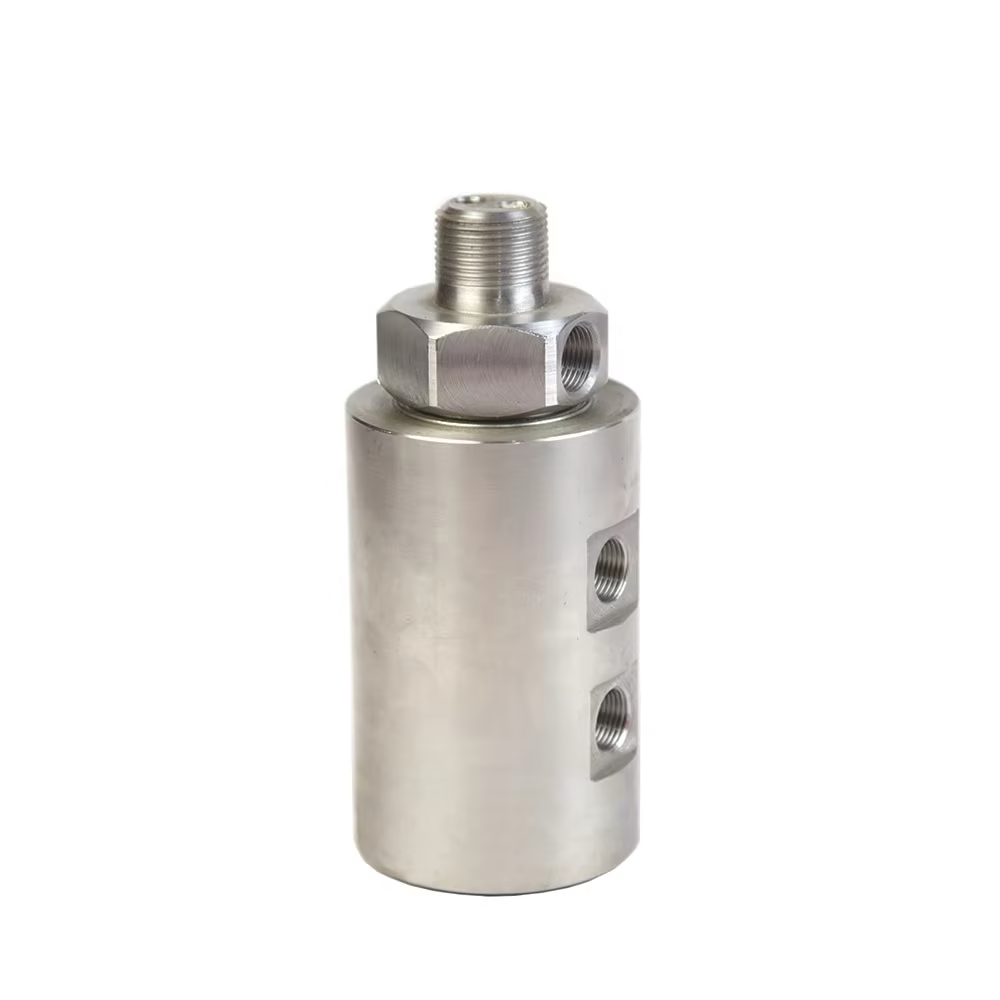
Supports two or more independent fluid channels. Engineers frequently use these rotary unions in machine tools to transmit hydraulic oil, coolant, and air simultaneously.
High-Pressure Hydraulic Union
Engineered for pressures exceeding 300 bar or more. Typically used in heavy industry, forging presses, and steel mills.
High-Speed Hydraulic Rotary Union
Optimized for high RPM environments such as CNC spindles and rotary indexing tables. These designs focus on dynamic balance, low friction, and advanced sealing.
Compact Hydraulic Union
Designed for limited installation space while maintaining performance. Often used in robotics and automation equipment.
Applications Across Industries
They are critical in systems requiring simultaneous rotation and fluid transfer:
Wind Energy: Transfer hydraulic oil to blade pitch control systems in turbines.
Construction Machinery: Enable 360° rotation in excavators, cranes, and drilling rigs.
Manufacturing: Coolant supply to CNC machine spindles.
Marine: Steering and propulsion systems on ships.
Robotics: Hydraulic power delivery to robotic arms.
Key Design Considerations
Selecting the correct hydraulic rotary union requires a thorough understanding of operating conditions.
Operating Pressure
Higher pressure demands stronger materials, reinforced seals, and precision manufacturing.
Rotational Speed (RPM)
High-speed applications require excellent dynamic balance and low-friction sealing systems.
Temperature Range
Both fluid temperature and ambient temperature influence seal material selection and bearing life.
Media Compatibility
Hydraulic oil type, viscosity, and cleanliness level must match the rotary union design.
Mechanical Loads
External axial or radial loads should not be transferred to the rotary union unless it is specifically designed to support them.
Materials and Sealing Technology
From an expert engineering perspective, materials determine reliability.
- Shaft Materials: Stainless steel, alloy steel, hardened carbon steel
- Seal Faces: Carbon graphite, silicon carbide, tungsten carbide
- O-Rings: NBR, FKM (Viton), EPDM
Advanced hydraulic rotary unions often use mechanical face seals instead of simple lip seals, significantly improving service life under high pressure and speed.
Hydraulic Rotary Union vs. Hydraulic Hose Loop
Some systems attempt to use hose loops instead of rotary unions. While this may reduce initial cost, it introduces serious risks:
- Hose fatigue and premature failure
- Limited rotation angle
- Increased maintenance and downtime
From a professional engineering standpoint, a hydraulic rotary union is the only safe and reliable solution for continuous rotation.
Why Quality and Supplier Expertise Matter
From an EEAT perspective, supplier experience and engineering capability are as important as the product itself. Reputable manufacturers provide:
- Proven design experience
- Application engineering support
- Reliable quality control
- Clear technical documentation
Choosing an experienced hydraulic rotary union supplier reduces lifecycle cost and operational risk.
FAQ: Addressing Common Queries
FAQ 1: What is a hydraulic union used for?
It is used to transfer pressurized hydraulic fluid from a stationary supply line to rotating equipment. It enables continuous rotation while maintaining a sealed hydraulic connection, commonly in CNC machines, rotary tables, and industrial automation systems.
FAQ 2: What is the difference between a rotary union and a rotary joint?
There is no functional difference. “Hydraulic rotary union” and “hydraulic rotary joint” are interchangeable terms, with “rotary union” more commonly used in industrial and engineering contexts.
FAQ 3: What is a high-pressure hydraulic union?
A high-pressure hydraulic rotary union is specifically designed to operate under elevated hydraulic pressures, often exceeding 300 bar. It uses reinforced housings, advanced mechanical seals, and high-strength materials to ensure safe, leak-free operation.
FAQ 4: What is a multi-passage rotary union?
A multi-passage hydraulic rotary union allows multiple independent fluid channels to pass through a single rotating interface. It is commonly used when hydraulic oil, coolant, or air must be transmitted simultaneously.
FAQ 5: Can a hydraulic union handle continuous rotation?
Yes. Hydraulic rotary unions are engineered for continuous rotation when properly selected and installed. Compared to hose loops, they offer higher reliability, longer service life, and improved safety.
FAQ 6: What causes hydraulic union leakage?
Common causes include incorrect installation, excessive external load, seal wear, contaminated hydraulic fluid, or operating beyond rated pressure or speed.
Conclusion
So, what is a Hydraulic Rotary Union? It is far more than a simple connector—it is a precision-engineered solution that enables modern rotating machinery to function safely, efficiently, and reliably under hydraulic power.
By understanding how hydraulic rotary unions work, where they are used, and how to select them correctly, engineers and procurement professionals can make informed decisions that enhance system performance and long-term reliability.
As industrial systems continue to evolve toward higher speeds, pressures, and automation levels, the role of the hydraulic rotary union will remain indispensable.