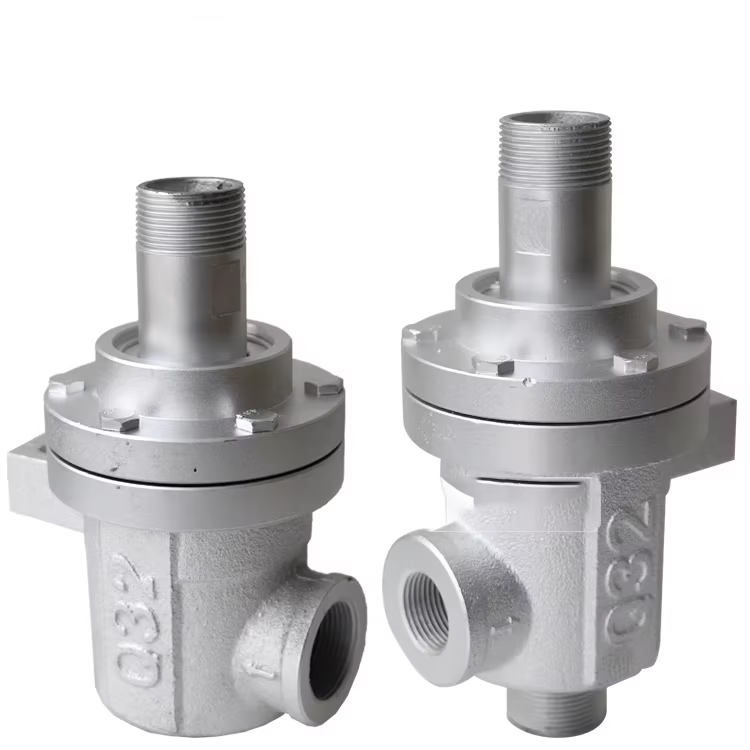
Steam Rotary Union for Paper Mills and Industrial Heating Systems
Original price was: $20.00.$15.00Current price is: $15.00.
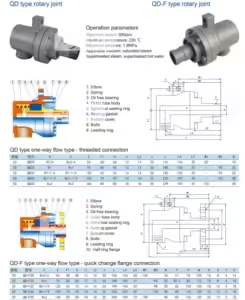
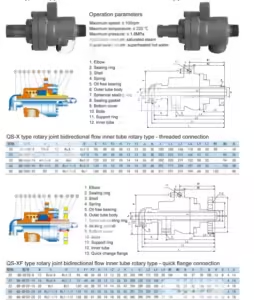
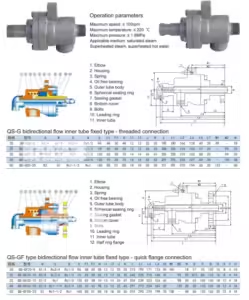
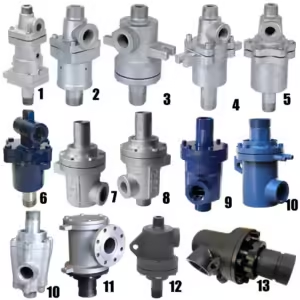
- Size: All kinds of models and sizes
- Max.Speed: ≤300RPM
- Max. Pressure: ≤1.8MPA
- Max. Temperature: ≤220℃
- Applicable medium: Saturated steam, hot oil, superheated water, superheated st
Description
Steam remains one of the most efficient heat transfer media used in industrial production. Across paper mills, textile factories, corrugated board plants, rubber processing facilities, food manufacturing lines, and drying systems, steam is widely used to heat rotating drums, rollers, cylinders, and process equipment. However, delivering steam into rotating machinery presents unique engineering challenges. High temperatures, pressure fluctuations, condensate formation, thermal expansion, and continuous operation place extreme demands on rotary sealing systems. A properly engineered Steam Rotary Union allows steam and condensate to pass safely between stationary piping and rotating equipment while maintaining efficiency, minimizing leakage, and extending equipment life.
As a professional rotary union manufacturer in China, we design and manufacture steam rotary unions for demanding industrial applications worldwide. Our products are used in paper production, textile finishing, corrugating machinery, rubber processing, food equipment, and many other steam-heated systems.
What Is a Steam Rotary Union?
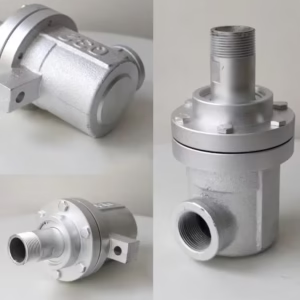
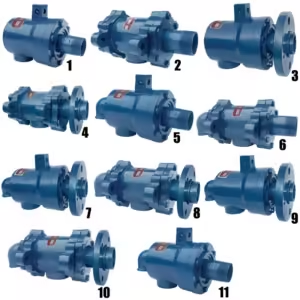
A Steam Rotary Union is a specialized rotary sealing device designed to transfer steam from a stationary source into rotating equipment.
Unlike standard water or air rotary unions, steam rotary unions must withstand:
- High temperatures
- Thermal cycling
- Condensate formation
- Pressure fluctuations
- Continuous operation
In many installations, the rotary union must simultaneously manage steam inlet and condensate outlet functions.
This makes proper design critical for system performance.
Why Steam Applications Are More Demanding
Steam behaves very differently from water, oil, or compressed air.
When steam enters a heated roller or cylinder, part of it condenses into water.
This creates two challenges:
Heat Transfer Efficiency
Condensate must be removed efficiently.
If condensate accumulates, heat transfer drops significantly.
Mechanical Stress
Temperature changes create expansion and contraction of metal components.
Poorly designed rotary unions often fail because they cannot accommodate thermal movement.

Main Industry Applications
Paper Industry
Paper machines are among the most common steam rotary union applications.
Steam-heated drying cylinders operate continuously at elevated temperatures.
The rotary union supplies steam while removing condensate generated during drying.
Common requirements include:
- High temperature resistance
- Stable sealing performance
- Efficient condensate removal
- Long service life
In paper mills, even a small steam leak can lead to substantial energy losses over time.
Corrugated Board Manufacturing
Corrugator machines use steam-heated rollers to produce corrugated cardboard.
Steam rotary unions are installed on:
- Preheaters
- Single facers
- Double facers
- Hot plates
Challenges include:
- Continuous operation
- Frequent temperature fluctuations
- High-humidity environments
Reliable sealing is essential for production efficiency.
Textile Industry
Textile finishing equipment uses heated cylinders for:
- Drying
- Ironing
- Fabric finishing
Steam rotary unions must withstand continuous thermal cycling while maintaining leak-free operation.
Rubber and Tire Manufacturing
Steam is commonly used in:
- Tire curing presses
- Rubber vulcanization equipment
- Calender machines
These applications demand high reliability because unexpected downtime directly impacts production output.
Food Processing Equipment
Food manufacturers often use steam for:
- Cooking
- Sterilization
- Drying
- Heating
Steam rotary unions used in these environments must provide reliable operation and support sanitary equipment designs.
Common Steam Rotary Union Failures
Understanding common failure modes helps engineers avoid costly downtime.
Failure 1: Steam Leakage
Symptoms
- Visible steam around the union
- Energy loss
- Reduced heating efficiency
Common Causes
- Worn seal faces
- Thermal distortion
- Improper installation
- Excessive pressure
Solution
Use balanced mechanical seal designs specifically engineered for steam service.
Failure 2: Condensate Accumulation
Symptoms
- Uneven heating
- Reduced production quality
- Water hammer
Common Causes
- Improper siphon design
- Inadequate condensate removal
Solution
Optimize condensate recovery systems and ensure proper rotary union selection.
Failure 3: Bearing Failure
Symptoms
- Noise
- Vibration
- Excessive heat
Common Causes
- Condensate intrusion
- Misalignment
- Excessive loads
Solution
Use protected bearing arrangements and maintain proper installation alignment.
Failure 4: Seal Face Damage
Symptoms
- Sudden leakage
- Reduced service life
Common Causes
- Dry running
- Thermal shock
- Contaminated condensate
Solution
Select appropriate seal materials and maintain stable operating conditions.
Engineering Considerations When Selecting a Steam Rotary Union
Selecting a steam rotary union requires careful evaluation of operating conditions.
Steam Pressure
Pressure influences:
- Seal loading
- Housing strength
- Bearing design
Steam Temperature
Higher temperatures require:
- Specialized seal materials
- Heat-resistant bearings
- Thermal expansion compensation
Rotational Speed
Higher speed demand:
- Better balancing
- Precision bearings
- Optimized seal geometry
Condensate Handling
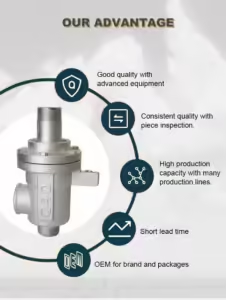
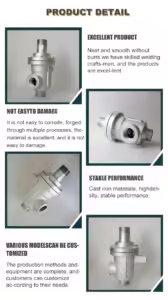
A steam rotary union must work together with a properly designed siphon system to maximize heating efficiency.
Our Manufacturing Experience
Producing reliable steam rotary unions requires more than machining metal parts.
It requires understanding how steam systems behave in real industrial environments.
Over the years, our engineering team has worked with customers in paper mills, textile plants, corrugated board factories, rubber processing facilities, and other steam-heated production systems.
This experience helps us recommend application-specific solutions rather than generic products.
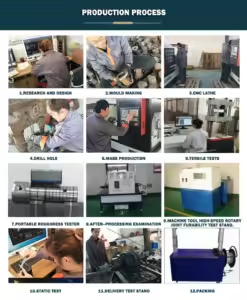
Advanced Manufacturing Capability
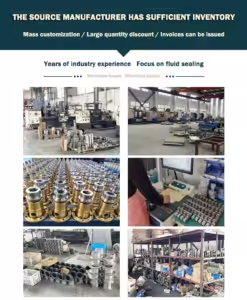
Our factory uses:
- CNC machining centers
- Precision grinding equipment
- Dynamic balancing systems
- Pressure testing stations
to ensure product consistency and performance.
Critical sealing surfaces are machined and inspected to maintain reliable sealing under high-temperature operating conditions.
Material Selection Expertise
Depending on application requirements, we utilize:
- Stainless Steel
- Alloy Steel
- Carbon Graphite
- Silicon Carbide
- Tungsten Carbide
to optimize durability and performance.
Material selection directly influences service life in steam environments.

Quality Control and Testing
Every steam rotary union undergoes:
- Dimensional inspection
- Pressure testing
- Leakage testing
- Rotation testing
before shipment.
These procedures help ensure reliable operation in demanding industrial environments.

Customer Application Example
A corrugated cardboard manufacturer experienced recurring steam leakage every six months.
Investigation revealed:
- Seal face wear
- Condensate accumulation
- Bearing contamination
Our engineering team recommended a redesigned steam rotary union with improved condensate handling and upgraded seal materials.
After implementation:
- Steam leakage decreased significantly.
- Maintenance intervals increased.
- Energy efficiency improved.
- Production downtime was reduced.

Why Customers Choose Our Factory
Customers choose us because we provide:
- Engineering-driven solutions
- Extensive steam application experience
- Strict quality control
- Custom manufacturing capability
- Global export support
Rather than offering standard catalog products, we work closely with customers to solve real operating challenges.

Frequently Asked Questions
What is the purpose of a steam rotary union?
A steam rotary union transfers steam and often condensate between stationary piping and rotating equipment.
Can steam rotary unions handle condensate?
Yes. Properly designed steam rotary unions are engineered to manage both steam delivery and condensate removal.
What industries commonly use steam rotary unions?
Paper, textile, corrugated board, rubber processing, food manufacturing, and drying equipment industries.
Why does a steam rotary union leak?
Common causes include seal wear, thermal distortion, improper installation, and pressure fluctuations.
Can you provide OEM replacement steam rotary unions?
Yes. We manufacture replacement solutions compatible with many imported rotary union designs.

Partner with an Experienced Steam Rotary Union Manufacturer
A reliable Steam Rotary Union is essential for maintaining heating efficiency, minimizing energy loss, and reducing maintenance costs in steam-heated equipment. Whether used in paper machines, corrugators, textile equipment, or rubber processing systems, the correct rotary union design can significantly improve operational reliability.
With extensive manufacturing experience, application knowledge, and advanced production capabilities, our factory delivers steam rotary union solutions engineered for demanding industrial environments worldwide.
Related products
-
Sale!

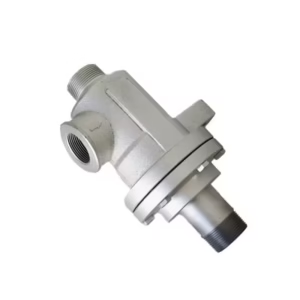
Rotary Union for Steam – Q Series for Heat Transfer Equipment
Original price was: $15.00.$13.00Current price is: $13.00. -
Sale!
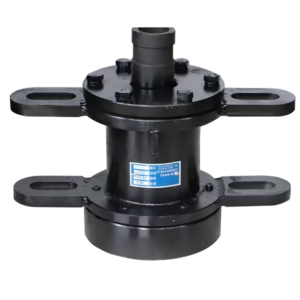
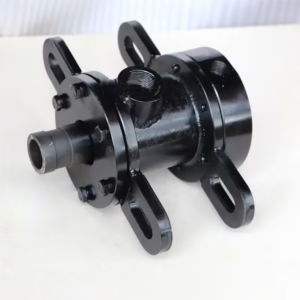
Q Type High Temperature Steam Corrugated Paper Machine Rotary Joint
Original price was: $50.00.$45.00Current price is: $45.00. -
Sale!

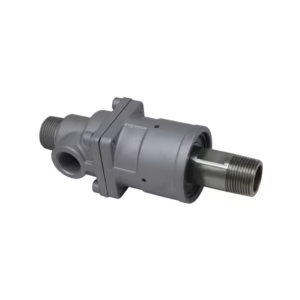
Mechanical Seal Rotary Union for High-Pressure and High-Speed Applications
Original price was: $70.00.$62.00Current price is: $62.00. -
Sale!

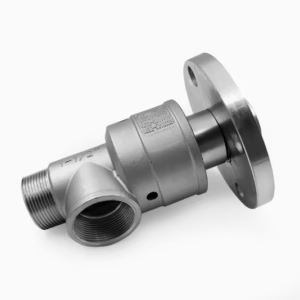
High Speed Rotary Joints Hydraulic Rotary Swivel Joint
Original price was: $25.00.$23.00Current price is: $23.00.