Standard Rotary Joint Design: OEM Rotary Union Solutions from a China Manufacturer
In modern industrial systems, Standard Rotary Joints play a critical role in transferring steam, water, air, hydraulic oil, coolant, and thermal media between stationary supply lines and rotating equipment. A well-engineered rotary joint directly affects machine efficiency, seal life, leakage control, production stability, and maintenance costs.
As a professional China rotary union manufacturer, we specialize in the engineering, machining, testing, and OEM production of high-performance standard rotary joints for global industrial customers. Our factory provides cost-effective alternatives to international brands while maintaining reliable sealing performance, precision machining quality, and long service life.
This guide explains the key engineering principles behind standard rotary joint design, common failure causes, material selection, and the manufacturing process for industrial-grade rotary unions for demanding applications.
What is a Standard Rotary Joint?
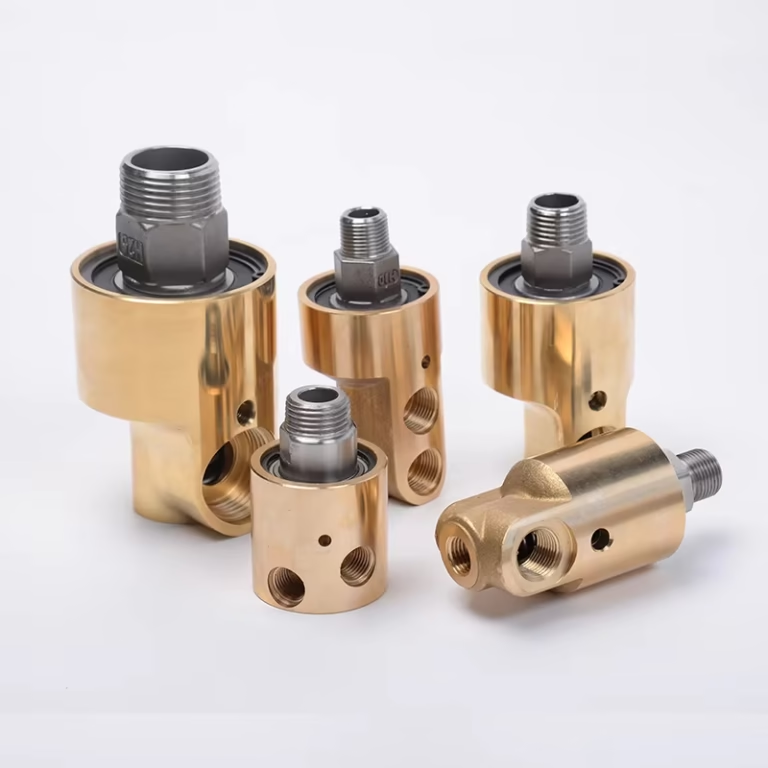
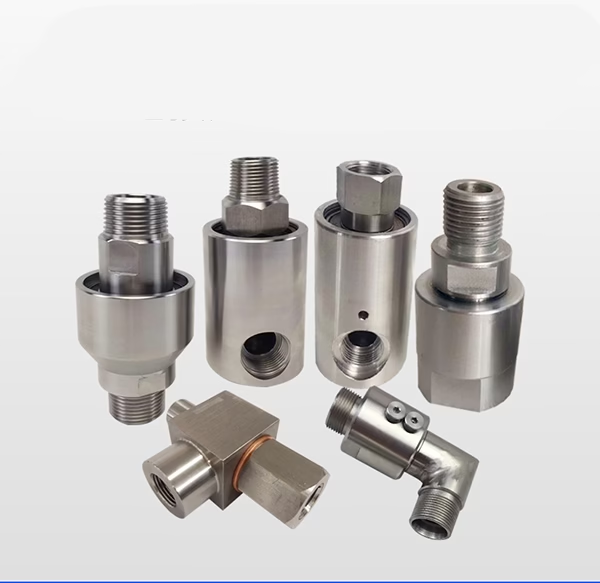
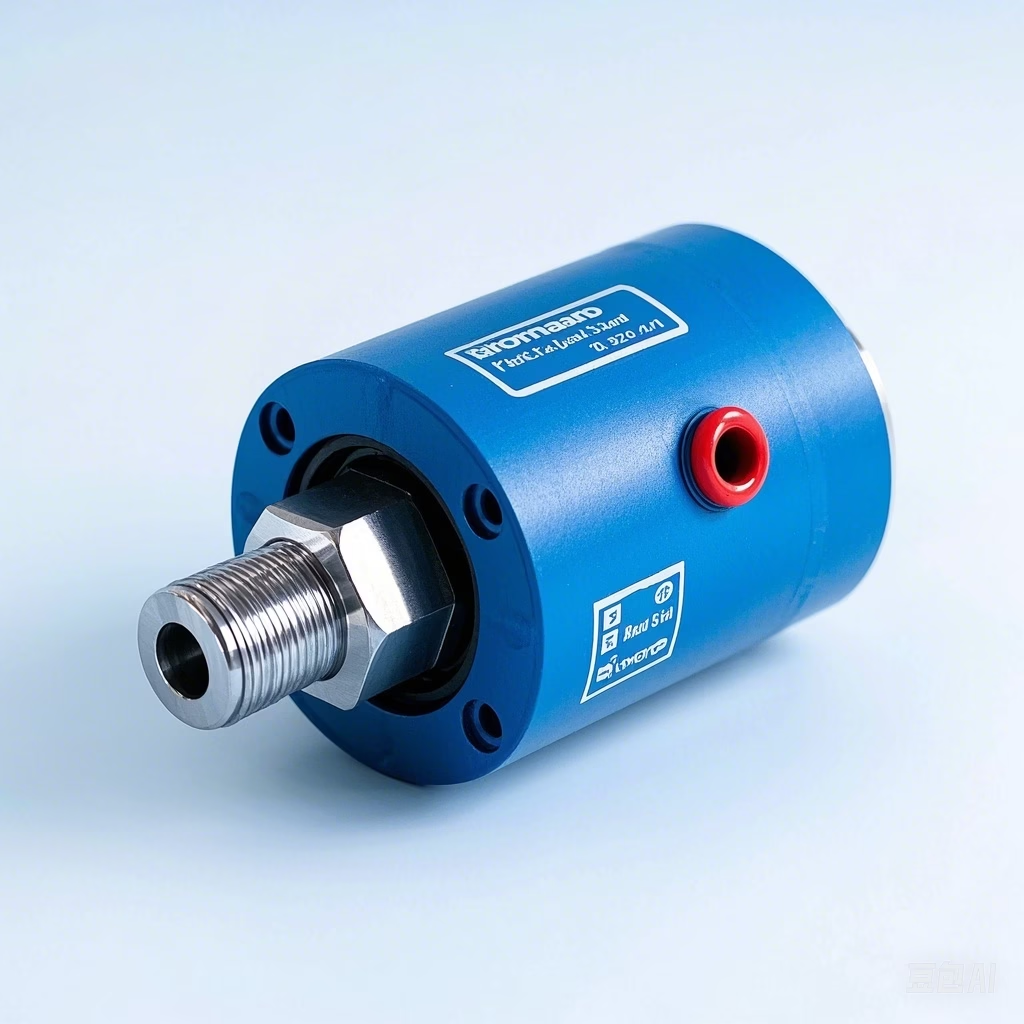
A standard rotary joint, also known as a rotary union, is a mechanical device that transfers fluid or gas from a stationary source to rotating machinery while maintaining a sealed connection.
Rotary joints are widely used in:
- CNC machine tools
- Steel processing equipment
- Paper machinery
- Textile machines
- Rubber and plastic machinery
- Battery manufacturing lines
- Food processing systems
- Packaging equipment
- Printing machinery
- Wind energy systems
Industrial rotary joints must operate under demanding conditions involving:
- High rotational speed
- Elevated temperature
- Continuous pressure
- Abrasive media
- Thermal expansion
- Long production cycles
A poor rotary joint design can lead to leakage, seal failure, bearing damage, machine downtime, and production losses.
How Standard Rotary Joints Work
Operational Mechanics
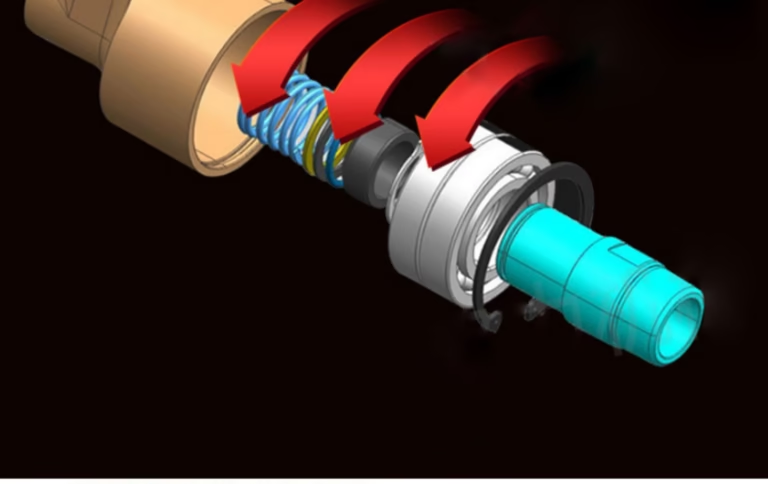
The core principle of a rotary joint is to balance rotational movement with a tight seal. As the rotor spins, the stator remains fixed, and the seals between them create a barrier that prevents media from escaping. The bearings ensure smooth rotation with minimal wear, while the design of the ports allows for consistent flow even at high speeds or pressures.
Key Operational Parameters
Rotation Speed:
Measured in RPM (revolutions per minute), affecting bearing and seal durability.
Operating Pressure:
Ranges from low-pressure air systems (5 PSI) to high-pressure hydraulic applications (over 3,000 PSI).
Temperature Range:
Depends on the media and materials; some joints handle cryogenic temperatures (-200°C), others high heat (500°C+ for steam).
Media Compatibility:
Materials like stainless steel, brass, or PTFE are chosen based on the fluid or gas being transferred (e.g., corrosive chemicals require resistant alloys).
Why Rotary Joint Design Matters
The performance of a rotary joint depends heavily on engineering precision. A properly designed rotary union improves:
- Seal reliability
- Pressure stability
- Temperature resistance
- Bearing life
- Rotational balance
- Energy efficiency
- Maintenance intervals
At our manufacturing facility, every rotary joint design is optimized according to operating conditions such as:
| Design Factor | Engineering Consideration |
|---|---|
| RPM | Dynamic balance and vibration control |
| Pressure | Seal loading and leakage prevention |
| Temperature | Thermal expansion compensation |
| Media Type | Corrosion and material compatibility |
| Installation Space | Compact structural design |
| Service Life | Bearing and seal durability |
Key Engineering Factors in Standard Rotary Joint Design
1. Mechanical Seal Face Technology
The sealing system is the core component of every rotary joint.
Our engineers select seal materials according to media type, temperature, speed, and pressure requirements.
Common seal face materials include:
- Carbon graphite
- Tungsten carbide
- Silicon carbide
- Ceramic composites
For high-speed rotary unions, precision-lapped seal faces reduce friction and minimize leakage under continuous operation.
Advanced seal face geometry helps:
- Reduce heat generation
- Improve seal stability
- Extend service life
- Prevent premature wear
2. Bearing Arrangement and Stability
Bearing performance directly affects rotary union lifespan.
Our standard rotary joint designs utilize:
- Dual-bearing support systems
- Precision angular contact bearings
- High-speed bearing configurations
- Anti-vibration stabilization structures
Proper bearing arrangement minimizes:
- Shaft runout
- Radial vibration
- Seal misalignment
- Rotational instability
This is especially important in high-speed CNC spindle applications.
3. High-Speed Dynamic Balancing
At high RPM, even a minor imbalance can cause:
- Excessive vibration
- Seal wear
- Noise
- Bearing failure
- Leakage
Our factory performs dynamic balancing and concentricity inspection during production to ensure stable operation under high rotational speeds.
High-speed rotary joints require:
- Precision machining tolerance
- Accurate shaft alignment
- Optimized internal flow structure
- Balanced rotating components
4. Temperature Compensation Design
Steam rotary joints and thermal oil rotary unions operate under significant thermal expansion conditions.
Our engineering team designs compensation structures that help:
- Reduce thermal deformation
- Maintain seal contact stability
- Prevent cracking and leakage
- Improve high-temperature reliability
Temperature-resistant sealing materials and stainless-steel components improve durability in harsh industrial environments.
5. Fluid Compatibility Engineering
Different industrial media require different internal structures and sealing technologies.
Our rotary unions are designed for:
- Steam
- Water
- Hydraulic oil
- Coolant
- Compressed air
- Vacuum
- Thermal oil
- Chemical fluids
Media compatibility is critical for:
- Corrosion resistance
- Seal life
- Internal lubrication
- Leakage prevention
How Our Factory Manufactures Standard Rotary Joints
Unlike trading companies or generic industrial websites, we are a real rotary joint manufacturing factory with complete production and testing capabilities.
Our manufacturing process includes:
CNC Precision Machining
We use advanced CNC turning centers and machining equipment to maintain tight dimensional tolerances and stable product consistency.
Precision machining improves:
- Concentricity
- Surface finish
- Seal stability
- Rotational balance
Precision Grinding and Seal Lapping
Mechanical seal faces undergo precision grinding and lapping processes to achieve superior sealing performance.
This process helps reduce:
- Friction
- Leakage
- Heat generation
- Seal wear
Dynamic Balancing Inspection
For high-speed applications, rotating components are dynamically balanced before assembly.
This improves:
- Operational stability
- Bearing lifespan
- High-speed reliability
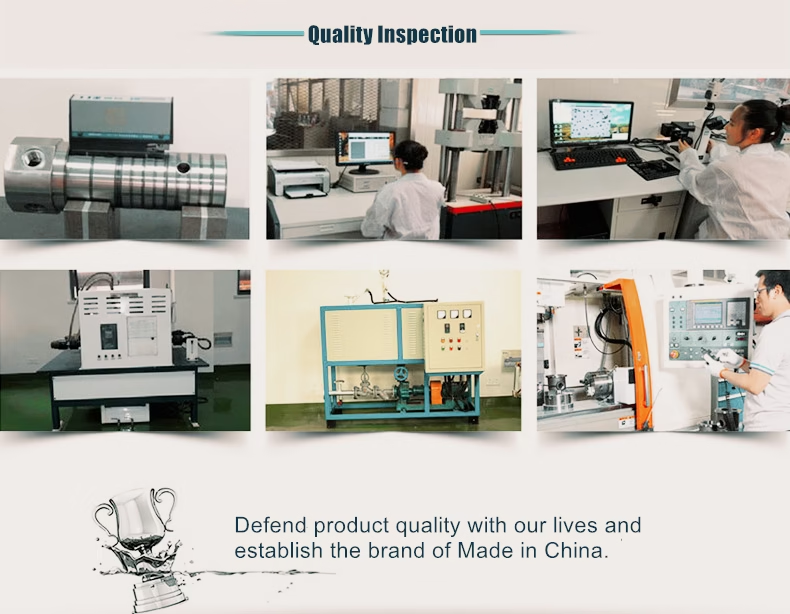
Pressure and Leakage Testing
Every rotary joint undergoes quality inspection procedures, including:
- Pressure testing
- Leakage testing
- Rotation simulation
- Seal inspection
- Dimensional verification
Our quality control system helps ensure reliable performance before shipment.

Material Inspection and Traceability
We strictly control raw material quality for:
- Stainless steel components
- Bearings
- Seals
- Springs
- Housings
Material traceability improves product consistency and long-term reliability.
Common Rotary Joint Failures and Their Causes
Many rotary union failures result from poor engineering design or incorrect product selection.
Common Problems Include:
Premature Seal Wear
Caused by:
- Poor seal material selection
- Excessive RPM
- Improper lubrication
Bearing Failure
Caused by:
- Misalignment
- Excessive vibration
- Poor balancing
Leakage
Caused by:
- Thermal deformation
- Seal face damage
- Pressure overload
Overheating
Caused by:
- Excessive friction
- Inadequate cooling
- Improper installation
Our engineering team helps customers select the correct rotary joint configuration according to actual working conditions.
OEM Replacement for International Rotary Union Brands
We manufacture OEM-compatible rotary joints for many international industrial brands.
Our factory provides cost-effective alternatives for:
- Deublin rotary unions
- Kadant rotary joints
- Rotoflux rotary unions
- Johnson-Fluiten rotary unions

Advantages include:
- Competitive pricing
- Stable quality
- Fast delivery
- OEM customization
- Flexible production
- Technical support
We can customize:
- Threads
- Flanges
- Passage configurations
- Seal materials
- Housing materials
- Mounting dimensions
Applications of Standard Rotary Joints
Our rotary unions are widely used across multiple industries.
Paper Industry
Used for:
- Dryer cylinders
- Steam systems
- Roll heating
Steel Industry
Used for:
- Continuous casting
- Roll cooling
- Hydraulic systems
CNC Machine Tools
Used for:
- Through-spindle coolant
- High-speed machining
Battery Manufacturing
Used for:
- Cooling systems
- Precision rotating equipment
Rubber and Plastic Machinery
Used for:
- Extrusion systems
- Roller heating
- Thermal oil transfer
Why Global Customers Choose Our Rotary Joint Factory
Industrial customers choose us because we combine engineering capability, manufacturing experience, and cost-effective production.
Professional Manufacturing Experience
Years of rotary joint production and OEM manufacturing experience.
Precision Production Equipment
Advanced CNC machining and testing capabilities.
Strict Quality Control
Complete inspection procedures throughout production.
OEM and Customization Support
Flexible design solutions for various industries.
Fast Delivery
Efficient production scheduling and export support.
Cost-Effective Solutions
Reliable alternatives to expensive imported brands.
Frequently Asked Questions (FAQs)
Q1: Can standard rotary joints handle both axial and radial loads?
Most standard joints are designed for rotational motion and minimal radial loads. For heavy loads, consider specialized joints with reinforced bearings or consult a manufacturer for custom solutions.
Q2: How do I choose the right seal material for my application?
Start by identifying the media (chemical composition, temperature, pressure) and operating environment (clean, dusty, corrosive). Common materials include:
PTFE: Chemical resistance, low friction
Tungsten Carbide: High hardness for abrasive media
Carbon: Self-lubricating, suitable for high-speed applications
Q3: What’s the difference between a standard rotary joint and a custom-designed one?
Standard joints follow common specifications (e.g., thread sizes and pressure ratings) and are available off-the-shelf. Custom joints are engineered for unique requirements, such as non-standard dimensions, extreme conditions, or multi-channel configurations.
Q4: Can I install a rotary joint myself, or do I need a professional?
While basic installations are feasible with proper tools and guidelines, complex systems (high-pressure, high-speed) should be installed by trained technicians to ensure alignment and safety.
Future Trends and Innovations
Material Science Self-Lubricating Composites:
Reduce friction in high-temperature applications. 3D-Printed Seals: Custom geometries for complex media pathways.
IoT Integration Smart Sensors:
Monitor seal wear in real time via cloud platforms. Predictive Algorithms: Forecast failures with 95% accuracy.
Sustainability Circular Design:
Modular components for easy repair/reuse. Eco-Friendly Lubricants: Biodegradable oils for food and marine applications.
Conclusion
A high-quality standard rotary joint is more than a simple fluid transfer component. It is a precision-engineered industrial product that directly impacts machine reliability, efficiency, and operating costs.
As a professional China rotary union manufacturer, we focus on engineering optimization, precision machining, strict quality control, and OEM customization to provide reliable rotary joint solutions for global industrial customers.
Whether you require high-speed rotary unions, steam rotary joints, thermal oil rotary unions, or OEM replacements for international brands, our factory can provide cost-effective and dependable solutions tailored to your application requirements.