
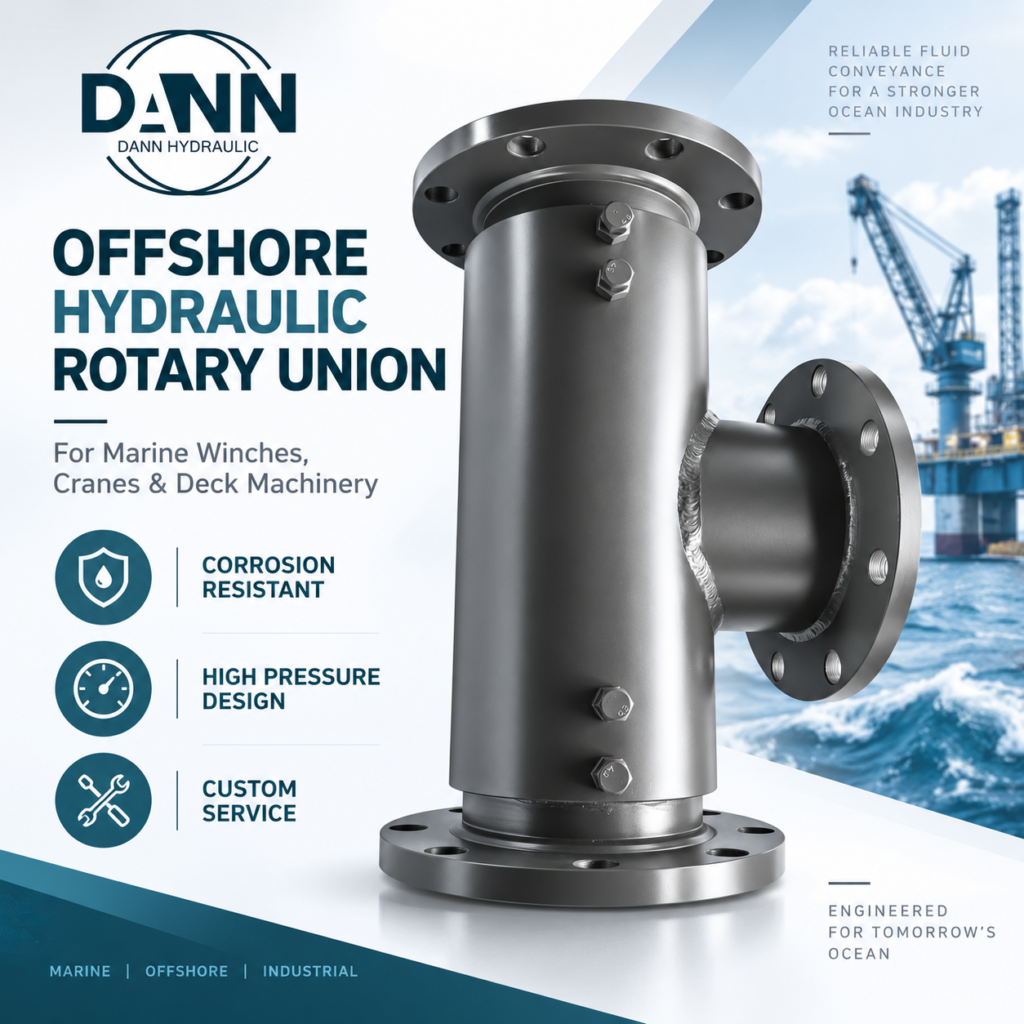
Offshore Hydraulic Rotary Union for Marine Winches, Cranes & Deck Machinery
Original price was: $120.00.$100.00Current price is: $100.00.
- Pressure Rating: Up to 15,000 PSI (1000 bar)
- Temperature Range: Designed for extreme temperature variations
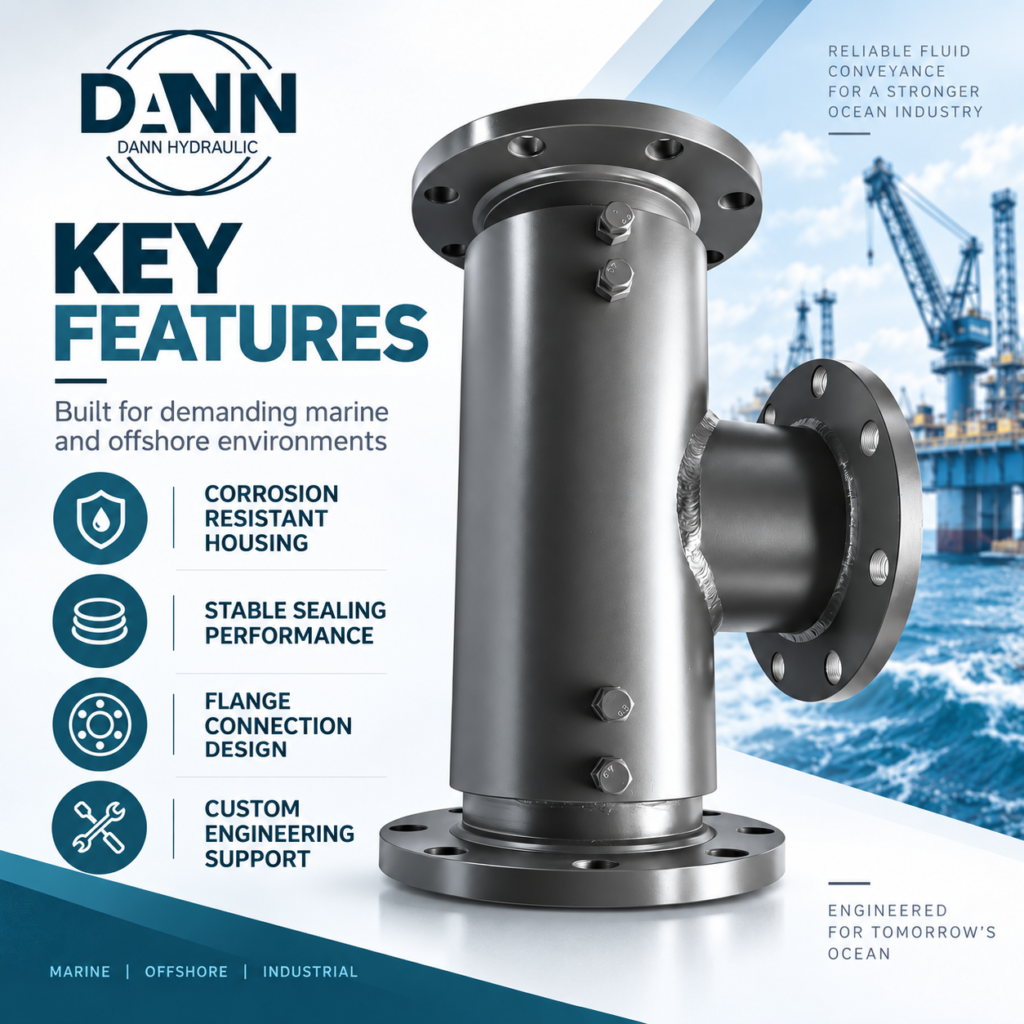
- Material Construction: Corrosion-resistant stainless steel
- Sealing Technology: Customizable seals based on application needs
- Maintenance Frequency: Minimal; designed for long service life
Description
Marine and offshore hydraulic equipment operates in conditions that are very different from ordinary factory machinery. Salt spray, humidity, vibration, pressure fluctuations and continuous outdoor exposure place additional demands on rotary sealing components. DANN Hydraulic manufactures offshore hydraulic rotary union for transferring pressurized hydraulic oil and other compatible media between stationary piping and rotating marine equipment.
Our marine rotary unions can be configured for applications such as deck winches, marine cranes, hose reels, cable reels, rotating platforms and offshore hydraulic machinery.
Instead of selecting a rotary union only according to maximum pressure, we evaluate the complete operating conditions, including medium, pressure, number of passages, flow requirement, rotational speed, temperature, port connection and marine environment.
Contact us with your equipment information or existing rotary union drawing for engineering evaluation.
What Is an Offshore Hydraulic Rotary Union?
An offshore hydraulic rotary union, also called a marine rotary joint, hydraulic swivel or rotating fluid union, transfers pressurized fluid from a stationary hydraulic line into a continuously or intermittently rotating component.
Without a rotary union, hydraulic hoses connected directly to rotating equipment would twist as the machine turns. Repeated twisting can damage hoses, fittings and hydraulic connections.
The rotary union creates a sealed rotating interface so that hydraulic pressure can be maintained while the equipment rotates.
In marine equipment, the component must also withstand environmental challenges such as salt spray, moisture and corrosion.
Designed for Real Marine Hydraulic Equipment
This product page specifically focuses on hydraulic rotary unions used in marine deck machinery and offshore rotating equipment.
Marine Winches
Hydraulic winches require pressurized oil to operate motors, brakes and control mechanisms while parts of the equipment rotate.
A properly configured marine hydraulic rotary union allows hydraulic oil to pass through the rotating interface without twisting external hoses.
Applications include anchor handling winches, towing winches, mooring equipment and other hydraulic deck machinery.
Marine and Offshore Cranes
Marine cranes frequently combine rotation with hydraulic lifting functions.
A rotary union installed around the slewing system can transfer hydraulic fluid between the stationary structure and rotating crane assembly.
For these applications, passage configuration, working pressure, flow requirement and installation dimensions must be evaluated together.
Hydraulic Hose Reels
Offshore service reels and hydraulic hose reels may require continuous fluid transfer while the reel rotates.
A rotary union or fluid swivel installed at the reel axis prevents the supply hose from twisting during winding and unwinding.
Cable and Umbilical Reels
Where hydraulic or pneumatic media must pass through rotating cable or umbilical handling equipment, multi-passage rotary unions can provide independent fluid channels inside one rotating assembly.
Rotating Marine Platforms
Marine handling systems, rotating tables and other deck equipment may require hydraulic power across a rotating interface.
Custom rotary unions can be developed according to the required number of hydraulic circuits and available installation space.
Typical Offshore Rotary Union Configuration
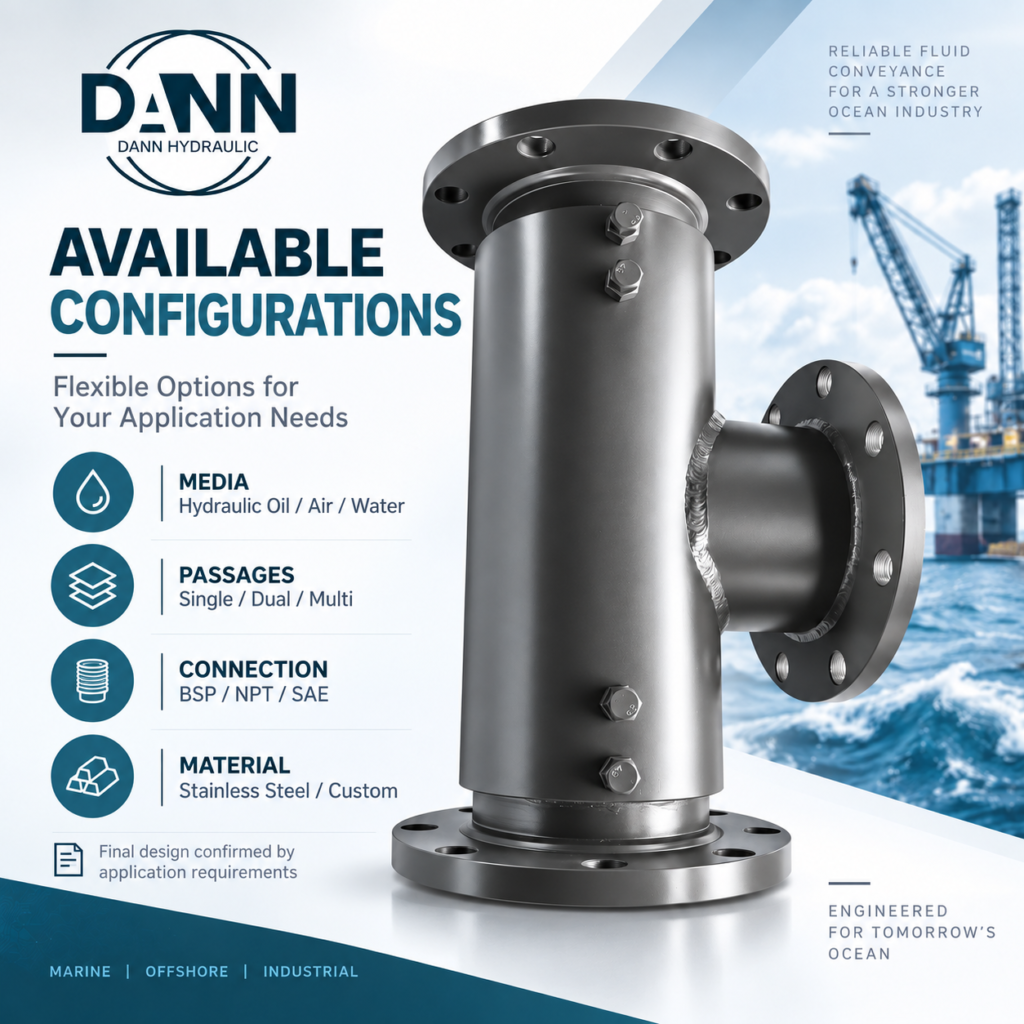
Offshore rotary unions are application-specific products. Final specifications depend on the actual equipment and operating conditions.
| Parameter | Available Configuration |
|---|---|
| Product Type | Offshore / Marine Hydraulic Rotary Union |
| Main Medium | Hydraulic Oil |
| Additional Media | Air, Water or Other Compatible Fluids |
| Passage Configuration | Single, Dual or Multi-Passage |
| Housing Material | Stainless Steel or Application-Specific Metal |
| Port Options | BSP, NPT, SAE or Custom Connections |
| Mounting | Threaded, Flanged or Custom |
| Pressure Rating | Selected According to Application |
| Temperature | Selected According to Medium and Seal Material |
| Rotation Speed | Application Specific |
| Seal System | Selected According to Pressure, Medium and Duty Cycle |
| Custom Manufacturing | Available |
For high-pressure applications, please provide the actual continuous working pressure and peak pressure rather than selecting the product only according to a theoretical maximum rating.
Certain configurations can be engineered for very high hydraulic pressure, but the allowable pressure depends on passage diameter, sealing system, rotational speed, media and complete mechanical design.
Why Offshore Rotary Unions Require Different Engineering
A rotary union installed inside a clean factory and a rotary union installed on an offshore deck may perform the same basic function, but their working environments are very different.
Corrosion Resistance
Marine equipment may be exposed to humidity, salt spray and seawater.
Material selection should therefore consider corrosion resistance as well as mechanical strength.
Stainless steel and other corrosion-resistant material options can be evaluated according to the application environment.
High Hydraulic Pressure
Marine cranes, winches and offshore hydraulic systems may operate under substantial hydraulic pressure.
The seal structure, internal passage geometry, housing strength and port configuration must all correspond to the actual pressure requirement.
Pressure Fluctuation
Hydraulic equipment does not always operate at one constant pressure.
Starting, braking and load changes can create pressure fluctuations or temporary peaks.
Providing both normal working pressure and peak pressure helps us select a more appropriate rotary union configuration.
Low-Speed, High-Torque Equipment
Many marine rotary systems do not require extremely high RPM.
Winches, cranes and reels often rotate relatively slowly but operate under substantial hydraulic loads.
For these applications, sealing stability, torque, corrosion resistance and service life may be more important than maximum rotational speed.
Outdoor Operating Environment
Temperature changes, salt contamination and moisture can affect seals, bearings and exposed surfaces.
Marine rotary unions should therefore be selected according to the complete operating environment rather than pressure alone.
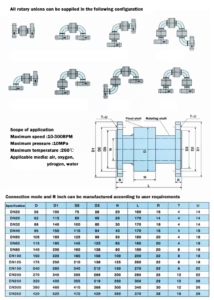
Single-Passage and Multi-Passage Marine Rotary Unions
Different marine machines require different numbers of hydraulic circuits.
Single-Passage Rotary Union
A single passage is suitable when only one hydraulic or fluid circuit must cross the rotating interface.
Typical applications include simple reels and rotating hydraulic devices.
Dual-Passage Rotary Union
Two independent passages allow separate pressure and return circuits or two different fluid lines to pass through the same rotating assembly.
Multi-Passage Hydraulic Rotary Union
Marine cranes, rotating platforms and complex offshore machinery may require several independent hydraulic circuits.
A multi-passage rotary union keeps these circuits separated while allowing the equipment to rotate.
For customized multi-passage designs, please provide the number of passages and the pressure, flow and port size required for each circuit.
How to Select a Marine Hydraulic Rotary Union
Correct selection starts with the machine rather than with a generic maximum-pressure number.
Before manufacturing or recommending an offshore rotary union, DANN Hydraulic evaluates the following engineering information.
Equipment: Marine crane, winch, reel, rotating platform or other machinery.
Working medium: Hydraulic oil, air, water or another fluid.
Number of passages: The number of independent fluid circuits required.
Normal operating pressure: The pressure used during normal machine operation.
Peak pressure: Maximum temporary system pressure if applicable.
Flow requirement: Required flow rate through each passage.
Temperature: Minimum and maximum fluid and environmental temperatures.
Rotational speed: Normal and maximum RPM.
Port connection: BSP, NPT, SAE, flange or custom interface.
Installation dimensions: Available diameter, length, shaft interface and mounting method.
Operating environment: Indoor marine equipment, exposed deck, salt spray or other offshore conditions.
Providing these conditions allows us to evaluate the rotary union as a complete fluid-transfer component rather than selecting it only by appearance.
Common Problems in Marine Rotary Union Applications
External Leakage
Leakage may result from seal wear, pressure exceeding the selected configuration, contaminated hydraulic oil, damaged sealing surfaces or incorrect installation.
If a rotary union begins leaking repeatedly, simply replacing the seal may not solve the root cause.
The operating pressure, fluid cleanliness and mechanical alignment should also be checked.
Internal Leakage Between Passages
Multi-passage rotary unions must keep independent hydraulic circuits separated.
Internal seal damage or excessive wear can allow fluid to migrate between passages.
For critical multi-channel applications, passage isolation and sealing design should be evaluated during product selection.
Corrosion
Ordinary materials may deteriorate quickly when continuously exposed to salt spray or marine moisture.
Material and surface treatment should therefore match the actual environmental exposure.
Abnormal Rotation Torque
High rotating torque may indicate incorrect installation, excessive mechanical load, bearing problems or seal conditions that are unsuitable for the application.
The rotary union should not be used as a structural bearing for loads that it was not designed to support.
Premature Seal Wear
Short seal life may be related to contaminated oil, incorrect seal material, excessive pressure, dry operation, misalignment or unexpected movement of connected piping.
Understanding the failure mode helps us recommend a more appropriate replacement.
Replacement Rotary Union for Existing Marine Equipment
DANN Hydraulic can also evaluate replacement requirements when an existing marine or offshore rotary union becomes unavailable, expensive or difficult to source.
If you have an existing product, send us:
the manufacturer and model number,
photos of the complete rotary union,
port and mounting dimensions,
number of passages,
working pressure,
operating medium,
rotation speed,
and machine application.
If the original drawing is unavailable, a used sample or dimensional information can also help our engineering team evaluate a replacement configuration.
A replacement should always be confirmed according to dimensions and operating conditions rather than simply copying the external appearance of the original component.
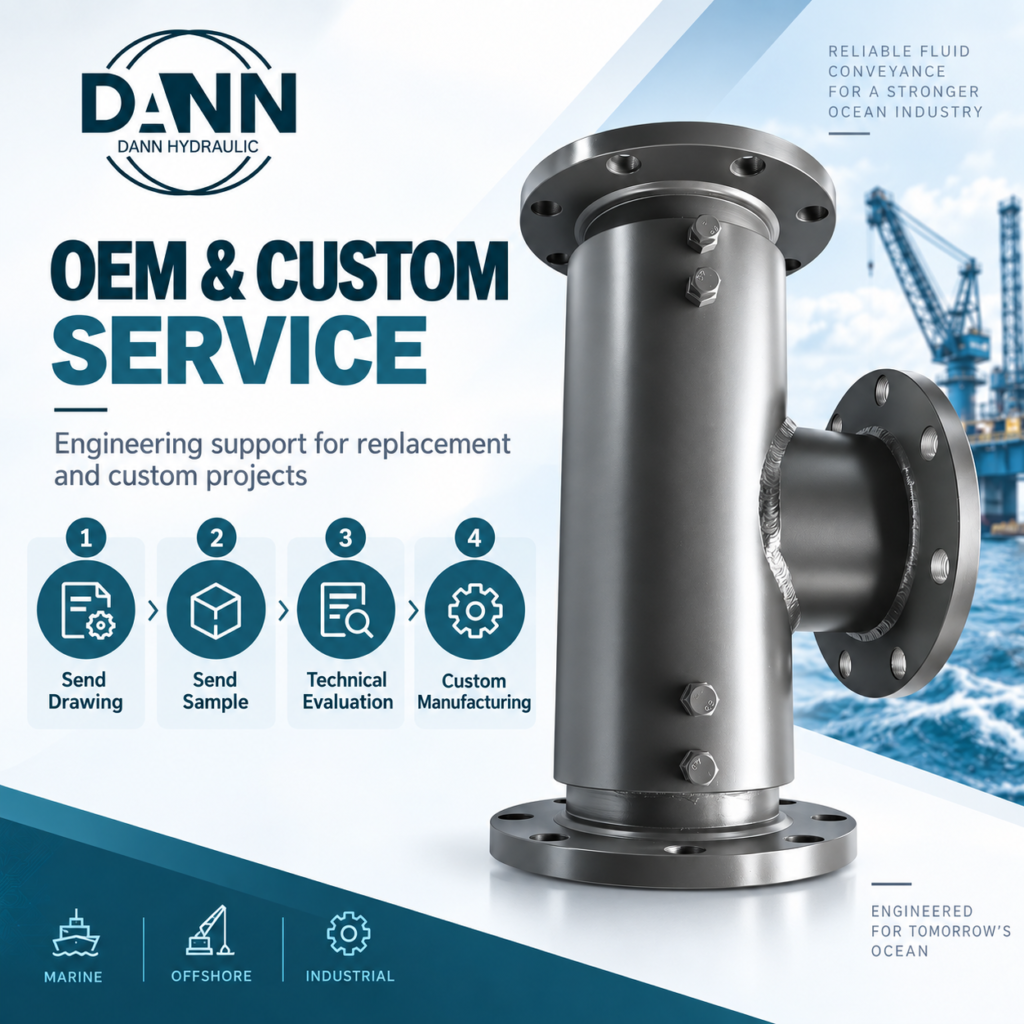
Custom Offshore Rotary Union Manufacturing
Many offshore systems cannot use a standard catalogue rotary union.
Equipment manufacturers may need specific:
passage numbers,
port locations,
mounting dimensions,
shaft interfaces,
housing materials,
seal materials,
or installation envelopes.
DANN Hydraulic provides customized rotary union manufacturing based on customer drawings, samples and operating requirements.
Our engineering process focuses on matching the rotary union to the actual machine rather than forcing every marine application into one standard model.
Manufacturing and Quality Control
DANN Hydraulic is a rotary union manufacturer in China serving industrial equipment manufacturers, distributors, maintenance companies and end users.
Marine rotary union reliability depends heavily on machining quality and sealing accuracy.
During production, key manufacturing and inspection points may include dimensional verification, sealing surface inspection, assembly control, pressure testing and leakage inspection according to the selected configuration.
For custom projects, technical requirements should be confirmed before production so that the materials, seals, passages and interfaces correspond to the actual application.
Offshore Hydraulic Rotary Union FAQ
What is the difference between a marine rotary union and a standard industrial rotary union?
Both transfer fluid between stationary and rotating components.
However, marine applications may require additional corrosion resistance, suitable materials, high-pressure hydraulic capability and designs that tolerate harsh outdoor environments.
Can a marine rotary union transfer hydraulic oil?
Yes.
Hydraulic oil is one of the main media used in offshore and marine rotary unions, particularly in cranes, winches, reels and rotating hydraulic equipment.
The rotary union must be configured according to operating pressure, flow, temperature and hydraulic fluid compatibility.
Can you manufacture a multi-passage offshore rotary union?
Yes.
Single-, dual-, and multi-passage configurations can be evaluated according to the number of hydraulic or pneumatic circuits required by the equipment.
Provide the pressure, flow, and connection requirements for each passage.
Can an offshore rotary union handle very high pressure?
High-pressure configurations are available, but maximum allowable pressure cannot be determined independently from the rest of the design.
Passage size, sealing system, rotational speed, temperature, medium, and housing design all influence the final pressure rating.
Provide your normal working pressure and peak pressure for engineering confirmation.
What materials are suitable for marine environments?
Stainless steel and other corrosion-resistant materials are commonly considered for marine applications.
The final material should be selected according to fluid compatibility, salt exposure, pressure requirements, and operating environment.
Can you reproduce an existing marine rotary union?
We can evaluate a compatible replacement from the original model number, technical drawing, dimensional information, or physical sample.
Final interchangeability must be confirmed from the mechanical interface and operating requirements.
What information do you need for a quotation?
Please send the equipment type, number of passages, fluid, pressure, flow, temperature, RPM, port connections, installation dimensions, and required quantity.
Photos or drawings of the existing rotary union are also useful.
Need an Offshore Hydraulic Rotary Union?
If you are designing or maintaining a marine winch, offshore crane, hydraulic hose reel, cable handling system or other rotating deck machinery, DANN Hydraulic can help evaluate the correct rotary union configuration.
Send us your operating conditions, drawing, or existing product information.
Our engineering team will review the:
equipment application,
working medium,
hydraulic pressure,
number of passages,
flow requirements,
port connections,
rotational speed,
and installation dimensions
before recommending a suitable solution.
Contact DANN Hydraulic for a custom offshore hydraulic rotary union for your marine equipment.
Related products
-
Sale!

Continuous Casting Machine Stainless Steel Rotary Union
Original price was: $50.00.$42.00Current price is: $42.00. -
Sale!
High Pressure Tower Crane Rotary Joint for Dust Removal
Original price was: $35.00.$30.00Current price is: $30.00. -
Sale!
OEM Replacement Stainless Steel Rotary Union Manufacturer
Original price was: $50.00.$38.00Current price is: $38.00. -
Sale!

Tool Center Outlet High Speed Rix Rotary Union
Original price was: $110.00.$106.00Current price is: $106.00.