What Is a Rotary Joint? The Complete Industrial Guide from a Rotary Joint Manufacturer
If you work with rotating machinery, you will sooner or later encounter a rotary joint. Whether it is a CNC machining center, a paper machine, a steel mill, a rubber curing press, or a textile production line, the rotary joint plays a critical role in transferring fluids from a stationary piping system to a rotating shaft without leakage.
Although rotary joints are widely used across industrial equipment, many engineers and purchasing managers still ask the same questions:
- What exactly is a rotary joint?
- How does it work?
- Is a rotary joint the same as a rotary union?
- Why do rotary joints fail?
- How can I choose the right model for my application?
After manufacturing rotary joints for customers in more than 40 countries, we have found that these questions cannot be answered with a simple definition. The real value lies in understanding how rotary joints perform under actual operating conditions, how they are manufactured, and which design features determine their service life.
This guide combines engineering principles with practical manufacturing experience from our factory, providing useful information for maintenance engineers, equipment manufacturers, and industrial buyers looking for reliable rotary joint solutions.
What Is a Rotary Joint?
A rotary joint is a precision mechanical device designed to transfer liquids, gases, steam, thermal oil, vacuum, or hydraulic oil from a stationary supply line into rotating equipment while maintaining a reliable pressure-tight seal.
Unlike ordinary pipe fittings, a rotary joint allows continuous rotation while preventing leakage between stationary and rotating components.
During operation:
- The housing remains stationary and connects to the fluid supply.
- The shaft or rotor rotates with the machine.
- Mechanical seals maintain sealing performance between moving surfaces.
- Bearings support smooth rotation and minimize friction.
The result is continuous fluid transfer without twisting hoses or interrupting machine movement.
Depending on the application, a rotary joint may rotate at only a few revolutions per minute in a paper mill or exceed 15,000 RPM in a high-speed machining center.
Because every operating condition is different, selecting the correct seal material, bearing arrangement, housing material, and internal flow path is essential for long-term reliability.
Rotary Joint vs. Rotary Union: Are They Different?
One of the most common questions we receive from overseas customers is:
“Is a rotary joint different from a rotary union?”
In most industrial applications, the answer is no.
The two terms are generally interchangeable and describe the same type of component.
However, terminology varies between industries and manufacturers.
For example:
- In North America, the term rotary union is more widely used.
- In Europe, many engineers prefer a rotary joint.
- Some manufacturers use “rotary union” for precision coolant applications and “rotary joint” for larger industrial equipment, although there is no universally accepted standard.
Regardless of the terminology, both products perform the same essential function—allowing fluid to pass from a stationary source into rotating machinery.
The key differences lie not in the name but in the design characteristics, such as:
- Single-passage or multi-passage construction
- Supported media
- Pressure rating
- Rotational speed
- Temperature capability
- Seal technology
When comparing products from different manufacturers, buyers should always focus on technical specifications rather than product names.
Why Rotary Joints Are Essential in Modern Industry
Modern manufacturing depends on rotating equipment that requires continuous cooling, lubrication, heating, or hydraulic power.
Without rotary joints, every rotating shaft would require flexible hoses that quickly become twisted, fatigued, or damaged.
Rotary joints solve this problem by providing a sealed, rotating interface that can operate continuously for thousands of hours.
Today, they are widely used in:
CNC Machine Tools
High-speed machining centers deliver coolant directly through the spindle.
Benefits include:
- Better chip evacuation
- Longer tool life
- Higher cutting speed
- Improved machining accuracy
Because spindle speeds often exceed 10,000 RPM, the rotary joint must maintain excellent sealing while generating minimal friction.
Paper Manufacturing
Paper machines contain dozens of drying cylinders heated by steam.
Rotary joints transfer steam into each rotating cylinder while simultaneously removing condensate.
Reliable sealing directly affects:
- Drying efficiency
- Energy consumption
- Paper quality
- Machine uptime
In these applications, steam rotary joints operate under high temperatures and continuous duty cycles, making seal design especially important.
Steel Mills
Steel production exposes rotary joints to harsh operating environments.
Typical conditions include:
- High temperature
- Heavy vibration
- Cooling water contamination
- Scale particles
- Continuous operation
For these applications, robust bearing support and wear-resistant seal faces are essential to achieve acceptable service life.
Rubber and Tire Manufacturing
Rubber curing presses require precise temperature control.
Rotary joints transfer:
- Steam
- Hot water
- Thermal oil
into rotating molds throughout the curing cycle.
Even a small internal leak can reduce heating efficiency and increase energy costs, making seal reliability one of the most important design considerations.
Food Processing Equipment
Food-grade rotary joints are commonly used on:
- Filling machines
- Packaging equipment
- Mixing systems
- Dairy processing machinery
These applications require corrosion-resistant materials such as stainless steel and sealing materials that comply with food industry standards.
Easy cleaning and hygienic design are equally important considerations.
How Does a Rotary Joint Work?
Although rotary joints are available in hundreds of different configurations, the operating principle remains remarkably consistent.
The rotary joint creates a sealed passage between a stationary inlet and a rotating outlet.
As the machine rotates:
- Fluid enters through the stationary housing.
- The medium flows into an internal passage.
- Precision mechanical seals prevent leakage.
- Bearings support the rotating shaft.
- The fluid exits into the rotating equipment.
The greatest engineering challenge is maintaining an effective seal while one component remains stationary and the other rotates continuously.
Unlike conventional static seals, rotary joints rely on carefully matched seal faces that remain in contact under controlled pressure.
When properly designed, the sealing surfaces generate an extremely thin lubricating film. This film reduces friction, minimizes wear, and significantly extends service life.
Achieving this balance requires precise machining, high-quality seal materials, proper spring loading, and accurate bearing alignment.
At our factory, we have found that even microscopic deviations in seal flatness can dramatically shorten service life, especially in high-speed applications. For this reason, every critical sealing surface undergoes precision grinding and dimensional inspection before assembly. Maintaining tight tolerances during manufacturing has proven to be one of the most effective ways to reduce leakage and improve long-term reliability in demanding industrial environments.
Main Components of a Rotary Joint
Although rotary joints are available in hundreds of configurations, most industrial designs are built around the same core components. The quality of these components determines not only sealing performance but also service life, maintenance intervals, and overall reliability.
From our manufacturing experience, premature failures rarely occur because the concept of the rotary joint is flawed. Instead, they are usually caused by poor machining accuracy, unsuitable materials, or incorrect assembly.
Understanding the function of each component helps engineers choose a product that matches their operating conditions rather than selecting solely based on price.
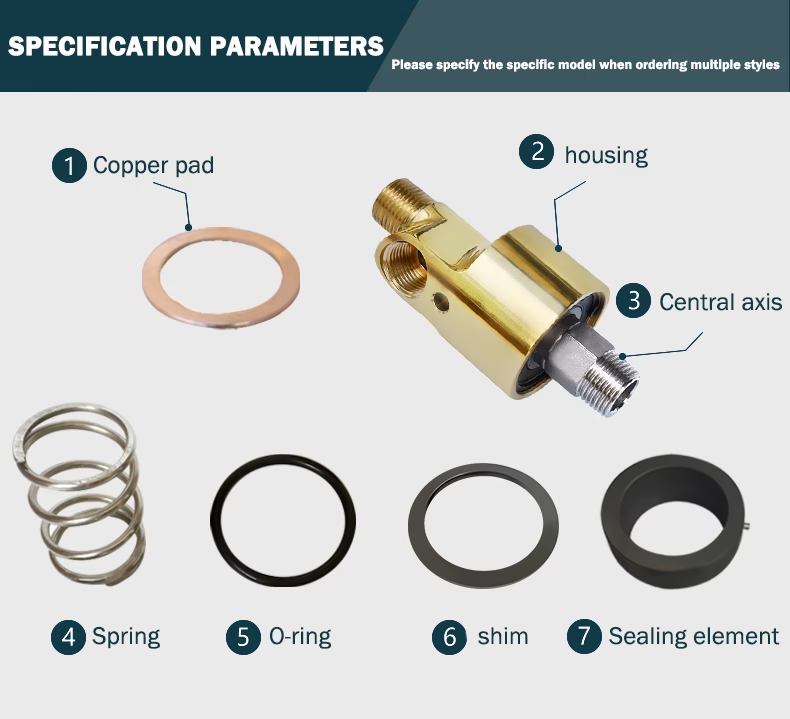
1. Housing
The housing forms the stationary body of the rotary joint and connects directly to the piping system.
Depending on the application, the housing may be manufactured from:
- Aluminum alloy
- Brass
- Carbon steel
- Stainless steel (304 or 316)
- Ductile iron
Material selection depends on several factors, including corrosion resistance, pressure, operating temperature, and the type of fluid being transferred.
For example:
- Aluminum is lightweight and commonly used in CNC coolant rotary unions.
- Stainless steel is preferred for food processing, pharmaceutical, and marine environments.
- Carbon steel provides excellent strength for high-pressure hydraulic applications.
At Dann Hydraulic, raw materials are inspected before machining to verify chemical composition and dimensional consistency. Inferior casting quality often leads to porosity, which can cause leakage under pressure. For this reason, every housing is visually inspected before entering CNC machining.
2. Rotor or Shaft
The rotor is the rotating component connected to the machine spindle, shaft, or drum.
Its primary function is to transfer the working medium into the rotating equipment while maintaining accurate alignment with the housing.
Because the rotor rotates continuously, dimensional accuracy is extremely important.
Critical manufacturing requirements include:
- Excellent concentricity
- High surface finish
- Accurate thread machining
- Proper hardness
- Dynamic balance for high-speed models
Even slight eccentricity can increase vibration, accelerate seal wear, and shorten bearing life.
In our factory, high-speed rotary union shafts undergo precision turning followed by grinding to achieve tighter tolerances than standard machining alone. Components designed for high-speed CNC applications receive additional runout inspection before assembly.
3. Mechanical Seal
The mechanical seal is the heart of every rotary joint.
It prevents leakage while allowing continuous rotation between stationary and rotating components.
Unlike rubber seals that simply deform to stop leakage, mechanical seals use two precision-machined faces that slide against each other.
One face rotates.
The other remains stationary.
A very thin lubricating film forms between the two surfaces, minimizing friction while maintaining sealing performance.
Common seal face materials include:
- Carbon graphite
- Silicon carbide
- Tungsten carbide
- Ceramic
Each material offers different advantages.
Carbon graphite provides excellent self-lubrication.
Silicon carbide offers outstanding wear resistance and chemical stability.
Tungsten carbide performs well under high pressure and abrasive conditions.
Selecting the wrong seal material is one of the most common causes of premature failure.
For example, using standard carbon seals in abrasive cooling water containing metal particles can significantly reduce service life.
4. Bearings
Bearings support the rotating shaft and maintain precise alignment between the rotor and housing.
Without proper bearing support, seal faces cannot remain parallel, leading to leakage and rapid wear.
Bearing selection depends on:
- Rotational speed
- Radial load
- Axial load
- Operating temperature
- Expected service life
Many low-cost rotary joints use ordinary bearings with limited fatigue life.
For industrial equipment operating continuously, bearing quality becomes one of the most important factors affecting reliability.
Depending on customer requirements, we typically use premium bearings from internationally recognized manufacturers such as SKF or FAG for demanding applications. These bearings provide better dimensional consistency, smoother operation, and longer service life compared with generic alternatives.
5. Springs
Springs maintain constant contact pressure between the seal faces.
As sealing surfaces gradually wear during operation, the spring automatically compensates for the reduction in thickness.
Proper spring force is critical.
If spring pressure is too low:
- Leakage may occur.
If spring pressure is too high:
- Friction increases.
- Heat generation rises.
- Seal wear accelerates.
Spring materials also vary according to operating conditions.
For corrosive environments, stainless steel springs provide better durability.
High-temperature applications may require specialized alloys with improved heat resistance.
6. O-Rings and Secondary Seals
Although mechanical seals perform the primary sealing function, secondary seals are equally important.
O-rings prevent leakage between stationary components and compensate for manufacturing tolerances.
Common elastomer materials include:
- NBR
- FKM (Viton)
- EPDM
- PTFE
Each material has different compatibility with temperature and chemical media.
Choosing the correct elastomer extends seal life and reduces unexpected maintenance.
How Rotary Joints Are Manufactured
Many buyers compare rotary joints by appearance alone.
From the outside, two products may look almost identical.
However, their manufacturing quality can be completely different.
As a rotary joint manufacturer, we believe long service life begins long before final assembly. It starts with disciplined process control throughout production.
The following workflow reflects how we manufacture industrial rotary joints for OEM equipment manufacturers and maintenance customers worldwide.
Step 1: Engineering Review
Every project begins with a technical evaluation.
Rather than simply copying an existing model, our engineering team reviews:
- Working medium
- Operating pressure
- Rotational speed
- Temperature
- Shaft dimensions
- Connection threads
- Available installation space
This information determines the internal sealing arrangement, bearing configuration, and material selection.
In many cases, a small design modification significantly improves service life compared with the original component.
Step 2: Material Inspection
Raw materials directly affect machining quality and long-term durability.
Incoming materials are checked for:
- Surface defects
- Hardness
- Dimensions
- Material certificates
Only approved materials proceed to production.
Although this inspection adds time to manufacturing, it helps eliminate defects before expensive machining operations begin.
Step 3: CNC Precision Machining
Every critical component is machined using CNC turning and machining centers.
Special attention is given to:
- Bearing fits
- Seal locations
- Internal flow passages
- Thread accuracy
- Surface finish
Precision machining ensures each component can be assembled without excessive adjustment.
For high-speed rotary joints, tighter tolerances are maintained to reduce vibration during operation.
Step 4: Precision Grinding
After machining, critical sealing surfaces undergo precision grinding.
This is one of the most important manufacturing stages.
The objective is to achieve:
- Excellent flatness
- Low surface roughness
- Accurate parallelism
Poor sealing surface quality cannot be corrected during assembly.
Instead, it inevitably leads to leakage after installation.
From our experience, investing additional time in grinding consistently produces better long-term sealing performance than attempting to reduce production costs by skipping this process.
Step 5: Cleaning Before Assembly
Before assembly, every machined component is thoroughly cleaned to remove:
- Metal chips
- Grinding dust
- Oil residue
- Abrasive particles
Even tiny contaminants trapped between seal faces can scratch precision surfaces during initial startup.
For this reason, cleanliness is treated as an essential part of quality control rather than a final cosmetic step.
Step 6: Precision Assembly
Assembly is often underestimated, yet it is one of the most critical stages in rotary joint manufacturing. Even when every component has been machined accurately, poor assembly practices can result in leakage, excessive friction, or premature bearing failure.
At Dann Hydraulic, assembly technicians follow standardized work instructions developed through years of manufacturing experience. Every component is assembled in a clean environment to prevent dust or metal particles from entering the sealing system.
During assembly, special attention is given to:
- Mechanical seal alignment
- Bearing preload
- Spring positioning
- O-ring lubrication
- Thread engagement
- Rotor concentricity
Unlike general mechanical components, rotary joints require extremely accurate alignment between the rotating and stationary sealing faces. Even a slight angular deviation can reduce seal life dramatically.
For high-speed models, technicians manually rotate each assembly after installation to confirm smooth movement before testing.
Step 7: Pressure Testing
A rotary joint should never leave the factory without functional testing.
Pressure testing verifies that the complete assembly can safely withstand its designed operating pressure while maintaining a reliable seal.
Depending on the application, testing media may include:
- Hydraulic oil
- Clean water
- Compressed air
- Nitrogen
Each product is tested according to its pressure rating before packaging.
During testing, inspectors monitor:
- External leakage
- Internal leakage
- Pressure stability
- Seal performance
- Thread sealing
Products that fail testing are completely disassembled to identify the root cause rather than simply replacing individual components.
This process allows us to continuously improve machining accuracy and assembly procedures.
Step 8: Rotation and Leakage Inspection
Pressure testing alone is not sufficient because many leakage problems only appear during rotation.
For this reason, selected production batches undergo dynamic rotation testing.
The rotary joint operates under simulated working conditions while technicians observe:
- Seal temperature
- Shaft vibration
- Rotational stability
- Leakage during rotation
- Bearing noise
This additional verification is especially important for customers using rotary unions on CNC machine tools, high-speed printing machines, and automated production lines.
In these applications, even a small increase in vibration can significantly reduce bearing and seal life.
Step 9: Final Quality Inspection
Before shipment, every rotary joint passes through final inspection.
Inspectors verify:
- Overall dimensions
- Thread specifications
- Surface finish
- Laser marking
- Product model
- Packaging integrity
For OEM customers, inspection records can also include:
- Pressure test reports
- Material certificates
- Dimensional inspection reports
- Traceability information
This documentation helps equipment manufacturers maintain consistent quality throughout their own production processes.
Our Manufacturing Experience: Lessons Learned from Thousands of Rotary Joints
Technical specifications explain how a rotary joint is designed, but practical manufacturing experience reveals why some products operate reliably for years while others fail within months.
After supplying rotary joints to customers in industries including machine tools, paper manufacturing, steel processing, rubber machinery, marine equipment, and hydraulic systems, we have observed several patterns.
Experience 1: Seal Material Is More Important Than Many Buyers Expect
Many customers initially compare products based only on price.
However, two rotary joints with identical external dimensions may use completely different sealing materials.
For example, replacing a silicon carbide seal with a lower-cost ceramic seal can reduce manufacturing costs, but under continuous operation, wear resistance and thermal stability are often compromised.
For applications involving abrasive cooling water or high rotational speed, premium seal materials generally provide a significantly longer service life.
Selecting the correct seal combination for the operating medium is usually more cost-effective than replacing failed rotary joints repeatedly.
Experience 2: Bearing Quality Determines Long-Term Stability
Another common misconception is that bearings simply support rotation.
In reality, bearings also maintain the precise alignment required between the rotating and stationary seal faces.
If bearing clearance increases over time, the seal faces no longer remain perfectly parallel.
The result is often:
- Seal leakage
- Increased vibration
- Higher operating temperature
- Accelerated wear
This is why bearing quality has a direct influence on the overall reliability of a rotary joint.
Experience 3: Most Failures Are Installation-Related
Customers occasionally return products believing the rotary joint itself has failed.
After inspection, we often discover the root cause lies elsewhere.
Common installation issues include:
- Pipe misalignment creating excessive radial load
- Running the rotary joint beyond its rated speed
- Operating without sufficient lubrication
- Incorrect hose support is causing additional stress
- Dry running before fluid reaches the seal faces
These problems can damage even the highest-quality rotary joint.
For this reason, we provide installation recommendations and application guidance whenever customers are selecting a new model.
Experience 4: Every Industry Has Different Design Priorities
There is no universal rotary joint suitable for every application.
For example:
A CNC machining center requires:
- Low rotational torque
- High-speed stability
- Compact design
- Excellent dynamic balance
A paper machine requires:
- Reliable steam sealing
- Condensate removal
- High-temperature resistance
- Long maintenance intervals
A steel mill focuses on:
- Heavy-duty bearings
- Impact resistance
- Abrasion resistance
- Continuous operation under harsh environments
Understanding the customer’s application is therefore far more valuable than simply matching dimensions from an existing component.
Common Rotary Joint Failures and How to Prevent Them
Although modern rotary joints are designed for long service life, failures can still occur if operating conditions exceed design limits or maintenance is neglected.
Understanding the most common failure modes helps maintenance teams reduce downtime and extend equipment life.
1. External Leakage
External leakage is the most frequently reported issue.
Possible causes include:
- Worn mechanical seals
- Damaged O-rings
- Excessive shaft runout
- Incorrect installation
- Operating pressure above design limits
Before replacing the rotary joint, engineers should also inspect the connected equipment for alignment issues that may have contributed to seal wear.
2. Bearing Failure
Bearing failure usually develops gradually rather than suddenly.
Typical symptoms include:
- Increased vibration
- Abnormal operating noise
- Rising housing temperature
- Reduced rotational smoothness
Ignoring these warning signs often results in secondary damage to the mechanical seal.
Replacing bearings before catastrophic failure can significantly reduce maintenance costs.
3. Seal Face Wear
Mechanical seals are consumable components. Even under normal operating conditions, the seal faces gradually wear over time.
However, premature seal wear usually indicates an underlying issue rather than normal aging.
Common causes include:
- Dry running without fluid lubrication
- Abrasive particles in the working medium
- Excessive operating temperature
- Incorrect seal material selection
- Continuous operation beyond the rated speed
For example, in one customer application involving recycled cooling water, fine metal particles entered the sealing chamber because the filtration system had not been maintained. Within only a few months, the seal faces developed visible grooves, leading to continuous leakage. After upgrading the filtration system and replacing the seals with silicon carbide components, the service interval increased to more than one year under the same operating conditions.
This case illustrates that seal failure is often related to the operating environment rather than the rotary joint itself.
4. Excessive Operating Temperature
A rotary joint should operate within a stable temperature range determined by its design and sealing materials.
When housing temperatures continue to rise during operation, engineers should investigate the root cause rather than simply replacing the unit.
Possible reasons include:
- Insufficient lubrication
- Excessive bearing preload
- High rotational speed
- Improper installation
- Restricted fluid flow
- Internal friction caused by damaged seals
Using an infrared thermometer during routine inspections can help maintenance teams identify abnormal temperature increases before major failures occur.
5. Corrosion
Corrosion is particularly common in applications involving:
- Salt water
- Chemical processing
- Fertilizer production
- Offshore equipment
- Food processing plants
If housing materials or internal metal components are incompatible with the working medium, corrosion can damage sealing surfaces and reduce structural strength.
For these environments, stainless steel housings combined with corrosion-resistant sealing materials generally provide much better long-term reliability than standard carbon steel designs.
How to Select the Right Rotary Joint
Selecting a rotary joint involves much more than matching thread sizes or copying an existing part number.
An experienced supplier will first understand the operating conditions before recommending a suitable design.
The following factors should always be evaluated.
1. Working Medium
The type of fluid directly affects seal material selection.
Common media include:
- Water
- Cooling water
- Hydraulic oil
- Steam
- Thermal oil
- Air
- Vacuum
- Nitrogen
- Chemical liquids
Each medium has different lubrication characteristics, viscosity, temperature limits, and chemical compatibility.
For example, steam applications require seal materials capable of withstanding both elevated temperatures and condensate, while hydraulic oil applications often demand high-pressure sealing and low internal leakage.
2. Operating Pressure
Pressure determines the strength requirements of both the housing and the sealing system.
Typical operating ranges include:
- Low pressure: below 10 bar
- Medium pressure: 10–40 bar
- High pressure: above 40 bar
Higher pressure generally requires:
- Stronger housing materials
- Optimized seal geometry
- Reinforced bearing arrangements
- Improved machining accuracy
Choosing a rotary joint with insufficient pressure capacity can result in rapid seal failure or even structural damage.
3. Rotational Speed
Speed is one of the most important design parameters.
As rotational speed increases:
- Friction rises.
- Heat generation increases.
- Seal wear accelerates.
- Bearing requirements become more demanding.
A rotary joint designed for 500 RPM cannot simply be installed on a spindle operating at 10,000 RPM.
High-speed applications require:
- Precision balancing
- Low-friction seal materials
- Premium bearings
- Excellent concentricity
From our production experience, maintaining tight machining tolerances becomes increasingly important as spindle speeds increase. Small geometric errors that have little effect at low speed can become major sources of vibration in high-speed equipment.
4. Operating Temperature
Temperature affects:
- Seal elasticity
- Lubrication
- Bearing grease
- Material expansion
Common temperature ranges include:
| Application | Typical Temperature |
|---|---|
| Cooling Water | 20–60°C |
| Hydraulic Oil | 40–90°C |
| Steam | 120–220°C |
| Thermal Oil | Up to 300°C |
Selecting materials that are compatible with the operating temperature helps ensure stable performance over extended periods.
5. Number of Passages
Rotary joints are available with different internal passage configurations.
Single-Passage Rotary Joints
Used when only one medium is transferred.
Typical applications include:
- Water cooling
- Hydraulic oil
- Steam
Dual-Passage Rotary Joints
Suitable for applications requiring both supply and return flow.
Common examples include:
- Cooling systems
- Mold temperature control
- Closed-loop circulation
Multi-Passage Rotary Joints
Designed for complex equipment requiring multiple independent fluid circuits.
They may simultaneously transfer:
- Hydraulic oil
- Cooling water
- Compressed air
- Vacuum
- Lubricating oil
This design reduces external piping while improving equipment integration.
Typical Industrial Applications
Rotary joints are used across a wide range of industries because many machines require continuous fluid transfer while rotating.
Below are some of the most common applications we support.
CNC Machine Tools
Modern machining centers rely on rotary joints for through-spindle coolant delivery.
Advantages include:
- Improved chip evacuation
- Higher machining accuracy
- Longer cutting tool life
- Increased production efficiency
Because these systems operate at very high spindle speeds, the rotary joint must maintain excellent balance and reliable sealing throughout continuous operation.
Paper and Pulp Industry
Paper mills use steam rotary joints to heat drying cylinders.
Reliable performance contributes to:
- Uniform drying
- Reduced steam consumption
- Improved paper quality
- Longer maintenance intervals
For these demanding conditions, rotary joints must withstand continuous thermal cycling while maintaining stable condensate removal.
Steel Manufacturing
Steel mills present one of the harshest operating environments.
Rotary joints are commonly installed on:
- Continuous casting equipment
- Rolling mills
- Cooling rollers
- Coilers
Products used in these applications require durable bearings, wear-resistant seal faces, and rugged housings capable of operating under vibration, dust, and elevated temperatures.
Rubber and Tire Production
Rotary joints transfer steam or thermal oil into rotating molds used during vulcanization.
Consistent heat transfer is essential for maintaining product quality and reducing energy consumption.
Leakage in these systems not only wastes energy but may also interrupt production.
Plastic Injection Molding
Injection molding machines often use rotary joints to circulate temperature-control media through rotating molds.
Accurate temperature regulation improves:
- Cycle time
- Product consistency
- Mold life
- Production efficiency
Choosing a rotary joint with the appropriate sealing materials helps maintain reliable performance even during continuous production.
Why Work with an Experienced Rotary Joint Manufacturer?
Purchasing a rotary joint is not simply about finding a component with matching dimensions. In industrial applications, long-term reliability depends on manufacturing quality, engineering support, and the supplier’s ability to understand real operating conditions.
At Dann Hydraulic, we have worked with equipment manufacturers, maintenance contractors, and industrial distributors across Europe, North America, Southeast Asia, and the Middle East. Many of our customers initially contact us because they need a cost-effective replacement for well-known international brands. However, they continue working with us because of consistent product quality and practical engineering support.
Our manufacturing philosophy is based on three principles:
Precision Manufacturing
Every critical component is produced using CNC machining equipment to achieve stable dimensional accuracy.
Critical sealing surfaces are precision ground rather than simply turned, ensuring better flatness and lower leakage under dynamic operating conditions.
Strict Quality Control
Quality control begins with incoming material inspection rather than final inspection.
Throughout production, we monitor:
- Raw material quality
- Machining accuracy
- Surface finish
- Bearing installation
- Seal assembly
- Pressure testing
- Final dimensional inspection
Each production stage has documented inspection procedures to reduce manufacturing variation.
Engineering Support
Every application is different.
Instead of recommending products solely based on dimensions, our engineers review operating conditions, including:
- Pressure
- Speed
- Temperature
- Working medium
- Installation method
- Duty cycle
This approach often helps customers avoid selecting an unsuitable rotary joint that would otherwise result in premature failure.
For replacement projects, we can also recommend compatible alternatives for many internationally recognized rotary union brands while maintaining similar installation dimensions and operating performance.
Frequently Asked Questions
What is the difference between a rotary joint and a rotary union?
In most industrial applications, there is no functional difference.
The two terms generally describe the same mechanical device used to transfer fluids between stationary piping and rotating equipment.
Different manufacturers and regions simply prefer different terminology.
How long does a rotary joint last?
Service life depends on many factors, including:
- Operating pressure
- Rotational speed
- Temperature
- Working medium
- Installation quality
- Maintenance practices
Under suitable operating conditions and with proper installation, a high-quality rotary joint can provide reliable service for several years before requiring seal replacement.
Can a rotary joint be repaired?
Yes.
Many industrial rotary joints are designed to be serviceable.
Common replacement parts include:
- Mechanical seals
- Bearings
- O-rings
- Springs
However, if the housing or shaft has suffered severe wear or corrosion, replacing the complete unit may be more economical.
Why is my rotary joint leaking?
The most common causes include:
- Worn seal faces
- Bearing wear
- Incorrect installation
- Excessive shaft runout
- Contaminated working fluid
- Operating beyond rated pressure or speed
A careful inspection should identify the underlying cause before replacing the product.
Which seal material should I choose?
There is no universal seal material suitable for every application.
Typical choices include:
| Seal Material | Typical Applications |
|---|---|
| Carbon Graphite | Water, Air, General Industrial Service |
| Silicon Carbide | Abrasive Fluids, High Speed, Chemical Media |
| Tungsten Carbide | High-Pressure, Heavy-Duty Equipment |
| Ceramic | Light-Duty Cooling Applications |
Selecting the appropriate material significantly improves service life.
Can one rotary joint handle multiple media?
Yes.
Multi-passage rotary joints are specifically designed to transfer several independent media simultaneously.
Examples include:
- Hydraulic oil
- Cooling water
- Air
- Vacuum
- Lubricating oil
These products simplify machine design while reducing external piping.
Do all rotary joints require maintenance?
Although rotary joints are designed for long service life, routine maintenance is still recommended.
Periodic inspections should include:
- Checking for leakage
- Monitoring bearing noise
- Measuring operating temperature
- Inspecting connected hoses and piping
- Verifying alignment
Preventive maintenance helps identify problems before they cause unexpected downtime.
How do I choose the correct rotary joint?
When requesting a quotation, prepare the following information:
- Working medium
- Operating pressure
- Maximum rotational speed
- Operating temperature
- Connection size and thread type
- Number of passages
- Installation drawings or photos (if available)
Providing complete technical information enables the supplier to recommend the most suitable solution.
Conclusion
A rotary joint may appear to be a simple mechanical component, but its performance has a direct impact on machine reliability, production efficiency, and maintenance costs. Whether it is delivering coolant to a high-speed CNC spindle, transferring steam into a paper machine dryer, or supplying hydraulic oil to rotating equipment, the rotary joint must maintain a reliable seal under continuous motion and demanding operating conditions.
Understanding how a rotary joint works is only the first step. Selecting the correct design, seal materials, bearing configuration, and manufacturing quality is equally important for achieving long service life.
From our experience as a rotary joint manufacturer, the most successful installations share several characteristics. The rotary joint is selected according to actual operating conditions rather than price alone, installed with proper alignment, operated within its design limits, and inspected periodically as part of a preventive maintenance program. These practices consistently reduce unplanned downtime and lower the total cost of ownership.
At Dann Hydraulic, we have spent years manufacturing rotary joints for customers across a wide range of industries. Every product reflects practical engineering experience—from material selection and CNC machining to precision grinding, assembly, pressure testing, and final inspection. Our objective is not only to supply replacement rotary joints but also to help customers improve equipment reliability through well-engineered solutions and responsive technical support.
If you are selecting a rotary joint for a new machine, replacing an existing unit, or looking for a compatible alternative to major international brands, providing complete operating information will enable us to recommend the most appropriate solution for your application. A properly selected and well-manufactured rotary joint is an investment in longer service life, higher production efficiency, and more reliable equipment performance.

Any problems, kindly contact us via email: dannhydraulic@gmail.com
Kindly read this blog: https://dannhydraulic.com/what-is-rotary-joint/.