
Deublin Hydraulic Rotary Union Installation Guide: 9 Essential Steps
Deublin rotary union installation is just as important as selecting the right model.
Even a high-quality rotary union can develop premature leakage, excessive seal wear, bearing damage, or overheating when it is installed with poor alignment, rigid piping, or excessive external loads.
This guide explains the key steps for Deublin rotary union installation and the common installation mistakes engineers and maintenance teams should avoid.
The principles below are also useful when installing a compatible replacement rotary union with the same mounting and operating requirements.
Why Correct Rotary Union Installation Matters
A hydraulic rotary union transfers pressurized fluid between stationary piping and rotating equipment while maintaining a sealed connection.
During operation, the rotary union may be exposed to:
- Hydraulic pressure
- Continuous rotation
- Shaft vibration
- Temperature changes
- Hose forces
- Radial and axial loads
- Contamination in the fluid
- Repeated start-stop cycles
Incorrect installation can place additional loads on the rotor, seals, and bearings.
Typical consequences include:
- External leakage
- Internal leakage
- Premature seal wear
- Bearing failure
- Excessive operating temperature
- Abnormal vibration
- Increased rotation torque
- Shortened service life
For this reason, installers should check alignment, piping, mounting, and operating conditions before starting the machine.
1. Check the Rotary Union Before Installation
Before installing the rotary union, inspect both the rotary union and the machine connection.
Check for:
- Damaged threads
- Impact damage
- Dirt inside the fluid ports
- Damaged sealing surfaces
- Corrosion
- Loose components
- Incorrect model or connection size
Do not install a rotary union that has been dropped or visibly damaged without inspecting it first.
The machine shaft, drum, or spindle connection should also be clean and free from burrs.
Foreign particles trapped between mounting surfaces can create misalignment and affect sealing performance.
2. Clean the Hydraulic Lines
Contamination is one of the most common causes of hydraulic component failure.
Before connecting a Deublin hydraulic rotary union, flush the hydraulic piping when necessary and remove:
- Metal chips
- Rust
- Dust
- Sealant residue
- Damaged O-ring particles
- Other contaminants
Dirty hydraulic oil can damage precision sealing surfaces and accelerate seal wear.
Where required by the hydraulic system, install suitable filtration upstream of the rotary union.
The appropriate filtration level depends on the working medium, seal structure, and hydraulic equipment requirements.
3. Check Shaft and Rotary Union Alignment
Correct alignment is critical during hydraulic rotary union installation.
The rotary union should be installed as concentrically as practical with the rotating shaft or machine connection.
Poor alignment may create:
- Radial loading
- Uneven seal contact
- Bearing stress
- Vibration
- Excessive friction
- Premature leakage
Never use the rotary union itself to compensate for significant shaft misalignment.
Before final tightening, check that the rotor enters the machine connection smoothly and does not require excessive force.
If the equipment manufacturer specifies concentricity or runout tolerances, follow those specifications.
4. Confirm the Thread Direction and Connection
Some rotary unions use threaded rotor connections.
Before installation, verify:
- Thread type
- Thread size
- Thread direction
- Required tightening method
- Rotation direction of the machine
A connection with the wrong thread direction may loosen during operation.
Do not force incompatible threads together.
BSPP, BSPT, NPT, metric, and other thread standards may look similar at first glance but are not necessarily interchangeable.
Using the wrong thread can damage the rotor and cause leakage.
If you are replacing an existing rotary union, compare the new unit with the original connection before installation.
5. Avoid Rigid Pipe Connections
One of the most important rotary union installation practices is preventing external piping from applying unnecessary force to the housing.
Where the application permits, use an appropriate flexible hose between the stationary supply line and rotary union.
Flexible connections can help accommodate:
- Machine vibration
- Small installation deviations
- Thermal expansion
- Equipment movement
A rigid pipe connected directly to the rotary union may transfer pipe stress into the housing.
This can cause poor alignment, bearing loads, and seal wear.
Important
A flexible hose should not be used as a solution for severe misalignment.
Correct the machine alignment first, then use the flexible connection to isolate normal vibration and movement.
6. Do Not Use the Hose to Support the Rotary Union
The hose should transfer fluid—not support the weight of the rotary union.
Avoid installation arrangements that:
- Pull the housing sideways
- Suspend heavy piping from the rotary union
- Twist the hose excessively
- Push the housing toward the rotating shaft
The stationary housing should remain free from unnecessary radial or axial loads.
Support heavy hoses and pipes independently whenever required.
This is particularly important for larger hydraulic rotary unions and high-pressure hose assemblies.
7. Install the Anti-Rotation Device Correctly
Many rotary union housings require an anti-rotation device to prevent the stationary housing from rotating with the shaft.
The anti-rotation mechanism should stop housing rotation without rigidly locking the housing in a way that prevents natural movement.
Depending on the rotary union design, the anti-rotation arrangement may use:
- Torque arms
- Pins
- Stops
- Brackets
- Other manufacturer-approved structures
Leave the required clearance around the anti-rotation device.
Excessively rigid restraint may transmit machine vibration or misalignment directly into the rotary union.
Never use the connected fluid hose as the primary anti-rotation device unless the rotary union manufacturer specifically allows it.
8. Check Inner Tube Installation Where Applicable
Some rotary unions use internal siphon tubes, inner pipes, or dual-flow configurations.
If your Deublin rotary union includes an inner tube, check:
- Tube diameter
- Tube length
- Thread connection
- Insertion depth
- Support method
- Alignment
- Clearance from rotating parts
An incorrectly installed inner tube can contact rotating components or create excessive mechanical loads.
The correct installation method depends on the specific rotary union design.
Always follow the dimensional requirements for the model being installed rather than applying one universal tolerance to every rotary union.
9. Lubricate Bearings Only When Required
Some rotary unions use permanently lubricated bearings, while other designs may include grease fittings or require periodic lubrication.
Do not assume every rotary union requires additional grease.
If the unit includes a lubrication point, follow the specified:
- Grease type
- Lubrication quantity
- Lubrication interval
Over-lubricating a bearing can be as harmful as insufficient lubrication.
If the rotary union uses sealed-for-life bearings, additional grease may not be required.
Follow the requirements of the specific model.
What to Check Before Starting the Machine
After installation but before full-speed operation, perform a final inspection.
Check the following items:
Rotary Union Mounting
Confirm that the rotor and housing connections are correctly installed.
Hydraulic Connections
Make sure hoses and fittings are properly connected and supported.
Anti-Rotation Device
Confirm that the housing cannot rotate continuously with the shaft but still has the required freedom of movement.
Fluid Direction
If the rotary union has dedicated inlet and outlet ports, verify the correct flow direction.
Operating Pressure
Confirm that system pressure does not exceed the allowable pressure of the selected rotary union.
Rotational Speed
Confirm that the maximum machine speed is within the rated operating range.
Temperature
Verify that the working medium temperature and ambient conditions are suitable for the seals and rotary union materials.
Initial Start-Up Procedure
Do not immediately operate newly installed rotating equipment at maximum pressure and speed unless the equipment procedure specifically requires it.
A controlled initial start-up makes it easier to identify installation problems.
A practical inspection sequence may include:
- Introduce the working medium at low or normal test pressure.
- Check all connections for leakage.
- Rotate the machine at low speed where possible.
- Observe the rotary union housing.
- Check for abnormal noise or vibration.
- Monitor the rotary union temperature.
- Gradually increase speed and pressure according to the equipment operating procedure.
- Perform another leakage inspection after the machine reaches normal conditions.
Stop the equipment if abnormal leakage, noise, vibration,n or temperature occurs.
Investigate the cause before continuing operation.
Common Deublin Rotary Union Installation Mistakes
Many rotary union failures originate from installation rather than the rotary union itself.
Here are some of the most common problems.
Mistake 1: Connecting Rigid Pipe Directly to the Housing
Rigid piping can transfer mechanical loads into the rotary union and cause misalignment.
Better approach: Use appropriately supported flexible hose where the equipment design permits.
Mistake 2: Forcing the Rotor Into the Machine
If installation requires excessive force, there may be a problem with dimensions, threads, concentricity, or surface condition.
Better approach: Stop and check the connection instead of forcing the assembly together.
Mistake 3: Using the Wrong Thread Standard
BSP, NPT, and metric connections should not be treated as interchangeable.
Better approach: Confirm both thread diameter and thread standard before installation.
Mistake 4: Ignoring Shaft Runout
Excessive shaft runout can create cyclic loads on bearings and seals.
Better approach: Inspect the rotating equipment before installing a new rotary union.
Mistake 5: Using the Hose as an Anti-Rotation Arm
The hose may become twisted and place continuous side load on the housing.
Better approach: Use a proper anti-rotation device when required.
Mistake 6: Operating With Contaminated Fluid
Metal particles and other contaminants can damage precision sealing surfaces.
Better approach: Keep the hydraulic system clean and maintain appropriate filtration.
Mistake 7: Starting at Maximum Operating Conditions Immediately
An installation problem may become severe before operators notice it.
Better approach: Conduct a controlled initial test whenever the machine procedure allows.
Rotary Union Installation Checklist
Before commissioning the equipment, check:
- Correct rotary union model
- Correct working medium
- Correct connection size
- Correct thread standard
- Correct rotation direction where relevant
- Shaft and rotor alignment
- Clean hydraulic lines
- Correct hose installation
- Independent hose support
- Correct anti-rotation device
- Correct inner tube installation where applicable
- Operating pressure within specification
- Rotational speed within specification
- Temperature within specification
- No abnormal leakage
- No abnormal vibration
- No abnormal operating temperature
Keeping an installation checklist can reduce repeated maintenance problems, particularly when multiple rotary unions are installed across a production line.
Maintenance After Installation
Correct installation should be followed by regular operating inspection.
Maintenance personnel should periodically look for:
- Hydraulic oil leakage
- Coolant leakage
- Abnormal noise
- Housing vibration
- Increasing operating torque
- Excessive heat
- Hose damage
- Loose fittings
- Contamination around the rotary union
A small change in leakage, temperature, or vibration can indicate developing seal, bearing, or alignment problems.
Early inspection may prevent unexpected downtime.
When Should a Rotary Union Be Replaced?
A rotary union may require inspection or replacement when it develops:
- Continuous external leakage
- Internal cross leakage
- Pressure instability
- Excessive bearing noise
- Abnormal temperature
- Damaged threads
- Excessive rotor movement
- Severe corrosion
- Repeated seal failure
However, replacing the rotary union without correcting an underlying alignment, hose, or contamination problem can cause the new unit to fail again.
Always investigate the cause of the original failure before installing the replacement.
Installing a Compatible Deublin Rotary Union Replacement
When replacing an existing Deublin rotary union with a compatible alternative, do not select a replacement based only on visual appearance.
Check:
- Original model number
- Overall dimensions
- Rotor connection
- Housing connection
- Working medium
- Working pressure
- Maximum pressure
- Rotational speed
- Temperature
- Number of passages
- Seal material
- Installation method
A properly selected replacement should match the functional requirements of the application.
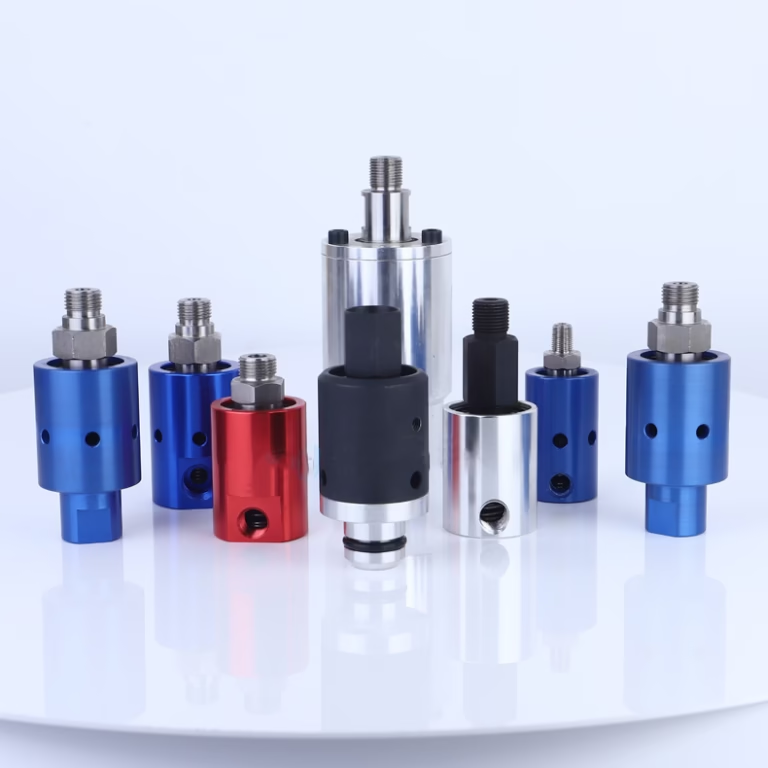
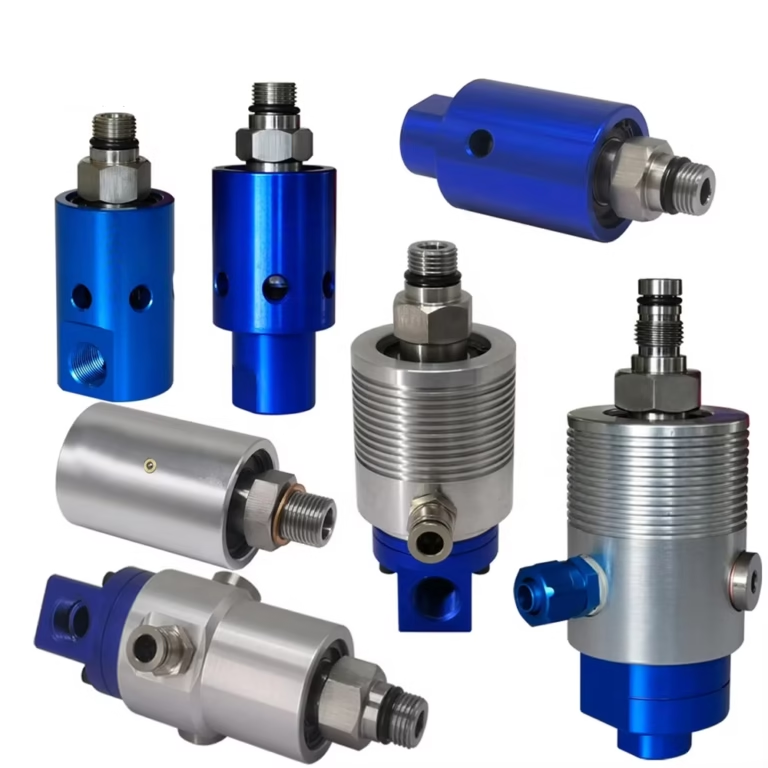
Dann Hydraulic manufactures rotary union replacement solutions for selected industrial applications.
If you need help evaluating a replacement, provide the original model number, photographs, technical drawings, and operating conditions.
Frequently Asked Questions
How do you install a Deublin rotary union?
Install the rotary union with correct shaft alignment, clean fluid lines, properly supported hoses, and an appropriate anti-rotation arrangement. Confirm the thread, pressure, speed, temperature, and working medium before starting the machine.
Should a rotary union be connected with a flexible hose?
A flexible hose is commonly used to reduce the transfer of vibration and piping stress into the rotary union. However, the correct piping arrangement depends on the equipment and rotary union design.
Can poor alignment cause rotary union leakage?
Yes. Misalignment can create additional loads on seals and bearings, potentially causing premature wear, increased temperature, and leakage.
Can the rotary union housing be rigidly fixed?
The housing normally requires anti-rotation control, but unnecessarily rigid restraint can transfer vibration or alignment errors into the rotary union. Follow the mounting requirements for the specific model.
Why does a new rotary union leak after installation?
Possible causes include incorrect installation, damaged sealing surfaces, contamination, excessive shaft runout, wrong connections, excessive pressure, or an unsuitable rotary union specification.
Should every rotary union be lubricated?
No. Some designs use permanently lubricated bearings. Only lubricate the rotary union when the model specifically requires it.
Can I replace a Deublin rotary union with a compatible alternative?
A compatible replacement may be possible when the original dimensions and operating requirements can be matched. Confirm the original model, pressure, speed, medium, temperature, and installation dimensions before selecting a replacement.
Conclusion
Correct Deublin rotary union installation depends on much more than simply tightening the rotary union onto the machine.
Alignment, piping flexibility, contamination control, anti-rotation, pressure, rotational speed, and proper commissioning all influence rotary union reliability.
Before installation:
- Check the original model and operating conditions.
- Clean the hydraulic system.
- Confirm the connection and alignment.
- Avoid unnecessary piping loads.
- Install the anti-rotation system correctly.
- Check for leakage during initial operation.
Following these practices can reduce premature seal and bearing problems and help the rotary union operate reliably in industrial equipment.
If you need to replace an existing Deublin rotary union, Dann Hydraulic can evaluate the application according to the original model, drawings, dimensions, and working conditions.