High Temperature Rotary Joints: Selection Guide for Steam & Thermal Oil Systems (2026)
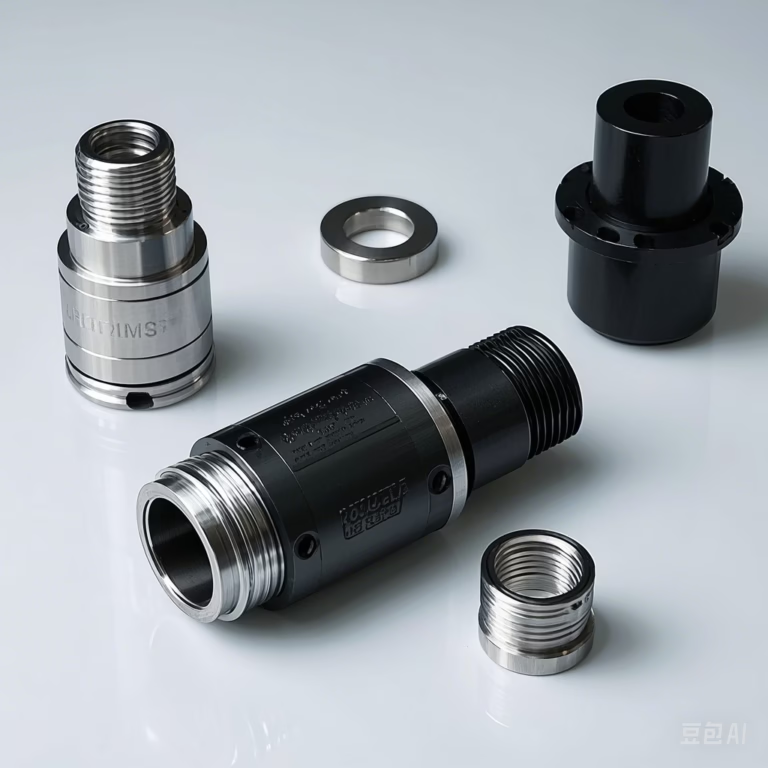
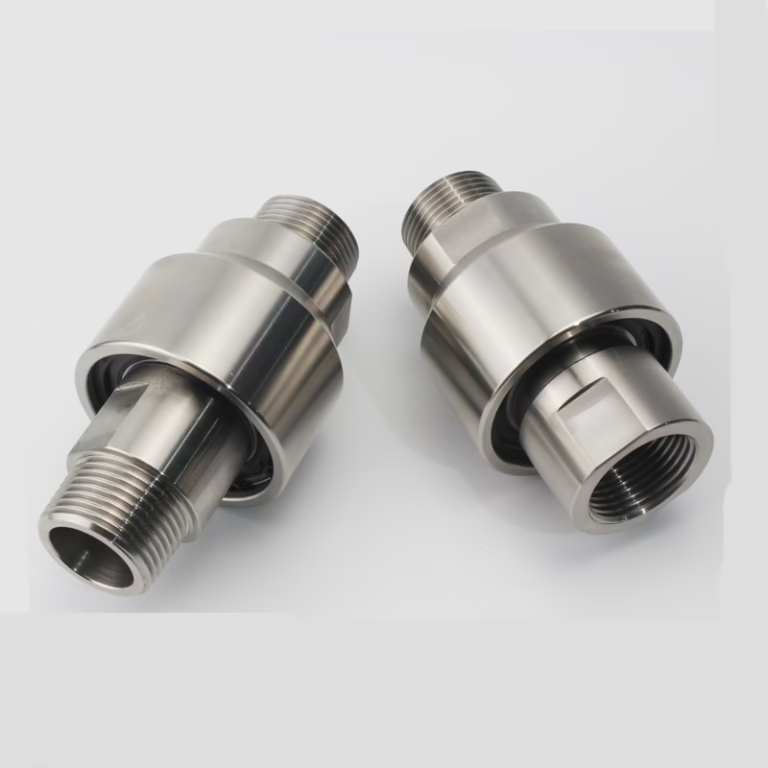
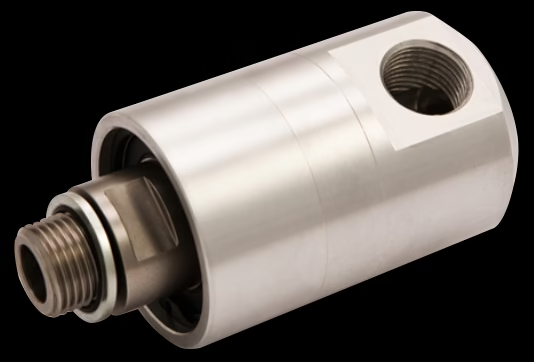
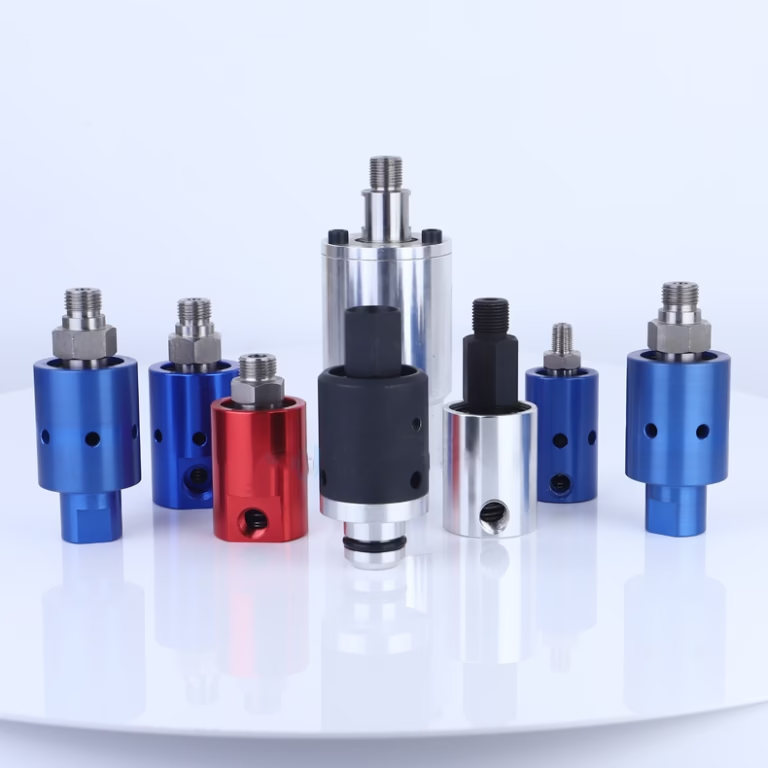
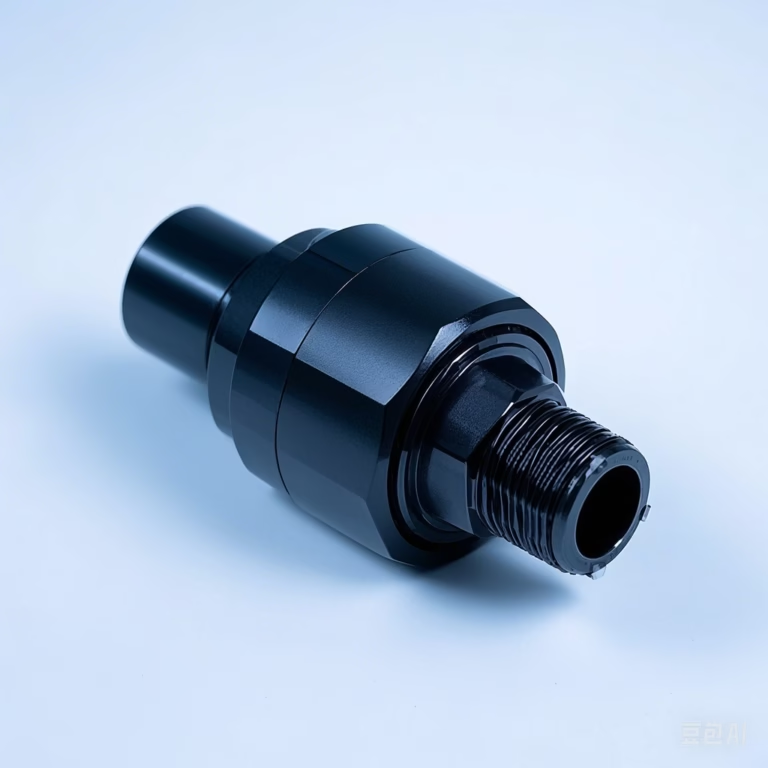
High temperature rotary joints are essential components in industrial systems that require the transfer of steam, thermal oil, hot air, or other high-temperature media between stationary and rotating equipment. These specialized rotary joints are engineered to withstand extreme temperatures, continuous rotation, and demanding operating environments. When properly maintained, a High temperature rotary joint ensures smooth sealing performance, extended service life, and safe operation across a wide range of industries, including textiles, papermaking, chemical processing, energy, plastics, and metallurgy.
In this comprehensive guide, we will examine the key characteristics of high-temperature rotary joints and offer practical maintenance techniques to help engineers, equipment operators, and facility managers ensure long-term reliability. The maintenance recommendations below combine real-world factory experience with engineering best practices to help minimize downtime, avoid leakage accidents, and improve overall operational stability.
Understanding High Temperature Rotary Joints
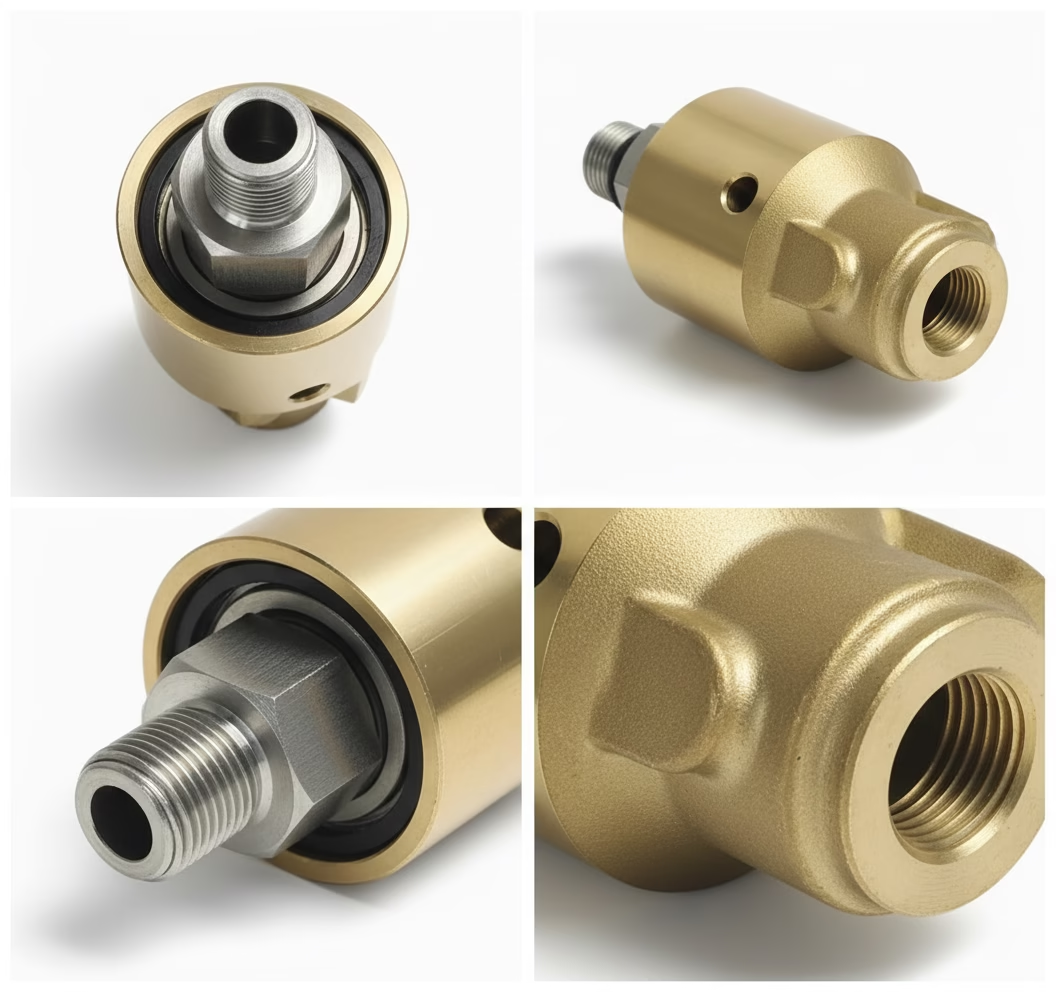
A High temperature rotary joint is designed to connect two rotating parts while allowing hot media to pass through without leakage. Its materials, seals, bearings, and overall structure are optimized to resist thermal expansion, corrosion, and wear.
Below are the main characteristics of high temperature rotary joints—understanding these will help explain why proper maintenance is crucial.
1. Able to Operate at Extreme Temperatures
High temperature rotary joints can reliably operate at 200°C and above, depending on the design. Some advanced rotary unions can withstand temperatures exceeding 1000°C, particularly in industries such as metallurgy, smelting, or high-temperature heating systems.
These joints must manage:
-
Rapid temperature fluctuations
-
Thermal expansion and contraction
-
Heat-induced stress on seal faces
-
Continuous exposure to hot steam or thermal oil
This makes material selection and structural design extremely critical.
2. Excellent High-Temperature Sealing Performance
A main function of the High temperature rotary joint is to maintain tight and stable sealing while rotating at high speed.
The sealing materials must have:
-
High thermal stability
-
Chemical resistance
-
Wear resistance
-
Elasticity at elevated temperatures
Many high-temperature rotary unions use mechanical seals made from carbon graphite, silicon carbide, tungsten carbide, or other special ceramic materials.
3. Low Friction and Smooth Rotational Performance
Even under extreme heat, the rotary joint must maintain:
-
Low torque
-
Smooth rotation
-
Low friction coefficient
This reduces energy loss and prevents overheating, which is especially important in high-speed rotating equipment such as calender rollers, drying cylinders, and heat transfer drums.
4. Corrosion and Wear Resistance
High temperature working environments often include:
-
Hot steam
-
Hot oil
-
Chemicals
-
Oxidizing atmospheres
Therefore, the housing, rotor, and sealing faces must be made from corrosion-resistant and high-strength materials. This ensures long-term durability even under harsh industrial conditions.
5. Customizable Design Based on Operating Conditions
A High temperature rotary joint is often customized according to:
-
Medium type (steam, thermal oil, nitrogen, exhaust gas)
-
Operating temperature
-
Pressure
-
Rotational speed
-
Equipment structure
-
Installation constraints
The more extreme the operating condition, the more important maintenance becomes.
🔧 Why Standard Rotary Unions Fail at High Temperatures
In real industrial environments, many users mistakenly apply standard rotary unions in high-temperature systems, leading to:
- Seal degradation due to thermal expansion
- Lubrication failure
- Carbon seal cracking
- Leakage under pressure fluctuation
👉 Based on field experience, over 60% of rotary union failures in thermal systems are caused by incorrect material selection.
🧠 How to Choose the Right High Temperature Rotary Joint
Step 1: Identify Media Type
Steam and thermal oil require completely different sealing designs.
Step 2: Confirm Temperature Range
Always choose a model rated 20–30% above your max operating temperature.
Step 3: Check Rotation Speed
High-speed applications require balanced sealing and bearing design.
Step 4: Evaluate Installation Space
Compact vs external bearing design.
Step 5: Consider OEM vs Replacement
Many industrial users today are switching from OEM brands like Deublin to aftermarket rotary union suppliers for better cost-performance ratio.
⚠️ Common Failure Causes & How to Avoid Them
1. Incorrect Seal Material
→ Always match material to temperature and media
2. Over-speed Operation
→ Stay within RPM limits
3. Poor Installation Alignment
→ Leads to vibration and premature wear
4. Lack of Maintenance
→ Regular inspection extends lifespan significantly
📊 Real Engineering Insight: Field-Proven Data from Thermal Oil Rotary Union Systems
Based on our long-term export experience and after-sales tracking in thermal oil rotary union applications, we have analyzed failure cases across multiple industries, including steel processing, paper mills, and chemical plants. The following insights are derived from real operational data and customer feedback.
🔍 1. Proper Seal Selection Can Increase Lifespan by 2–3x
One of the most critical factors affecting the lifespan of a high temperature rotary union is the seal material combination.
In thermal oil systems operating between 200°C and 350°C, using standard carbon seals alone often leads to:
- Rapid wear due to insufficient thermal resistance
- Surface deformation under continuous heat stress
- Increased leakage after short-term operation
However, when upgrading to optimized seal pairs, such as:
- Carbon graphite + silicon carbide
- Carbon + tungsten carbide
👉 The performance improvement is significant:
- Reduced friction coefficient
- Enhanced thermal stability
- Better resistance to dry-running conditions
Result:
Field data shows that properly matched seal materials can extend service life from 3–6 months to 12–18 months, especially in continuous-duty systems.
⚙️ 2. External Bearing Design Reduces Failure Rate by 40%+
In high temperature environments, bearing failure is another major cause of rotary union breakdown.
Traditional internal bearing designs often suffer from:
- Heat transfer from the media to the bearing chamber
- Lubricant degradation at high temperatures
- Increased vibration and misalignment
To solve this, many advanced designs adopt an external bearing configuration, which:
- Physically isolates bearings from heat sources
- Allows independent lubrication systems
- Improves rotational stability at high speeds
👉 In our export cases:
- Equipment using external bearing rotary unions showed over 40% reduction in failure rates
- Maintenance intervals increased significantly
- Particularly effective in thermal oil heating systems and drying cylinders
⚠️ 3. Most Failures Occur Within the First 3 Months Due to Incorrect Installation
A surprising but consistent finding across projects is:
The majority of rotary union failures are not due to product defects, but improper installation.
From our after-sales support records, the most common installation-related issues include:
Misalignment Between Shaft and Rotary Union
- Causes uneven seal wear
- Leads to vibration and leakage
Over-tightening or Incorrect Mounting Torque
- Damages internal sealing surfaces
- Reduces seal elasticity
Lack of Pre-Operation Flushing
- Debris or metal particles damage seal faces immediately
No Thermal Expansion Compensation
- Especially critical in high temperature systems
- Leads to seal face cracking or deformation
🛠️ Engineering Recommendation
To maximize the performance of your thermal oil rotary union, we strongly recommend:
- ✔ Conducting shaft alignment checks before installation
- ✔ Using recommended torque specifications
- ✔ Ensuring clean media and system flushing before startup
- ✔ Selecting designs with thermal compensation structures
👉 With proper installation and configuration, failure risk can be reduced by more than 50% in the first year of operation.
📈 Summary of Key Findings
| Factor | Impact on Performance |
|---|---|
| Seal Material Selection | Lifespan ↑ 2–3x |
| External Bearing Design | Failure Rate ↓ 40%+ |
| Proper Installation | Early Failure Risk ↓ 50%+ |
📊 Case Study: Cost Reduction After Switching from Deublin Rotary Union
🏭 Customer Background
A mid-sized steel processing plant in Southeast Asia operates multiple continuous production lines using thermal oil rotary union systems for high-temperature heat transfer.
- Application: Drying cylinders & heating rollers
- Operating temperature: 280°C
- Running schedule: 24/7 continuous operation
- Original supplier: Deublin
⚠️ Challenges Faced with OEM Rotary Unions
Despite stable performance, the customer encountered several cost-related issues:
- High procurement cost per unit
- Long lead times (4–6 weeks), causing inventory pressure
- Expensive maintenance and replacement cycles
- Limited flexibility for customization
👉 Annual maintenance cost kept increasing, especially due to frequent replacements in high-load conditions.
🔄 Solution: Switching to Aftermarket Rotary Union Replacement
The customer decided to test our high temperature rotary union replacement as an alternative.
Key Actions Taken:
- Replaced Deublin units with dimensionally compatible models
- Upgraded seal materials to carbon + silicon carbide combination
- Selected external bearing design for improved thermal isolation
📈 Performance & Cost Comparison
| Metric | Deublin (OEM) | Our Replacement |
|---|---|---|
| Unit Price | 100% (baseline) | ↓ 40% |
| Lead Time | 4–6 weeks | 7–10 days |
| Average Lifespan | 6–8 months | 10–14 months |
| Annual Replacement Frequency | High | Reduced |
| Total Annual Cost | 100% | ↓ 45–55% |
💰 Key Result: Significant Cost Savings
After 12 months of operation:
- Total rotary union procurement cost reduced by over 40%
- Maintenance-related downtime decreased noticeably
- Overall annual cost dropped by approximately 50%
👉 The ROI was achieved within the first 3 replacement cycles.
🧠 Engineering Insights Behind the Improvement
The cost reduction was not only due to price advantage, but also:
- ✔ Optimized seal material pairing → longer service life
- ✔ External bearing design → reduced failure rate
- ✔ Faster delivery → lower inventory holding cost
🗣️ Customer Feedback (Trust Signal)
“After switching from Deublin to this replacement solution, we achieved both cost savings and stable performance. The shorter lead time also helped us reduce spare parts inventory pressure.”
❓ FAQ – High Temperature Rotary Joints
What is the maximum temperature for a rotary joint?
High temperature rotary joints can handle up to 350°C, depending on materials and design.
Can one rotary union handle both steam and thermal oil?
No. These require different sealing structures and materials.
How long does a high temperature rotary union last?
Typically 6–24 months, depending on operating conditions and maintenance.
Is it safe to use aftermarket rotary unions?
Yes, if sourced from a reliable manufacturer with proven engineering capability.
Conclusion: Proper Maintenance Ensures Long-Term Reliability
A High temperature rotary joint is a critical component in many industrial systems, and maintaining it properly is the key to ensuring operational reliability. By understanding the joint’s structure, working conditions, and potential failure mechanisms, operators can implement an effective maintenance strategy to:
-
Reduce leakage risk
-
Minimize downtime
-
Extend service life
-
Improve equipment safety
-
Increase energy efficiency
Choosing the right high temperature rotary joint is critical for system reliability, safety, and operational efficiency. Whether you are using steam or thermal oil systems, selecting the correct seal material, structure, and supplier will significantly reduce downtime and maintenance costs.
If your factory relies on high-temperature equipment, routine inspection and proper operation of rotary joints are not just good practice—they are essential for sustainable productivity.
CTA
Looking for a reliable high temperature rotary union supplier?
- OEM replacement solutions
- Fast delivery
- Custom engineering support
👉 Contact us today for expert selection support.