Rotary Joint Components Explained: Structure, Materials, Failure Points & Industrial Design Guide
Industrial rotary joints are critical components in modern manufacturing systems. Whether used in CNC machine tools, paper mills, steel processing lines, textile machinery, or automation equipment, rotary joints ensure continuous transfer of fluids and gases between stationary piping and rotating equipment.
However, many engineers and buyers only focus on operating pressure or rotational speed when selecting a rotary joint. In reality, understanding the internal components of a rotary joint is essential for ensuring long service life, leakage prevention, and stable machine performance.
As a professional rotary union manufacturer with more than 10 years of production experience, we have manufactured and customized rotary joints for hydraulic oil, coolant, steam, water, compressed air, and thermal oil applications. Through years of field experience, we have learned that seal design, bearing configuration, material selection, and machining accuracy directly determine the reliability of a rotary joint.
In this guide, we explain the key components inside a rotary joint, their functions, common failure points, and how industrial-grade rotary unions are engineered for demanding applications.
Definition and Types of Rotary Joints
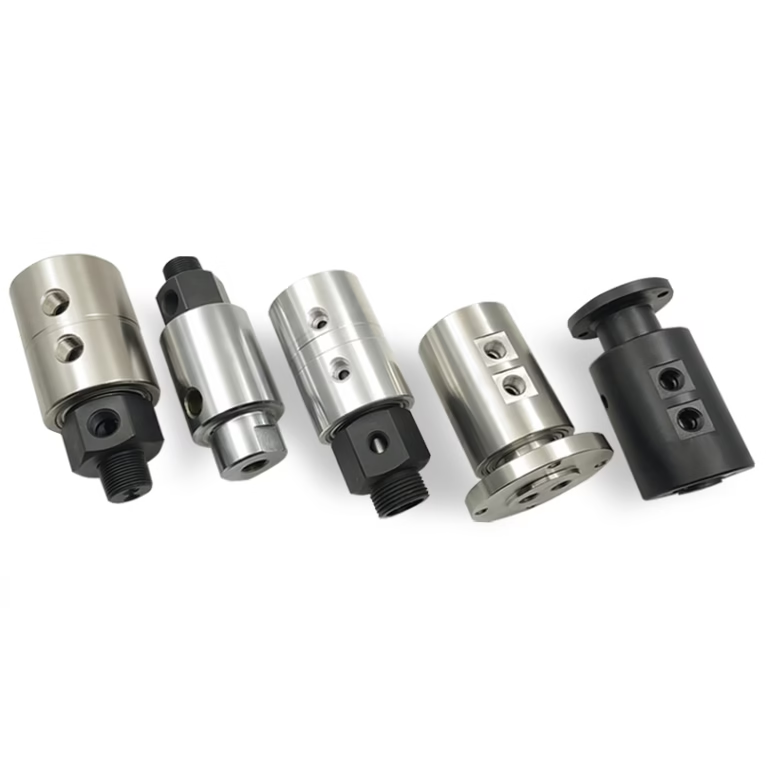
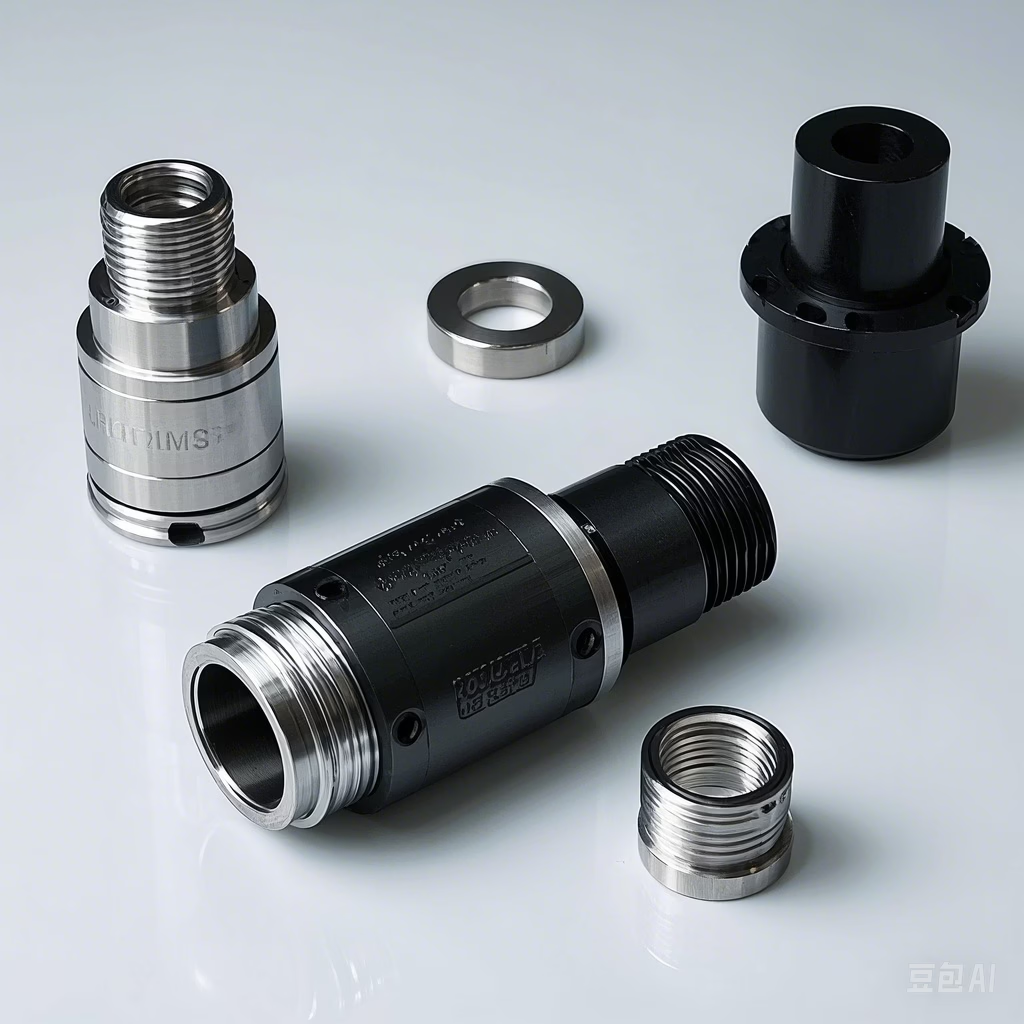
A rotary joint, also known as a rotary union or swivel joint, is a mechanical device that allows the transfer of various substances, such as steam, water, air, oil, or hydraulic fluid, from a stationary source to a rotating component of a machine without leakage.
It acts as a connection point that bridges the gap between the fixed and moving parts, ensuring a continuous and secure flow of the medium being transferred.
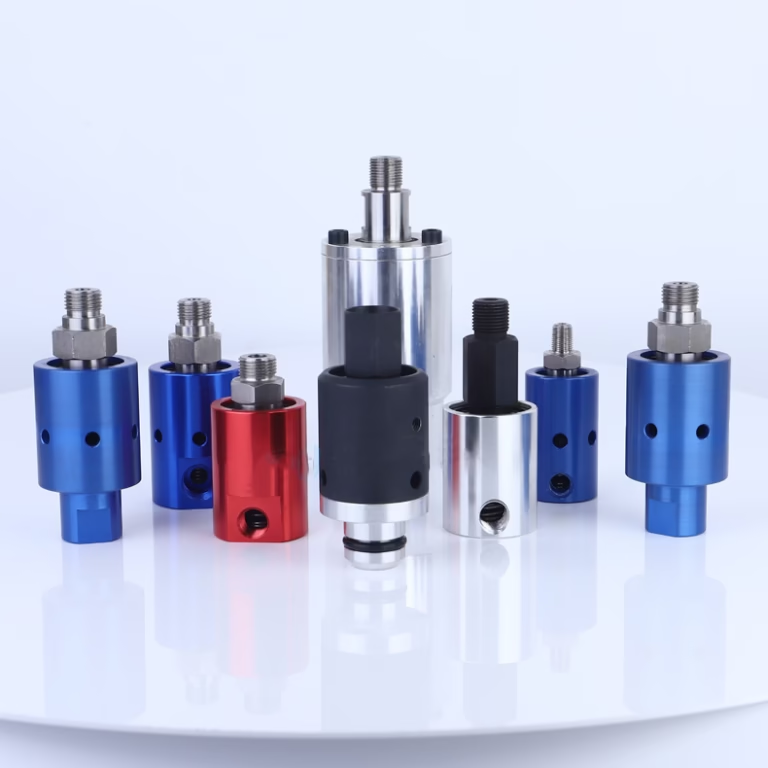
Rotary joints come in different shapes, sizes, and configurations, depending on their intended application. Some are for simple, single-port applications where the material passes directly through the joint, while others are more complex, featuring multiple ports to handle the transfer of different media simultaneously.
The design of a rotary joint is carefully engineered to meet the specific requirements of the system it integrates into, taking into account factors such as pressure, temperature, rotational speed, and the type of media being transferred.
Rotary joints are employed in various applications, including:
Industrial Machinery: Such as rotating tables, indexers, and robotic arms.
Aerospace: In aircraft engines and landing gear.
Automotive: In steering systems and turbochargers.
Medical Equipment: In surgical instruments and imaging devices.
There are several types of rotary joints, each tailored to specific applications and media:
Mechanical Rotary Joints: for transferring fluids and gases. They are commonly found in hydraulic systems, cooling systems, and pneumatic systems.
Electrical Rotary Joints: Also known as slip rings, these joints transfer electrical power and signals. They are essential in applications where continuous rotation is required, such as radar systems and camera platforms.
Optical Rotary Joints: Facilitate the transfer of optical signals, typically in fiber optic communication systems and laser equipment.
Main Components of a Rotary Joint
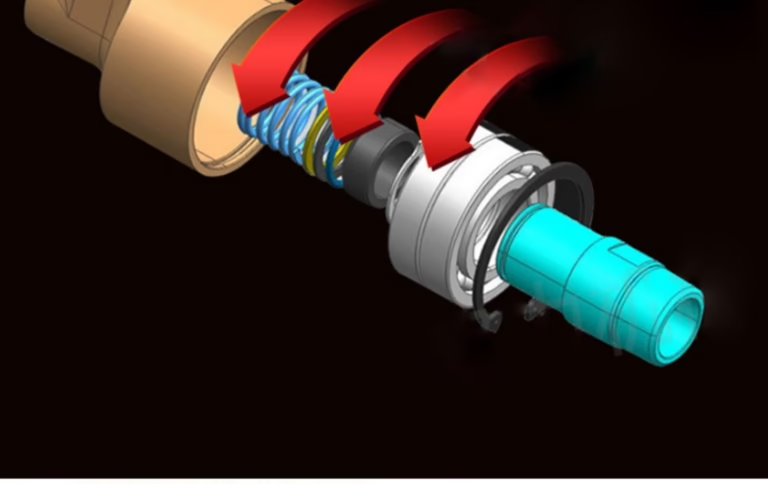
Although rotary joint designs vary depending on application requirements, most industrial rotary unions contain the following core components:
- Housing
- Shaft (Rotor)
- Bearings
- Mechanical seals
- Springs
- O-rings
- Flow passages
Each component plays a critical role in operational stability and sealing performance.
1. Housing (Body)
The housing is the external structure of the rotary joint. It supports internal components while containing pressure and media flow.
Main Functions
- Protect internal sealing components
- Maintain structural rigidity
- Support pressure loads
- Connect the stationary piping
Common Housing Materials
| Material | Advantages |
|---|---|
| Brass | Cost-effective for water and air |
| Stainless Steel | Corrosion resistance |
| Aluminum Alloy | Lightweight applications |
| Carbon Steel | High mechanical strength |
For high-temperature steam rotary joints, ductile iron or stainless steel housings are commonly used due to thermal expansion resistance.
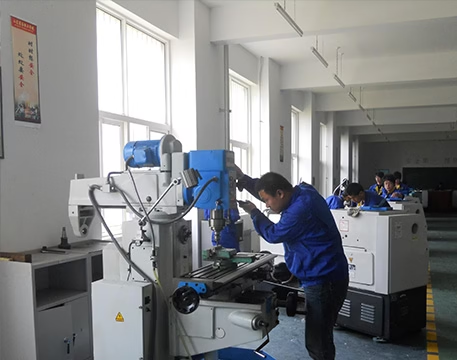
At our factory, all housings are processed using CNC machining centers to ensure excellent concentricity and sealing alignment.
2. Rotor / Shaft
The rotor is the rotating component connected directly to the machine spindle, roller, or rotating shaft.
It transfers media from the stationary side into the rotating equipment.
Key Engineering Requirements
The shaft must maintain:
- High concentricity
- Surface smoothness
- Rotational stability
- Wear resistance
Poor shaft machining accuracy is one of the most common causes of premature seal wear.
For high-speed rotary unions, dynamic balancing becomes extremely important because vibration directly affects seal face stability.
3. Bearings
Bearings support rotational movement inside the rotary joint.
Their primary function is to reduce friction while maintaining alignment between rotating and stationary components.
Common Bearing Types
- Ball bearings
- Angular contact bearings
- Needle bearings
Why Bearings Matter
Low-quality bearings often cause:
- Excessive vibration
- Seal instability
- Leakage
- Shaft wobbling
- Reduced service life
For high-speed CNC rotary unions, precision bearings are essential.
Our production team performs bearing preload adjustment and dynamic rotational testing during assembly to improve operational stability.
4. Mechanical Seals
Mechanical seals are the most critical components inside a rotary union.
They create the dynamic sealing interface that prevents media leakage during rotation.
According to industrial rotary joint design principles, seals experience continuous pressure loading and friction during operation.
Common Seal Face Materials
| Material | Application |
|---|---|
| Carbon Graphite | Steam applications |
| Silicon Carbide | High-speed coolant |
| Tungsten Carbide | Abrasive media |
| Ceramic | General water systems |
Seal Failure Causes
The most common seal failures include:
- Dry running
- Excessive RPM
- Misalignment
- Contaminated media
- Thermal shock
- Poor cooling
In our manufacturing experience, seal face flatness and spring pressure balance are two major factors affecting seal life.
5. O-Rings and Secondary Seals
O-rings provide static sealing between non-rotating surfaces.
Although small, they are extremely important for preventing internal leakage.
Common O-Ring Materials
- NBR
- Viton
- EPDM
- PTFE
Different media and temperatures require different elastomer materials.
For example:
- Steam systems often use EPDM
- Hydraulic oil systems prefer NBR
- Chemical media may require PTFE
6. Springs
Springs maintain consistent contact pressure between seal faces.
Without a proper spring force, mechanical seals cannot maintain stable sealing during pressure fluctuations or vibration.
High-quality rotary joints use corrosion-resistant stainless steel springs for improved durability.
7. Internal Flow Passages
Flow passages direct media through the rotary joint.
The internal flow design directly affects:
- Pressure loss
- Flow efficiency
- Turbulence
- Heat generation
Multi-passage rotary unions contain separate internal channels for transferring multiple media simultaneously.
These are commonly used in:
- Robotics
- Automation equipment
- CNC rotary tables
- Hydraulic systems
Common Failure Points in Rotary Joints
Understanding failure mechanisms helps engineers choose more reliable rotary unions.
Seal Leakage
Usually caused by:
- Worn seal faces
- Misalignment
- Excessive speed
- Poor media filtration
Bearing Failure
Typically caused by:
- Overheating
- Insufficient lubrication
- Vibration
- Contamination
Housing Cracks
Often caused by:
- Pressure spikes
- Thermal expansion
- Low-quality casting materials
Excessive Vibration
Common in low-precision rotary unions without dynamic balancing.
How Industrial-Grade Rotary Joints Are Manufactured
A high-performance rotary union requires more than simple assembly.
At our manufacturing facility, we follow strict production procedures, including:
CNC Precision Machining
Ensures:
- Tight tolerances
- Stable concentricity
- Accurate seal positioning
Dynamic Balancing
Critical for:
- High-speed operation
- Vibration reduction
- Seal protection
Pressure Testing
Every rotary union undergoes leakage and pressure testing before shipment.
Material Inspection
We verify:
- Hardness
- Surface finish
- Corrosion resistance
- Dimensional accuracy
Why Rotary Joint Design Matters
A poorly designed rotary joint can result in:
- Machine downtime
- Product defects
- Coolant leakage
- Bearing damage
- Reduced production efficiency
In industries such as CNC machining and steel processing, even minor leakage problems can create major production losses.
This is why selecting a reliable rotary union manufacturer is critical.
Our Experience as a Rotary Union Manufacturer
With more than 10 years of rotary union manufacturing experience, we provide reliable and cost-effective solutions for industrial customers worldwide.
Our product range includes:
- High-speed rotary unions
- Hydraulic rotary joints
- Steam rotary joints
- Multi-passage rotary unions
- Pneumatic rotary unions
- Coolant rotary unions
We also provide customized replacement solutions compatible with many international rotary union brands.
Our engineering team continuously improves seal technology, machining precision, and product durability to meet demanding industrial applications.
FAQ
Q1. What is a rotary joint, and why is it important in machinery?
A1: A rotary joint, also called a rotary union, is a mechanical device that transfers fluids (e.g., water, steam, oil), gases, or electrical signals between stationary and rotating parts of equipment. It’s critical for systems requiring seamless media flow during rotation, such as printing presses, industrial rollers, or aircraft engines, to ensure no leakage and continuous operation. Without it, rotating machinery would struggle to receive essential fluids or power, leading to inefficiency or failure.
Q2. What are the main components of a rotary joint?
A2: The core components include:
Mechanical Seal: Prevents leakage by creating a barrier between moving and stationary parts (e.g., pusher-type seals, O-rings, lip seals).
Bearings: Support smooth rotation, handling radial/axial loads (e.g., roller bearings, bronze bushings).
Shaft: Transmits media to rotating parts like drums or rolls, often made of durable materials like stainless steel.
Housing: Encloses components and connects to supply/return lines, available in materials like cast iron or steel.
Q3. How do mechanical seals work, and what types are commonly used?
A3: Mechanical seals use mating surfaces (rotating and stationary) to block leaks. Common types include:
Pusher-Type End Face Seals: Use springs to maintain contact between seal faces, compensating for wear.
Non-Pusher Seals: Employ bellows/diaphragms for compact, low-maintenance designs.
Lip Seals/O-Rings: Simple, cost-effective options for liquid/gas sealing in low-pressure environments.
Dual-seal configurations (e.g., O-rings + lip seals) are often used for enhanced leak protection.
Q4. How does misalignment affect a rotary joint, and how can it be prevented?
A4: Misalignment (when the joint’s axis doesn’t match the equipment’s) causes uneven stress on seals/bearings, leading to leaks, wear, or component failure. Symptoms include broken springs, hose failures, or excessive vibration. Prevention steps:
Ensure precise installation using alignment tools.
Evenly tighten mounting bolts (e.g., diary spine/areola rib clamps).
Correct bent support structures or misadjusted mounting brackets.
Q5. Can rotary joints handle high-pressure or high-temperature media?
A5: Yes, but design and material selection are critical. High-pressure joints use robust housings and reinforced seals (e.g., metal-faced mechanical seals). For high temperatures (e.g., steam applications), materials like stainless steel or heat-resistant elastomers (e.g., fluorocarbon) are used, and cooling/insulation may be added to prevent material degradation. Always check the manufacturer’s specs for pressure/temperature ratings.
Conclusion
Understanding the internal components of a rotary joint is essential for selecting the right solution and improving equipment reliability.
Although components such as seals, bearings, shafts, and housings may appear simple, their design accuracy directly determines the overall performance of the rotary union.
For industrial buyers, maintenance engineers, and OEM manufacturers, choosing a rotary joint with high-quality materials, precision machining, and reliable sealing technology is the key to long-term operational stability.
As an experienced rotary union factory with over a decade of manufacturing expertise, we are committed to delivering durable, leak-free, and high-performance rotary union solutions for customers worldwide.