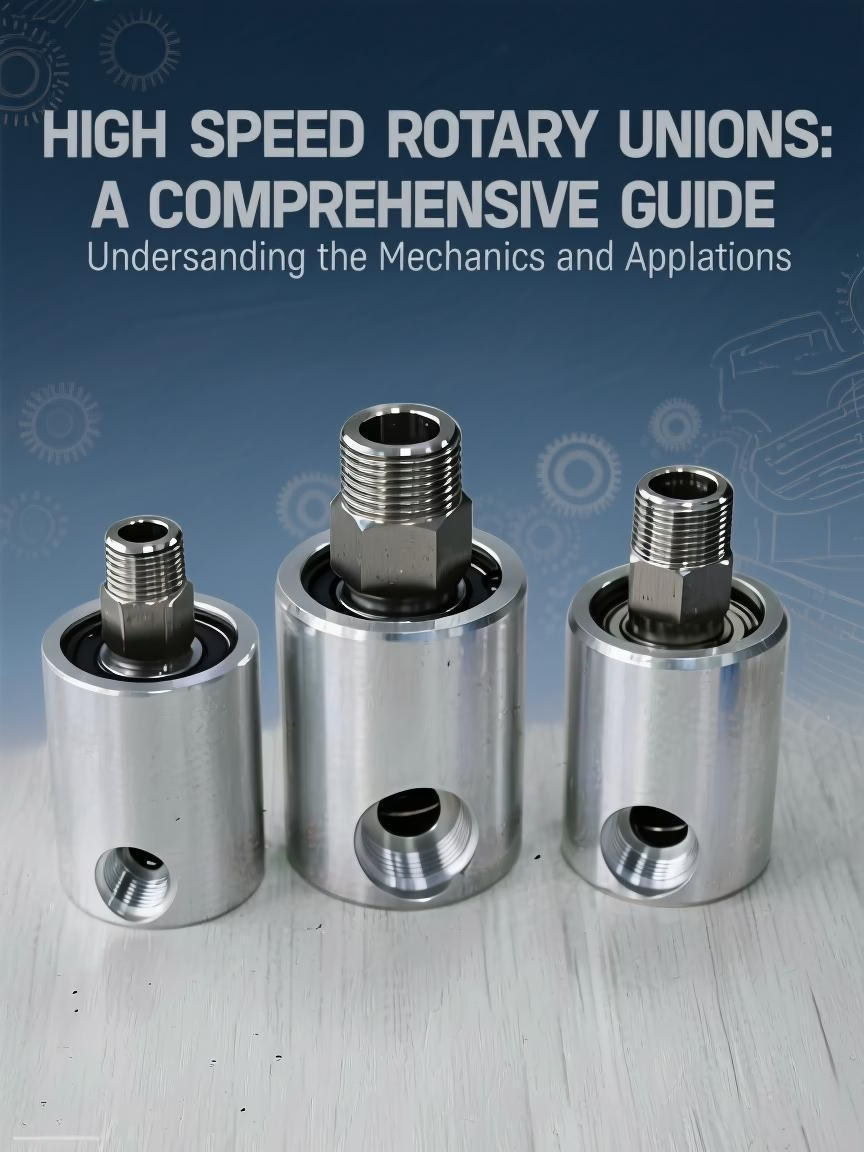
High Speed Rotary Unions: A Comprehensive Guide for Industrial Applications
In modern industrial systems, achieving reliable fluid transfer at high rotational speeds is a critical engineering challenge. High-speed rotary unions are specifically designed to ensure stable media transmission—such as coolant, air, or oil—between stationary supply lines and rapidly rotating equipment.
Unlike standard rotary unions, high-speed designs must withstand extreme RPM, thermal stress, and sealing wear. This guide provides a practical, engineering-focused overview, along with real manufacturing insights from an experienced rotary union supplier.
What Is a High Speed Rotary Union?
A high-speed rotary union is a precision mechanical device that enables the transfer of fluids or gases from a stationary source into a rotating component at high rotational speeds (typically above 3,000 RPM and up to 20,000+ RPM).
These unions are widely used in:
- CNC machine tool spindles
- High-speed grinding machines
- Printing and packaging equipment
- Steel and paper processing lines
Their performance directly affects machine efficiency, cooling effectiveness, and equipment lifespan.
How High Speed Rotary Unions Work
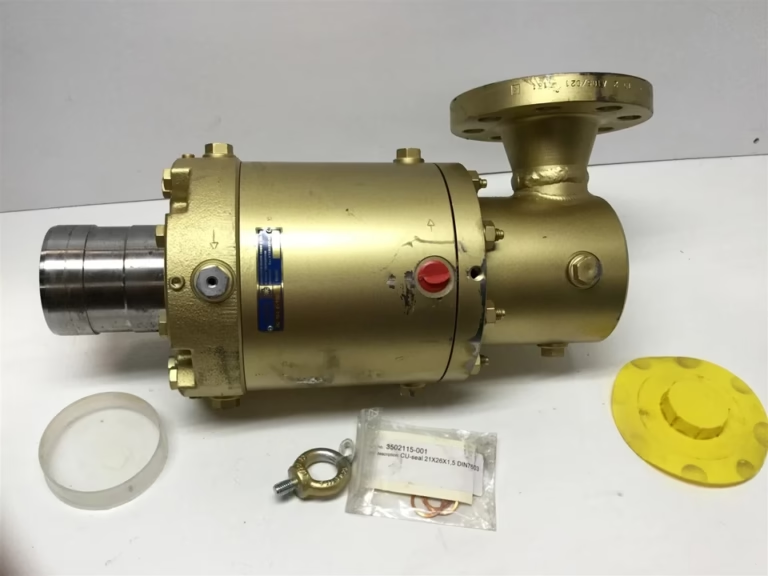
A rotary union consists of a stationary housing and a rotating shaft sealed together through advanced sealing technology.
Key Components:
- Rotor (shaft) – rotates with the machine
- Housing – fixed fluid inlet
- Mechanical seals – prevent leakage at high speed
- Bearings – support rotation and reduce vibration
At high RPM, maintaining seal integrity and minimizing friction heat are the primary design challenges.
Working Principle
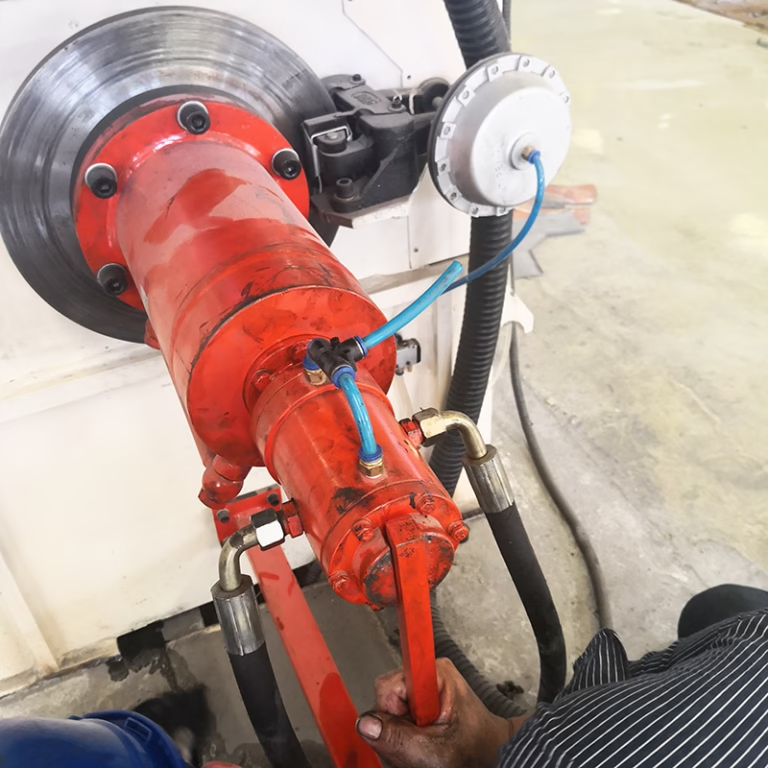
The working principle of a high-speed rotary union is the ability to maintain a fluid-tight connection between a stationary and a rotating component. That allows for the transfer of fluids. As the rotating part of the machine (such as a spindle, drum, or cylinder) rotates. The high-speed rotary union continuously supplies fluid to the rotating component without leakage.
The fluid enters the rotary union through a stationary inlet port. The internal components of the union, such as the seals and bearings. They allow the fluid to pass through and directly to the rotating part. The mechanical seals prevent the fluid from escaping between the stationary and rotating parts. The bearings support the rotation of the shaft and ensure smooth operation. The fluid then exits the rotary union through a rotating outlet port and goes to the intended destination within the rotating part of the machine.
As the equipment spins, the rotary union uses precision bearings and dynamic seals to maintain a leak-proof connection. This ensures a continuous flow of coolant, oil, steam, air, or vacuum without restricting rotation or causing pressure loss.
Many modern units also include features like:
Labyrinth seals or mechanical face seals
Carbon-graphite sealing rings
Integrated slip rings for data/signal transfer
Balanced rotating assemblies for vibration control
Engineering Challenges in High Speed Applications
High-speed environments introduce multiple failure risks that standard rotary unions cannot handle.
1. Thermal Build-Up
At speeds above 8,000 RPM, seal faces generate significant friction heat. Poor material selection leads to:
- Seal deformation
- Leakage
- Reduced service life
2. Dynamic Imbalance
Even a minor imbalance can cause:
- Vibration
- Bearing failure
- Noise and instability
Precision dynamic balancing is essential.
3. Seal Wear and Leakage
High-speed applications require:
- Mechanical seals (SiC/carbon graphite)
- Ultra-flat sealing surfaces (micron-level tolerance)
Standard vs High Speed Rotary Unions
| Feature | Standard Rotary Union | High Speed Rotary Union |
|---|---|---|
| Speed Range | < 1,000 RPM | Up to 20,000+ RPM |
| Seal Type | Basic sealing | Mechanical seal |
| Heat Resistance | Low | High |
| Application | General machinery | CNC spindle/precision systems |
| Lifespan | Moderate | Extended (engineered) |
Types of High-Speed Rotary Unions
There are several types of high-speed rotary unions available, each designed to meet specific application requirements. Some of the common types include:
Single-Passage High-Speed Rotary Unions
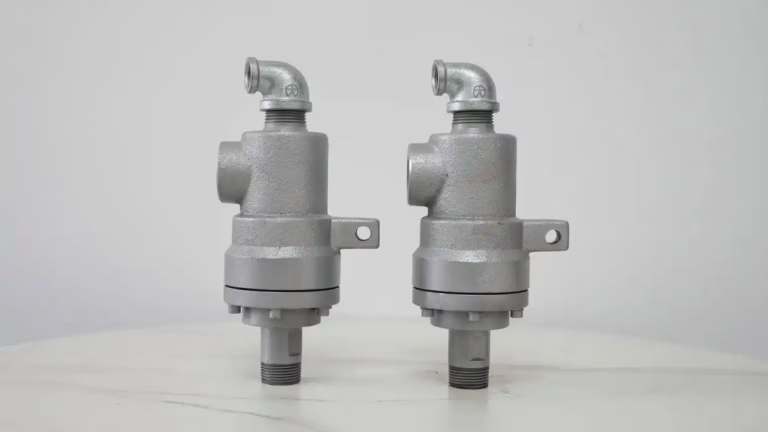
Single-passage high-speed rotary unions are the simplest type, designed to transfer a single fluid from a stationary source to a rotating component. They have a single inlet and a single outlet for the fluid. Engineers commonly use these unions in applications where they transfer only one type of fluid, such as coolant in basic machine tools. For example, in a small-scale machining operation, technicians install a single-pass high-speed rotary union to supply coolant directly to the cutting tool. The design of a single-passage rotary union is relatively straightforward, with a focus on ensuring a reliable seal and smooth rotation for the transfer of the fluid.
Multi-Passage High-Speed Rotary Unions
Multi-passage high-speed rotary unions transfer multiple fluids simultaneously. They have multiple inlets and outlets, allowing for the independent transfer of different fluids, such as water, oil, and air. These unions are for complex fluid transfer requirements. For instance, in a high-speed industrial dryer, a multi-passage rotary union can transfer steam for heating. Also, it can transfer cooling water for temperature control, and compressed air for cleaning or drying purposes. The internal design of a multi-passage rotary union is more complex. It needs to ensure that the different fluids do not mix and that each fluid is transferred efficiently to its intended destination.
High-Pressure High-Speed Rotary Unions
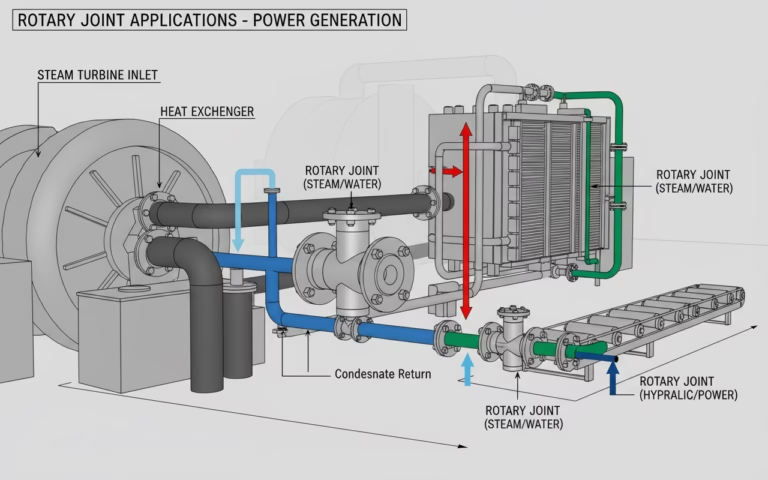
Rotary unions are specifically for handling high-pressure fluids while operating at high rotational speeds. These union applications include hydraulic systems in heavy machinery or high-pressure steam transfer in power generation. The materials in the construction of high-pressure high-speed rotary unions withstand the high pressures, and the sealing mechanisms maintain a leak-free connection under extreme conditions. For example, a hydraulic press is used in the metalworking industry. A high-pressure, high-speed rotary union that transfers hydraulic fluid at high pressures to the rotating cylinders, enabling the press to exert high forces on the metal workpieces.
High-Temperature High-Speed Rotary Unions
Rotary unions transfer fluids at elevated temperatures, such as in steam-based processes or high-temperature heat transfer applications. Manufacturers select materials for these unions—especially seals, bearings, and housings—based on their high-temperature resistance. For instance, in a steam turbine, where steam temperatures can reach several hundred degrees Celsius, a high-temperature high-speed rotary union transfers steam to the rotating blades. These unions typically use seals made from materials like graphite or special high-temperature-resistant polymers, while engineers design the bearings to operate smoothly at high temperatures.
Applications of High-Speed Rotary Unions
High-speed rotary unions find applications in a wide range of industries, including steel, metallurgy, paper, glass, printing and dyeing, chemical, pharmaceutical, petroleum, tobacco, food, plastic, and rubber. Equipment such as paper machines, drying machines, mixing machines, and injection molding machines uses them. The versatility of high-speed rotary unions makes them an essential component in many industrial processes.
Our High Speed Rotary Union Solutions
As a specialized manufacturer of rotary unions, we provide high-performance alternatives to premium international brands with competitive pricing and consistent quality.
Product Advantages:
- Designed for high RPM spindle systems
- Compatible with coolant, air, and oil applications
- Long service life with advanced mechanical seal technology
- Available in single and multi-passage configurations
- Fully customizable for OEM applications
We support industries such as:
- CNC machining
- Steel processing
- Printing machinery
- Automation systems
Our Factory Manufacturing Experience
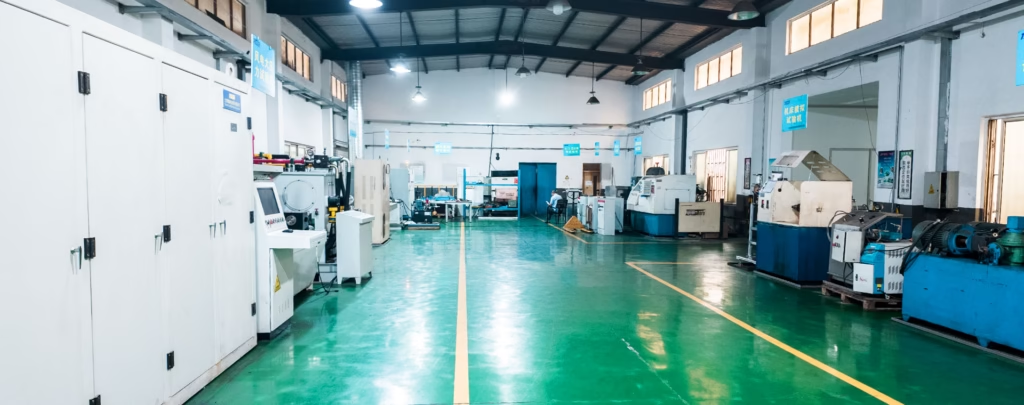
As a professional Chinese rotary union manufacturer, we have focused on rotary sealing technology for more than a decade.
Our production facility specializes in:
- High-speed rotary unions
- Hydraulic rotary joints
- Multi-passage rotary unions
- Steam rotary joints
- CNC coolant rotary unions
- Customized rotary sealing solutions
We continuously improve product performance through:
- CNC precision machining
- Dynamic balancing testing
- Leak testing
- Pressure testing
- Material hardness inspection
- Seal face lapping
- Bearing performance evaluation
Our engineering team works directly with equipment manufacturers and industrial distributors to optimize rotary union solutions for real operating environments.
Instead of offering only standard catalog products, we support:
- OEM manufacturing
- Reverse engineering
- Drawing-based production
- Custom thread standards
- Special sealing materials
- Multi-channel configurations
- High-pressure upgrades
- High-temperature customization

Why Choose Us as Your Rotary Union Manufacturer
Unlike trading companies, we are a direct factory with full in-house production capability, ensuring quality control at every stage.
🏭 Manufacturing Strength
- 10+ years of rotary union production experience
- Precision CNC machining (tolerance up to ±0.005 mm)
- Advanced dynamic balancing testing
- High-speed performance simulation
🔬 Quality Control
- 100% pressure and leakage testing before delivery
- High-grade materials (SiC, carbon graphite, stainless steel)
- Strict inspection standards
⚙ OEM & Replacement Capability
We specialize in:
- Deublin rotary union replacement
- Custom design for high-speed applications
- Fast delivery for global customers
Quality Control Process for High-Speed Rotary Unions
Quality control is essential for high-speed rotary union manufacturing.
A single machining deviation may affect sealing performance and rotational stability.

Our inspection process includes:
Raw Material Inspection
We verify:
- Material composition
- Hardness
- Surface defects
- Dimensional accuracy
CNC Precision Machining Inspection
Critical tolerances are checked using precision measuring equipment.
This ensures:
- Rotor concentricity
- Seal face alignment
- Thread accuracy
- Surface smoothness
Dynamic Balance Testing
High-speed rotating parts undergo balancing inspection to reduce vibration.
Pressure and Leakage Testing
Each rotary union is tested under simulated operating conditions.
Testing may include:
- Air pressure testing
- Hydraulic testing
- Water leakage testing
- Vacuum testing
Final Assembly Inspection
Before shipment, products undergo:
- Rotation inspection
- Appearance inspection
- Connection verification
- Packaging inspection

How to Choose the Right High Speed Rotary Union
Selecting the correct model is critical for performance and longevity.
Key Selection Factors:
✔ Rotational Speed (RPM)
Ensure the union is rated above your machine’s maximum speed.
✔ Working Medium
- Coolant
- Compressed air
- Hydraulic oil
Each requires different sealing materials.
✔ Pressure Requirements
High-pressure systems require reinforced seals and housing design.
✔ Number of Passages
- Single passage (most common)
- Multi-passage rotary unions for complex systems
✔ Installation Environment
Consider:
- Temperature
- Contamination
- Continuous vs intermittent operation
Why Global Customers Choose Chinese Rotary Union Manufacturers
Chinese rotary union manufacturers have significantly improved in:
- CNC machining capability
- Quality control systems
- Export experience
- Material sourcing
- Engineering support
- OEM customization
Today, many global buyers choose experienced Chinese manufacturers because they offer:
- Competitive pricing
- Faster lead times
- Flexible customization
- Stable quality
- Responsive technical communication
However, buyers should still evaluate:
- Factory experience
- Testing capability
- Technical knowledge
- Production consistency
- Export experience
A trustworthy manufacturer should provide clear technical documentation and engineering support rather than only low prices.
FAQ – High Speed Rotary Unions
1. What RPM qualifies as “high speed”?
Typically above 3,000 RPM, but many industrial applications exceed 10,000 RPM.
2. What is the best seal material?
Silicon carbide (SiC) combined with carbon graphite offers excellent wear resistance.
3. Can you replace Deublin rotary unions?
Yes, we provide fully compatible replacement rotary unions with equivalent or improved performance.
4. How long does a high-speed rotary union last?
With proper selection and maintenance, service life can exceed 6–12 months or more, depending on conditions.
Conclusion
High-speed rotary unions are precision industrial components that directly influence equipment reliability, spindle performance, production efficiency, and maintenance costs.
In demanding applications such as CNC machining, steel production, printing, automation, and semiconductor manufacturing, choosing the correct rotary union and manufacturer is critical.
A high-quality rotary union requires:
- Precision machining
- Advanced sealing technology
- Reliable bearings
- Dynamic balancing
- Strict quality inspection
- Real engineering expertise
As a rotary union manufacturer with more than 10 years of production experience, we continue to develop reliable, cost-effective, and customizable rotary sealing solutions for industrial customers worldwide.
By combining engineering expertise, factory manufacturing capability, strict quality control, and practical application experience, we help customers improve equipment stability, reduce downtime, and optimize long-term operational performance.
If you are searching for a reliable high-speed rotary union manufacturer, technical consultation, OEM replacement solution, or customized rotary sealing product, our engineering team can provide professional support based on your specific operating conditions.
Request a Quote for High Speed Rotary Unions
Looking for a reliable and cost-effective solution?
We offer:
- Custom design support
- Fast quotation within 24 hours
- Global shipping
- OEM/ODM services
👉 Contact us today to get a tailored solution for your high-speed application.