Rotary Unions for Marine and Offshore Equipment: A Practical Guide from a Manufacturer
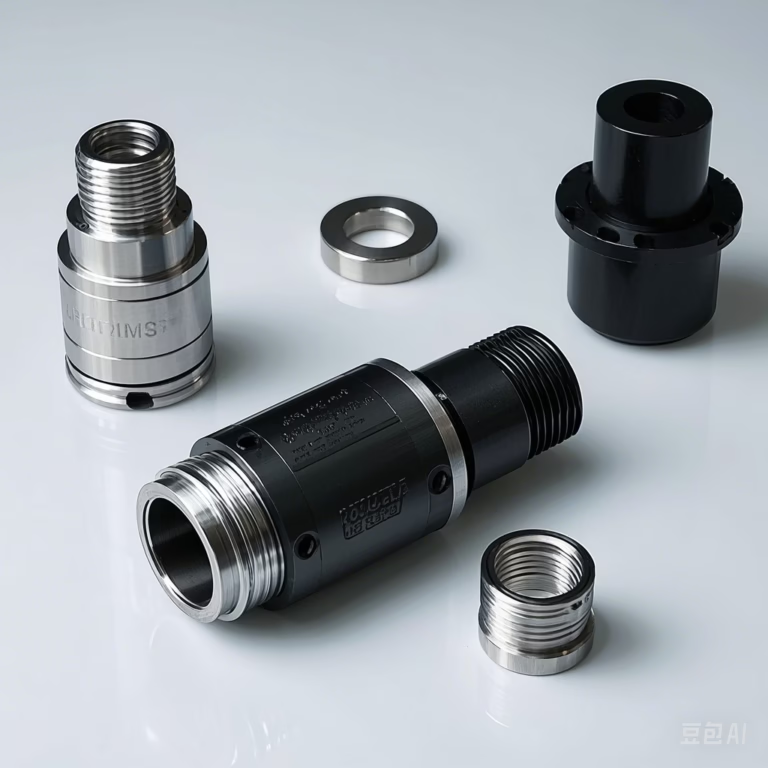
Marine equipment operates in one of the harshest environments found in industrial applications. Saltwater exposure, continuous vibration, humidity, corrosion, temperature changes, and heavy mechanical loads place enormous demands on every component installed onboard a vessel. Among these critical components, Marine Rotary Joints often receive little attention until a failure occurs.
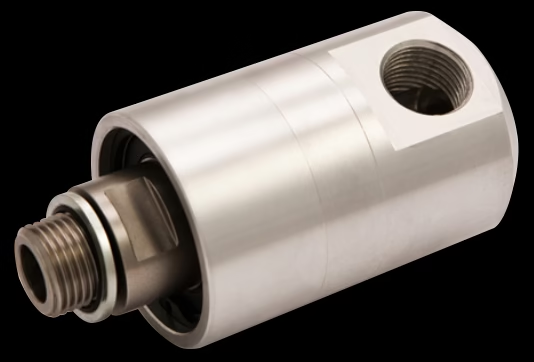
Whether installed on deck cranes, hose reels, winches, offshore platforms, dredging equipment, or hydraulic systems, rotary joints perform the essential task of transferring fluid, hydraulic oil, air, coolant, or other media between stationary and rotating structures.
As a manufacturer of rotary unions and rotary joints, we have supplied products for marine equipment builders, shipyards, offshore contractors, and maintenance companies. Through years of production and field support, we have gained practical experience regarding how marine rotary joints fail, how they should be selected, and what design features contribute to long service life.
This article explains the role of rotary joints in marine applications and shares practical manufacturing insights from real-world projects.
Why Rotary Joints Are Important in Marine Equipment
A rotary joint allows fluid transfer while rotational movement occurs simultaneously.
Without rotary joints, hoses would twist, fatigue, and eventually fail.
Marine applications often involve continuous rotation combined with hydraulic power transmission.
Typical examples include:
- Ship deck cranes
- Offshore cranes
- Hose reels
- Cable reels
- Dredging systems
- Winches
- Loading arms
- Hydraulic steering systems
A failure in any of these systems can result in costly downtime and difficult repair operations, especially when equipment is operating offshore.
Common Marine Applications
Ship Deck Cranes
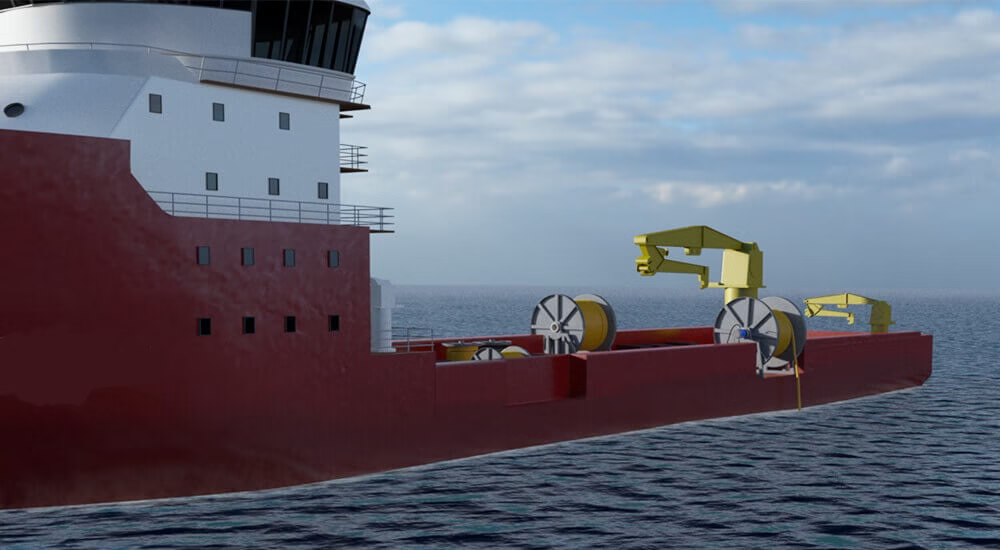
One of the most common marine applications for rotary joints is deck cranes.
These cranes rotate continuously, while hydraulic power must be supplied to lifting cylinders and control systems.
A hydraulic rotary joint enables:
- Continuous 360-degree rotation
- Stable hydraulic flow
- Reliable lifting performance
Without a properly designed rotary joint, hydraulic hoses would quickly become tangled.
Offshore Cranes
Offshore cranes operate in even more demanding conditions.
Equipment is exposed to:
- Salt spray
- Strong winds
- Constant vibration
- Heavy loads
Rotary joints used in offshore cranes must provide reliable sealing performance despite these challenges.
Hose Reels
Marine vessels frequently use hose reels for:
- Fuel transfer
- Water transfer
- Hydraulic systems
Rotary joints allow hoses to be wound and unwound while maintaining uninterrupted fluid flow.
Dredging Equipment
Dredgers rely heavily on hydraulic systems.
Rotary joints are often installed in rotating cutter heads and hydraulic drive assemblies.
These applications require excellent wear resistance and sealing reliability.
Marine Winches
Hydraulic winches used for anchor handling and towing operations often require rotary joints for fluid transfer.
Because winches operate under high loads, the rotary joint must withstand pressure spikes and dynamic loading.
Challenges Unique to Marine Environments
Marine rotary joints face challenges rarely encountered in standard industrial facilities.
Understanding these conditions is essential when selecting the correct product.
Saltwater Corrosion
Corrosion is one of the most common causes of marine equipment failure.
Saltwater can attack:
- Housing surfaces
- Internal passages
- Fasteners
- Seal components
Improper material selection dramatically shortens service life.
Continuous Vibration
Ship engines, wave impacts, and rotating machinery generate continuous vibration.
Over time, vibration may cause:
- Seal wear
- Bearing damage
- Fastener loosening
Rotary joints designed for marine applications must account for these conditions.
Pressure Fluctuations
Hydraulic systems onboard vessels often experience pressure spikes.
Repeated pressure fluctuations can accelerate seal fatigue and reduce service life.
Limited Maintenance Access
Unlike factory environments, marine equipment may remain in operation for long periods without maintenance opportunities.
Reliability, therefore, becomes a critical requirement.
Common Marine Rotary Joint Failures
Through years of manufacturing and replacement projects, several failure patterns appear repeatedly.
Hydraulic Oil Leakage
The most common complaint from marine customers is leakage.
Typical causes include:
- Seal wear
- Corrosion damage
- Shaft misalignment
- Excessive pressure
Small leaks often become major failures if left unaddressed.
Bearing Failure
Rotary joints supporting rotating loads require reliable bearing systems.
Bearing damage may result in:
- Excessive vibration
- Seal instability
- Increased leakage
Internal Corrosion
Many returned rotary joints show corrosion inside fluid passages.
This is particularly common when unsuitable materials are used.
Seal Degradation
Exposure to:
- Saltwater
- Hydraulic fluids
- Temperature fluctuations
gradually affect seal performance.
Eventually, leakage develops and replacement becomes necessary.
How We Manufacture Rotary Joints for Marine Applications
As a rotary joint manufacturer, we focus heavily on durability and corrosion resistance.
Marine applications require a different design philosophy compared with standard factory equipment.
Material Selection
One of the most important factors is selecting materials suitable for corrosive environments.
Depending on application requirements, we may utilize:
- Stainless steel components
- Corrosion-resistant alloys
- Protective surface treatments
Material selection is often the biggest factor influencing service life.
Precision Machining
Marine rotary joints require accurate machining of:
- Seal faces
- Bearing seats
- Fluid passages
Poor machining quality often results in premature leakage.
Seal System Design
Different marine applications require different sealing technologies.
Factors considered include:
- Media type
- Pressure
- Rotation speed
- Environmental exposure
Proper seal selection significantly improves reliability.
Pressure Testing
Every rotary joint should be tested before shipment.
Pressure testing helps verify:
- Seal integrity
- Internal flow paths
- Manufacturing quality
Practical Experience from Real Marine Projects
Over the years, we have supplied rotary joints for various marine applications.
One recurring lesson is that environmental conditions often cause more problems than operating pressure.
In several projects involving coastal equipment, corrosion was found to be the primary cause of failure rather than hydraulic overload.
Another common observation involves maintenance practices.
Many failures attributed to product quality were ultimately traced to contaminated hydraulic oil, improper installation, or neglected maintenance schedules.
These experiences have influenced how we design and manufacture marine rotary joints today.
How to Select the Right Marine Rotary Joint
Choosing the correct rotary joint begins with understanding operating conditions.
Important factors include:
Media Type
Examples include:
- Hydraulic oil
- Water
- Air
- Coolant
Operating Pressure
Pressure directly affects seal and housing design.
Rotation Speed
High-speed applications require specialized bearing arrangements.
Number of Passages
Marine rotary joints may contain:
- Single passage
- Dual passage
- Multi-passage configurations
Environmental Conditions
Corrosion exposure should always be considered during product selection.
Why Many Customers Choose Replacement Rotary Joints
Marine operators increasingly seek alternatives to imported rotary joints.
Common reasons include:
- Lower procurement costs
- Shorter delivery times
- Easier technical communication
- Availability of customized solutions
A properly engineered replacement can often provide reliable performance while reducing maintenance expenses.
Frequently Asked Questions
What is a marine rotary joint?
A rotary joint transfers fluid between stationary and rotating components in marine equipment.
Can rotary joints operate in saltwater environments?
Yes, provided suitable materials and sealing systems are selected.
What causes marine rotary joints to leak?
Common causes include seal wear, corrosion, contamination, and pressure fluctuations.
Are stainless steel rotary joints better for marine applications?
In many cases, stainless steel provides improved corrosion resistance.
How long does a marine rotary joint last?
Service life depends on operating conditions, maintenance practices, and environmental exposure.
Can you manufacture customized marine rotary joints?
Yes. Custom dimensions, passage configurations, and connection types are available.
Conclusion
Marine rotary joints operate under some of the most demanding conditions found in industry. Corrosion, vibration, pressure fluctuations, and continuous rotation create unique engineering challenges.
Through years of manufacturing experience and field applications, we have learned that long service life depends on more than specifications alone. Material selection, machining accuracy, seal technology, and practical application knowledge all play a critical role.
For shipbuilders, offshore contractors, and marine equipment operators, selecting the right rotary joint is an investment in reliability, safety, and reduced downtime.