
Top 7 Causes of Rotary Union Bearing Failure and Proven Prevention Methods
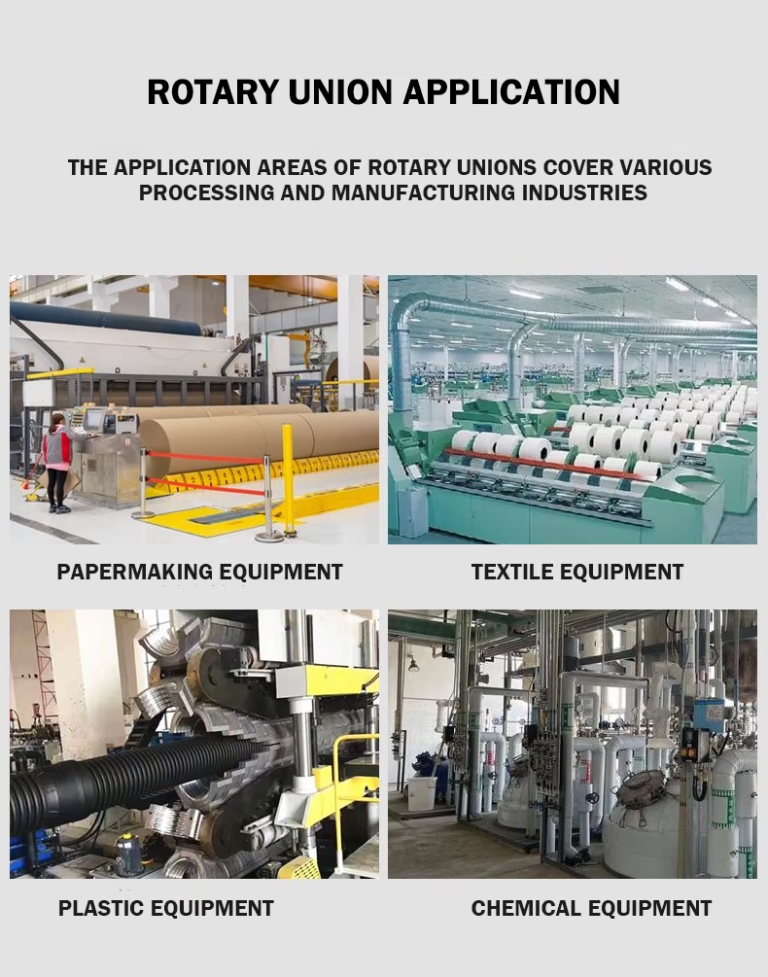
Rotary unions are designed to transfer media from stationary piping into rotating equipment. Whether installed on paper machines, steel processing lines, rubber calenders, CNC machining centers, or textile equipment, the rotary union relies heavily on one critical component: the bearing system. When a rotary union bearing fails, the consequences often extend far beyond the union itself. Rotary Union Bearing Failure can lead to seal damage, leakage, machine shutdowns, product quality issues, and expensive maintenance costs.
As a manufacturer that has supplied rotary unions to customers in more than 30 countries, we have analyzed hundreds of failed rotary unions returned from paper mills, steel plants, packaging factories, and machine builders. In many cases, the root cause was not the seal but the bearing assembly.
This article explores the seven most common causes of rotary union bearing failure and shares practical solutions based on real manufacturing and field-service experience.
Why Bearing Failure Matters in Rotary Unions
In a rotary union, the bearing is not just a support component—it is a geometric stability system.
If the bearing fails:
- Seal faces lose alignment
- Leakage increases rapidly
- Shaft runout accelerates wear
- Equipment vibration spreads to the entire machine line
In heavy industries, a single rotary union failure can stop an entire production line worth tens of thousands of dollars per hour.
Factory Failure Analysis Process (EEAT Strengthening Section)
Before discussing causes, it is important to understand how we analyze failures.
In our engineering lab, every returned rotary union goes through a structured process:
1. Incoming Inspection
- Visual damage mapping
- Seal condition check
- Bearing noise and rotation test
2. Disassembly Analysis
- Bearing raceway inspection under magnification
- Lubricant condition analysis (carbonization/contamination)
- Shaft wear measurement
3. Root Cause Reconstruction
- Load simulation based on customer machine data
- Temperature and speed recalculation
- Installation geometry review
4. Reporting
We provide customers with a structured failure report, including:
- Failure classification
- Contributing factors
- Corrective engineering actions
This process is critical because more than 60% of failures are system-related, not component defects.
Case Study #1: Paper Mill Steam Rotary Union Bearing Failure
Background
A European paper mill experienced repeated bearing failure in steam rotary unions installed on a drying cylinder system.
Failure occurred every 2–3 months.
Initial Assumption
The maintenance team suspected “low-quality bearings.”
Our Investigation Findings
After receiving two failed units, we found:
- Severe radial load marks on bearing raceways
- Pipe stress is directly transferred to the rotary union housing
- No flexible hose connection installed
- Operating temperature exceeded 185°C
Root Cause
The real issue was rigid piping misalignment, creating a continuous side load.
Engineering Correction
- Installed stainless steel flexible connectors
- Adjusted pipe support brackets
- Optimized steam inlet orientation
Result
Bearing life increased from 3 months to over 24 months.
Case Study #2: Steel Plant Contamination-Induced Bearing Failure
Background
A steel processing plant reported frequent rotary union leakage and vibration in cooling water systems.
Observed Symptoms
- Metallic noise during rotation
- Rapid seal wear
- Frequent bearing overheating
Lab Findings
After teardown:
- Severe abrasive scoring on bearing surfaces
- Presence of iron oxide particles inside the bearing cavity
- Seal lip damage from particle ingress
Root Cause
The bearing failure was driven by contamination ingress from steel mill dust and scale particles.
Engineering Correction
- Added a multi-stage labyrinth sealing structure
- Upgraded external dust protection shields
- Introduced a scheduled seal replacement program
Result
Failure frequency reduced by over 80% within 6 months.
Case Study #3: CNC Machine High-Speed Bearing Overload
Background
A CNC machining center upgraded the spindle speed from 6,000 RPM to 12,000 RPM without modifying the rotary union.
Failure Symptoms
- Excessive vibration above 9,000 RPM
- Rapid temperature rise
- Bearing seizure within 8 weeks
Engineering Diagnosis
- The bearing was not rated for high-speed dynamic load
- Lubrication film breakdown at high RPM
- Insufficient dynamic balancing of the rotating assembly
Root Cause
Excessive rotational speed beyond the bearing design envelope
Engineering Correction
- Replaced with a high-speed angular contact bearing system
- Introduced a dynamic balancing test
- Optimized grease viscosity grade for high RPM
Result
Stable operation restored at 12,000 RPM with no recurrence.
Why Bearings Are Critical in Rotary Unions
The bearing inside a rotary union performs several essential functions:
- Supports the rotating shaft
- Maintains concentric alignment
- Reduces friction during rotation
- Protects sealing surfaces from excessive movement
- Extends the service life of the entire assembly
When bearings deteriorate, even a perfectly designed seal system cannot function properly.
Typical symptoms include:
- Excessive vibration
- Abnormal noise
- Increased operating temperature
- Media leakage
- Shaft runout
- Premature seal wear
Understanding the causes of bearing failure is the first step toward preventing these costly problems.
Cause #1: Excessive Radial Loads
One of the most common causes of rotary union bearing failure is excessive radial loading.
Many operators mistakenly assume that a rotary union can compensate for machine misalignment. In reality, bearings inside rotary unions are designed primarily to support rotational movement, not heavy side loads.
Common Sources of Radial Load
- Misaligned rolls
- Bent shafts
- Improper coupling installation
- Pipe stress
- Unsupported hoses
When radial forces exceed bearing design limits, rolling elements become overloaded.
The result is:
- Raceway deformation
- Accelerated fatigue
- Increased friction
- Bearing overheating
Factory Experience
A paper mill customer experienced repeated bearing failures every three months on steam rotary unions.
After inspection, we discovered that rigid piping connected directly to the union created continuous side loading. Once flexible connectors were installed, bearing life increased to over two years.
Prevention Methods
- Verify shaft alignment during installation
- Use flexible hose connections
- Reduce pipe stress
- Install proper support brackets
- Check shaft runout regularly
Cause #2: High Operating Temperatures
Heat is one of the biggest enemies of bearing life.
Rotary unions operating with steam, thermal oil, or hot water frequently encounter elevated temperatures that can degrade lubrication and damage bearing components.
Effects of Excessive Temperature
High temperatures can cause:
- Lubricant breakdown
- Reduced viscosity
- Metal expansion
- Cage deformation
- Oxidation of bearing surfaces
In steam applications above 180°C, inadequate thermal management often shortens bearing life dramatically.
Typical Industries Affected
- Paper mills
- Corrugated board production
- Tire manufacturing
- Textile drying systems
- Laminating equipment
Engineering Solution
Modern high-temperature rotary unions often incorporate:
- External cooling chambers
- Thermal isolation structures
- Balanced mechanical seals
- High-temperature grease systems
These design features significantly reduce thermal transfer into the bearing housing.
Cause #3: Lubrication Failure
Insufficient lubrication is responsible for a large percentage of bearing failures.
Bearings require a stable lubrication film to separate rolling surfaces.
When lubrication fails, metal-to-metal contact occurs almost immediately.
Common Lubrication Problems
Under-Lubrication
Not enough grease leads to:
- Increased friction
- Surface wear
- Elevated temperature
Over-Lubrication
Too much grease can be equally harmful.
Excess grease creates:
- Churning losses
- Heat buildup
- Seal damage
Wrong Grease Selection
Using grease is not suitable for:
- High speed
- High temperature
- Wet environments
often results in premature failure.
Manufacturing Insight
We frequently inspect failed rotary unions where standard industrial grease was used in high-temperature steam applications.
In these cases, grease carbonization caused complete bearing seizure within weeks.
Best Practice
Always select lubrication according to:
- Speed rating
- Operating temperature
- Media type
- Environmental conditions
Cause #4: Contamination Ingress
Contamination remains one of the most underestimated causes of rotary union bearing failure.
Even microscopic particles can significantly shorten bearing life.
Common Contaminants
- Dust
- Scale particles
- Paper fibers
- Metal chips
- Water
- Steam condensate
When contaminants enter the bearing cavity, they create abrasive wear that rapidly damages raceways and rolling elements.
Industrial Example
In steel processing plants, airborne scale particles often penetrate damaged bearing seals.
The result is severe abrasive wear and unexpected shutdowns.
Prevention Methods
- Use labyrinth protection systems
- Install contamination barriers
- Replace damaged seals promptly
- Maintain proper drainage systems
- Conduct routine inspections
Modern rotary unions designed for harsh environments typically incorporate multiple contamination defense layers.
Cause #5: Excessive Rotational Speed
Every bearing has a maximum speed rating.
Operating above this limit dramatically increases internal stress.
What Happens at High Speed?
High rotational speed creates:
- Centrifugal loading
- Increased friction
- Higher operating temperatures
- Lubricant breakdown
The problem becomes especially critical in:
- CNC machining centers
- High-speed printing machines
- Textile machinery
- Battery manufacturing equipment
Real Application Case
A customer upgraded a machining center spindle from 6,000 RPM to 12,000 RPM without replacing the rotary union.
The original bearing design could not accommodate the increased speed.
Failure occurred within two months.
Recommended Solution
Choose rotary unions specifically engineered for:
- High RPM operation
- Precision angular-contact bearings
- Dynamic balancing
- Low-friction sealing systems
Cause #6: Improper Installation
Even the highest-quality rotary union can fail prematurely if installed incorrectly.
Our engineering team often finds installation errors responsible for bearing damage.
Common Installation Mistakes
Hammering Components into Position
Direct impact damages bearing raceways.
Misaligned Mounting
Creates uneven bearing loads.
Incorrect Torque Values
Over-tightening causes stress concentration.
Poor Coupling Alignment
Leads to excessive vibration.
Lack of Break-In Procedure
New installations sometimes require a gradual startup.
Skipping this process may increase thermal shock.
Field Observation
Many bearing failures occur within the first 100 operating hours.
This usually indicates installation-related issues rather than bearing defects.
Cause #7: Bearing Fatigue and Natural Wear
Eventually, all bearings reach the end of their service life.
Repeated loading cycles gradually create fatigue damage.
Typical Fatigue Symptoms
- Surface pitting
- Spalling
- Increased vibration
- Noise generation
- Reduced accuracy
The lifespan depends on:
- Load conditions
- Speed
- Temperature
- Lubrication quality
- Environmental cleanliness
Predictive Maintenance Strategy
Modern plants increasingly use:
- Vibration monitoring
- Temperature sensors
- Oil analysis
- Ultrasonic inspection
These technologies help identify bearing degradation before catastrophic failure occurs.
Warning Signs of Rotary Union Bearing Failure
Early detection can prevent major production losses.
Watch for these warning signs:
Unusual Noise
Grinding, rattling, or humming sounds often indicate bearing damage.
Increased Vibration
Changes in vibration patterns may signal internal wear.
Higher Surface Temperature
Sudden temperature increases deserve immediate investigation.
Seal Leakage
Bearing wear often causes seal misalignment.
Shaft Movement
Excessive axial or radial play suggests bearing deterioration.
Ignoring these symptoms often leads to more expensive repairs.
How Our Factory Prevents Bearing Failure
As a rotary union manufacturer, we invest heavily in bearing reliability because bearing performance directly determines overall product life.
Precision Bearing Selection
We use high-quality angular contact bearings for demanding applications.
Dynamic Balancing
High-speed rotary unions undergo dynamic balance testing before shipment.
Thermal Management Design
Specialized structures reduce heat transfer from media to bearing assemblies.
Strict Machining Tolerances
Critical bearing seats are machined using CNC equipment to ensure optimal alignment.
Factory Testing
Every rotary union is tested before delivery.
Testing includes:
- Leakage verification
- Rotation testing
- Pressure testing
- Performance inspection
These procedures help ensure long-term field reliability.
Why Bearing Failure Analysis Matters
Many maintenance teams replace failed rotary unions without investigating the root cause.
Unfortunately, this often leads to repeated failures.
A proper failure analysis can reveal:
- Installation issues
- Misalignment problems
- Lubrication deficiencies
- Contamination sources
- Design limitations
Addressing the root cause not only extends rotary union life but also improves overall machine reliability.
Conclusion
Rotary union bearing failure is rarely caused by a single factor. In most industrial applications, failure results from a combination of excessive loads, poor lubrication, contamination, high temperatures, installation errors, or operating conditions that exceed design limits.
Understanding these seven common causes enables maintenance teams and equipment manufacturers to make better decisions regarding installation, operation, and preventive maintenance.
At our factory, we have spent years manufacturing replacement rotary unions for paper mills, steel plants, textile machinery, rubber equipment, and CNC machine tools. Through continuous failure analysis and product improvement, we have learned that bearing reliability is not simply a component issue—it is the foundation of rotary union performance.
Selecting the right rotary union, installing it correctly, and maintaining it properly can significantly reduce downtime, lower maintenance costs, and maximize equipment productivity.
If you are experiencing recurring rotary union bearing failures, a detailed engineering review of the application conditions is often the fastest path to a permanent solution.
FAQ
What is the most common cause of rotary union bearing failure?
Excessive radial load caused by shaft misalignment and pipe stress is one of the most frequent causes.
Can overheating damage rotary union bearings?
Yes. High temperatures can degrade grease, reduce lubrication performance, and accelerate bearing wear.
How long should a rotary union bearing last?
Depending on operating conditions, high-quality bearings can last from several thousand hours to multiple years.
Can bearing failure cause seal leakage?
Absolutely. Bearing wear increases shaft movement, which often damages sealing surfaces and causes leakage.
How can I extend rotary union bearing life?
Maintain proper alignment, use correct lubrication, prevent contamination, monitor temperature, and select a rotary union designed for your application.
Are high-speed rotary unions more prone to bearing failure?
Not necessarily. Properly designed high-speed rotary unions use specialized bearings and balancing techniques that ensure long service life.